

 English
 русский
 España
 Portugal
 عربي
عربيChen Xiao | Customer Service & After-Sales Coordinator
Home / Author / Chen Xiao | Customer Service & After-Sales Coordinator / A Practical Guide to the TM111 Cat Ear Semi-Closed Litter Basin
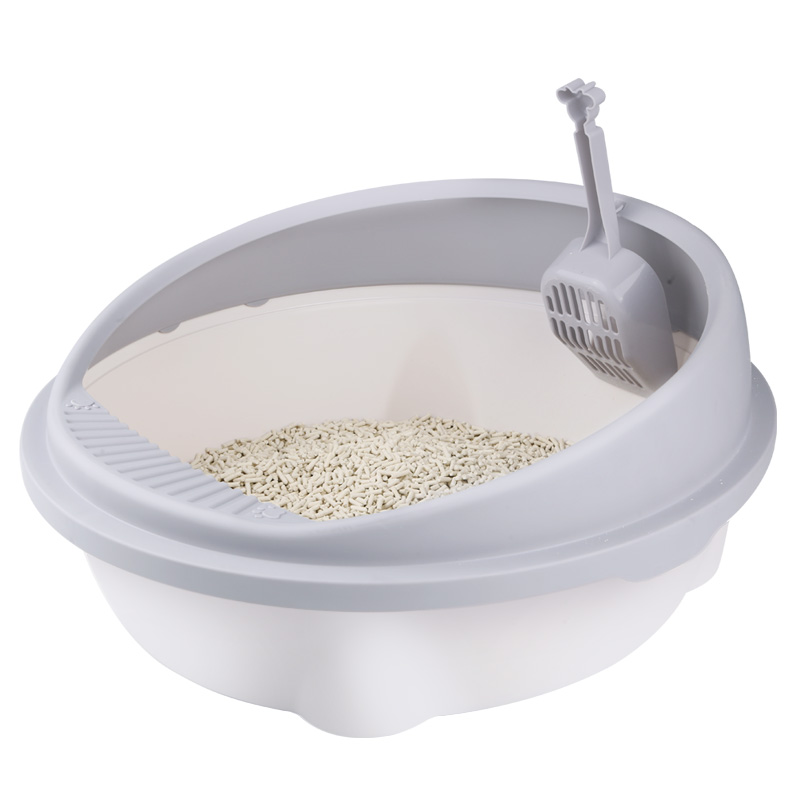
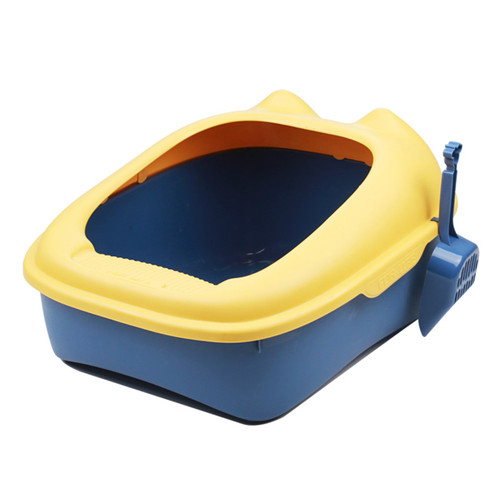
Choosing a litter basin is an important part of creating a comfortable, hygienic, and manageable home environment for a cat. A litter basin must give the animal enough room to enter, turn, dig, and bury waste, while also helping the owner control scattered litter, simplify cleaning, and maintain a tidy living space. The TM111 series cat ear semi-closed litter basin is designed around these everyday needs. It combines a raised protective fence, a spacious interior, a striped litter-catching pedal, a detachable snap structure, and environmentally friendly PP material in one practical product.
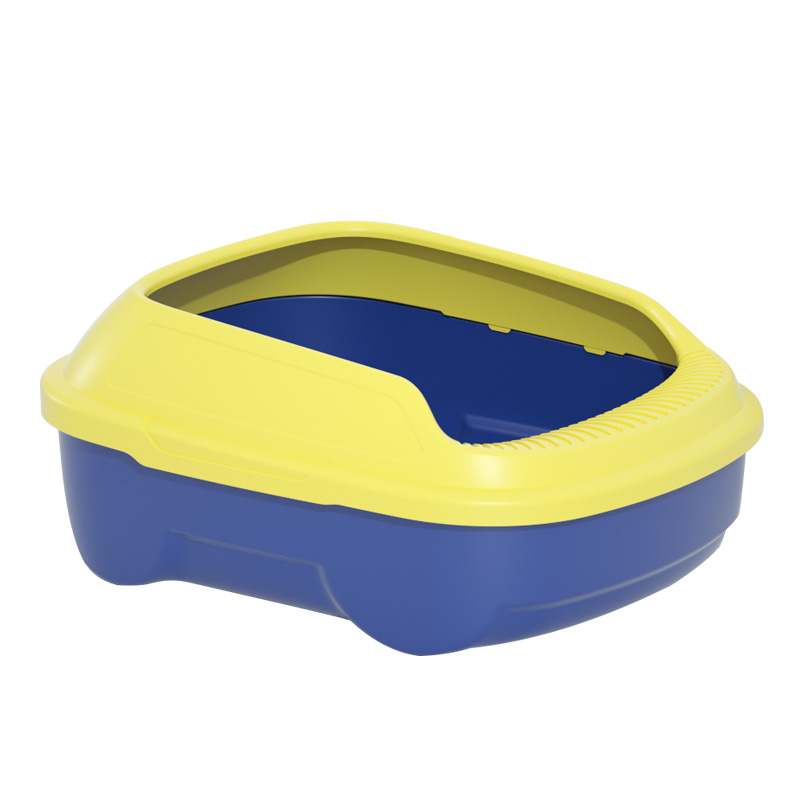
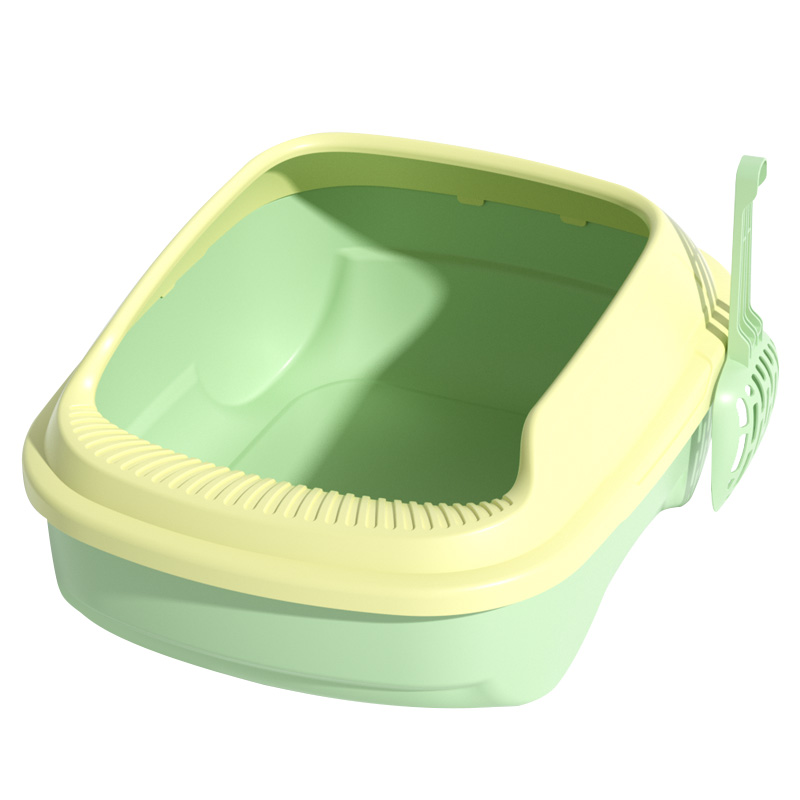
Unlike a completely open litter tray, the TM111 series uses a semi-closed design to provide greater containment without making the cat feel confined. Its raised surrounding fence is intended to reduce litter being kicked or scattered outside the basin. The 26-centimeter-high protective structure offers additional splash and scatter protection, while the large interior allows cats of different body shapes to turn around and use the toilet with greater freedom.
The product also addresses a common problem found in many conventional litter trays: litter carried out on the cat’s paws. A striped pedal is positioned to encourage active sanding as the cat exits. As the animal steps across the textured area, loose litter can remain inside the basin instead of being distributed throughout the room. This feature supports cleaner floors and reduces the amount of sweeping required after each use.
Manufactured from environmentally friendly PP material, the basin is designed to combine practical durability with a smooth, easy-care surface. The material is described as wear-resistant, bite-resistant, thickened, compression-resistant, and free from an unpleasant odor. These characteristics make the TM111 series suitable for regular household use and for owners who want a litter product that can withstand repeated cleaning and daily handling.
Content
The TM111 series is a semi-closed cat litter basin with a raised fence and a detachable upper structure. Its design is more protective than a low-sided open tray, yet more accessible than a fully enclosed litter box. This middle-ground approach is useful for cats that need a clear, open entrance but whose owners want better control over litter scatter and splashing.
The product is available in two sizes. The small model measures 43.5 by 35 by 23 centimeters, while the large model measures 51 by 41.5 by 26 centimeters. The two-size approach allows owners to select a basin according to the cat’s body shape, age, movement habits, and available household space. A smaller model may suit kittens or smaller adult cats, while the larger model provides additional room for bigger cats or cats that prefer to rotate before settling.
| Product | TM111 series cat ear semi-closed cat litter basin |
| Category | Pet products |
| Material | Environmentally friendly PP material |
| Small size | 43.5 × 35 × 23 cm |
| Large size | 51 × 41.5 × 26 cm |
| Available colors | Banana Blue, Dousha Red, Matcha Green |
| Main structure | Raised fence, upper cover, bottom basin, striped pedal |
| Assembly method | Snap design for convenient disassembly |
Although the product has a playful appearance, its design is based on practical household concerns. The cat-ear modeling gives the basin a distinctive visual identity, while the raised fence and bottom basin perform functional roles. The result is a product that can fit naturally into a home without looking like an overly industrial or purely utilitarian container.
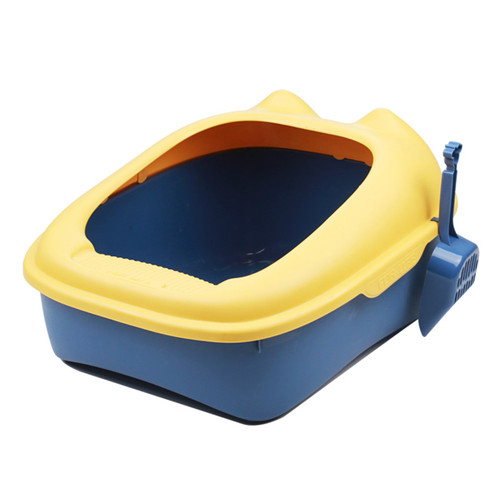
TM111 series cat ear semi-closed cat litter basin
A litter basin should provide enough interior area for a cat to behave naturally. Cats often circle, inspect the litter, dig, reposition their bodies, and bury waste after use. If the basin is too small, the cat may touch the side walls repeatedly, step into contaminated areas, or avoid the basin altogether. The TM111 series responds to this concern with a spacious interior intended to accommodate different cat shapes.
The product information emphasizes that a fat cat can use the basin without worry and that the large space makes it easier for the animal to turn around. This is a meaningful advantage over narrow litter trays. While dimensions alone cannot determine whether every cat will find a basin comfortable, the availability of a 51 by 41.5 by 26 centimeter large model gives owners a more suitable option for larger-bodied cats.
The interior space also supports more flexible placement of litter. Cats that dig actively need enough room to move their front paws and shift their weight. A basin with sufficient width and length can reduce the chance that litter is pushed over the edge during normal use. The raised surrounding structure provides an additional barrier when the cat digs with greater energy.
For kittens and smaller cats, the small model offers a more compact alternative. Its 43.5 by 35 by 23 centimeter dimensions can be easier to position in a small apartment, utility room, bathroom, or dedicated pet area. Selecting the correct size is important: the basin should fit the cat’s current body size while leaving enough room for turning and burying. Owners should also consider future growth when purchasing for a young cat.
Turning space affects both comfort and hygiene. When a cat can rotate without pressing against the walls, it has more freedom to choose a natural posture. This can reduce the chance of waste being deposited directly against the side of the basin. It may also help keep more litter in the central area, where it can absorb moisture effectively.
A wider basin is particularly useful for cats that move frequently while digging. Instead of requiring the cat to restrict its movements, the TM111 series provides a larger working area. This makes the product more accommodating for cats with different toilet habits, body proportions, and activity levels.
For owners, sufficient interior space can make maintenance easier. A basin with a practical layout allows a scoop to be used more comfortably and makes it easier to see which areas require cleaning. The detachable upper structure can then be removed when a deeper wash is needed.
One of the most visible features of the TM111 series is its large open raised fence. The structure is designed to create a higher barrier around the litter area while keeping the top open enough for convenient access. According to the product information, the fence reaches 26 centimeters in height on the large model and is intended to prevent litter from splashing or scattering.
Traditional low-sided litter trays can allow litter to escape when a cat digs, turns, or jumps out. This is especially noticeable when lightweight litter is used or when the cat has a habit of digging vigorously. The TM111 raised fence offers a more protective alternative by placing additional material between the litter and the surrounding floor.
The semi-closed construction also helps manage urine splash. Some cats prefer to stand or raise their bodies while urinating, and a low tray may not provide sufficient side protection. A higher wall can help keep liquid within the basin, although correct positioning, regular cleaning, and suitable litter depth remain important for effective use.
Compared with a fully enclosed litter box, the TM111 design preserves an open upper area. This can make entry and exit easier for cats that dislike confined spaces. It also allows owners to observe the condition of the litter more readily and may provide better air circulation than a completely covered box.
The main competitive advantage of the semi-closed format is balance. An open tray is easy to access but may offer limited scatter control. A fully enclosed litter box can contain more litter and odor, but some cats may find it restrictive, and cleaning can be less convenient. The TM111 series attempts to occupy the practical middle position: it offers a high fence and structured protection while retaining an open, approachable configuration.
This balance can be especially helpful in multi-room homes, apartments, and other spaces where scattered litter is highly visible. The product is not presented as a substitute for routine cleaning or ventilation, but its physical design can reduce the amount of litter that escapes during ordinary use.

Loose litter often leaves the basin on a cat’s paws. Even when the litter itself remains in the tray during digging, small particles can be carried across the floor when the cat exits. The TM111 series includes a striped pedal designed to encourage active sanding before the animal leaves the litter area.
The striped surface gives the cat a textured place to step across. As the paws contact the pedal, some loose litter can fall or remain on the pedal rather than being carried farther into the home. This feature supports a cleaner living environment and reduces the need to collect scattered particles from hallways, bedrooms, and furniture areas.
The pedal is also a useful transition area between the litter compartment and the floor. Instead of moving directly from the litter to a smooth household surface, the cat crosses a designated section that is part of the basin structure. This creates a simple form of litter management without requiring a separate mat or additional accessory.
Compared with a plain open tray, the integrated striped pedal may reduce the number of separate components needed for setup. Owners do not necessarily need to purchase a loose litter-catching mat immediately, although an additional mat can still be used according to household preference. The integrated design keeps the main containment and tracking-control functions together in one product.
Because the pedal is designed to collect loose litter, it should be emptied or cleaned regularly. A quick daily shake or sweep can prevent accumulated particles from being carried back into the living area. During a full wash, the pedal should be checked for trapped litter and rinsed thoroughly before the basin is dried and reassembled.
The striped texture is intended to support active sanding, but it should remain comfortable for the cat’s paws. Owners should monitor how their cat responds during the first few uses. Most cats can adapt to a new surface when the basin is introduced gradually and placed in a familiar, quiet location.
Cleaning is one of the most important factors in litter-basin ownership. A design that is difficult to take apart may discourage frequent washing and lead to odor, residue, and bacterial buildup. The TM111 series uses a snap design that allows the upper cover and bottom basin to be separated with less effort.
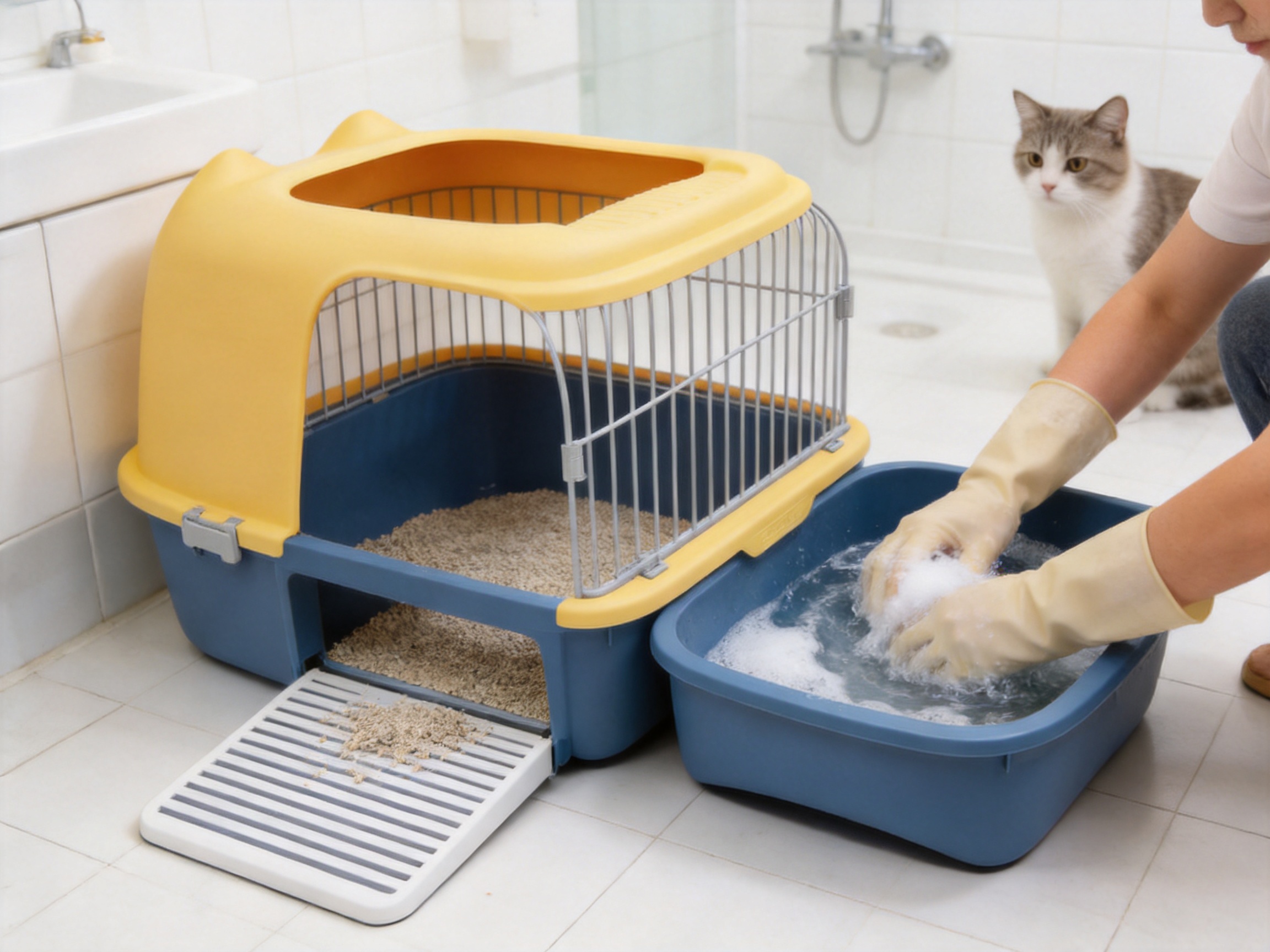
The product information describes the upper cover and bottom basin as easy to disassemble and clean in one step. This structure gives owners access to the interior surfaces, corners, and lower areas that may not be reachable when a litter basin remains fully assembled. The ability to separate the components also makes it easier to replace litter, wipe the walls, and perform deeper maintenance.
A detachable design can reduce the time required for routine care. For daily maintenance, owners can remove waste and top up the litter as necessary. For periodic cleaning, the upper section can be detached, the remaining litter can be discarded or stored according to preference, and the individual parts can be washed separately.
The snap structure also contributes to storage and transport. When the basin is not in use, its components may be easier to handle independently. Retailers and distributors can benefit from a product that is straightforward to assemble for customers, while households can appreciate a basin that does not require complicated tools or technical instructions.
Owners should remove solid waste regularly and inspect the basin for clumps or damp areas. A mild, pet-appropriate cleaning solution can be used when deeper washing is needed, followed by thorough rinsing. Strongly scented products should be avoided because some cats are sensitive to unfamiliar odors and may become reluctant to use the basin.
After washing, each component should be dried before the basin is reassembled and filled. Moisture trapped under the upper structure can create an unpleasant smell over time. The snap points should also be checked during cleaning to ensure that no litter or residue prevents the parts from joining securely.
Regular inspection is particularly useful in a multi-cat household. Frequent use places greater demands on every litter product, so owners should clean more often and examine the basin for signs of wear. The thickened PP construction is intended to support repeated handling, but proper care helps preserve the product’s service life.
The TM111 series is made from environmentally friendly PP material. Polypropylene is widely used in household products because it can be formed into practical shapes, is relatively light to handle, and can provide a durable surface for repeated use. In this product, the material supports the raised fence, detachable structure, bottom basin, and striped pedal.
The supplied product information identifies several material characteristics: wear resistance, bite resistance, thickness, compression resistance, and an environmentally friendly, tasteless composition. These qualities are relevant to a cat litter basin because the product is exposed to claws, repeated movement, cleaning, and the weight of litter over time.
Wear resistance helps the surface withstand routine contact with paws, scoops, and cleaning tools. Bite resistance is useful because some cats may investigate new plastic products with their teeth. Compression resistance supports the structural stability of the basin during handling, storage, and ordinary use. A thickened construction can also provide a more solid feel than a thin, flexible tray.
The description of the material as tasteless and environmentally friendly is also relevant to indoor pet use. A product placed in a cat’s living area should not introduce an unpleasant plastic smell that discourages use. Owners should nevertheless wash the basin before its first use and allow it to air out if any packaging odor is present.
Material selection is one of the areas where a manufacturer can distinguish a pet product from low-cost alternatives. A litter basin must be affordable, but it also needs to maintain its shape during daily use. If the walls bend excessively, the snap connections may be harder to align and the basin may become less stable when moved.
The TM111 series addresses this concern through a thickened PP construction and a structured design. The raised fence is not merely a decorative feature; it must remain sufficiently stable to contain litter and handle repeated contact. The lower basin must also support its load without becoming difficult to lift or clean.
For distributors and professional buyers, the use of a consistent material across the product line can simplify quality management. It can also support more predictable performance between the small and large models. Both sizes retain the same fundamental concept, allowing retailers to explain the benefits clearly while offering customers an appropriate size option.
The cat-ear shape gives the TM111 series a recognizable appearance. Many litter basins are visually plain, with little consideration given to how the product fits into a home. The delicate cat-ear modeling adds a friendly and playful element while maintaining the practical function of the basin.
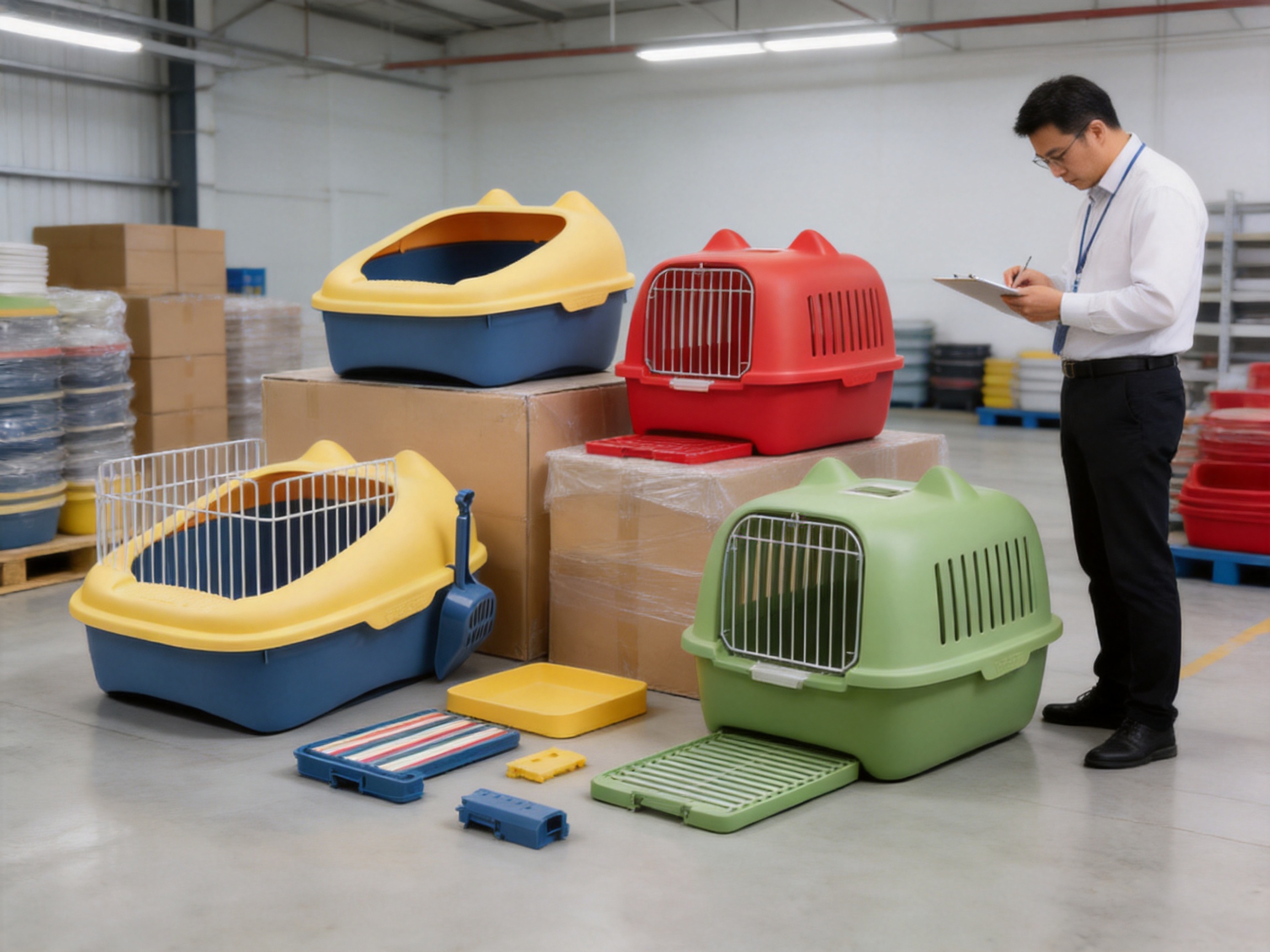
The shape may appeal to owners who view pet products as part of their interior environment rather than as objects that must be hidden. Available colors include Banana Blue, Dousha Red, and Matcha Green. These options provide different visual moods, from a softer blue to a warmer red and a natural green-inspired tone.
A distinctive exterior can also support retail presentation. Products with a clear visual identity are easier for customers to recognize, compare, and remember. For stores selling pet supplies, the cat-ear silhouette may help the basin stand out from conventional rectangular trays while still communicating its purpose immediately.
Appearance, however, is only one part of the product proposition. The cat-ear form is valuable because it is combined with a large interior, high protective fence, striped pedal, and detachable structure. The product therefore uses styling to complement utility rather than replace it.
| Color | Possible design impression | Suitable placement consideration |
| Banana Blue | Fresh, bright, and playful | Light-colored rooms or modern pet areas |
| Dousha Red | Warm and visually expressive | Rooms where the basin is intended to be noticeable |
| Matcha Green | Natural and calm | Homes with neutral or plant-inspired décor |
The TM111 series offers several advantages when compared with a basic low-sided litter tray. The first is improved containment. The 26-centimeter raised fence on the large model creates a higher boundary that can help control litter during digging and reduce splash outside the basin.
The second advantage is the choice of interior space. Conventional trays are often offered in a single size, forcing owners to use the same dimensions for kittens, small cats, and larger cats. The TM111 series provides small and large options, allowing buyers to select a more suitable configuration.
The third advantage is the integrated striped pedal. A standard tray may require a separate litter mat to reduce tracking. The TM111 design places a litter-catching surface within the product itself, helping simplify the setup and creating a defined exit area.
The fourth advantage is the snap-based structure. Some litter products are molded as one piece, which may be simple but can make deep cleaning more difficult. Others use complicated multi-part systems that take time to assemble. The TM111 approach focuses on convenient separation of the upper cover and bottom basin.
The fifth advantage is the combination of function and appearance. A basic tray may perform its essential purpose but contribute little to the visual character of a room. The cat-ear modeling and coordinated colors make the product more expressive while preserving its household practicality.
Compared with a fully enclosed litter box, the TM111 series provides a more open user experience. Cats can see the surrounding area and enter without passing through a narrow door or tunnel. This may be helpful for cats that are cautious about enclosed spaces or that prefer a clear view while using the toilet.
The open upper area can also make inspection and maintenance more convenient. Owners can check the litter level and remove waste without opening a separate top panel. The raised fence still provides more protection than a low tray, making the design a practical compromise between openness and containment.
Another advantage is ease of introduction. Some cats accept an open basin more readily than a closed box because it resembles the familiar shape of a traditional litter tray. The TM111 series can therefore be considered by owners who want to improve litter control without changing to a completely enclosed environment.
The TM111 series is supplied by Sensen Group Co., Ltd., a company whose corporate history extends back to November 1985. The group has developed activities across aquarium pets, aquaculture machinery, industrial equipment, and related product fields. This broad industrial background provides a useful context for understanding the company’s approach to product development and manufacturing.
The company states that it has continued to innovate through more than 30 years of development. Its headquarters includes functional departments such as the Sensen Research Institute, Quality Control Department, Sensen Business School, Personnel and Administrative Information Department, and Financial Department. The presence of research and quality-control functions indicates an organizational structure designed to support product development, production management, and market supply.
For a molded pet product such as the TM111 basin, quality management is important at multiple stages. Material consistency affects color, strength, surface finish, and odor. Dimensional consistency affects the fit between the upper cover and bottom basin. Snap accuracy affects how easily the product can be assembled and whether the parts remain secure during use.
The supplier’s stated quality-control structure can support attention to these details. Although specific testing figures and certifications are not provided in the source material, the existence of a dedicated Quality Control Department is a relevant manufacturing strength. Buyers should request detailed inspection standards, test reports, and compliance documents when those records are required for a particular market.
The presence of a research institute within the company’s headquarters suggests an emphasis on continued product improvement. In the pet-product sector, research does not only mean developing new materials. It can also involve studying user habits, improving assembly methods, adjusting proportions, refining surface structures, and designing products that are easier for owners to maintain.
The TM111 series reflects this type of integrated development. Its product concept addresses multiple issues at once: cat comfort, litter containment, tracking reduction, cleaning convenience, durability, and appearance. Combining these requirements into one product requires coordination between design, material selection, tooling, production, and quality inspection.
The two-size strategy also reflects a product-development approach based on user variation. Cats are not uniform in size or behavior, so offering small and large models can make the product range more adaptable. The same basic production concept can serve different household needs while maintaining recognizable design characteristics.
Sensen Group reports that it operates wholly owned subsidiary corporations and maintains important holdings in several trading companies. Its corporate structure includes entities such as ZHOUSHAN GRECH, ZHEJIANG JIALU, JIANGSU SENSEN, CHONGQING SENSEN, ZHONGSHAN SENSEN, TIANJIN SENSEN, ROLL-TAIL PET COMPANY, and MARINE ORIGANISM, as well as an import and export company.
A broad corporate and trading network can provide advantages in production coordination, distribution, market coverage, and after-sales communication. For international buyers, an established import and export function may also support order processing and commercial coordination. Retailers and distributors can discuss packaging, color assortments, model quantities, and market-specific requirements with the supplier.
The company also describes a network of aquarium stores and an integration of online and offline retail services. While the TM111 series belongs to the pet-products category rather than aquarium equipment, experience in consumer pet markets can help a manufacturer understand retail presentation, product education, and the importance of practical household design.
Retailers and distributors evaluating the TM111 series should consider more than visual appearance. The raised fence should be inspected for consistent height and stable attachment. The bottom basin should sit level on a flat surface. The upper cover should connect and disconnect smoothly through the snap structure without excessive force.
Color consistency is also important for commercial orders. Banana Blue, Dousha Red, and Matcha Green may be ordered as a mixed assortment or as selected colors according to market demand. Buyers should confirm the available color ratio, packaging method, carton dimensions, and order quantity before placing a commercial order.
Dimensions should be checked against the product specification. The small model is listed at 43.5 by 35 by 23 centimeters, and the large model at 51 by 41.5 by 26 centimeters. Retailers should distinguish between product dimensions and shipping-carton dimensions when planning warehouse space or delivery costs.
Packaging protection is another practical consideration. A litter basin can be affected by compression during transport, particularly around the raised fence and snap connection points. Buyers should ask about protective packaging, stacking recommendations, carton testing, and procedures for handling transit damage.
Product documentation should clearly identify the material, size, color, assembly method, cleaning recommendations, and intended use. Clear instructions help retailers reduce customer questions and improve the likelihood that the product will be used correctly from the beginning.
A cat may need time to accept any new litter product. Owners should place the TM111 basin in a quiet, accessible area where the cat already feels comfortable. The basin should not be positioned next to loud machinery, heavy foot traffic, or a location where the animal could feel trapped.
If the cat is moving from another litter tray, a small amount of familiar clean litter can be transferred into the new basin. The familiar scent may help the animal recognize the intended purpose. The owner should avoid making sudden changes to every aspect of the toilet area at the same time.
The correct size should be selected before introduction. A larger cat may benefit from the large model because it has more room to turn and dig. A kitten or small adult cat may find the small model more approachable, although owners should consider whether the animal is still growing.
During the first few days, owners should observe whether the cat enters comfortably, turns without difficulty, and uses the basin consistently. If the cat hesitates, the owner should check the location, litter type, litter depth, and cleanliness rather than assuming that the basin itself is unsuitable.
Daily waste removal is essential for maintaining acceptance and hygiene. Cats are often sensitive to dirty litter, and a clean basin encourages regular use. The high fence can reduce scattered litter, but it does not eliminate the need for scooping and periodic replacement.
The striped pedal should be swept or emptied regularly because its purpose is to catch loose litter. If particles accumulate, they may eventually be carried out of the basin or pushed back into the main litter area. A simple cleaning routine preserves the usefulness of this feature.
The upper cover and bottom basin should be separated for periodic washing. Owners should rinse away residue and allow the components to dry fully. The snap points should remain free from compacted litter so that the pieces can be reconnected correctly.
When using a scoop, owners should avoid excessive force against the basin walls. Although the PP material is described as wear-resistant and compression-resistant, gentle handling helps preserve the surface and reduces unnecessary scratches. A suitable scoop with rounded or smooth edges is preferable.
The basin should be inspected whenever it is cleaned. Owners should look for cracks, sharp edges, loose snap points, or deformation. If any part becomes damaged, it should be replaced or removed from service to protect the cat.
The use of environmentally friendly PP material is part of the product’s overall value proposition. A durable product that remains usable through repeated cleaning may reduce the need for frequent replacement. Longer service life can be beneficial to both households and retailers, provided that the basin is cared for properly.
The product’s compact two-size range also allows owners to avoid selecting an unnecessarily large model for a small cat or a model that is too small for a large cat. Choosing a suitable size can make better use of household space while supporting the cat’s comfort.
The semi-closed format can contribute to a tidier room by helping contain litter and splash. However, litter management also depends on the type and amount of litter used, the cat’s behavior, and the owner’s cleaning schedule. No litter basin can eliminate all tracking or odor without regular maintenance.
Responsible use includes disposing of soiled litter according to local waste-management rules. The basin itself should be maintained in a way that extends its working life. At the end of its service life, owners and commercial operators should follow applicable local guidance for disposing of plastic pet products.
The TM111 series is suitable for households seeking a litter basin with more protection than a standard tray. It may be useful in apartments where floor cleanliness is a major concern, in homes with active diggers, and in spaces where an attractive appearance is important.
It can also be considered by pet retailers that want to offer a differentiated product within the cat-litter category. The combination of cat-ear styling, three colors, two sizes, and practical structural features gives retailers several selling points without requiring customers to understand complicated technology.
For multi-cat households, owners should consider the number of cats, their individual habits, and the recommended number of litter areas. One basin may not be sufficient for every household. The TM111 series can be used as part of a broader litter-management arrangement, with size selection based on the cats that will use each basin.
The product may also appeal to buyers searching for a gift or a visually distinctive pet accessory. Its appearance makes it more decorative than a plain utility tray, while its raised fence and detachable structure give it practical value beyond styling.
The TM111 series is a cat ear semi-closed litter basin designed for household cats. It includes a raised fence, a bottom basin, a striped pedal, and a detachable upper structure.
The small model measures 43.5 by 35 by 23 centimeters. The large model measures 51 by 41.5 by 26 centimeters. Owners should select the size that allows the cat to turn, dig, and bury litter comfortably.
The basin is made from environmentally friendly PP material. The supplied product information describes it as wear-resistant, bite-resistant, thickened, compression-resistant, and tasteless.
The raised fence creates a higher boundary around the litter area. It is designed to help reduce litter splashing and scattering during digging and use. The large model has a listed height of 26 centimeters.
No. It is a semi-closed design. The raised structure provides additional protection, but the upper area remains open to preserve accessibility and make inspection and cleaning more convenient.
The striped pedal is designed to encourage active sanding as the cat exits. It can help loose litter remain in the basin area instead of being carried across the floor on the cat’s paws.
Yes. The TM111 series uses a snap design that allows the upper cover and bottom basin to be separated. This makes it easier to clean the interior and maintain the product.
The listed colors are Banana Blue, Dousha Red, and Matcha Green.
The small model may not provide enough room for every large cat. Owners should select the large model when the cat needs more turning space or has a larger body shape. The cat should be able to enter, rotate, dig, and bury waste without being restricted.
No litter basin can eliminate tracking completely. The raised fence helps with scatter and splash, while the striped pedal is designed to reduce loose litter carried out by the cat. Regular sweeping and cleaning are still necessary.
Professional buyers should confirm dimensions, color availability, order quantities, packaging, shipping-carton specifications, quality-control procedures, inspection documentation, and any market-specific compliance requirements.
The TM111 series combines a higher protective fence, a striped litter-catching pedal, a detachable snap structure, two size options, and cat-ear styling. A simple open tray may not provide the same combination of containment, tracking control, cleaning convenience, and visual design.
The TM111 series cat ear semi-closed litter basin is designed as a practical response to several common cat-care challenges. Its large open raised fence helps control litter and splash. Its spacious interior supports natural movement. Its striped pedal addresses paw tracking. Its snap structure simplifies disassembly and cleaning. Its environmentally friendly PP construction is intended to provide durability for regular household use.
The product also benefits from clear differentiation. The cat-ear modeling and three color options give it a recognizable appearance, while the small and large sizes make the range suitable for different cats and living environments. These features can help the product compete with plain litter trays and fully enclosed boxes by offering a balanced alternative.
The supplier’s long operating history, research orientation, quality-control department, subsidiary structure, and import-and-export capabilities provide a foundation for commercial cooperation. Buyers should still verify specific quality standards and documentation for their intended market, but the company’s described manufacturing organization indicates experience in developing and supplying products across pet, aquarium, aquaculture, and industrial sectors.
For households, the main value of the TM111 series lies in its combination of comfort and maintenance control. For retailers, the product offers practical selling points that can be explained easily to customers. For distributors, the two-size range, color choices, structured design, and established supplier background create a flexible product proposition within the pet-products category.
Used with suitable litter, regular scooping, correct placement, and periodic washing, the TM111 series can support a cleaner and more comfortable toilet area for cats and their owners. It is not simply a decorative container; it is a purpose-designed litter-management product that combines a protective form, user-friendly maintenance, and distinctive styling.
1. Product specification for the TM111 series cat ear semi-closed cat litter basin, including material, dimensions, colors, structure, and product features.
2. Product information describing the large open raised fence, 26-centimeter splash-protection structure, striped pedal, snap design, and two available sizes.
3. Corporate information supplied for Sensen Group Co., Ltd., including company history, research organization, quality-control structure, subsidiaries, and trading network.
4. General household pet-care principles concerning litter-basin sizing, routine waste removal, cleaning, ventilation, and cat acclimatization.
5. General product-design considerations for polypropylene pet products, including durability, ease of cleaning, structural stability, and repeated household handling.


 No. 61-79, Baima Street, Maao Town, Dinghai District, Zhoushan City, Zhejiang Province, China.
 0086 580 8082088 / 8081168
 0086 580 8080978
 songhua@sunsun-china.com