

 English
 русский
 España
 Portugal
 عربي
عربيChen Xiao | Customer Service & After-Sales Coordinator
Home / Author / Chen Xiao | Customer Service & After-Sales Coordinator / Advanced UV-C Clarification for Clearer, Healthier Aquatic Systems
Modern aquariums, ornamental ponds, aquaculture systems, and water garden installations require more than simple circulation. They require stable water quality, efficient control of suspended algae, reduced microbial pressure, and equipment that can operate dependably in demanding environments. The CUV Series UV-C Clarifiers, especially the CUV-111, CUV-118, and CUV-136 models, are designed to meet these expectations with a practical combination of ultraviolet clarification, durable construction, high water-handling capacity, and user-oriented maintenance features.
As a UV germicidal sterilizer and clarifier product family, the CUV Series is built around a focused principle: water passing through the unit is exposed to UV-C radiation inside a protected chamber, helping to clarify green water and reduce microorganisms that may otherwise contribute to cloudy conditions, poor viewing quality, and unstable aquatic environments. Unlike chemical treatments that may temporarily change water parameters or require repeated dosing, a UV-C clarifier works as part of the circulation system, continuously treating water when correctly installed with a compatible pump and filtration arrangement.
The CUV-111, CUV-118, and CUV-136 represent three useful performance levels within the series. The CUV-111 is suited for systems requiring dependable clarification at a moderate scale. The CUV-118 offers stronger UV-C output and higher recommended capacity for larger installations. The CUV-136 moves into a higher-output class, providing a 36W UV-C lamp and greater flow-handling capability for more demanding water volumes. Together, these models allow aquarium keepers, pond owners, retailers, installers, and aquatic system managers to choose a clarifier based on actual system size, flow rate, and operating objectives.
CUV Series UV-C Clarifiers CUV-111/118 CUV-136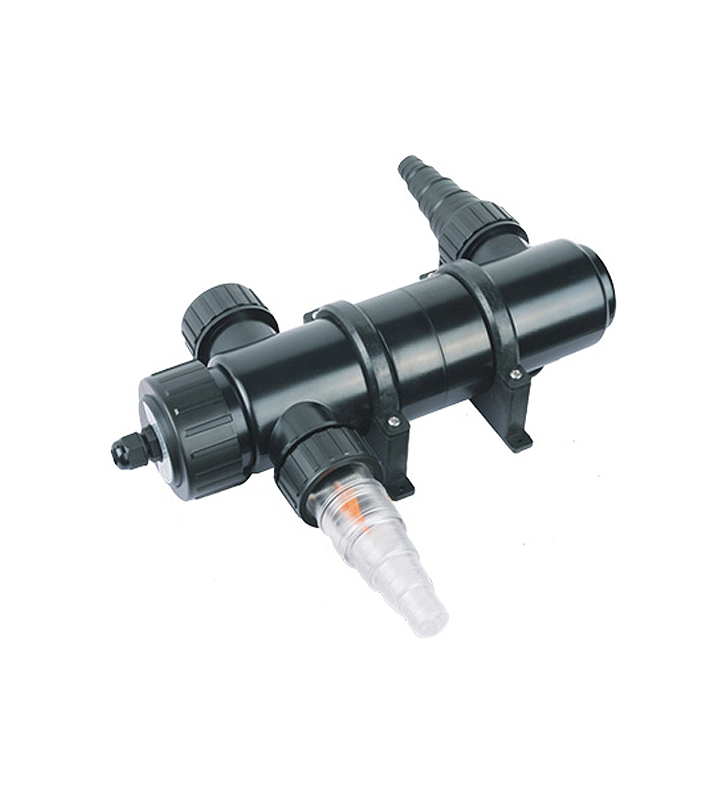
Content
UV-C clarification uses short-wave ultraviolet radiation to affect microorganisms and suspended single-cell algae as water flows through a treatment chamber. When properly sized and installed, a UV-C clarifier can help improve water transparency and contribute to a cleaner aquatic environment. It is especially valuable in ponds and large aquariums where sunlight, nutrients, fish waste, and organic buildup may encourage algae blooms or cloudy water.
The technology does not replace mechanical filtration, biological filtration, regular maintenance, or balanced stocking practices. Instead, it supports them. Mechanical filters remove particles, biological filters process ammonia and nitrite, and UV-C clarification addresses free-floating organisms that pass through the unit with the water. This layered approach is one of the most reliable ways to achieve stable water clarity.
Compared with chemical water clarifiers, UV-C treatment offers a major operational advantage: it does not require adding substances to the water column. This is important for sensitive fish, aquatic plants, beneficial bacteria communities, and pond ecosystems. A UV-C clarifier operates physically rather than chemically, making it a preferred choice for long-term water management in many professional and hobbyist systems.
The CUV Series is developed for this exact role. It provides a contained UV-C exposure path while keeping the lamp isolated from direct water contact by means of a quartz tube. The quartz sleeve allows ultraviolet transmission while protecting the electrical lamp structure from the water stream. This design is common in quality UV systems because it balances performance, protection, and serviceability.
The CUV Series covers several models, but the CUV-111, CUV-118, and CUV-136 are especially important because they address three different tiers of aquatic system demand. These models are not simply different in size; they are configured with different power consumption levels, UV-C lamp outputs, recommended capacity ratings, and through-flow values.
The CUV-111 has a power consumption of 15W and uses an 11W UV-C lamp. It is rated for a capacity of 10,000 liters and a through flow of 1,700 liters per hour. This makes it a strong choice for medium pond systems, larger ornamental aquariums, and installations where consistent clarification is needed without excessive energy use.
The CUV-118 increases the power consumption to 22W and uses an 18W UV-C lamp. It is rated for a capacity of 20,000 liters and a through flow of 2,500 liters per hour. For users moving beyond small installations, this model provides a broader performance margin. It is suitable for larger ponds, higher fish loads, and water features where clarity is a visible and important quality factor.
The CUV-136 provides a substantial increase in UV-C intensity with 40W power consumption and a 36W UV-C lamp. It is rated for a capacity of 35,000 liters and a through flow of 4,500 liters per hour. This model is designed for users who need stronger treatment capacity, including commercial display ponds, large garden water systems, aquaculture support systems, and high-volume decorative installations.
The difference between these models gives buyers a clear progression path. Instead of forcing a single product to fit every installation, the CUV Series allows the product to be matched to the water volume and circulation requirements. Correct sizing is critical because UV-C treatment depends on exposure time, flow rate, lamp output, and water transparency. By offering multiple options, the series improves the likelihood of effective real-world performance.
The following table summarizes key specifications for the CUV-111, CUV-118, and CUV-136 models. These values help installers and buyers compare the models according to electrical consumption, UV-C output, rated capacity, flow rate, maximum pressure, and physical length.
Model |
CUV-111 |
CUV-118 |
CUV-136 |
Power Consumption |
15W |
22W |
40W |
UV-C Lamp Output |
11W |
18W |
36W |
UV-C Output After 8000 Hours |
80% |
85% |
85% |
Recommended Capacity |
10,000 L |
20,000 L |
35,000 L |
Maximum Pressure |
0.3 bar |
0.3 bar |
0.3 bar |
Through Flow |
1,700 L/h |
2,500 L/h |
4,500 L/h |
Compatible Adapter Range |
20/25/32/38 mm |
20/25/32/38 mm |
20/25/32/38 mm |
Product Length |
314 mm |
314 mm |
490 mm |
These specifications show that the CUV Series is engineered with a practical relationship between UV-C output and system capacity. As capacity rises, the lamp output and through-flow capability also increase. This makes the series easier to specify for different installations and reduces the risk of choosing a unit that is too small for the application.
One of the strongest advantages of the CUV Series is its model range. Many competing products are positioned as generic pond UV units, but the CUV-111, CUV-118, and CUV-136 provide a clearer performance ladder. This allows retailers, installers, and end users to select according to water volume instead of relying on guesswork. Proper model selection improves satisfaction because UV-C clarification is highly dependent on sizing.
A second advantage is the balance between power consumption and UV-C output. The CUV-111 consumes 15W while using an 11W UV-C lamp, the CUV-118 consumes 22W with an 18W UV-C lamp, and the CUV-136 consumes 40W with a 36W UV-C lamp. This indicates efficient allocation of electrical power toward ultraviolet performance. For users who run their clarifier for extended periods, energy efficiency matters. A well-balanced UV unit helps reduce operating cost while still delivering meaningful clarification support.
A third advantage is the long service expectation of the UV-C lamp, with replacement recommended after 8,000 hours. In practical terms, this gives the user a clear maintenance interval. Many water treatment products lose effectiveness gradually, and users may not know when performance has declined. The CUV Series provides a defined operating benchmark, making maintenance planning easier for households, garden pond managers, and commercial aquatic businesses.
A fourth advantage is the use of a quartz tube. The quartz tube is essential because ordinary glass may not transmit UV-C efficiently enough for germicidal effectiveness. The quartz sleeve helps preserve the intended irradiation path while separating the lamp from the water. The product instructions correctly emphasize that dirtiness on the quartz tube will influence equipment effect, which is an important point. A clean quartz tube supports stronger UV transmission and better clarification results.
A fifth advantage is the maximum pressure rating of 0.3 bar, which is appropriate for many pond and aquarium circulation arrangements when installed correctly. The product is not intended for high-pressure industrial plumbing, and this stated pressure limit helps users design safe systems. Clear pressure guidance is a sign of responsible product engineering because it helps prevent misuse and extends product life.
A sixth advantage is installation flexibility through multiple inlet and outlet adapter options. The 20/25/32/38 mm adapter range supports a variety of hose sizes commonly used in pond and aquarium filtration systems. Competing products that support fewer hose sizes may require extra fittings, adapters, or improvised connections, increasing installation time and potential leak points. A broader adapter range makes the unit easier to integrate into existing systems.
Finally, the CUV Series benefits from the manufacturing background of Sensen Group Co., Ltd., a long-established aquatic equipment manufacturer with experience across aquarium pets, aquaculture machinery, industrial equipment, pumps, accessories, lighting, controllers, and garden equipment. This broad industrial foundation supports product consistency, production capacity, supply reliability, and engineering experience that smaller competitors may struggle to match.

In a clear aquarium or pond, fish colors appear brighter, aquatic plants look more natural, and the entire installation becomes more enjoyable. Poor clarity can make even a healthy system look neglected. Green water is especially frustrating because it can develop quickly when nutrients and light are abundant. Once suspended algae multiply, conventional mechanical filtration may not be enough because the cells are too small to be efficiently trapped by ordinary filter media.
This is where UV-C clarification is particularly effective. Water containing suspended algae passes through the clarifier, where UV-C exposure interferes with the organisms’ ability to reproduce. Over time, the water can become noticeably clearer as the suspended algae population declines and filtration removes affected material. This process is not instant, but it is consistent when the system is sized and maintained correctly.
The CUV-111 is appropriate for users who need dependable clarification without oversizing. In many medium installations, using a unit that is too large may be unnecessary and less cost-effective. The CUV-111 offers a balanced 11W UV-C output and a through flow of 1,700 L/h, making it suitable for moderate aquatic volumes and routine water clarity management.
The CUV-118 provides a stronger option for larger ponds or systems where green water is more likely because of sunlight exposure or higher nutrient load. With 18W UV-C output and a 20,000 L rated capacity, it offers a useful upgrade for users who want more treatment margin.
The CUV-136 is designed for significantly larger systems. Its 36W UV-C lamp and 4,500 L/h through flow allow it to serve installations that demand greater treatment intensity. For garden ponds, commercial displays, and larger water features, the CUV-136 can be an important part of a complete water management plan.
Because the CUV Series is used externally rather than underwater, it can be integrated into filter loops where water is pumped through the unit and returned to the system. This installation style allows easy access for inspection, lamp replacement, and quartz tube cleaning. External placement also keeps the electrical unit away from full submersion, supporting safer operation when the installation instructions are followed.
UV-C radiation is powerful and must be handled responsibly. The product instructions clearly state that users should not watch UV-C directly or allow skin to approach UV-C radiation. This warning is important because UV-C can harm eyes and skin. A properly assembled clarifier contains the UV-C lamp inside the housing and prevents direct exposure during normal operation.
The product instructions also state that the equipment must not be used underwater. This is a critical installation requirement. The CUV Series is intended for external installation as part of a water circulation line. Submerging the unit could create safety risks, damage the equipment, or void intended operating conditions. Responsible users should mount the unit securely in a dry or protected location according to the installation environment.
Another important safety factor is pressure. With a maximum pressure rating of 0.3 bar, the unit should be connected only to compatible low-pressure circulation systems. It should not be installed in closed, high-pressure plumbing networks or applications outside its designed range. Users should also avoid blocking outlets or creating excessive back pressure.
Electrical safety should always be part of aquatic equipment operation. The power supply should be protected from water exposure, drip loops should be used where appropriate, and local electrical safety rules should be followed. For outdoor ponds, weather protection and residual-current protection are commonly recommended practices. Although the clarifier is a water-treatment device, it is also an electrical appliance and should be treated with the same care as pumps, lights, heaters, and controllers.
The CUV Series demonstrates responsible product communication by stating key limitations and maintenance needs directly. These details help users operate the equipment properly, which ultimately protects both the user and the aquatic system.
The quartz tube is one of the most important components in a UV-C clarifier. It separates the lamp from the water while allowing UV-C energy to pass into the treatment chamber. If the tube becomes coated with mineral deposits, biofilm, algae residue, or fine sediment, the UV-C transmission may be reduced. Even if the lamp is still operating, the effective dose reaching the water may decline.
The product information emphasizes that dirtiness on the quartz tube will influence the effect of the equipment and that the quartz tube should be cleaned in time. This is not a minor instruction; it is central to the performance of any UV system. A neglected quartz sleeve can make a strong lamp perform like a weak one. For this reason, regular inspection and cleaning should be included in the maintenance schedule.
Cleaning frequency depends on water quality. Hard water may leave mineral scale more quickly. Ponds with high organic load may create biofilm. Systems with fine suspended solids may cause deposits. In relatively clean water, cleaning may be needed less often, but inspection remains valuable.
When cleaning the quartz tube, the unit should be disconnected from electricity, isolated from water flow, and handled carefully. Quartz can be more delicate than ordinary plastic parts, and scratches or cracks can compromise performance or safety. Users should follow the product manual and avoid abrasive tools that may damage the surface. A clean quartz tube supports optimal UV-C transmission and extends the value of the lamp.
The UV-C lamp should be replaced after 8,000 hours. This service interval is a practical advantage because it allows users to plan maintenance rather than waiting for visible water quality problems. UV lamps may continue to glow after their germicidal effectiveness has declined, so visual inspection alone is not always reliable. A lamp that still produces visible light may no longer provide sufficient UV-C output for effective clarification.
The CUV Series provides a UV-C output retention indication after 8,000 hours. The CUV-111 is listed at 80%, while the CUV-118 and CUV-136 are listed at 85%. This information helps buyers understand long-term performance expectations. It also reinforces the importance of scheduled replacement, because UV-C intensity gradually decreases with lamp age.
In practical use, 8,000 hours can represent a long operating period. If a clarifier runs continuously, it approaches that interval in roughly one year. If operated seasonally, such as during warm months when algae growth is strongest, the lamp may last across more than one season depending on the operating schedule. Users should record installation dates and operating periods to maintain performance.
Competitor products sometimes provide vague maintenance information, leaving users uncertain about lamp life. By clearly stating the 8,000-hour replacement point, the CUV Series supports more professional maintenance habits and more predictable results.
A UV-C clarifier is only as reliable as the manufacturing system behind it. Sensen Group Co., Ltd. has developed over decades from its establishment in 1985 into a diversified manufacturer serving aquarium pets, aquaculture machinery, industrial equipment, garden equipment, water pumps, air pumps, aquarium lighting, controllers, plant wall products, pet products, and aquarium accessories. This manufacturing breadth is important because aquatic equipment requires knowledge of plastics, sealing, electrical systems, fluid movement, lighting technologies, and long-term water exposure.
The company’s production and management structure includes specialized functional departments such as research, quality control, personnel and administration, information management, finance, and business training functions. This organizational depth supports standardized production, product development, process control, and after-sales consistency. For a product like a UV-C clarifier, such systems matter because small errors in sealing, lamp positioning, material selection, or assembly can affect safety and performance.
Advanced manufacturing is not only about machines; it is also about repeatable methods. A product line must control material quality, dimensional accuracy, electrical assembly, water-path integrity, and packaging protection. Each unit must be produced to fit adapters correctly, hold the quartz tube securely, protect electrical components, and withstand normal operating conditions. Manufacturing experience across water pumps, aquarium filters, lighting, and controllers gives the company a strong foundation for these requirements.
The company’s scale also supports supply capability. With multiple subsidiaries and a broad domestic and international sales network, it can serve distributors, retailers, private-label customers, and project buyers more effectively than small workshops. For buyers, manufacturing scale reduces the risk of inconsistent availability and helps ensure that replacement parts, compatible products, and related aquarium or pond equipment can be sourced more easily.
Quality control is especially important for UV-C products because they combine water, electricity, ultraviolet radiation, and plastic housing components. The product must be assembled to protect users from UV exposure, keep water away from electrical components, and maintain the correct internal flow path. A manufacturer with dedicated quality systems is better positioned to maintain these standards across large production volumes.
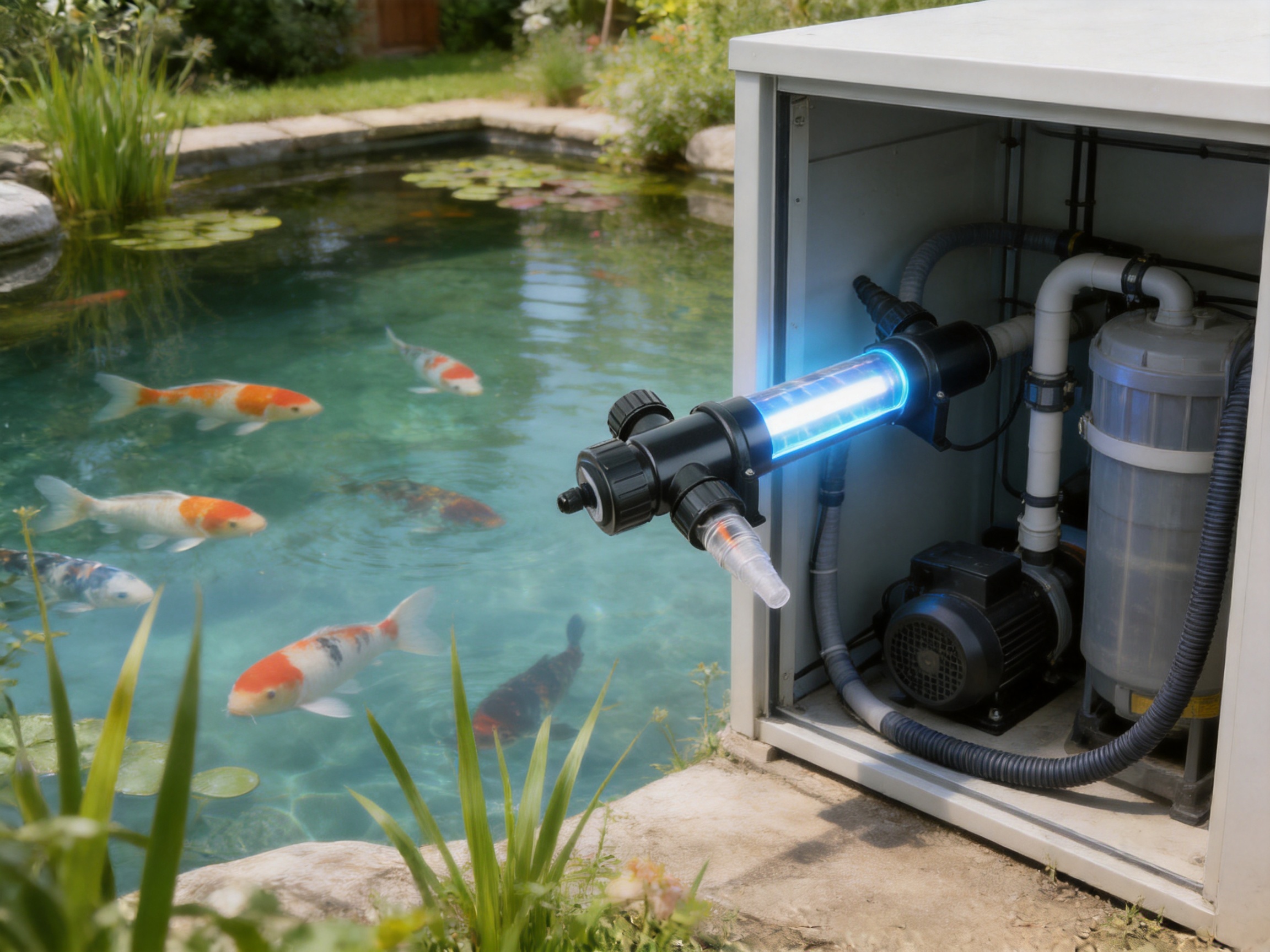
The production of a UV-C clarifier involves multiple process stages. First, the housing materials must be selected for strength, water resistance, and compatibility with outdoor or humid environments. The molded parts must fit accurately to prevent leaks and ensure reliable assembly. Injection molding consistency is important because poor dimensional control can lead to weak seals, misaligned components, or difficult maintenance access.
Second, the internal chamber design must allow water to pass through the UV exposure zone effectively. Flow characteristics matter because water must receive adequate exposure while also maintaining practical circulation rates. The CUV-111, CUV-118, and CUV-136 are specified with through-flow ratings appropriate to their UV-C output levels. This indicates that the design is not simply based on lamp wattage but also on realistic hydraulic performance.
Third, the quartz tube must be protected and correctly positioned. The sleeve must allow UV-C transmission while preventing water from contacting the lamp. It must also be removable or serviceable for cleaning. A good manufacturing process ensures that the quartz sleeve interfaces properly with seals and housing components.
Fourth, electrical assembly must be controlled carefully. UV-C lamps require appropriate electrical connection and stable operation. Cable routing, insulation, and component placement must be handled consistently. Since aquatic equipment often operates in humid environments, electrical reliability is a core competitive factor.
Fifth, testing is necessary. Water-path products should be checked for leakage, fit, and general function. Electrical products should be checked for safe operation. While individual factory procedures may vary by model and production batch, a mature manufacturer typically relies on systematic quality checks to reduce failure rates and ensure that products reaching the market meet defined standards.
These manufacturing process advantages help the CUV Series compete against lower-cost alternatives that may look similar externally but lack consistent internal quality. A UV-C clarifier is not judged only by its appearance; it is judged by long-term clarity performance, safe operation, ease of maintenance, and reliability over repeated use.
Many users make the mistake of choosing a UV-C clarifier based only on price or lamp wattage. Capacity matching is more complex. The correct model depends on pond or aquarium volume, water clarity before treatment, fish load, sunlight exposure, nutrient level, circulation rate, and the goal of treatment. A lightly stocked shaded pond may need less UV-C support than a sunlit pond with many fish and heavy feeding.
The CUV Series capacity ratings help users begin the selection process. The CUV-111 is rated for 10,000 liters, the CUV-118 for 20,000 liters, and the CUV-136 for 35,000 liters. These ratings provide practical guidance, but users should still consider real conditions. If a pond is exposed to strong sunlight or has heavy algae pressure, choosing the next higher model may provide better results. If the water is already well filtered and shaded, the standard rating may be sufficient.
Flow rate must also be considered. If water moves too quickly through a UV-C clarifier, exposure time may be reduced. If it moves too slowly, overall turnover may be insufficient. The specified through-flow values show recommended operating points: 1,700 L/h for CUV-111, 2,500 L/h for CUV-118, and 4,500 L/h for CUV-136. Matching the pump to these values helps the unit work as intended.
In many installations, the UV-C clarifier is placed after mechanical filtration. This arrangement can improve performance because mechanical filtration removes larger debris before water enters the UV chamber. Cleaner water allows UV-C light to penetrate more effectively. If debris-rich water enters the clarifier, deposits may form faster on the quartz sleeve and reduce efficiency.
The CUV Series should be installed externally and must not be used underwater. A typical installation connects a pump to a filter and then routes water through the UV-C clarifier before returning it to the pond or aquarium. In some systems, the clarifier may be installed before the filter, but placing it after mechanical filtration is often beneficial for maintaining quartz sleeve cleanliness.
The unit should be mounted securely to prevent vibration, accidental movement, or stress on hose connections. Hose sizes should match the available adapter options, and clamps should be used where appropriate to prevent leaks. Because the series supports multiple adapter sizes, installation can be adapted to common pond hose dimensions without excessive additional hardware.
Users should observe the maximum pressure rating of 0.3 bar. This means the unit should be used in open circulation systems rather than closed high-pressure systems. Outlets should not be blocked, and the pump should not exceed the product’s hydraulic limits.
Electrical connection should be arranged so that water cannot run along the cable into the power supply. Drip loops and protected outlets are commonly used in aquatic installations. Outdoor setups should consider rain exposure, splashing, and local safety regulations. Proper installation not only protects the equipment but also protects the user and livestock.
Before servicing, the power must be disconnected. Users should never open the unit while the UV-C lamp is operating. Direct UV-C exposure can damage eyes and skin. This warning is important enough to repeat: do not look directly at UV-C light, and do not allow skin to approach active UV-C radiation.
UV-C clarification can support more sustainable water management by reducing dependence on repeated chemical clarification treatments. While some chemical products have legitimate uses, frequent chemical correction may not be ideal for every aquatic system. A UV-C clarifier works continuously and does not add residues to the water.
Clearer water can also improve system monitoring. When water is transparent, fish behavior, plant health, debris accumulation, and equipment condition are easier to observe. Early detection of problems is one of the most important factors in successful aquarium and pond keeping. A cloudy system hides warning signs; a clear system reveals them.
Energy consumption is another practical factor. The CUV-111, CUV-118, and CUV-136 provide graduated power levels so users can avoid unnecessary electricity use. Instead of installing a very large UV unit on every system, buyers can choose a model that matches their capacity needs. This improves cost efficiency and avoids waste.
The long lamp service interval also reduces maintenance frequency. Replacing lamps at 8,000 hours is straightforward and predictable. The user can plan seasonal service, stock replacement lamps, and clean the quartz sleeve at the same time. Predictable maintenance supports long-term ownership satisfaction.
The CUV Series can be applied in many water environments. In ornamental ponds, it helps control green water caused by suspended algae. In garden water features, it supports visual clarity, making waterfalls, streams, and decorative basins more attractive. In large aquariums, it can support water clarity when integrated with appropriate filtration. In retail aquatic systems, it may contribute to clearer display water, improving the presentation of fish and aquatic plants.
For aquaculture-related support systems, UV-C clarification may help reduce free-floating microbial load as part of a broader water management strategy. It should not be viewed as a complete disease-control system by itself, but it can contribute to improved water hygiene when combined with filtration, water exchange, stocking control, and biosecurity practices.
The CUV-111 is useful where space and energy consumption matter. The CUV-118 fits installations requiring stronger capacity while retaining a compact length of 314 mm. The CUV-136, at 490 mm, provides larger performance capability while remaining practical for external installation in pond equipment areas.
The products are also relevant for installers who build complete pond systems. A predictable UV-C clarifier series simplifies project planning because different pond sizes can be addressed within the same product family. This creates consistency in installation methods, spare parts planning, customer training, and service routines.
When comparing UV-C clarifiers, buyers should look beyond the headline wattage. Important details include UV-C output, rated capacity, through-flow, pressure rating, lamp life, quartz sleeve access, adapter compatibility, manufacturer reputation, and replacement part availability. The CUV Series performs well in these areas because it provides clear specifications and practical installation features.
Some low-cost competitors may advertise high wattage but provide limited information about flow rate or capacity. Without these details, users may install the product incorrectly or expect unrealistic results. The CUV Series gives model-specific data, helping users make more informed decisions.
Other competing units may require special fittings or limited hose sizes. The CUV Series supports a range of common adapter sizes, reducing installation complications. This can be especially valuable for replacement projects where the existing pond already has established hose dimensions.
Maintenance clarity is another differentiator. The instruction to clean the quartz tube and replace the lamp after 8,000 hours helps users preserve performance. Products that fail to communicate these maintenance requirements may disappoint users because effectiveness declines over time without obvious warning.
Manufacturing background is also important. A company with decades of experience in aquatic equipment production offers stronger confidence than a short-term supplier selling generic products. Sensen Group’s broad product ecosystem, research structure, quality control capability, and manufacturing scale give the CUV Series a competitive foundation that is difficult for smaller competitors to replicate.
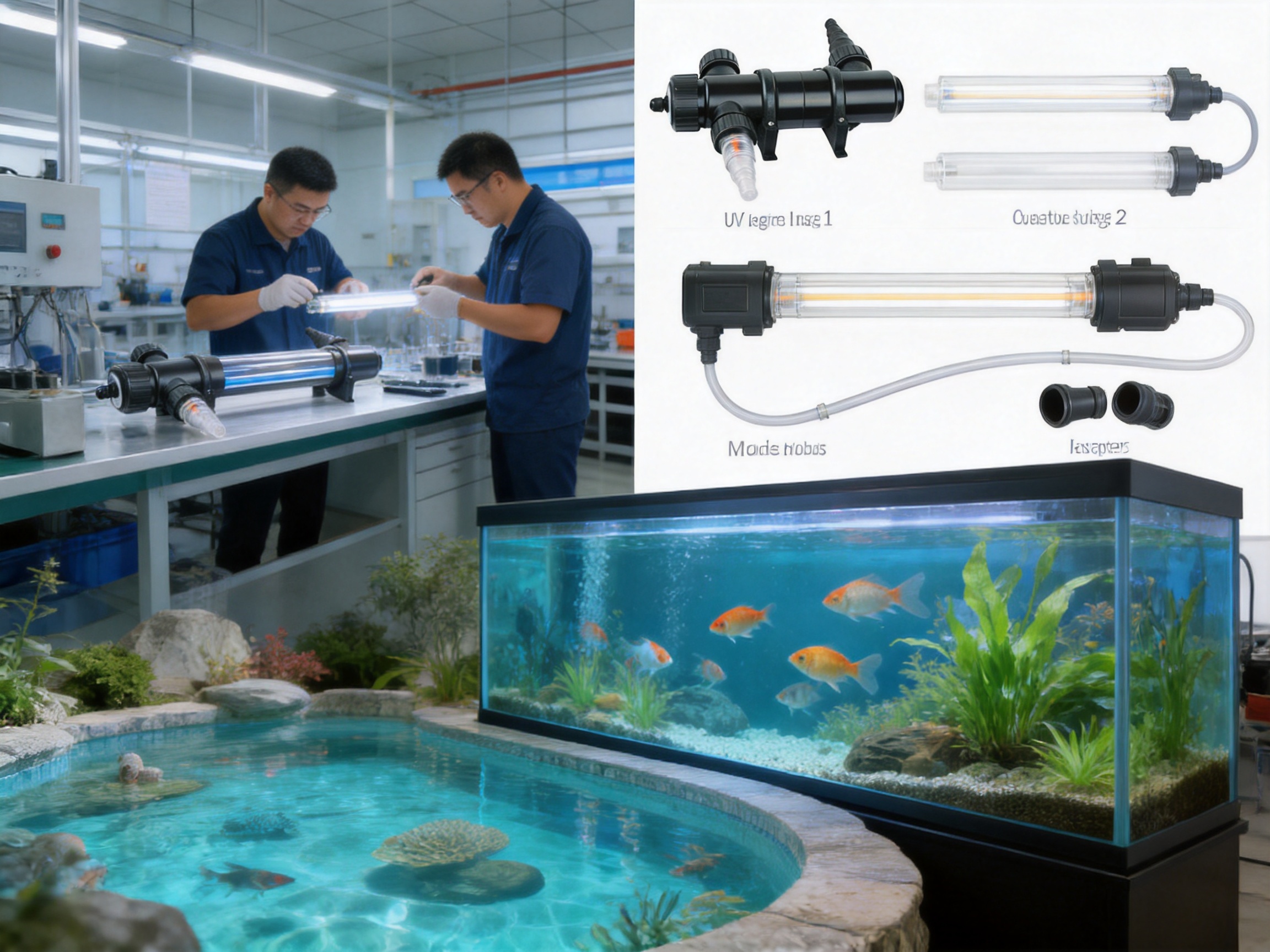
For distributors and retailers, a UV-C clarifier must be more than a technical product. It must be easy to explain, easy to position, and reliable enough to reduce after-sales issues. The CUV-111, CUV-118, and CUV-136 are straightforward to present because each model corresponds to a clear capacity range and flow value. Retail staff can guide customers according to pond volume and pump performance.
The product family also allows good-better-best positioning. Customers with smaller systems can select the CUV-111, while those with larger or more demanding systems can move to the CUV-118 or CUV-136. This tiered structure supports upselling based on real technical need rather than vague claims.
Retailers benefit from products that include clear safety and maintenance guidance. When customers understand that the unit must not be submerged, that UV-C should not be viewed directly, and that the quartz tube and lamp require periodic maintenance, they are more likely to use the product successfully. Successful use leads to fewer complaints and stronger brand trust.
Distributors also value manufacturer stability. Sensen Group’s long history, production scale, and broad product range support dependable supply. In aquatic equipment markets, availability matters because customers may need compatible products, replacement lamps, pumps, filters, and accessories. A manufacturer with a complete aquatic equipment ecosystem can support broader business needs than a single-product supplier.
A practical maintenance routine helps ensure long-term performance. Users should inspect the system regularly for leaks, hose security, and proper water flow. If flow appears reduced, the pump, filter, hoses, and clarifier should be checked for blockage or buildup.
The quartz tube should be inspected and cleaned whenever deposits are visible or when water clarity performance declines. In hard-water regions or nutrient-rich ponds, cleaning may be required more often. The lamp should be replaced after 8,000 hours of operation, even if it still appears to glow.
At the beginning of a pond season, users should inspect the complete UV system. This includes checking seals, cleaning the quartz sleeve, confirming hose connections, and verifying that the lamp is within its service life. At the end of a season, if the unit will be stored, it should be cleaned, dried, and protected from freezing or physical damage where applicable.
Good maintenance is not complicated, but it is essential. A well-maintained UV-C clarifier can provide much stronger results than a neglected unit with the same lamp wattage. The CUV Series is designed to make these maintenance tasks understandable and manageable.
The main purpose is to help clarify aquarium, pond, and garden water by exposing flowing water to UV-C radiation inside a protected chamber. This can help reduce suspended algae and microbial presence in the water column when the unit is correctly sized, installed, and maintained.
For a medium pond up to around 10,000 liters under suitable conditions, the CUV-111 may be appropriate. It has 15W power consumption, an 11W UV-C lamp, and a through flow of 1,700 L/h. If the pond has strong sunlight, heavy fish load, or persistent green water, a larger model may be considered.
The CUV-118 offers higher performance. It uses an 18W UV-C lamp, has 22W power consumption, is rated for 20,000 liters, and supports a through flow of 2,500 L/h. It is better suited for larger water volumes or more demanding clarification needs.
The CUV-136 is suitable for larger systems requiring stronger UV-C treatment. It uses a 36W UV-C lamp, has 40W power consumption, is rated for 35,000 liters, and supports a through flow of 4,500 L/h. It is appropriate for large ponds, commercial displays, and higher-capacity water features.
No. The equipment must not be used underwater. It is intended for external installation as part of a compatible water circulation system.
The quartz tube protects the UV-C lamp from water while allowing UV-C radiation to pass into the treatment chamber. If the quartz tube becomes dirty, UV-C transmission can decrease, reducing the equipment’s effectiveness. Regular cleaning is necessary for best results.
The UV-C lamp should be replaced after 8,000 hours of operation. Even if the lamp still glows, its effective UV-C output may decline over time, so scheduled replacement is recommended.
No. Users should not look directly at UV-C light and should not allow skin to approach active UV-C radiation. UV-C can harm eyes and skin. The unit should be operated only when properly assembled.
The maximum pressure rating is 0.3 bar. The unit should be used only in compatible low-pressure aquatic circulation systems and should not be installed in high-pressure plumbing.
Manufacturing background matters because a UV-C clarifier combines water handling, electrical operation, ultraviolet radiation containment, sealing, plastic molding, and serviceable components. A manufacturer with long aquatic equipment experience and quality control systems is better positioned to produce reliable and consistent products.
The CUV Series UV-C Clarifiers, particularly the CUV-111, CUV-118, and CUV-136, offer a practical and technically sound solution for users who want clearer water in aquariums, ponds, garden water features, and larger aquatic systems. Their key advantages include model-specific capacity options, efficient UV-C output, defined flow ratings, quartz tube protection, clear maintenance guidance, multiple adapter compatibility, and a predictable 8,000-hour lamp replacement interval.
Compared with many competing clarifiers, the series stands out because it gives buyers the information needed for proper selection and use. It does not rely only on simple wattage claims; it provides capacity, pressure, flow, and service-life data that support real installation decisions. This transparency is valuable for end users, retailers, installers, and distributors.
The product is also strengthened by the manufacturing capabilities of Sensen Group Co., Ltd., a company with decades of experience in aquarium pets, aquaculture machinery, industrial equipment, garden equipment, pumps, lighting, controllers, and accessories. Advanced manufacturing processes, quality control systems, research capability, and broad production scale all contribute to the reliability and market competitiveness of the CUV Series.
For best results, users should install the unit externally, match the model to the water volume and pump flow, clean the quartz tube regularly, replace the lamp after 8,000 hours, and follow all UV-C safety instructions. When used responsibly as part of a complete filtration and water management system, the CUV Series can help create clearer, healthier, and more visually appealing aquatic environments.
Bolton, J. R., and Cotton, C. A. The Ultraviolet Disinfection Handbook. American Water Works Association.
Hargreaves, J. A. Recirculating Aquaculture Tank Production Systems: Management of Water Quality. Southern Regional Aquaculture Center.
Timmons, M. B., Ebeling, J. M., Wheaton, F. W., Summerfelt, S. T., and Vinci, B. J. Recirculating Aquaculture Systems. Cayuga Aqua Ventures.
Wedemeyer, G. A. Fish Hatchery Management. American Fisheries Society.
Spotte, S. Captive Seawater Fishes: Science and Technology. Wiley-Interscience.


 No. 61-79, Baima Street, Maao Town, Dinghai District, Zhoushan City, Zhejiang Province, China.
 0086 580 8082088 / 8081168
 0086 580 8080978
 songhua@sunsun-china.com