

 English
 русский
 España
 Portugal
 عربي
Chen Xiao | Customer Service & After-Sales Coordinator
Home / Author / Chen Xiao | Customer Service & After-Sales Coordinator / Aquarium Glass Heaters: Reliable Temperature Control for Healthy Aquatic Environments
Content
Stable water temperature is one of the most important conditions in a successful aquarium. Fish, shrimp, aquatic plants, and many microorganisms depend on a consistent thermal environment. Even a moderate temperature fluctuation can create stress, reduce feeding activity, affect metabolism, and make aquatic animals more vulnerable to disease. For this reason, an aquarium heater is not simply an accessory. It is a central part of aquarium equipment for maintaining a suitable habitat throughout the year.
The ZRB Series Aquarium Glass Heater is designed to provide controlled heating for freshwater and marine aquariums across a wide range of tank sizes. The series includes four power options: 100 watts, 200 watts, 300 watts, and 500 watts. These models are suitable for aquariums from approximately 30 liters to 350 liters, with an adjustable temperature range of 20 to 35 degrees Celsius.
With a glass heating body, multiple power choices, a compact cylindrical format, and clear application ranges, the ZRB Series offers a practical solution for aquarium owners, retailers, ornamental fish farms, aquarium maintenance professionals, and system integrators. Its product structure also reflects the manufacturing experience of a large aquatic equipment producer with decades of industrial development and a broad production network.
This article examines the heater’s specifications, operating principles, installation considerations, product advantages, quality-related manufacturing strengths, and practical selection guidance. It also explains how the ZRB Series compares with common aquarium heating alternatives and answers frequently asked questions about its use.
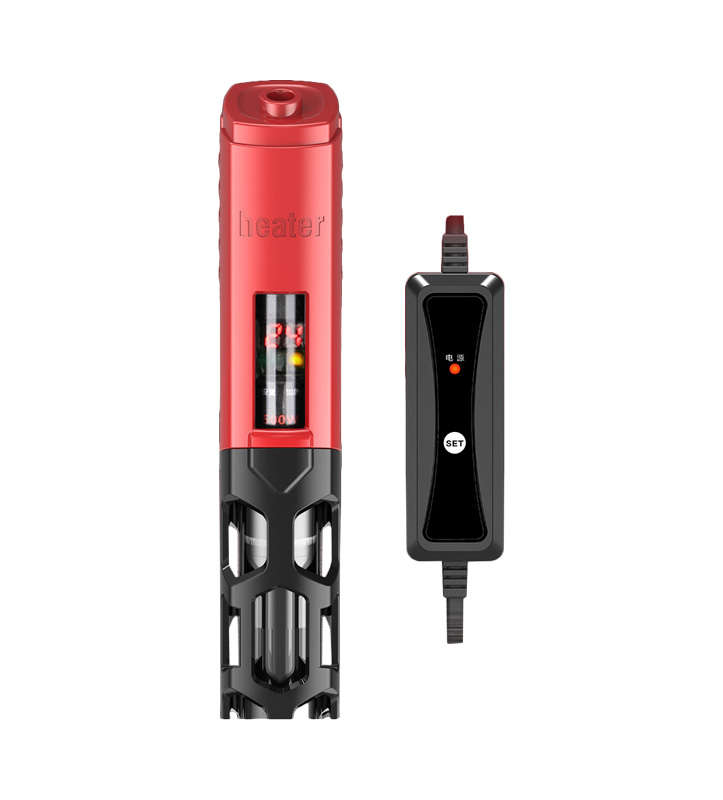
ZRB Series Aquarium Glass Heater
Aquatic animals are sensitive to the temperature of their surrounding water because they are ectothermic. Unlike mammals, fish and many aquatic invertebrates do not regulate their internal temperature independently. Their body functions are closely connected to the water around them. Water that is too cold may slow movement, digestion, immune response, and growth. Water that is too warm may lower dissolved oxygen and increase metabolic demand.
Temperature stability is often more important than achieving a precise number for a short period. Rapid changes may be more harmful than a gradual adjustment. A quality heater therefore needs to do more than generate heat. It must provide a controlled heating cycle that helps the aquarium remain within a suitable range.
Room temperature can change significantly between day and night, especially during winter. Air conditioning can also lower the temperature around a tank. An aquarium positioned near a window may experience seasonal changes, while a tank in a commercial store may be exposed to frequent door openings and fluctuating indoor conditions. In each situation, an appropriately sized heater can help compensate for environmental variation.
Temperature control is also important during acclimation and breeding. Newly introduced fish may require a stable environment while adjusting to their new surroundings. Some species need warmer water for spawning, while others require cooler conditions. A heater with a usable adjustment range from 20 to 35 degrees Celsius gives aquarium keepers flexibility for many tropical and temperate applications.
The ZRB Series Aquarium Glass Heater is available in four models. The models share the same general voltage and frequency specification, while their power, length, and recommended tank capacity differ. This makes it possible to select a heater based on both aquarium volume and available installation space.
| Model | Voltage and Frequency | Power | Length | Recommended Tank Size | Temperature Range |
|---|---|---|---|---|---|
| ZRB-810 | 220-240 V / 50-60 Hz | 100 W | 250 mm | 30-50 L | 20-35 °C |
| ZRB-820 | 220-240 V / 50-60 Hz | 200 W | 290 mm | 50-100 L | 20-35 °C |
| ZRB-830 | 220-240 V / 50-60 Hz | 300 W | 290 mm | 100-200 L | 20-35 °C |
| ZRB-850 | 220-240 V / 50-60 Hz | 500 W | 330 mm | 200-350 L | 20-35 °C |
The listed tank capacities provide a useful starting point for selection. Actual heater performance can also be influenced by room temperature, aquarium cover design, water movement, glass thickness, ambient drafts, and whether the aquarium is located indoors or outdoors. In colder environments, users should consider the thermal conditions of the entire installation rather than relying only on nominal tank volume.
The heating body is built around a glass structure intended for aquarium use. Glass is widely used in aquarium heaters because it can remain immersed in water while providing a suitable protective enclosure for the heating element. Its smooth surface is also relatively easy to clean when mineral deposits or algae accumulate.
A glass heater should always be handled carefully. Although the material is designed for submerged operation, sudden mechanical impact or rapid temperature shock can damage it. Users should avoid placing a cold heater directly into very hot water and should not remove a heater from the aquarium while it is still powered. These precautions protect the heater and reduce the risk of thermal stress.
The cylindrical design allows the heater to be installed vertically or horizontally, depending on the aquarium layout and the mounting accessories used. Horizontal placement can be useful in shallow tanks, while vertical placement may be better for tall aquariums. In both cases, the heating body should remain fully submerged during operation.
Glass construction also supports visual inspection. Aquarium keepers can normally examine the outer body for visible deposits, cracks, or damage during routine maintenance. Regular inspection is an important part of responsible aquarium equipment use, particularly in commercial displays and systems that operate continuously.
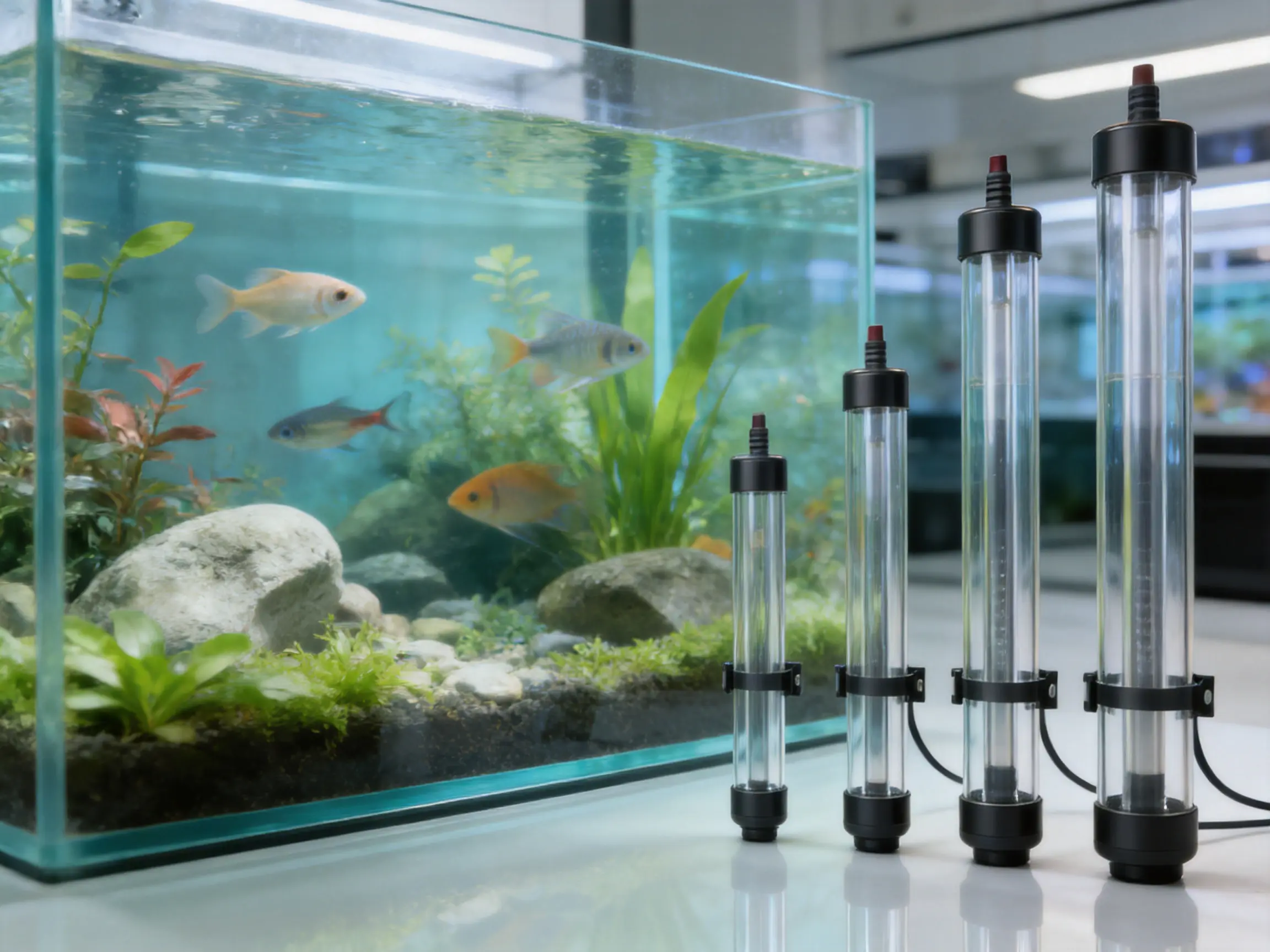
The ZRB-810 provides 100 watts of heating power and has a length of 250 millimeters. It is specified for aquariums from 30 to 50 liters. This model is suited to compact home aquariums, nano displays that require additional heating capacity, quarantine tanks, and small breeding setups.
Its lower power rating can be advantageous where the water volume is limited. A correctly matched heater avoids unnecessary equipment size and leaves more room for plants, decorations, filtration devices, and fish shelter. The 250-millimeter length also offers a practical fit for many smaller aquariums.
The ZRB-820 is rated at 200 watts and measures 290 millimeters in length. It is designed for tanks from 50 to 100 liters. This range covers many common home aquariums, including community tanks, planted aquariums, and small marine displays.
For medium-sized aquariums, heating efficiency depends heavily on circulation. The heater should be placed in an area where water moves around the heating body. Positioning it near a filter outlet can help distribute warmed water through the tank, provided that the heater remains securely mounted and is not exposed to air.
The ZRB-830 delivers 300 watts and has the same 290-millimeter length as the 200-watt model. It is intended for aquariums from 100 to 200 liters. This model provides a higher power level without adding extra length compared with the ZRB-820, which may be valuable where space is limited but greater heating capacity is needed.
A 300-watt heater can be useful in larger community aquariums and display tanks with significant water volume. It may also provide more reserve capacity in rooms with lower ambient temperatures. Users should still check the actual operating environment, because the recommended tank range is a guide rather than a guarantee for every climate and installation.
The ZRB-850 is the highest-capacity model in the series. It provides 500 watts of power, has a length of 330 millimeters, and is specified for aquariums from 200 to 350 liters. It is appropriate for larger home aquariums, retail displays, ornamental fish systems, and other high-volume installations.
The increased length supports the higher power rating while providing a substantial heating surface. In large aquariums, circulation is especially important. A heater should be installed in a location where the warmed water can move through the aquarium rather than remaining concentrated in one area.
Every model in the ZRB Series is specified with a temperature range of 20 to 35 degrees Celsius. This range covers many common aquarium applications, including tropical community tanks, ornamental fish displays, quarantine systems, and certain breeding environments.
The adjustment range allows users to select a target suited to the species in the aquarium. Different fish and invertebrates have different requirements, so the correct setting should always be based on the care information for the animals being kept. Users should avoid selecting a temperature merely because it is within the heater’s adjustment range.
An independent aquarium thermometer is recommended even when a heater includes a built-in temperature control system. A thermometer provides an additional reference point and helps users detect changes caused by room conditions, water circulation, or equipment malfunction. Monitoring is especially important after the heater is first installed or after a major water change.
For gradual adjustment, users should change the setting in small increments and observe the aquarium over time. Sudden changes may stress fish and other aquatic organisms. The heater is intended to maintain a selected temperature, not to replace careful acclimation practices.
Some basic aquarium heaters are designed to operate at a fixed temperature or offer only limited adjustment. Such products may be convenient for a single application, but they provide less flexibility when the aquarium species, season, or operating conditions change.
The ZRB Series offers a 20 to 35 degree Celsius adjustment range across all four models. This gives users greater control than a fixed-temperature product. A retailer can use the same heater family for several types of aquarium displays, while a home aquarium keeper can adjust the setting for seasonal conditions or different livestock requirements.
A single universal heater size may be too powerful for a small tank or insufficient for a large one. The ZRB Series addresses this issue through four distinct power levels. The available models create a more systematic selection process based on aquarium volume.
This product range can simplify purchasing and inventory management for distributors and aquarium stores. Instead of stocking unrelated heater designs for every tank size, a supplier can present a coherent series with consistent operating principles and clearly differentiated capacities.
External heating systems can be useful in specialized aquarium installations, but they often require additional plumbing, space, connections, or system components. A submersible glass heater is generally simpler to install in a conventional aquarium because it can be positioned directly inside the water.
The ZRB Series is therefore well suited to standard aquarium layouts where straightforward installation is a priority. It can support home tanks, retail displays, and maintenance systems without requiring a separate heating loop. This can reduce installation complexity when compared with more elaborate external solutions.
The four models use consistent voltage and frequency specifications and share the same general product concept. This consistency benefits users who manage multiple aquariums. Staff members can learn one installation and operating procedure, while replacement selection becomes easier because the product family is organized by power and tank volume.
Consistent design can also help professional buyers evaluate products more efficiently. The model numbers, power ratings, lengths, and recommended capacities provide a clear framework for matching heaters to different aquarium projects.
Before installation, users should inspect the heater body, power cable, control area, and mounting components for visible damage. A damaged heater should not be installed. The aquarium should contain enough water to keep the complete heating body submerged during operation.
The heater should be positioned where water can circulate around it. Placing it near the output of a filter or circulation pump can help distribute warmed water. However, the heater should not be pressed directly against the aquarium glass, decorations, substrate, or other equipment.
Users should follow the product instructions regarding the installation position and mounting method. If suction cups or brackets are supplied, they should be attached securely to a clean aquarium surface. The heater must not be allowed to float freely or rest against objects that could restrict water circulation.
The heater should be allowed to acclimate to the aquarium water before it is switched on if the product instructions require such a waiting period. This reduces the possibility of thermal shock to the glass body. Similarly, the heater should be switched off and allowed to cool before it is removed from the aquarium.
Electrical safety is essential. The power supply should match the listed 220-240 volt, 50-60 hertz specification. The electrical outlet should be suitable for the installation environment, and users should keep plugs and connections away from water. A residual-current protection device is recommended where appropriate and where permitted by local electrical practice.
Efficient aquarium heating depends on more than wattage. A covered aquarium generally loses less heat than an open aquarium. Avoiding strong drafts can also reduce heat loss. In larger systems, proper water movement helps distribute heat and reduces the possibility of uneven temperature zones.
The heater should be selected according to the recommended tank capacity, but environmental conditions must also be considered. A 100-watt model designed for a 30-50 liter tank may perform differently in a warm room than in a cold room. Likewise, a large aquarium located in an unheated space may require careful observation even when the selected model falls within the listed volume range.
Users should monitor the aquarium after installation. The water temperature should be checked at different times of day during the first several days. If the aquarium contains valuable livestock or operates as part of a commercial system, a second thermometer or alarm device may provide additional protection.
Regular maintenance should include removing mineral deposits from the exterior of the heater, checking mounting stability, and examining the cable and control area. Cleaning should be performed only after the heater is disconnected from the power supply and removed safely according to the instructions.
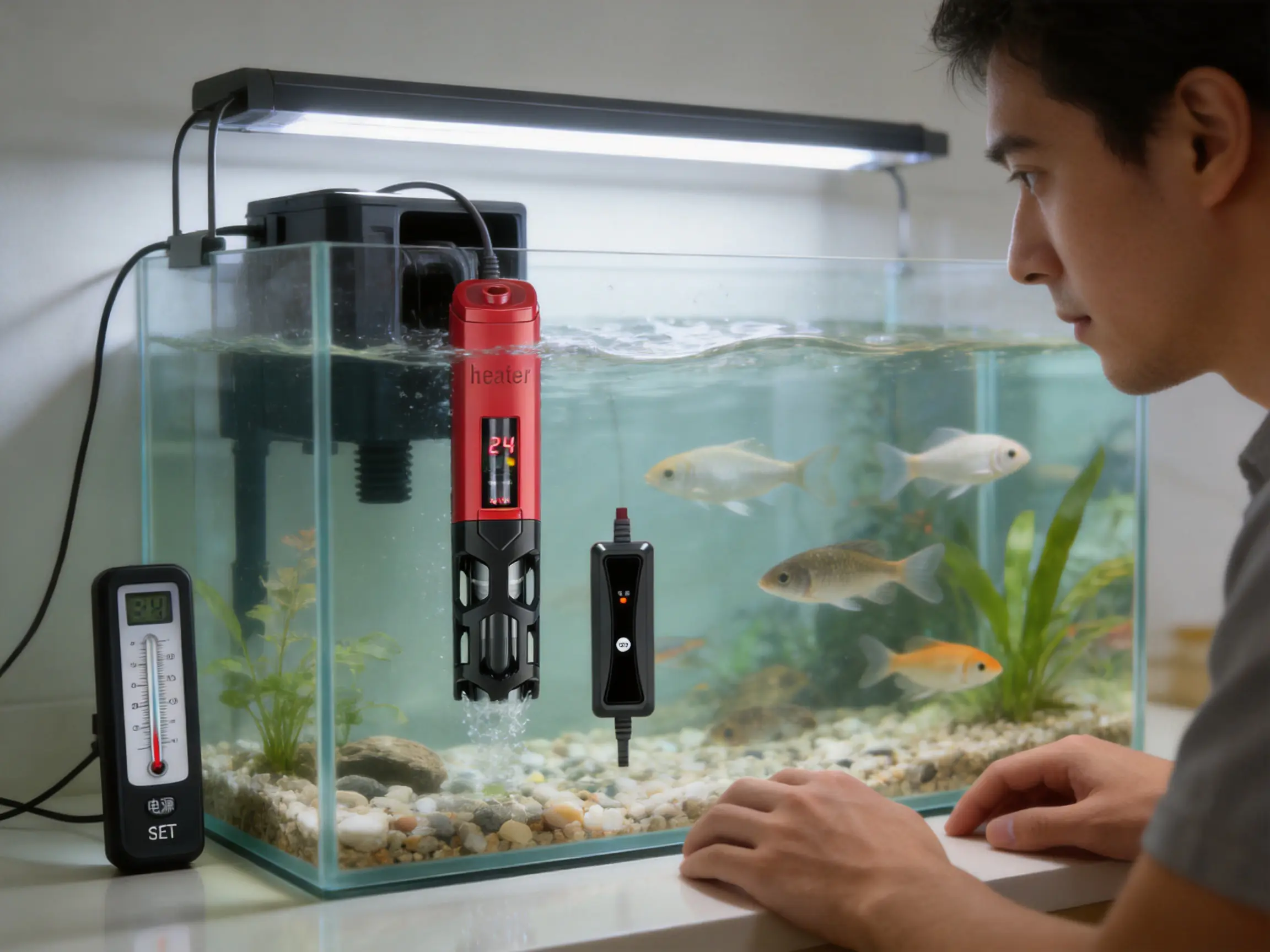
The product is supplied by Sensen Group Co., Ltd., an established manufacturer with a long history in aquarium pets, aquaculture machinery, industrial equipment, and related fields. The company was established in November 1985 and has developed through more than three decades of continuous industrial activity.
A long operating history does not automatically define the performance of a single product, but it can provide a significant foundation for product development, manufacturing organization, quality management, and market feedback. Aquarium equipment must function in a demanding environment involving water, electricity, continuous operation, temperature changes, and diverse user conditions. Experience in this sector helps a manufacturer understand these practical requirements.
The company has established functional departments including a research institute, business school, quality control department, personnel and administrative information department, and financial department. The presence of specialized departments supports a structured approach to product development and company management.
A dedicated research organization can contribute to product improvement, design evaluation, and technical knowledge. A quality control department can help establish inspection procedures for materials, assembly, electrical performance, appearance, and finished goods. Together, these functions provide an organizational basis for producing aquarium equipment consistently at commercial scale.
The company operates with wholly owned subsidiaries and associated organizations in different regions and product fields. This broader structure supports production, supply coordination, sales, distribution, and service activities. For buyers, an integrated organization may offer advantages in terms of production capacity, order coordination, and long-term supply planning.
The company also operates an import and export business and has developed trading relationships in several areas. This international orientation is relevant to aquarium equipment because product buyers are distributed across many climates, markets, and application environments. Export experience can help a manufacturer organize packaging, documentation, communication, and delivery for overseas customers.
The manufacturer’s product scope extends beyond aquarium heaters to include aquarium pets, aquaculture machinery, industrial equipment, pumps, filtration equipment, lighting, controllers, and other related products. This broad portfolio allows the company to view the heater as part of a complete aquatic system rather than as an isolated electrical device.
For an aquarium glass heater, manufacturing quality involves several important stages. The glass body must be formed and handled carefully. The internal heating element must be correctly assembled. Electrical connections need to be secure and appropriately insulated. The control mechanism must be integrated with the heating system, and the finished product must be inspected before packing.
Production also requires attention to dimensional consistency. The stated lengths of 250, 290, and 330 millimeters help users plan installation space. Consistent dimensions make it easier for distributors and system builders to incorporate the heaters into standard aquarium layouts.
Quality control is also important for labeling and model identification. The difference between a 100-watt heater and a 500-watt heater is significant. Clear model information helps prevent incorrect selection, particularly when several heaters are stored or installed together.
At the final stage, packaging must protect the glass body from impact during handling and transport. A manufacturer with extensive export experience is better positioned to develop packaging and logistics practices suitable for long-distance distribution. Buyers should still inspect all shipments upon arrival and report visible damage before installation.
In a home aquarium, the ZRB Series can support tropical fish tanks, planted aquariums, quarantine tanks, and breeding systems. The four model choices cover a broad range of common aquarium volumes. Users can select a lower-power model for a compact tank or a higher-power model for a large display.
The adjustable temperature range is practical for households that maintain more than one aquarium type. A single product family can serve a small community tank, a medium planted aquarium, and a larger ornamental fish display, provided that each tank is matched with the correct model.
Retail stores often operate many aquariums in the same room. These tanks may vary in size and may contain different species. A heater series with clearly separated power levels can simplify installation and staff training.
Retailers also benefit from predictable model identification. When a heater requires replacement, staff can compare the tank volume with the model specifications and choose an appropriate unit. This can reduce the risk of installing an undersized or oversized heater.
Quarantine tanks require stable conditions because newly acquired fish may already be under stress. A heater suitable for the tank volume can help maintain the selected temperature while the fish acclimate. Temperature stability can also be important when fish are being observed for health problems.
Breeding systems may use different temperature settings at different stages. The adjustable range of 20 to 35 degrees Celsius gives aquarists a useful operating window, although the correct setting must always be determined by the requirements of the species and the breeding program.
For larger facilities, the ZRB-850 may be suitable for individual tanks within the listed 200-350 liter capacity range. Multiple heaters can be selected for separate systems according to tank size and local conditions. Larger installations should use appropriate electrical protection, monitoring, and maintenance procedures.
The heater should not be considered a replacement for a complete environmental control system in large-scale aquaculture. Facilities may require centralized heating, redundant monitoring, alarms, and backup equipment. However, submersible heaters can be useful for independent tanks, holding systems, and smaller specialized units.
The first selection factor is aquarium volume. Users should identify the actual water capacity rather than relying only on the external dimensions of the tank. Substrate, decorations, filtration compartments, and internal structures reduce the actual water volume.
The second factor is ambient temperature. A tank in a warm room may need less heating assistance than a tank in a cold warehouse. If the room temperature is low, users should pay close attention to monitoring during the first days of operation.
The third factor is aquarium depth and available installation space. The 100-watt model is 250 millimeters long, the 200-watt and 300-watt models are 290 millimeters long, and the 500-watt model is 330 millimeters long. Users should confirm that the chosen heater can be installed fully submerged without interfering with the cover, filter, or aquarium decorations.
The fourth factor is the biological requirement of the livestock. A heater should be selected to maintain the temperature required by the fish, plants, or invertebrates, not simply to achieve the highest available setting.
The fifth factor is water circulation. Even a correctly sized heater may produce uneven results if water movement is poor. The heater should be installed where circulation can distribute heat through the aquarium.
Electrical aquarium equipment requires responsible handling. Always disconnect the heater from the power supply before placing hands in the aquarium, moving the heater, performing maintenance, or changing its position.
Never operate the heater outside the water unless the instructions specifically permit it. The heating body is designed for submerged use, and dry operation may cause damage. The heater should also remain fully submerged during normal operation.
Inspect the glass body regularly. If cracks, chips, severe discoloration, exposed internal components, or cable damage are observed, stop using the heater and seek an appropriate replacement or service solution. Do not attempt to repair damaged electrical aquarium equipment without qualified technical support.
Keep the heater away from direct impact from rocks, decorations, cleaning tools, and aquarium covers. When transporting or storing the product, use protective packaging to reduce the chance of glass damage.
Mineral deposits can accumulate in hard water. These deposits may be removed during routine maintenance using a method suitable for aquarium equipment and consistent with the product instructions. Abrasive tools should be avoided if they could scratch the glass surface.
A heater is most effective when it is part of a complete management routine. The ZRB Series provides the heating component, but good aquarium care also requires water testing, filtration, circulation, lighting management, feeding control, and regular observation.
The clear division between the four models supports an organized equipment strategy. A store or service company can create standard operating procedures based on tank capacity. Home users can record the model installed in each aquarium and maintain a replacement plan.
The combination of adjustable temperature control and multiple wattage options also reduces the need to compromise. Users can choose a power level appropriate to the aquarium and then set the desired temperature within the available range. This is more practical than relying on one heater size for every application.
For manufacturers and distributors, the series structure can support private-label programs, wholesale supply, and project-based aquarium installations. Product buyers should confirm packaging, electrical requirements, mounting accessories, warranty terms, and local compliance requirements before placing large orders.
The series covers aquariums from approximately 30 liters to 350 liters. The ZRB-810 is specified for 30-50 liter tanks, the ZRB-820 for 50-100 liter tanks, the ZRB-830 for 100-200 liter tanks, and the ZRB-850 for 200-350 liter tanks.
All four models are specified for a temperature range of 20 to 35 degrees Celsius. The correct setting should be selected according to the requirements of the fish, plants, and other aquatic organisms in the aquarium.
Each listed model uses a specification of 220-240 volts at 50-60 hertz. Users should confirm that the local electrical supply and outlet are compatible before installation.
The ZRB-810 is the model specified for 30-50 liter aquariums, so it is the listed choice for a 40-liter tank. Room temperature, aquarium cover, water circulation, and livestock requirements should still be considered.
The ZRB-830 is specified for aquariums from 100 to 200 liters and is therefore the appropriate model within the provided range for a 150-liter aquarium.
The available product information identifies the product as an aquarium glass heater but does not provide a separate marine-use certification or detailed saltwater compatibility statement. Buyers should confirm suitability with the supplier before using it in a saltwater system, especially where corrosion resistance and marine electrical standards are critical.
Yes. An independent aquarium thermometer is recommended for checking actual water temperature. It provides a useful reference and can help users identify unexpected changes.
No. The heater should be disconnected from the power supply and allowed to cool before removal. Removing a powered heater from the water may cause damage and creates an electrical safety hazard.
It should be installed fully submerged in an area with good water movement. Positioning it near suitable filter circulation can help distribute heat, but it should not be pressed against the aquarium glass, decorations, substrate, or other equipment.
The series has four clearly differentiated models, consistent electrical specifications, defined lengths, and stated aquarium capacity ranges. This makes product selection, inventory planning, staff training, and replacement management easier.
The manufacturer has operated since 1985 and has developed experience in aquarium products, aquaculture machinery, and industrial equipment. Its organizational structure includes research and quality control functions, subsidiaries, production resources, and international trade operations.
No. The heater controls temperature but does not replace filtration, aeration, water testing, lighting, circulation, or routine aquarium maintenance. It should be used as one component of a complete aquatic system.
The ZRB Series Aquarium Glass Heater provides a structured heating solution for aquariums from 30 to 350 liters. Its four models offer 100, 200, 300, and 500 watts of power, while the 20-35 degree Celsius temperature range supports a wide variety of aquarium applications.
The series stands out through its clear model differentiation, adaptable temperature control, glass heating construction, and practical installation format. Compared with fixed-temperature or single-size alternatives, it gives users more flexibility when selecting equipment for different tanks and operating conditions.
Its value is also supported by the manufacturer’s long-term experience in aquarium products, aquaculture machinery, and industrial equipment. Research, quality control, production organization, subsidiary operations, and international distribution capabilities provide a foundation for serving both individual aquarium keepers and professional buyers.
For the best results, users should select the model according to aquarium volume, ambient temperature, livestock requirements, and available installation space. Correct installation, independent temperature monitoring, electrical safety, and regular inspection remain essential. When these practices are followed, the ZRB Series can become a dependable part of a stable and well-managed aquarium environment.
1. Product specification sheet for the ZRB Series Aquarium Glass Heater, including model power, length, voltage, recommended tank size, and temperature range.
2. Manufacturer company information concerning organizational history, research activities, quality control functions, subsidiaries, and international business operations.
3. General aquarium equipment maintenance principles concerning submerged heaters, water circulation, temperature monitoring, and electrical safety.
4. General ornamental fishkeeping guidance concerning temperature stability, acclimation, species requirements, and aquarium environmental management.


 No. 61-79, Baima Street, Maao Town, Dinghai District, Zhoushan City, Zhejiang Province, China.
 0086 580 8082088 / 8081168
 0086 580 8080978
 songhua@sunsun-china.com