

 English
 русский
 España
 Portugal
 عربي
Chen Xiao | Customer Service & After-Sales Coordinator
Home / Author / Chen Xiao | Customer Service & After-Sales Coordinator / ATS Series Acrylic View Aquarium: A Compact, Safe, and Efficient Small Fish Tank Solution
The ATS Series Acrylic View Aquarium is designed for people who want an attractive, compact, and easy-to-manage aquatic display without the space requirements of a large aquarium system. Combining a clear acrylic viewing structure, integrated LED lighting, low-voltage operation, and a compact water-pumping system, this small fish tank provides a practical foundation for homes, offices, bedrooms, reception areas, classrooms, and retail environments.
Small aquariums are often judged by more than their appearance. Users also expect safe electrical operation, manageable maintenance, efficient lighting, stable water circulation, quiet performance, and a design that can fit comfortably into limited spaces. The ATS Series addresses these expectations through a coordinated product structure rather than relying on a tank alone. Its lighting, water-power system, acrylic body, and low-voltage electrical design are intended to work together as one compact aquarium solution.
Available in the ATS-220 and ATS-320 models, the series uses a 5-volt, 1-amp power specification, a 5-liter water volume, a 2-watt LED lamp, and a 2-watt HJ-111F water-power system. The listed tank dimensions are 200 millimeters in length, 140 millimeters in width, and 210 millimeters in height. These specifications make the aquarium suitable for small ornamental fish, aquatic plants, decorative displays, and users who prefer a simple entry-level aquarium arrangement.
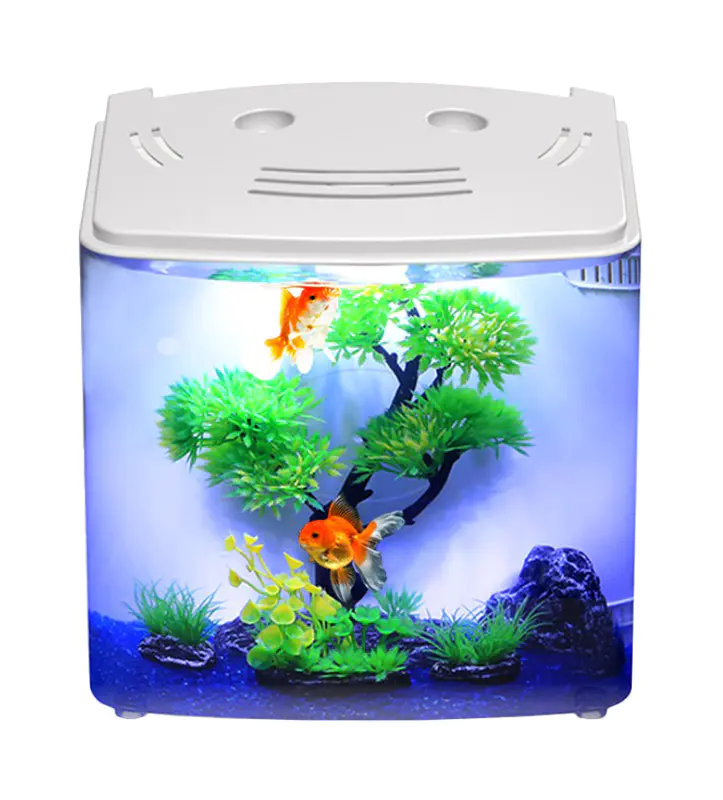
ATS Series Acrylic View Aquarium
Content
The ATS Series Acrylic View Aquarium is built around a compact rectangular format that emphasizes visibility while reducing the footprint required for installation. With a length of 200 millimeters and a width of 140 millimeters, the tank can be positioned on many desks, counters, shelves, side tables, and workstations. Its height of 210 millimeters provides a balanced viewing proportion, allowing users to observe fish and decorations while keeping the total unit relatively compact.
The 5-liter capacity is an important part of the product’s identity. It offers more water volume than many decorative desktop bowls while remaining easier to place and maintain than a medium or large aquarium. This makes the product appropriate for consumers who want a dedicated aquarium but do not want to commit to the furniture, plumbing, lighting, filtration, and maintenance requirements associated with larger systems.
The acrylic viewing construction contributes to the product’s visual appeal and practical usability. Acrylic is commonly selected for compact aquarium applications because it can provide a clear viewing surface while helping manufacturers create lightweight and space-efficient products. The material also supports modern product forms and can be integrated into a clean, contemporary housing design.
The series is presented in two styles and four colors. This variety gives distributors, retailers, and end users more flexibility when selecting an aquarium that matches a room, furniture arrangement, or target customer group. A choice of styles and colors can also improve product merchandising because the aquarium can be positioned as both an aquatic device and a decorative lifestyle product.
The following table summarizes the specifications provided for the ATS Series models.
| Model | Voltage | Dimensions | Water Volume | Water-Power System | Lighting |
|---|---|---|---|---|---|
| ATS-220 | 5V, 1A | 200 × 140 × 210 mm | 5 liters | HJ-111F, 2W | LED, 2W |
| ATS-320 | 5V, 1A | 200 × 140 × 210 mm | 5 liters | HJ-111F, 2W | LED, 2W |
The specifications indicate that both listed models share the same basic technical dimensions and power configuration. Their distinction is primarily associated with styling, color, or product presentation. This allows a supplier to support multiple design preferences without requiring completely different installation requirements or operating procedures.
One of the main advantages of the ATS Series is its combination of a high-brightness LED lamp and a modest 2-watt power rating. Aquarium lighting must provide enough illumination for clear viewing, but excessive energy consumption can make a small aquarium less attractive for daily use. The ATS Series is designed to provide a visible, decorative lighting effect while keeping operating power low.
LED technology is particularly suitable for compact aquariums because it can deliver useful brightness from a small lighting module. Compared with older lighting technologies, LEDs generally require less energy for a similar visual effect and can be integrated into smaller product housings. Their compact size also gives designers more freedom to create a neat aquarium profile without adding a large external light fixture.
Low energy consumption benefits both residential and commercial users. In a home, the aquarium can remain part of the room’s atmosphere without becoming a noticeable source of electricity use. In an office, hotel, restaurant, waiting area, or retail display, multiple small aquariums can be operated with a more manageable combined energy demand. For distributors, the 2-watt lighting specification also provides a clear selling point for customers who are increasingly attentive to energy efficiency.
The LED lamp also helps maintain visual continuity. A well-illuminated tank can make fish colors, gravel, ornaments, and aquatic plants more noticeable, especially in rooms where natural light changes throughout the day. The lighting system therefore contributes not only to visibility but also to the decorative value of the aquarium.
Users should still follow suitable lighting schedules and avoid excessive continuous operation. Lighting needs vary according to the fish, plants, water conditions, and room environment. The product’s low-power design makes responsible daily operation easier, but good aquarium management remains important for maintaining water quality and controlling unwanted algae growth.
The ATS Series uses a 5-volt, 1-amp electrical specification. This low-voltage architecture is one of the product’s most significant design advantages for desktop and household use. A compact aquarium combines water and electrical components, so reducing the operating voltage at the product level is a meaningful safety-oriented design choice.
Low-voltage operation can help reduce the electrical risk associated with everyday use, particularly when the aquarium is installed in a bedroom, study, office, classroom, or other area where users may frequently interact with the unit. The 5-volt specification also makes the product compatible with common low-voltage power arrangements, subject to the requirements of the supplied power equipment and local electrical standards.
Safety is not determined by voltage alone. Correct installation, dry hands during handling, safe cable routing, appropriate power supplies, and regular inspection remain essential. Users should keep connectors and power adapters away from water, avoid operating damaged cables, and follow the manufacturer’s instructions. Nevertheless, a low-voltage product platform provides an additional layer of practical safety compared with many conventional aquarium systems that place higher-voltage equipment directly near the tank.
The low-voltage configuration can also make the aquarium more convenient to distribute internationally. Different markets may have different household electrical standards, so a low-voltage product design can simplify the development of suitable power-adapter packages. Importers and distributors should confirm the correct adapter, certification, plug type, and local compliance requirements before commercial sale.

The acrylic viewing body gives the ATS Series a clean and contemporary appearance. Its transparent construction supports an unobstructed view of the aquatic environment, allowing the aquarium to function as a decorative focal point even when placed in a small area. The visual effect is especially useful for users who want to combine a fish display with modern interior design.
Acrylic is also valuable when a product must balance visibility and portability. A compact aquarium should not be unnecessarily difficult to move during cleaning, redecorating, or relocation. A lightweight acrylic structure can make handling more practical, although users should always carry the aquarium according to its actual filled weight and avoid moving it when filled unless the product instructions specifically allow it.
The acrylic format supports a broad range of decorative concepts. Users can add suitable gravel, aquatic ornaments, artificial plants, or carefully selected live plants to create different visual themes. Because the tank is relatively small, the design can be adapted to minimalist, natural, colorful, or professional environments without requiring a large installation area.
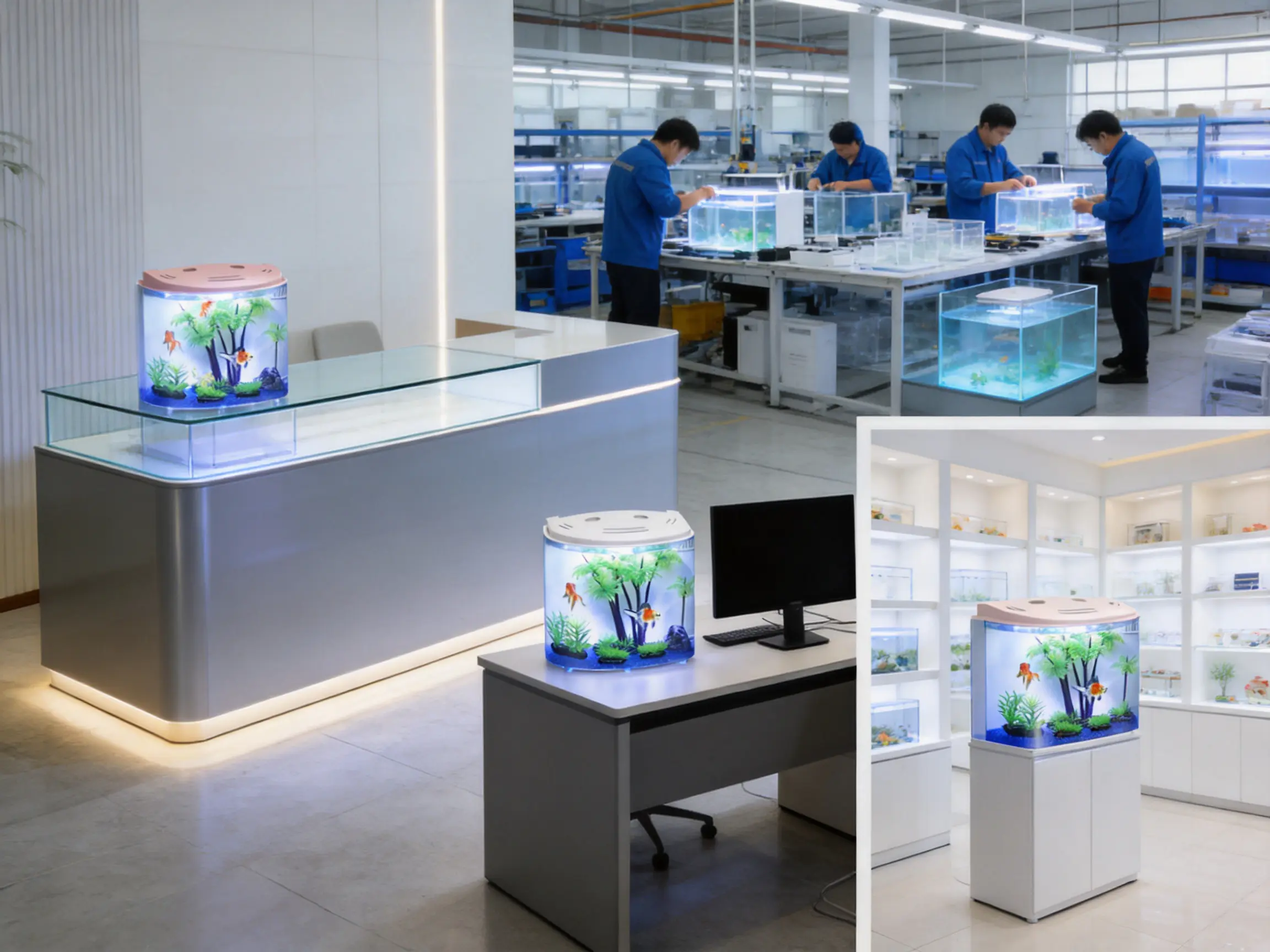
In commercial environments, the compact transparent body can be used as a point-of-sale display or an atmosphere-enhancing feature. A small aquarium at a reception desk, pet shop counter, restaurant entrance, or office lobby can create visual interest without occupying the floor space required by a large aquarium. This makes the ATS Series relevant not only to individual consumers but also to hospitality, retail, and workplace applications.
When compared with open bowls or improvised containers, a purpose-designed acrylic aquarium offers a more coordinated appearance. The integrated lighting and water-power components are developed as part of the overall product concept, helping the tank look more finished and organized. This can be especially valuable for first-time aquarium owners who may not want to assemble several unrelated components.
The ATS Series includes an HJ-111F water-power system rated at 2 watts. Water movement is important in a small aquarium because circulation helps distribute temperature, oxygen, and dissolved substances throughout the water. A dedicated water-power component can also make the aquarium more functional than a static decorative container.
Water circulation should be gentle enough for the scale of the tank and the needs of the livestock inside it. Small fish and delicate aquatic plants may be stressed by excessive turbulence, while insufficient movement can create stagnant areas. The ATS Series is designed around a compact 2-watt water-power system, offering a proportionate solution for its 5-liter capacity.
The presence of an integrated water-power component also simplifies the purchasing process. Instead of asking a new aquarium owner to identify a pump separately, the product presents the tank and its basic circulation system as a coordinated package. This reduces compatibility concerns and helps retailers explain the product more clearly.
Users should remember that water circulation is not a substitute for responsible aquarium care. Depending on stocking levels and the intended setup, additional filtration media, water conditioning, partial water changes, and biological cycling may be required. The small size of the aquarium does not eliminate the need for proper fishkeeping practices. In fact, smaller water volumes can respond more quickly to changes in temperature, feeding, and water chemistry.
Regular inspection of the water-power system is recommended. Users should check that the intake and outlet are not blocked by debris, plants, gravel, or algae. Any cleaning should be carried out with the equipment disconnected from power, and only appropriate cleaning methods should be used to protect the pump and acrylic surfaces.
Many new aquarium owners prefer a product that is easy to understand and does not require a complicated installation. The ATS Series meets this expectation through a straightforward specification: a 5-liter tank, a low-voltage electrical system, an integrated LED lamp, and a compact water-power component.
The product’s small footprint makes it easier for beginners to find a suitable location. A new owner does not need to redesign an entire room or purchase a special aquarium cabinet. A stable, level surface with access to an appropriate power source may be sufficient, provided that the surface can safely support the filled aquarium and that the installation follows all instructions.
The integrated lighting system also reduces the number of separate decisions required during setup. Beginners do not need to compare multiple lamp types, mounting brackets, or external lighting fixtures before using the aquarium. The product arrives as a more unified display solution, allowing the user to focus on water preparation, decoration, fish selection, and routine care.
The 5-liter capacity can be useful for learning basic aquarium routines such as feeding control, water observation, cleaning, and equipment inspection. However, beginners should choose livestock carefully. Not every fish species is suitable for a 5-liter aquarium. Stocking decisions should be based on the adult size, activity level, social behavior, oxygen requirements, and welfare needs of the selected species.
For this reason, the aquarium may be particularly suitable for carefully selected small ornamental fish, aquatic plants, or decorative aquatic arrangements. Responsible advice from aquarium professionals should be obtained before introducing livestock.
The ATS Series offers several commercial advantages for aquarium retailers and distributors. Its compact dimensions reduce storage requirements, while its two model options and multiple style or color choices can support a broader product display. Retailers can present the series as an accessible introduction to aquarium ownership or as a decorative gift item.
The product has a clear group of selling points that can be communicated quickly: acrylic viewing construction, high-brightness LED lighting, low energy consumption, 5-volt operation, integrated water power, 5-liter capacity, and compact dimensions. These features are easier to explain than a highly complex aquarium system with numerous optional components.
Its small size can also reduce shipping and handling challenges compared with larger aquariums. Distributors should still use suitable protective packaging because acrylic surfaces may be scratched or damaged by impact, abrasion, or incorrect stacking. Proper packaging design, corner protection, internal stabilization, and clear handling instructions are important parts of delivering the product in good condition.
The series may be marketed through pet shops, home-goods retailers, online stores, office-supply channels, interior decoration outlets, and gift-product distributors. Its combination of aquatic function and decorative design allows it to reach customers who may not initially identify themselves as experienced aquarium enthusiasts.
For online retail, product listings should include accurate dimensions, water volume, voltage, power requirements, model information, care instructions, and an explanation of what is included in the package. Clear photographs and installation guidance can reduce customer uncertainty and improve post-purchase satisfaction.
The ATS Series can be evaluated against several common alternatives, including open bowls, basic unlit tanks, and larger modular aquariums. Each alternative may be appropriate for a particular user, but the ATS Series combines several functions in a compact format.
Compared with an open bowl, the ATS Series offers a more structured viewing environment and an integrated lighting concept. Open bowls may be inexpensive and visually simple, but they often provide limited space for equipment and can offer less control over the presentation of the aquatic display. The ATS Series is designed as a complete small aquarium product rather than a container that requires extensive improvisation.
Compared with a basic unlit tank, the ATS Series provides built-in LED illumination. This improves viewing in darker rooms and makes the aquarium more visually attractive during evening use. It also removes the need to purchase a separate lamp immediately after buying the tank.
Compared with a larger modular aquarium, the ATS Series requires less space, less equipment planning, and less initial infrastructure. A larger aquarium may be preferable for certain fish species or more ambitious aquascaping projects, but it also demands greater attention to support furniture, water volume, filtration, lighting, and maintenance. The ATS Series is intended for a different use case: compact, accessible, and decorative aquatic display.
The most important competitive advantage is therefore not that the ATS Series replaces every other aquarium category. Instead, its strength is the balance it provides between appearance, convenience, energy efficiency, low-voltage operation, and compact size.
The product is associated with Sensen Group Co., Ltd., a company that has operated in related industries since its establishment in November 1985. According to the supplied company information, the group has developed activities across aquarium pets, aquaculture machinery, and industrial equipment. This broad industrial background is relevant because aquarium products require knowledge of water movement, electrical components, plastics, product assembly, quality control, and consumer safety.
A company with experience across aquarium and equipment categories can approach product development from several technical perspectives. It can consider not only how a tank looks but also how water-power components function, how lighting is integrated, how products are assembled, and how finished goods are prepared for domestic and international markets.
The supplied information identifies several functional departments within the headquarters, including a research institute, business school, quality control department, personnel and administrative information department, and financial department. The presence of dedicated research and quality functions suggests an organizational structure capable of supporting product development, process management, testing, and continuous improvement.
Manufacturing quality begins with material selection and continues through design verification, component inspection, assembly, electrical checking, appearance inspection, packaging, and shipment control. For an acrylic aquarium, quality management should pay particular attention to transparency, surface condition, dimensional accuracy, sealing, structural stability, and resistance to damage during handling.
For the LED lighting system, manufacturing controls may include component consistency, electrical connection inspection, illumination performance, heat management, and operational testing. For the water-power system, inspection may involve pump operation, water movement, noise evaluation, cable condition, and compatibility with the compact tank design. For the low-voltage power system, connector reliability and insulation condition are essential considerations.
The company’s reported group structure includes wholly owned subsidiaries and related trading companies. Such an organizational network can support specialized production, regional operations, supply coordination, export activity, and market distribution. A broad structure may also help a manufacturer manage larger order volumes and respond to different customer requirements.
Aquarium products are influenced by changing consumer expectations. Customers increasingly look for energy-efficient lighting, attractive appearance, simple installation, safer operation, compact dimensions, and products that fit modern living spaces. Continuous innovation is therefore important even for a small aquarium.
The ATS Series reflects this direction by combining several features that address contemporary use: acrylic visibility, integrated LED illumination, low-voltage operation, low energy consumption, and compact water circulation. The product does not depend on a single feature. Instead, its value comes from the coordination of multiple functions within one small platform.
Continuous improvement can involve many areas. A manufacturer may refine the acrylic structure for improved clarity and appearance, improve the placement of lighting for more even illumination, adjust water movement for better circulation, reduce operating noise, simplify cleaning, improve packaging, or expand the range of available colors and styles.
Manufacturing data and customer feedback can be used to identify recurring issues and guide future revisions. For example, feedback about installation difficulty may encourage clearer instructions. Reports about scratches during transportation may lead to improved protective films or packaging inserts. Retailer feedback about shelf presentation may influence color selection and product labeling.
The company’s emphasis on innovation and international marketing also supports the development of products suitable for different markets. Export-oriented manufacturing requires attention to documentation, packaging, electrical compatibility, language requirements, quality expectations, and local regulations. These factors are important when a compact aquarium is sold across multiple regions.
Quality control for the ATS Series should cover the complete product rather than only the acrylic tank. The aquarium is a system made up of a transparent body, a lighting unit, a water-power component, cables, connectors, and packaging materials. Reliable performance depends on how these elements function together.
Visual inspection is an important first step. The acrylic body should be checked for visible scratches, cracks, cloudiness, deformation, sharp edges, and other surface defects. Product dimensions should be verified against design requirements. The body should also be inspected for stable positioning and suitable integration with the associated components.
Electrical inspection should verify that the product operates according to the 5-volt, 1-amp specification and that the LED lamp performs consistently. Cables and connectors should be examined for secure attachment and appropriate insulation. Water and electrical pathways should be arranged to reduce the possibility of accidental contact or water migration.
Water-power inspection should confirm that the HJ-111F system starts correctly, provides suitable movement, and operates without abnormal vibration or noise. If the pump includes an intake area, that area should be checked for unobstructed operation. Testing should be completed under controlled conditions before the product is packed.
Packaging inspection is also essential. Acrylic products can be vulnerable to impact and surface abrasion, so packaging should stabilize the aquarium and protect visible surfaces. The packaging should identify the product model, handling requirements, power information, and basic installation guidance where appropriate.
A disciplined quality-control process benefits consumers, distributors, and the manufacturer. It reduces product returns, protects brand reputation, and helps maintain consistent performance across production batches.
The ATS Series should be installed on a stable, level, and adequately supported surface. Although the empty aquarium is compact, water has significant weight, and the filled unit also includes decorations and equipment. The selected surface should be able to support the total load without bending, shaking, or becoming unstable.
Before adding water, users should inspect the aquarium for visible damage and confirm that the included components are present. The tank should be placed away from direct sources of excessive heat, strong vibration, and locations where it could be easily knocked over. It should also be positioned close enough to a suitable power source while allowing cables to be routed safely.
The aquarium should be rinsed according to the product instructions before use. Household detergents, solvents, abrasive cleaners, and unapproved chemicals should not be used because residues may harm fish, plants, acrylic surfaces, or equipment. Clean, appropriate water should be prepared before livestock is introduced.
Users should install the water-power component and lighting system as instructed. The electrical connection should remain dry, and the power adapter should be located in a safe position away from splashes. A drip loop in the cable can help prevent water from traveling along the cable toward an electrical connection, although users must follow the specific safety guidance supplied with the product.
The aquarium should be allowed to operate and stabilize before fish are added. Water conditioning and biological cycling are important parts of responsible aquarium setup. The correct process depends on the intended livestock and the advice of an aquarium professional.
Routine maintenance helps preserve the appearance and performance of the ATS Series. Users should monitor water clarity, temperature, fish behavior, plant condition, and equipment operation. Small tanks can experience changes in water quality more quickly than larger aquariums, so regular observation is especially important.
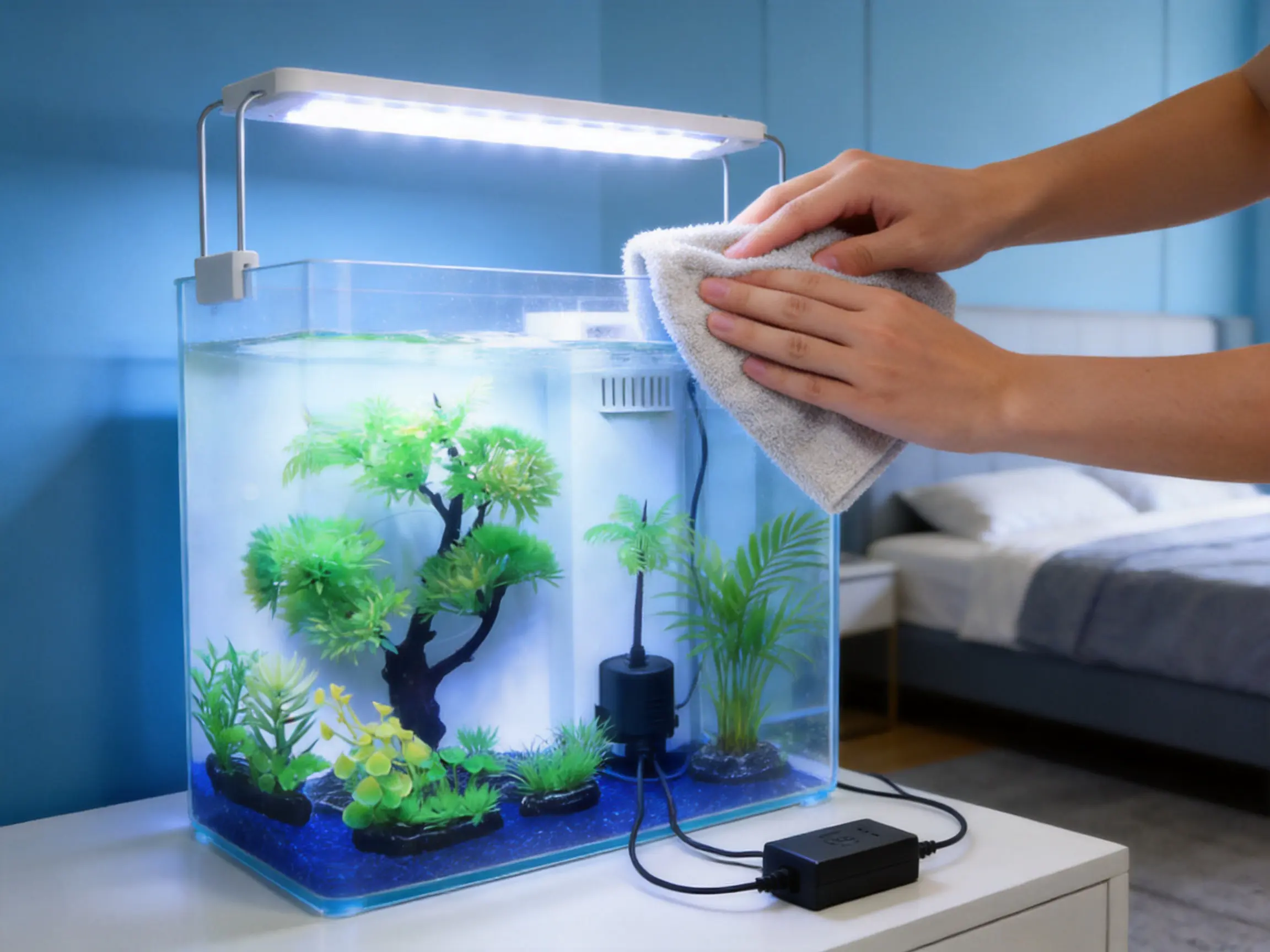
The acrylic viewing surface should be cleaned with materials suitable for acrylic. Abrasive pads, rough cloths, sharp tools, and household glass-cleaning products may damage or cloud the surface. A soft, clean material and an appropriate aquarium-safe cleaning method should be used.
Partial water changes should be carried out according to stocking levels and water-quality conditions. Water should be prepared properly, and sudden changes in temperature or chemistry should be avoided. Uneaten food and waste should be removed promptly because excess organic matter can affect water quality in a small volume.
The LED lamp should be kept free of excessive moisture and residue. The water-power system should be inspected periodically for debris, algae, or reduced flow. Before servicing any electrical or water-power component, the system should be disconnected from the power supply.
Good maintenance does more than preserve appearance. It supports the welfare of fish and plants, helps equipment operate efficiently, and extends the practical service life of the aquarium system.
In residential settings, the ATS Series can be used in living rooms, bedrooms, home offices, study areas, kitchens, and entryways where space is limited. Its compact size allows users to add an aquatic feature without dedicating a large section of the room to aquarium equipment.
In offices, a small aquarium may improve the visual atmosphere of reception desks, meeting rooms, employee lounges, or private workspaces. The low-energy LED lamp and compact design make it easier to integrate into a professional environment without requiring extensive electrical or furniture modifications.
Restaurants, cafés, hotels, salons, and retail shops can use the aquarium as a decorative feature. Multiple units can be arranged as coordinated displays, particularly when different colors or styles are available. The aquarium can contribute to a calm and attractive customer environment while occupying minimal counter space.
In classrooms or educational settings, a small aquarium may support basic discussions about aquatic life, habitats, observation, responsibility, and water management. Any educational use should be supervised, and the welfare needs of the fish must remain the primary consideration.
Pet shops can display the ATS Series as an entry-level aquarium package. Demonstration units can show the LED effect, water movement, and acrylic viewing quality. Retail staff should also explain appropriate stocking, cycling, feeding, and maintenance practices so that customers understand that a compact aquarium still requires responsible care.
The 2-watt LED lamp and compact water-power system help limit operating energy compared with larger aquarium installations. Lower energy demand can be beneficial for users who want an aquatic display with a modest daily operating cost. It may also support retailers and businesses that plan to operate several units simultaneously.
Energy efficiency should be considered alongside product durability. A product that performs reliably over an extended period can reduce the frequency of replacement and the material use associated with discarded equipment. Proper maintenance, careful handling, and appropriate operating schedules can contribute to longer service life.
Packaging design is another area where manufacturers can pursue improvement. Protective packaging is necessary for acrylic products, but it should be designed to balance damage prevention with responsible material use. Efficient packaging dimensions can also improve shipping utilization and reduce unnecessary transport volume.
Users can support efficient operation by following recommended lighting schedules, keeping the pump clean, preventing unnecessary blockage, and turning equipment off only when doing so is safe and appropriate for the aquarium’s livestock. Any operating decision should prioritize animal welfare and equipment instructions.
The ATS Series stands out because it combines the most important requirements of a modern small aquarium in one compact format. It offers a clear acrylic viewing structure, built-in LED illumination, low energy consumption, 5-volt operation, an integrated 2-watt water-power system, and a 5-liter capacity.
Many small aquarium products focus primarily on appearance, while others emphasize equipment without giving enough attention to interior design. The ATS Series attempts to bridge these two expectations. Its transparent body and choice of styles and colors support decorative use, while its lighting and water-power components provide practical aquarium functions.
The product is also positioned between a simple ornamental container and a full-size aquarium system. It offers more structure and functionality than an unpowered bowl but does not demand the space and infrastructure of a large tank. This balanced position can appeal to beginners, gift buyers, office users, retailers, and experienced aquarists seeking a compact display.
Its low-voltage design is another differentiating factor. A 5-volt operating system is suitable for a safety-conscious product concept, especially when combined with responsible installation and careful handling. The design does not remove the need for electrical safety practices, but it supports a more approachable user experience.
The listed water capacity is 5 liters for both the ATS-220 and ATS-320 models.
The listed dimensions are 200 millimeters in length, 140 millimeters in width, and 210 millimeters in height.
The product specification lists an operating voltage of 5 volts and a current rating of 1 ampere. Users should use the appropriate power equipment supplied or recommended for the product.
Yes. The specifications identify an integrated LED lamp rated at 2 watts. The product description highlights high brightness and low energy consumption.
Yes. The listed water-power component is the HJ-111F system with a rated power of 2 watts.
The supplied specifications show the same dimensions, capacity, voltage, water-power rating, and lamp rating for both models. The series is described as having two styles and four colors, so the primary distinction may relate to styling, color, or product presentation.
Its compact size, integrated lighting, low-voltage design, and coordinated water-power system make it approachable for beginners. However, new aquarium owners must still learn about water conditioning, biological cycling, stocking limits, feeding, cleaning, and species welfare.
Not all fish are suitable for a 5-liter aquarium. Stocking should be based on the adult size and welfare requirements of the selected species. Users should consult an aquarium professional before adding fish and should consider aquatic plants or other appropriate arrangements where fishkeeping space is limited.
Yes, the LED lighting and water movement can support a decorative aquatic plant arrangement. Plant selection should account for the available space, lighting conditions, water quality, and maintenance requirements.
Acrylic can be cleaned effectively when suitable soft materials and aquarium-safe methods are used. Abrasive tools, rough pads, solvents, and unapproved household cleaners should be avoided because they may scratch or damage the viewing surface.
It can be installed in suitable homes, offices, classrooms, retail spaces, restaurants, hotels, reception areas, and other locations with a stable, level surface and safe access to the required power source.
No. Low-voltage operation is a safety-oriented feature, but users must still keep connectors and power adapters dry, inspect cables, avoid handling electrical equipment with wet hands, and follow all installation instructions.
Maintenance frequency depends on stocking, feeding, plant growth, water conditions, and equipment performance. Users should observe the aquarium regularly, remove waste, inspect the water-power system, and perform appropriate partial water changes.
A filled aquarium should generally not be moved unless the product instructions specifically permit it and the water, decorations, and livestock have been handled safely. The filled weight may be considerably greater than the empty product weight and could create a risk of damage or injury.
The ATS Series Acrylic View Aquarium provides a practical and attractive solution for compact aquatic display. Its 5-liter capacity, 200 × 140 × 210-millimeter dimensions, integrated 2-watt LED lamp, 2-watt HJ-111F water-power system, and 5-volt electrical design create a balanced product for homes, offices, retail spaces, hospitality environments, and beginner aquarium users.
Its strongest advantages are the combination of compactness, visual clarity, low energy consumption, low-voltage operation, integrated functions, and style variety. Rather than requiring users to assemble a tank, lamp, and circulation component separately, the product brings these functions together in a coordinated format.
The manufacturing background of Sensen Group Co., Ltd., including its long history, research resources, quality-control organization, subsidiary structure, and experience in aquarium and industrial equipment, supports the product’s positioning as part of a broader technical manufacturing system. Advanced manufacturing is reflected not only in the final appearance but also in component coordination, electrical control, acrylic processing, water-power integration, inspection, packaging, and international supply capability.
For consumers, the ATS Series offers an accessible way to introduce aquatic life into a limited space. For retailers and distributors, it offers a clear set of features that can be communicated across multiple sales channels. For commercial users, it provides a decorative display with modest space and energy requirements. When installed correctly and maintained responsibly, it can deliver an appealing aquatic experience in a compact and efficient form.
1. Product specification sheet for the ATS Series Acrylic View Aquarium, including model, voltage, dimensions, water volume, water-power rating, and LED lamp rating.
2. Product information supplied for the ATS-220 and ATS-320 aquarium models.
3. Company profile information for Sensen Group Co., Ltd., including company history, organizational structure, research functions, quality-control resources, subsidiaries, and industry activities.
4. General principles of aquarium installation, water circulation, low-voltage equipment handling, acrylic surface care, and responsible aquatic livestock management.
5. General LED lighting and energy-efficiency principles applied to compact aquarium display products.
6. General manufacturing quality-control principles for acrylic products, small water pumps, integrated lighting systems, electrical components, and protective packaging.


 No. 61-79, Baima Street, Maao Town, Dinghai District, Zhoushan City, Zhejiang Province, China.
 0086 580 8082088 / 8081168
 0086 580 8080978
 songhua@sunsun-china.com