

 English
 русский
 España
 Portugal
 عربي
Chen Xiao | Customer Service & After-Sales Coordinator
Home / Author / Chen Xiao | Customer Service & After-Sales Coordinator / Eco-Friendly Turtle Tanks for Compact Aquatic Habitats
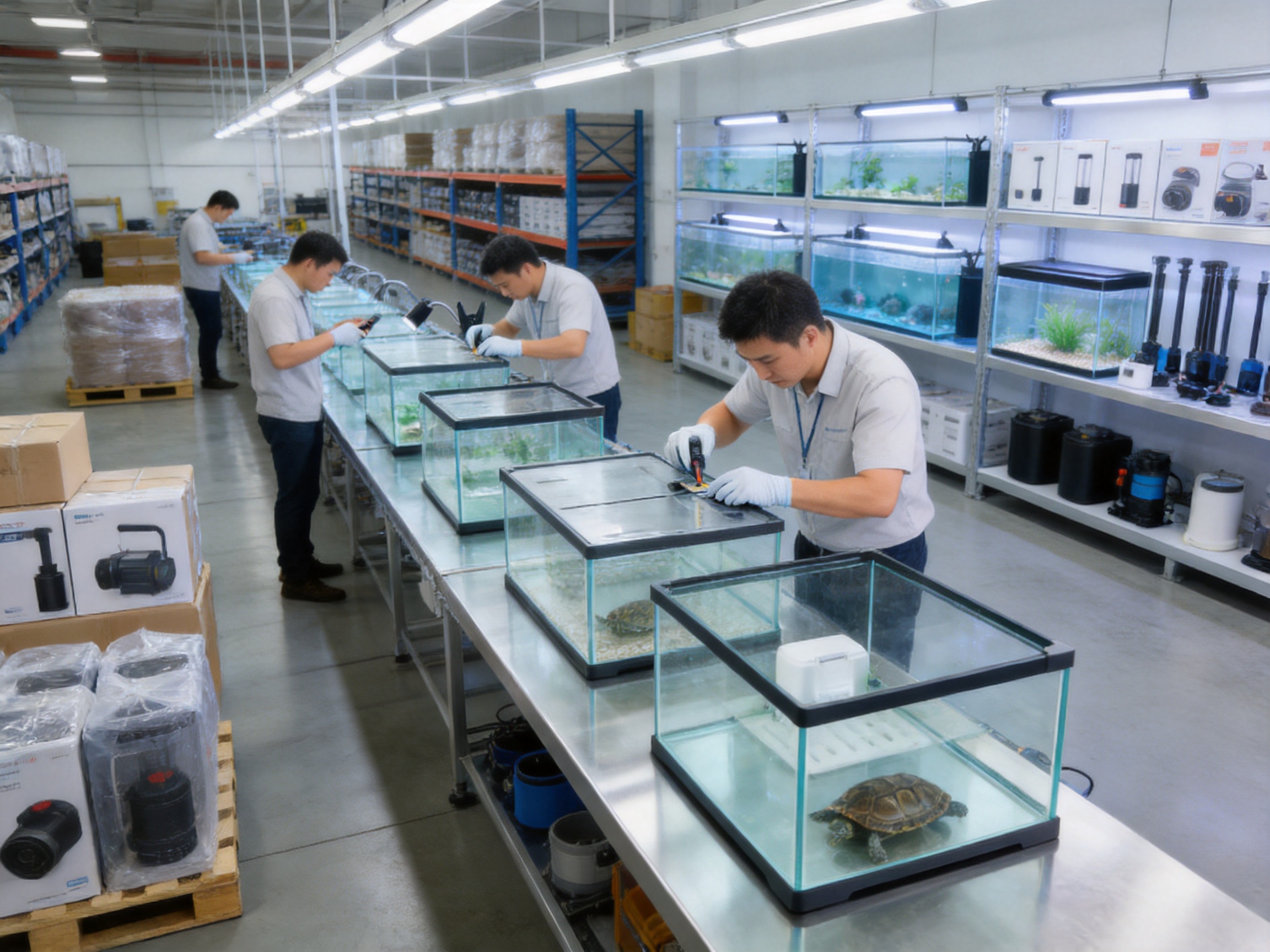
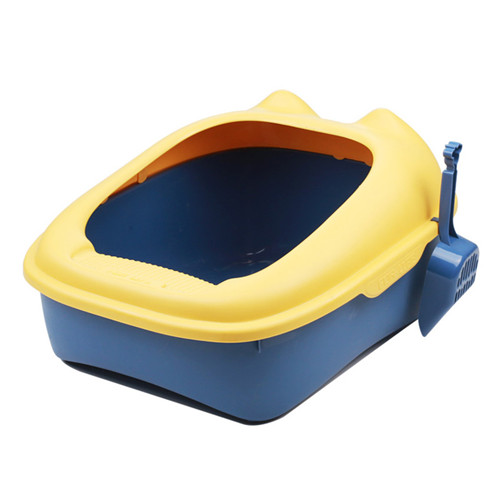
Keeping aquatic turtles in a healthy, attractive, and manageable environment requires more than simply placing a turtle in a container of water. A suitable habitat must provide enough swimming space, a secure resting area, stable water conditions, convenient access for maintenance, and a design that fits naturally into the home or workplace. The HKJ Series Eco-turtle Tank has been developed for people who want a compact aquatic habitat that balances practical care, efficient use of space, and an appealing presentation.
Available in several sizes, the series is designed for different stages of turtle keeping and for a variety of indoor settings. Its compact format makes it appropriate for desks, shelves, counters, bedrooms, living rooms, offices, classrooms, and specialty pet retail displays. At the same time, its structured design gives owners a more organized alternative to improvised containers that may be difficult to clean, unsafe for pets, or unattractive in a modern interior.
The product is part of a broader aquarium and aquatic-equipment portfolio manufactured by Sensen Group Co., Ltd. The company has developed extensive experience in aquarium pets, aquaculture machinery, industrial equipment, pumps, aquarium accessories, and related products. This wider manufacturing background supports the development of practical aquatic habitats that are not only visually appealing but also designed with production consistency, product usability, and long-term market requirements in mind.
Content
A turtle tank must support several daily needs at once. Turtles require water for swimming, a dry or elevated area for rest, sufficient ventilation, reliable access for feeding, and regular cleaning. A general storage box may hold water, but it is rarely designed around these combined requirements. It may have unsuitable proportions, sharp or unstable edges, poor visibility, or insufficient space for separating water and resting areas.
The HKJ Series Eco-turtle Tank addresses this challenge through a purpose-oriented format. Rather than treating the tank as a simple vessel, the series is intended as a complete compact habitat platform. Its dimensions provide a defined footprint, while its product format allows the user to organize the environment more effectively than with an ordinary household container.
A specialized turtle tank also encourages more consistent care. When a habitat is easy to observe and maintain, owners are more likely to inspect water quality, remove waste, monitor feeding, and notice changes in the turtle’s activity. This can contribute to better husbandry habits and a more comfortable daily routine for both the pet and its owner.
For retailers, the product is also easy to position within a small-animal or aquarium section. Its compact dimensions make it suitable for display in stores where floor space is limited. A range of models allows retailers to offer customers a clear choice according to available space, pet size, and intended use.
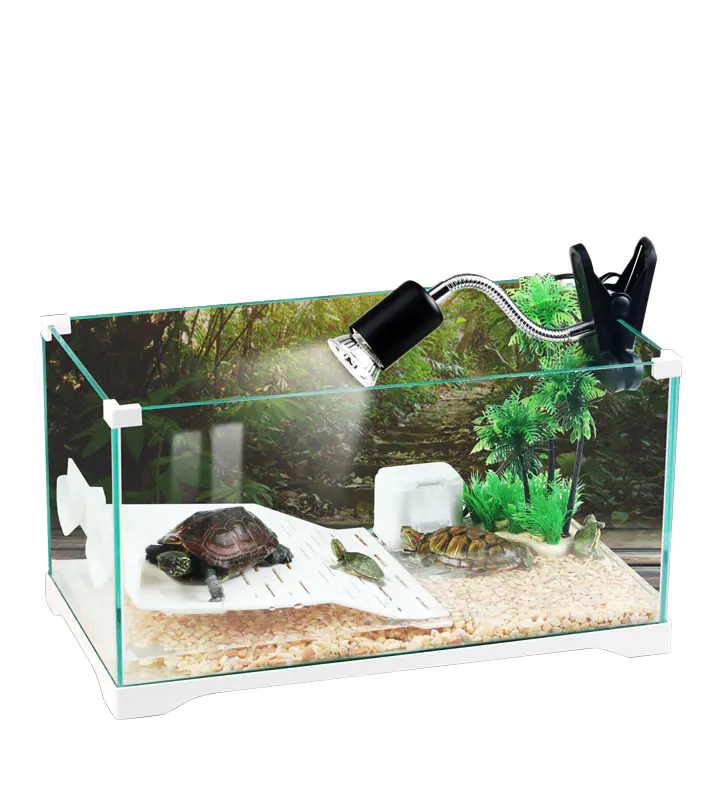
HKJ Series Eco-turtle Tank
The HKJ Series includes multiple sizes intended to serve different compact-habitat requirements. The available specifications are listed below.
| Model | Length | Width | Height |
| HKJ-230 | 236 mm | 168 mm | 155 mm |
| HKJ-280 | 286 mm | 188 mm | 165 mm |
| HKJ-420 | 426 mm | 236 mm | 222 mm |
| HKJ-600 | 606 mm | 326 mm | 272 mm |
The smallest model, the HKJ-230, is suited to users who need a highly compact habitat for a small turtle or a limited-space installation. Its short length and narrow footprint allow it to fit comfortably on many desks, counters, and shelves, provided the supporting surface is stable and strong enough for the filled tank.
The HKJ-280 provides a modest increase in length and width while retaining a compact overall profile. This additional space may be useful for owners who want more room for water movement, a resting platform, or simple habitat decoration without moving to a substantially larger installation.
The HKJ-420 offers a more generous interior footprint. It is suitable for users who require additional swimming room or who want to create a more clearly separated aquatic and resting environment. This size may also be attractive to specialty retailers and educational settings where the animal needs to remain visible to observers.
The HKJ-600 is the largest model in the listed range. With a length of 606 millimeters, it offers the greatest opportunity for arranging water space, a basking area, and carefully selected accessories. Its larger footprint requires more installation space and a suitable support surface, but it also provides greater flexibility for habitat planning.
Some product materials may refer to the third size as HKJ-400 in visual or promotional labeling, while the dimensional table identifies the model as HKJ-420. Buyers and distributors should confirm the exact model code with the seller before placing an order. This simple verification helps avoid confusion during purchasing, replacement, inventory management, or product communication.
One of the key advantages of the series is its compact orientation. Many urban homes and offices do not have room for a large aquarium or a complex reptile enclosure. A compact turtle tank can be placed in a carefully selected location where the animal remains visible without dominating the room.
The four size options allow the tank to be selected according to the available surface area. Instead of forcing every customer to purchase one standard size, the series supports a more flexible approach. A small model may suit a young turtle or a limited apartment, while a larger model can serve a growing animal or a user who wants more elaborate internal organization.
Compact does not mean that placement can be casual. A filled tank can become considerably heavier than its empty form because of water, substrate, decorative materials, and equipment. The tank should be positioned on a level, stable, water-resistant surface that can support the total load. It should also be placed away from unstable edges, direct heat sources, and areas where children or other pets could knock it over.
The relatively low profile of the series can make daily observation easier. Owners can check the turtle’s movement, feeding behavior, water condition, and general activity without needing to look into a very deep enclosure. This visibility is valuable for beginners because it helps them develop a better understanding of the animal’s normal routine.
For commercial users, compact dimensions can improve display efficiency. Several units may be presented in a retail environment without requiring a large amount of floor space. When arranged with suitable lighting and clean signage, the product can be shown as a practical lifestyle item rather than only as a basic pet container.
The product concept is based on organizing the turtle’s environment in a clear and manageable way. A well-planned habitat normally includes water, an area where the turtle can leave the water, and enough open space for movement. The tank’s shape and size options give the owner a defined framework for arranging these elements.
In a makeshift container, the turtle may have difficulty reaching a resting area, or the resting area may occupy too much of the available water volume. A purpose-designed turtle tank encourages the user to think about proportion. The internal layout can be adapted with suitable habitat accessories, provided that they are secure, non-toxic, smooth, and appropriate for the turtle’s size.
Organization also affects cleaning. Waste and uneaten food are easier to identify when the interior is not overcrowded. A tank with excessive ornaments, loose gravel, or unsuitable objects can create hidden areas where debris accumulates. The HKJ Series should therefore be used with a simple, carefully planned arrangement that preserves access to the water and allows regular maintenance.
Owners should avoid filling the tank with accessories simply to make it look decorative. The turtle’s safety and movement should remain the priority. Any platform, ramp, plant, stone, or ornament should be stable and should not create a risk of trapping, climbing out, or injury. A clean and open layout often provides a better habitat than a heavily decorated enclosure.
Daily care becomes easier when the habitat is visible and accessible. Owners can inspect the turtle before feeding, observe how it moves through the water, and confirm that the resting area remains usable. Early changes in appetite, activity, or swimming behavior can then be noticed more quickly.
Feeding should be carried out in a way that minimizes leftover food. Excess food can quickly affect water quality, particularly in a small tank. The compact format of the HKJ Series makes it practical to monitor feeding closely, but it also means that waste should not be ignored. Removing uneaten food and solid waste on a regular schedule is essential.
Water changes should be performed according to the turtle’s size, feeding habits, filtration arrangements, and water volume. A small habitat can experience changes in water quality more rapidly than a large, mature aquarium system. Users should establish a routine that includes partial water changes, cleaning of appropriate surfaces, and inspection of any pump or filter used with the tank.
Water temperature, lighting, and basking requirements depend on the turtle species and its stage of life. The tank itself is a habitat foundation, not a substitute for species-specific care. Before installation, owners should identify the turtle’s needs and select suitable heating, ultraviolet lighting, filtration, and basking equipment where necessary.
The product is especially useful for people who want a clear starting point for responsible turtle keeping. By providing a defined tank format, it reduces the uncertainty associated with selecting a random container. However, good results still depend on correct setup, suitable equipment, regular maintenance, and appropriate animal care.

Improvised containers are often selected because they are inexpensive or readily available. However, they may lack the design features needed for a safe and attractive turtle habitat. Their walls may be too low, their shapes may waste space, and their materials may not be ideal for long-term contact with water. They may also be difficult to position or clean.
The HKJ Series offers a more deliberate alternative. The models are produced specifically for aquatic pet applications, so their dimensions are presented as part of a structured product range rather than as an accidental household size. This gives customers clearer purchasing information and makes it easier for retailers to recommend a model according to the available space.
Another advantage is visual consistency. A dedicated tank can look more orderly in a home or commercial display. Its compact proportions can complement modern furniture and interior arrangements better than a storage box or large plastic tub. For customers who care about the appearance of their living environment, this is an important practical benefit.
The series also supports product continuity. If a customer later needs a larger model, the multiple-size range provides a natural upgrade path within the same product family. Retailers can maintain a coherent selection rather than offering unrelated containers from different sources.
Compared with oversized enclosures, compact models may also reduce initial space demands, water usage, and the quantity of accessories required. This does not mean that smaller is always better. The tank must still be appropriate for the turtle and its expected growth. The benefit lies in selecting a size that is proportionate to the animal and the location, rather than buying an unnecessarily large installation for a limited requirement.
A conventional aquarium is usually designed primarily for fish, with emphasis on transparent viewing, water depth, and aquatic circulation. A turtle habitat has different priorities. Turtles may require a dry area, an accessible ramp, a stronger arrangement of accessories, and a layout that supports both aquatic and terrestrial behavior.
The HKJ Series is positioned specifically as an eco-turtle tank. This product direction helps customers distinguish it from a basic fish aquarium. Instead of adapting a fish tank through trial and error, users can begin with a format intended for turtle keeping and then add suitable equipment according to the species.
Its size range is another point of differentiation. Generic aquarium products often come in standard volumes intended for fish communities. The HKJ models are expressed through practical length, width, and height dimensions that can help users evaluate whether the tank will fit a particular location. Retailers can also explain the differences in physical footprint more easily.
A turtle tank should not be judged only by water capacity. The available floor area, access to a resting location, ease of cleaning, and safety of the enclosure are equally important. The HKJ Series gives these considerations a more central role than many general-purpose aquatic containers.
Nevertheless, users should understand the product’s limitations. A compact turtle tank is not automatically suitable for every turtle species or adult animal. As the turtle grows, its habitat requirements may increase. Responsible owners should review the enclosure size regularly and upgrade when the animal’s welfare requires more room.
The HKJ Series is manufactured within the broader production and research background of Sensen Group Co., Ltd. The company was established in 1985 and has accumulated more than three decades of experience in aquarium pets, aquaculture machinery, industrial equipment, and related product categories.
This range of experience is valuable because aquatic pet products depend on more than external appearance. They must be developed with attention to materials, dimensional consistency, water contact, assembly, packaging, logistics, user handling, and long-term market requirements. A company that works across aquarium and machinery categories can draw on a wider base of engineering and production knowledge when developing new products.
The company has established functional departments including a research institute, business school, quality control department, personnel and administrative information department, and financial department. A structure that includes dedicated research and quality functions can support a more systematic approach to product development than a purely trading-oriented operation.
Quality control is particularly important for tanks and aquatic accessories. Customers expect dimensions to be consistent, surfaces to be properly finished, components to remain stable during use, and packaging to protect the product during transportation. Quality procedures can help reduce variation between production batches and provide a stronger foundation for distributor confidence.
The company also operates multiple wholly owned subsidiaries and maintains an import and export business. This broader organization supports production coordination, supply-chain management, domestic distribution, and international market service. For buyers, the practical benefit is a supplier with greater organizational capacity than a small, single-product workshop.
Manufacturing strength should not be understood only as factory size. It also includes the ability to maintain product specifications, coordinate raw materials, manage quality checks, respond to market feedback, and support different sales channels. These capabilities are important when supplying a product family in multiple models.
Aquarium and turtle habitats are used in environments where small defects can become inconvenient or costly. A dimensional error may affect the way the tank fits on a shelf. A poorly protected surface may reduce customer satisfaction. Weak packaging may lead to damage during shipping. For these reasons, consistent quality control is an important part of responsible manufacturing.
The company’s stated structure includes a research institute and a quality control department. These functions can contribute to product improvement by evaluating customer feedback, reviewing production results, checking materials, and refining manufacturing standards. Continuous improvement is especially relevant in compact pet products because users often provide detailed feedback about cleaning, placement, appearance, packaging, and accessory compatibility.
Product development can also benefit from the company’s experience in pumps, aquarium equipment, and related aquatic technologies. Although the HKJ tank is a habitat product rather than a pump itself, its intended use may involve filtration, water circulation, lighting, or other equipment. Experience in adjacent categories helps a manufacturer understand how products function as part of a larger aquatic system.
For distributors, this broader knowledge can make product selection and support more efficient. Retail staff can position the tank alongside appropriate accessories, maintenance tools, and aquatic equipment. Customers can then receive a more complete solution rather than purchasing a tank without understanding the rest of the habitat requirements.
Manufacturing quality also supports international trade. Products supplied to overseas markets must withstand longer logistics routes, varied storage conditions, and different retail environments. Consistent inspection and suitable packaging are therefore essential to maintaining product performance from the factory to the final customer.
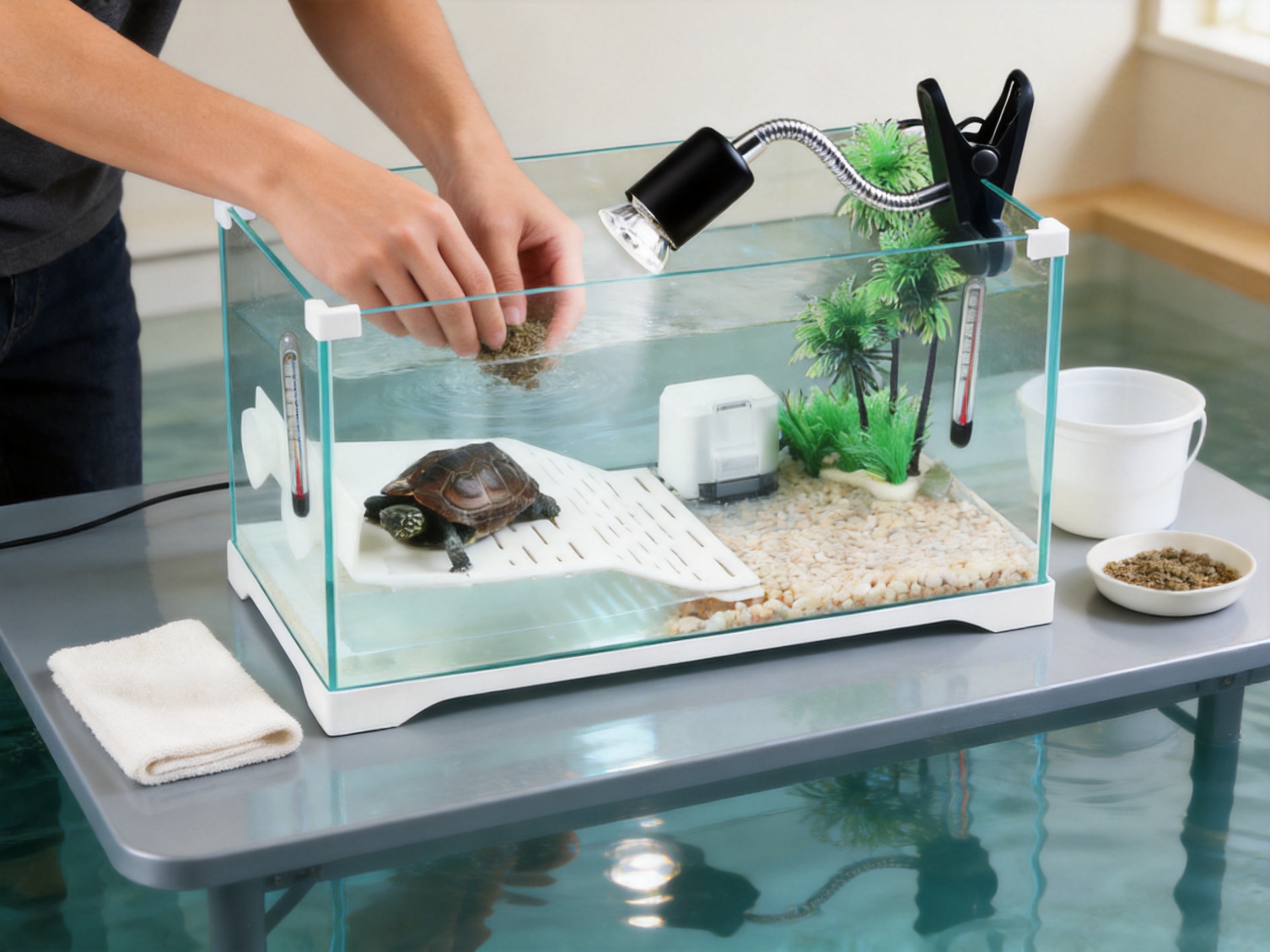
The word “eco” in the product name suggests an effort to provide a practical habitat with efficient use of space and resources. A compact tank generally requires less water, less floor area, and fewer materials for habitat decoration than a large installation. These characteristics can be useful for customers who want to keep a pet responsibly while managing household resources.
However, environmental responsibility involves more than product size. Owners should use the tank for an appropriate animal, avoid unnecessary replacement, maintain equipment properly, and dispose of packaging responsibly. A well-maintained product that remains useful for a long period can offer a better environmental result than a low-cost item that must be replaced frequently.
Water management is also important. Owners should avoid unnecessary full water changes when a properly planned partial-change routine is appropriate. At the same time, water quality must never be sacrificed in the name of saving water. The correct balance depends on the turtle, tank size, filtration, feeding routine, and local water conditions.
Energy use should be considered as well. Heating, filtration, and lighting may be necessary depending on the species, but equipment should be selected according to the actual habitat requirements. Timers, correctly sized devices, and regular maintenance can help prevent unnecessary energy consumption.
The eco-oriented concept is therefore best understood as a combination of compact design, responsible use, efficient maintenance, and long-term product value. The tank provides the physical foundation, while the owner’s habits determine much of the environmental outcome.
Before filling the tank, select a location that is level, stable, and protected from excessive sunlight. Direct sunlight can cause unwanted temperature increases, encourage algae growth, and make water conditions more difficult to control. The location should also provide enough space around the tank for feeding, cleaning, and equipment access.
Inspect the product before setup. Check the tank body, edges, supporting elements, and any included parts for visible damage caused by transportation. If damage is found, document it and contact the seller before adding water. This is especially important for products shipped over long distances.
Clean the tank with fresh water and a clean, non-abrasive cloth before use. Avoid household detergents, disinfectants, or chemicals that may leave residues harmful to aquatic animals. Any substrate or decorative material should also be rinsed appropriately before it is placed inside the habitat.
Create a simple layout. The turtle should have an accessible water area and a secure resting or basking area. A ramp should not be excessively steep or slippery. All structures must be stable enough that they cannot collapse or shift when the turtle climbs onto them.
Fill the tank gradually and observe whether the internal arrangement remains stable. Confirm that the turtle can reach the resting area without becoming trapped. Water depth should be determined according to the turtle’s species, size, swimming ability, and care requirements.
If filtration or circulation equipment is used, select a device suitable for the tank’s actual volume and the level of biological waste produced by the turtle. Turtles can generate substantial waste, so equipment should be maintained regularly. A filter does not eliminate the need for water changes or cleaning.
Allow the habitat to reach a stable operating condition before introducing the turtle whenever possible. Confirm that temperature, lighting, water movement, and access points are functioning correctly. A careful setup reduces stress for the animal and makes future care more predictable.
Routine maintenance is essential for every turtle tank, including a compact model. Remove uneaten food promptly, inspect the water each day, and clean visible waste as needed. The frequency of deeper maintenance depends on the tank size, turtle size, feeding schedule, filtration system, and water condition.
When cleaning, keep the turtle in a safe temporary container with suitable water and temperature conditions. Do not use harsh chemicals inside the tank. A dedicated cleaning cloth, soft brush, and clean water are generally preferable. If a descaling or disinfecting product is ever considered, it must be fully compatible with aquatic-pet use and completely rinsed according to its instructions.
Check ramps, platforms, ornaments, and other accessories for slime, sharp edges, instability, or accumulated waste. Replace any item that becomes damaged or unsafe. A turtle may push, climb, and investigate objects with considerable force, so accessories should be reviewed regularly.
Inspect equipment cables and connections if lighting, heating, pumps, or filters are installed. Keep electrical connections away from splash zones where possible and use safe installation practices. Equipment should be unplugged before maintenance whenever the manufacturer’s instructions require it.
Regular maintenance protects the turtle and preserves the appearance of the tank. It also helps owners identify problems before they become serious. A clean, uncluttered habitat is easier to observe, easier to sell in a retail setting, and more pleasant to keep in a home.
Model selection should begin with the turtle rather than the available shelf space. Consider the turtle’s current size, expected growth, swimming behavior, resting requirements, and species-specific care guidance. The tank should provide adequate room for movement and should not become overcrowded with accessories.
Next, measure the installation location. Compare the available length, width, and height with the dimensions of the selected model. Leave additional room for maintenance and equipment. Do not place the tank where its edges extend beyond the supporting surface.
The HKJ-230 is the most space-efficient option and may be suitable for a very compact setup. The HKJ-280 offers additional room while retaining a small footprint. The HKJ-420 provides a more balanced space increase for users who need greater layout flexibility. The HKJ-600 is appropriate when the customer has more room and wants the largest habitat in the series.
Customers should also consider transport and installation. Larger models may require two people to move safely, particularly after accessories or water have been added. Retailers should communicate this clearly so buyers can prepare an appropriate support structure and installation plan.
If the turtle is expected to grow significantly, it may be more economical and more responsible to choose a larger model from the beginning, provided that the habitat can be set up safely. The correct choice depends on the animal, the owner’s care plan, and the available environment.
The HKJ Series provides a straightforward product story for retail and distribution channels. It belongs to the small fish tank category while serving a specialized aquatic-pet purpose. This allows it to be displayed alongside aquarium products, turtle accessories, pumps, filters, lighting, and other pet-care items.
A four-model range helps retailers address different customer budgets and space requirements. A shopper who cannot accommodate the largest model may still find a suitable smaller option. Another customer may begin with a compact product and later return for a larger model as the turtle grows.
Clear dimensional information also supports e-commerce listings and wholesale catalogs. Length, width, and height can be presented in a consistent table, helping buyers understand the physical footprint before ordering. Product descriptions should clearly identify the model and avoid confusing HKJ-420 with any alternative promotional label.
For importers, the manufacturer’s broader corporate structure is a meaningful advantage. Sensen Group Co., Ltd. has experience across domestic and international markets and maintains an import and export company within its wider organization. This can support communication, order coordination, documentation, and distribution planning.
Retailers should nevertheless provide accurate care guidance. The tank should not be marketed as a complete solution without explaining the need for appropriate lighting, basking, water management, and species-specific care. Honest product education improves customer satisfaction and reduces the risk of unsuitable use.
When buyers compare aquatic pet products, manufacturing experience can be as important as initial appearance. A tank may look attractive in a photograph, but its value depends on how consistently it is produced, packaged, shipped, and supported.
A manufacturer with experience in several aquatic and industrial sectors is more likely to understand the importance of standardized dimensions, material handling, quality inspection, packaging design, and supply continuity. These factors affect distributors and end users even when they are not visible at the time of purchase.
Sensen Group Co., Ltd. has built a business that includes research, quality control, production subsidiaries, marketing networks, and international trade. This organizational foundation can help support the HKJ Series as a repeatable commercial product rather than a one-time design.
Long-term manufacturing capability is particularly relevant for retailers who need stable replenishment. A product range is more useful when the same models, specifications, and packaging can be supplied consistently over time. It also makes staff training easier because product information remains structured and familiar.
For end users, manufacturing experience may contribute to a more dependable ownership experience. While no product can replace proper care, a consistently produced habitat gives owners a better starting point for safe installation and maintenance.
It is designed as a compact aquatic habitat for turtle keeping. The series provides several size options for homes, offices, classrooms, retail displays, and other indoor environments where space is limited.
The listed dimensional range includes HKJ-230, HKJ-280, HKJ-420, and HKJ-600. Product images or promotional materials may sometimes show the third model as HKJ-400, so buyers should confirm the exact model code with the supplier before ordering.
The HKJ-230 is the smallest listed model, measuring 236 millimeters in length, 168 millimeters in width, and 155 millimeters in height.
The HKJ-600 is the largest model in the listed range. It measures 606 millimeters in length, 326 millimeters in width, and 272 millimeters in height.
No. The correct habitat depends on the turtle’s species, age, adult size, swimming ability, temperature needs, and basking requirements. The tank should be selected and arranged according to species-specific care guidance.
The supplied product information identifies the tank series and its dimensions but does not specify a complete package of heating, lighting, filtration, or other equipment. Buyers should confirm the package contents with the supplier and purchase any required equipment separately.
No. A filled tank can be heavy. It must be placed on a level, stable, water-resistant surface that can support the combined weight of the tank, water, accessories, and animal. The support should be checked before installation.
Filtration may be beneficial, but it does not replace water changes and cleaning. The correct filtration method depends on the tank size, turtle, water volume, feeding routine, and waste level.
Remove uneaten food and waste regularly, perform appropriate partial water changes, and clean surfaces with fresh water and non-abrasive tools. Household detergents and unapproved chemicals should be avoided because residues may harm aquatic animals.
The series is developed as a specialized aquatic-pet product with defined models and dimensions. It provides a more organized and visually consistent starting point than an improvised household container.
The four-model range supports different customer needs and can be displayed with aquarium equipment, turtle accessories, pumps, filters, and lighting. Its compact format also helps retailers use display space efficiently.
The product is associated with Sensen Group Co., Ltd., a company with experience in aquarium pets, aquaculture machinery, industrial equipment, and related product categories. The company has research, quality control, production, domestic distribution, and international trade capabilities.
The HKJ Series Eco-turtle Tank offers a practical approach to compact turtle keeping. Its main strengths are its specialized purpose, four available size options, efficient use of space, organized habitat concept, and connection to an established aquatic-equipment manufacturer.
Compared with improvised containers, the series provides clearer dimensions, a more purposeful product format, and a more attractive presentation. Compared with general fish tanks, it is positioned more directly toward the needs of turtle owners, who must balance swimming space with access to a dry resting area.
The product’s value is supported by the manufacturing background of Sensen Group Co., Ltd. The company’s long operating history, research structure, quality control department, subsidiary network, and international business experience provide a foundation for product consistency and market support.
At the same time, responsible use remains essential. Buyers must select a model appropriate for the turtle, provide suitable heating and lighting when required, maintain water quality, clean the habitat regularly, and upgrade the enclosure as the animal grows. The tank is an important foundation, but good husbandry determines the final result.
For households, offices, educators, retailers, and distributors seeking a compact aquatic-pet product, the HKJ Series combines practical dimensions with a clear product identity. Its range makes it easier to match the habitat to the available location, while the manufacturer’s broader aquatic expertise supports confidence in the product’s development and commercial supply.
1. Sensen Group Co., Ltd. Product information for the HKJ Series Eco-turtle Tank.
2. Sensen Group Co., Ltd. Corporate information regarding company history, research, quality control, subsidiaries, and international business operations.
3. HKJ Series dimensional specification table listing HKJ-230, HKJ-280, HKJ-420, and HKJ-600.
4. General aquatic-pet habitat management principles concerning turtle space, water quality, basking, filtration, cleaning, and responsible enclosure selection.
5. General product merchandising principles for compact aquarium and aquatic-pet equipment.


 No. 61-79, Baima Street, Maao Town, Dinghai District, Zhoushan City, Zhejiang Province, China.
 0086 580 8082088 / 8081168
 0086 580 8080978
 songhua@sunsun-china.com