

 English
 русский
 España
 Portugal
 عربي
Chen Xiao | Customer Service & After-Sales Coordinator
Home / Author / Chen Xiao | Customer Service & After-Sales Coordinator / High-Performance Self-Priming Circulating Water Pumps for Demanding Aquatic Systems
Content
Reliable water movement is essential in large aquariums, aquaculture installations, ornamental ponds, water features, industrial circulation systems, and many other aquatic environments. A circulation pump must do more than move water from one point to another. It must maintain stable flow, overcome elevation differences, operate consistently for long periods, and remain practical to install and service. When the system includes long pipe runs, high discharge points, filtration equipment, or large water volumes, the pump’s head, output, construction, and starting performance become especially important.
The HLG and HLW series self-priming circulating water pumps are designed for applications that require a combination of strong hydraulic performance, substantial flow capacity, and dependable operation. The range includes models delivering outputs from 29 to 37 cubic meters per hour, with maximum heads from 16 to 21 meters. Depending on the model, the pumps are available in single-phase or three-phase 220-volt and 380-volt configurations at 50 hertz. Their connection sizes are standardized around 63-millimeter and 60-millimeter tube diameters, supporting integration into substantial circulation systems.
Two related product families make the range more adaptable. The HLG series includes models from HLG-200 through HLG-400, while the HLW series includes models from HLW-200 through HLW-400. The two series share core performance characteristics but differ in their overall dimensions and model progression. This gives system designers more flexibility when selecting a pump for available installation space, electrical supply, flow requirements, and lifting height.
Compared with ordinary circulation pumps intended for smaller aquariums or low-head applications, these pumps are positioned for more demanding duties. Their self-priming design can simplify startup and system operation, while their high power ratings support greater water movement and higher discharge pressure. The result is a practical solution for large-scale aquatic circulation where compact hobby pumps would not provide sufficient capacity.
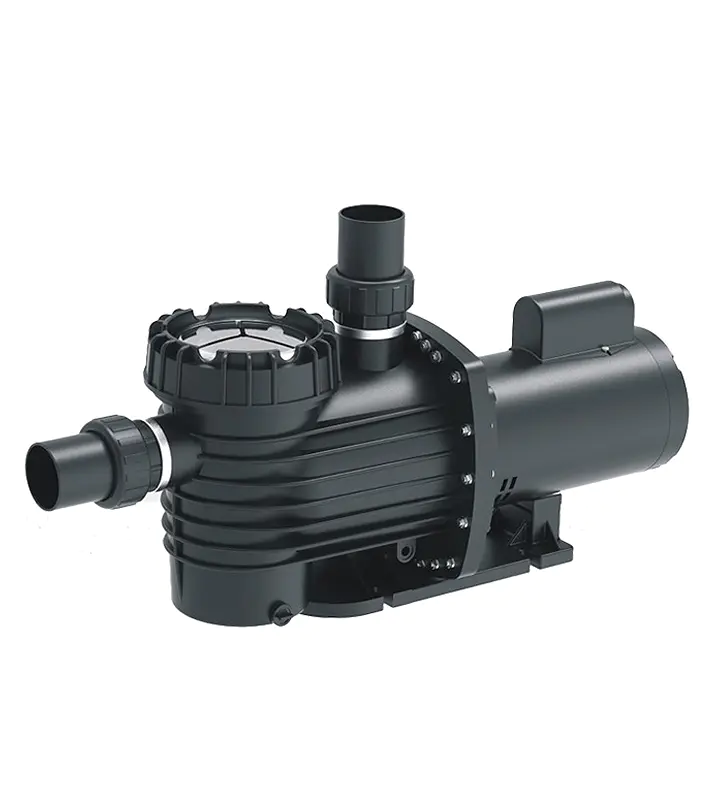
HLG/HLW Series Self-priming Circulating Water Pump
The HLG and HLW series are self-priming circulating water pumps developed for high-volume water movement. Their basic function is to draw water into the pump, circulate it through the hydraulic system, and discharge it at a useful pressure and flow rate. The self-priming configuration is particularly valuable in installations where the pump may not always be positioned below the water level or where air can enter the suction line during startup.
The series is offered in several capacity levels. The 200 models provide a rated output of 29 cubic meters per hour and a maximum head of 16 meters. The 300 models increase output to 32 cubic meters per hour and maximum head to 18 meters. The HLW-350 models provide 35 cubic meters per hour at a maximum head of 20 meters, while the HLG-400 and HLW-400 models are designed for higher-performance three-phase applications. The HLG-400 delivers 35 cubic meters per hour with a 20-meter maximum head, and the HLW-400 reaches 37 cubic meters per hour with a 21-meter maximum head.
This progression allows users to select capacity according to the hydraulic demands of the project instead of choosing a single oversized pump for every installation. A properly selected pump can help reduce unnecessary energy consumption, improve system balance, and provide more predictable circulation. At the same time, the larger models provide additional capacity for installations with higher vertical lifts, longer pipe distances, or more restrictive equipment.
| Series | Models | Voltage and frequency | Power range | Output range | Maximum head range | Tube diameter |
| HLG | HLG-200 to HLG-400 | 220V/50Hz or 380V/50Hz, depending on model | 1,500W to 3,000W | 29 to 35 m³/h | 16 to 20 m | 63 mm / 60 mm |
| HLW | HLW-200 to HLW-400 | 220V/50Hz or 380V/50Hz, depending on model | 1,500W to 3,000W | 29 to 37 m³/h | 16 to 21 m | 63 mm / 60 mm |
The published dimensions are also useful when preparing an equipment room, pump cabinet, filtration area, or service platform. HLG-200 and HLG-300 models measure 657 by 273 by 316 millimeters. HLG-400 uses the same listed dimensions. HLW-200 and HLW-300 measure 605 by 273 by 316 millimeters, while HLW-350 and HLW-400 measure 625 by 273 by 316 millimeters. These consistent width and height dimensions can simplify layout planning and provide a relatively predictable installation footprint.
Self-priming is one of the defining characteristics of this product family. In a conventional non-self-priming arrangement, the pump and suction pipe often need to be completely filled with water before operation. If air enters the suction line, the pump may lose its prime and require manual refilling. This can be inconvenient in large systems, seasonal installations, maintenance areas, and equipment rooms where access is limited.
A self-priming pump is designed to help remove air from the suction side during startup and establish water flow with less manual intervention. The exact installation requirements still depend on the system design, pipe configuration, valve arrangement, and operating conditions. Users should follow the applicable installation instructions and avoid operating the pump dry. Nevertheless, the self-priming design can make system commissioning more manageable and can reduce the disruption caused by small amounts of air in the intake line.
This feature is particularly useful in water features, pond circulation systems, large aquariums, aquaculture facilities, and filtration installations where the pump may be connected to a reservoir, sump, balancing tank, or external pipework. It can also benefit maintenance routines. After a filter, pipe, or valve has been serviced, the ability to restore circulation more easily can shorten restart procedures and help operators return the system to normal operation more quickly.
Self-priming performance should not be confused with unlimited suction capability. Every pump has practical limits related to suction lift, pipe length, pipe diameter, air leakage, water temperature, and the condition of valves and fittings. Correct installation remains essential. A short, straight suction route with properly sealed connections will support better performance than a long and poorly sealed pipe arrangement. The pump’s self-priming capability is therefore best understood as an operational advantage that complements sound hydraulic design.
Many circulation pumps are optimized either for high flow at low pressure or for high pressure at relatively modest flow. The HLG and HLW series are designed to provide a useful balance between the two. Outputs of 29 to 37 cubic meters per hour are substantial for many aquatic installations, while maximum heads from 16 to 21 meters allow the pumps to handle vertical elevation changes and system resistance more effectively than small low-head units.
Flow rate is important because it determines how quickly water can pass through a tank, filter, cooling loop, pond, or treatment system. High circulation can support more uniform temperature distribution, improved filtration turnover, better oxygen transfer when combined with suitable aeration, and more effective movement through water features. In aquaculture, appropriate water circulation can assist with water quality management and help reduce stagnant areas. In ornamental installations, it can contribute to more dynamic water movement and stable circulation through decorative features.
Head is equally important. A pump may have a high free-flow output but provide poor performance once it is connected to long pipes, elbows, filters, valves, spray bars, heat exchangers, or elevated outlets. The maximum head rating indicates the pump’s ability to overcome pressure created by elevation and system resistance. For this reason, pump selection should consider the complete system curve rather than relying on the output number alone.
The stepped range of the HLG and HLW series gives installers several ways to match the pump to the project. The 200 models are suitable for systems requiring approximately 29 cubic meters per hour and a 16-meter maximum head. The 300 models offer additional head and output. The 350 and 400 models provide further capacity for larger or more demanding systems. This structured range can make specification easier for engineering contractors, equipment distributors, aquarium builders, and industrial users.

Choosing the correct model begins with a clear understanding of the installation. The main factors are required flow, total dynamic head, pipe diameter, available power supply, operating hours, water temperature, and the location of the pump relative to the water source. It is also important to account for the resistance produced by filters, fittings, valves, nozzles, and other components.
The HLG-200 and HLW-200 models are rated at 1,500 watts, 29 cubic meters per hour, and a 16-meter maximum head. Both model families are available with 220-volt or 380-volt, 50-hertz configurations. This gives users a choice between electrical options according to the power infrastructure at the installation site.
The HLG-300 and HLW-300 models are rated at 2,200 watts, 32 cubic meters per hour, and an 18-meter maximum head. Like the 200 models, they are available in both 220-volt and 380-volt versions. They can be considered when the project needs more head and flow than the 200 models provide but does not require the maximum capacity of the larger units.
The HLW-350 is rated at 2,600 watts and provides 35 cubic meters per hour with a 20-meter maximum head. It is offered in 220-volt and 380-volt versions. The HLG-400 and HLW-400 are rated at 3,000 watts and are listed with 380-volt, 50-hertz power. The HLG-400 provides 35 cubic meters per hour and a 20-meter maximum head, while the HLW-400 provides 37 cubic meters per hour and a 21-meter maximum head.
| Model | Power | Output | Maximum head | Voltage | Dimensions |
| HLG-200 | 1,500W | 29 m³/h | 16 m | 220V or 380V, 50Hz | 657 × 273 × 316 mm |
| HLG-300 | 2,200W | 32 m³/h | 18 m | 220V or 380V, 50Hz | 657 × 273 × 316 mm |
| HLG-400 | 3,000W | 35 m³/h | 20 m | 380V, 50Hz | 657 × 273 × 316 mm |
| HLW-200 | 1,500W | 29 m³/h | 16 m | 220V or 380V, 50Hz | 605 × 273 × 316 mm |
| HLW-300 | 2,200W | 32 m³/h | 18 m | 220V or 380V, 50Hz | 605 × 273 × 316 mm |
| HLW-350 | 2,600W | 35 m³/h | 20 m | 220V or 380V, 50Hz | 625 × 273 × 316 mm |
| HLW-400 | 3,000W | 37 m³/h | 21 m | 380V, 50Hz | 625 × 273 × 316 mm |
Single-phase and three-phase versions should be selected only after confirming the electrical characteristics of the site. Electrical work must be completed by qualified personnel, and appropriate protection equipment should be installed. The power rating should also be considered when planning operating costs, backup power, control panels, and cable sizing.
The listed tube diameters of 63 millimeters and 60 millimeters provide a practical connection standard for high-volume circulation. Larger pipework helps reduce friction losses compared with narrow tubing, especially when the system operates at substantial flow rates. Correct adapters, unions, valves, and flexible connectors can be used to integrate the pump into existing filtration or circulation infrastructure.
Installation should provide a stable, level, and accessible base. The pump should be positioned where routine inspection, cleaning, electrical isolation, and service work can be performed safely. Sufficient clearance around the unit is important because even a reliable pump benefits from regular inspection of connections, seals, valves, and the surrounding area.
The suction pipe should be designed to minimize unnecessary bends and restrictions. Air-tight connections are especially important in self-priming applications. Any leak on the suction side can allow air into the system and may cause unstable priming, reduced output, or excessive operating noise. The discharge line should also be sized and routed to avoid unnecessary pressure loss.
Where the pump is used with filtration equipment, the filter should be maintained so that it does not become excessively blocked. A clogged filter increases system resistance and can reduce flow. Similarly, valves should be fully opened when the system requires maximum circulation, unless flow control is intentionally part of the design. Users should never assume that the pump will deliver its rated output under every installation condition; actual performance depends on the complete hydraulic network.
The HLG and HLW series offer several practical advantages over general-purpose pumps designed for small aquariums, decorative fountains, or low-pressure circulation. The first is scale. With output values beginning at 29 cubic meters per hour and reaching 37 cubic meters per hour, these pumps are intended for installations that require more than basic aquarium turnover. Their higher power ratings and head capabilities make them more suitable for large tanks, central filtration systems, aquaculture facilities, and substantial water features.
The second advantage is the combination of flow and lift. A pump that produces considerable flow at zero head may not perform adequately once it is connected to an elevated outlet or a restrictive filtration system. The HLG and HLW range provides maximum head ratings from 16 to 21 meters, giving system designers more capacity for demanding pipe layouts.
The third advantage is model diversity. Competing products may offer only one electrical version or a narrow capacity range, forcing users to adapt the installation around the pump. The availability of 220-volt and 380-volt versions across many models allows the product to serve different electrical environments. The range from 1,500 to 3,000 watts also supports more accurate matching between pump size and system requirements.
The fourth advantage is the self-priming configuration. For systems where air may enter the suction side or where manual priming would be inconvenient, this design can simplify operation and maintenance. It can help reduce the time required to restore circulation after cleaning or service, provided that the pump is installed and operated correctly.
The fifth advantage is dimensional consistency. The listed width and height are shared across much of the range, and the differences in length are relatively limited. This can be valuable for equipment manufacturers and installers who need to create standardized pump compartments, service panels, or modular filtration platforms.
These advantages do not mean that one pump is appropriate for every application. A smaller pump may be more efficient for a compact aquarium, and a specialized chemical or high-temperature pump may be preferable for certain industrial fluids. The strength of the HLG and HLW series is their suitability for high-volume water circulation where substantial output, head, self-priming capability, and electrical flexibility are priorities.
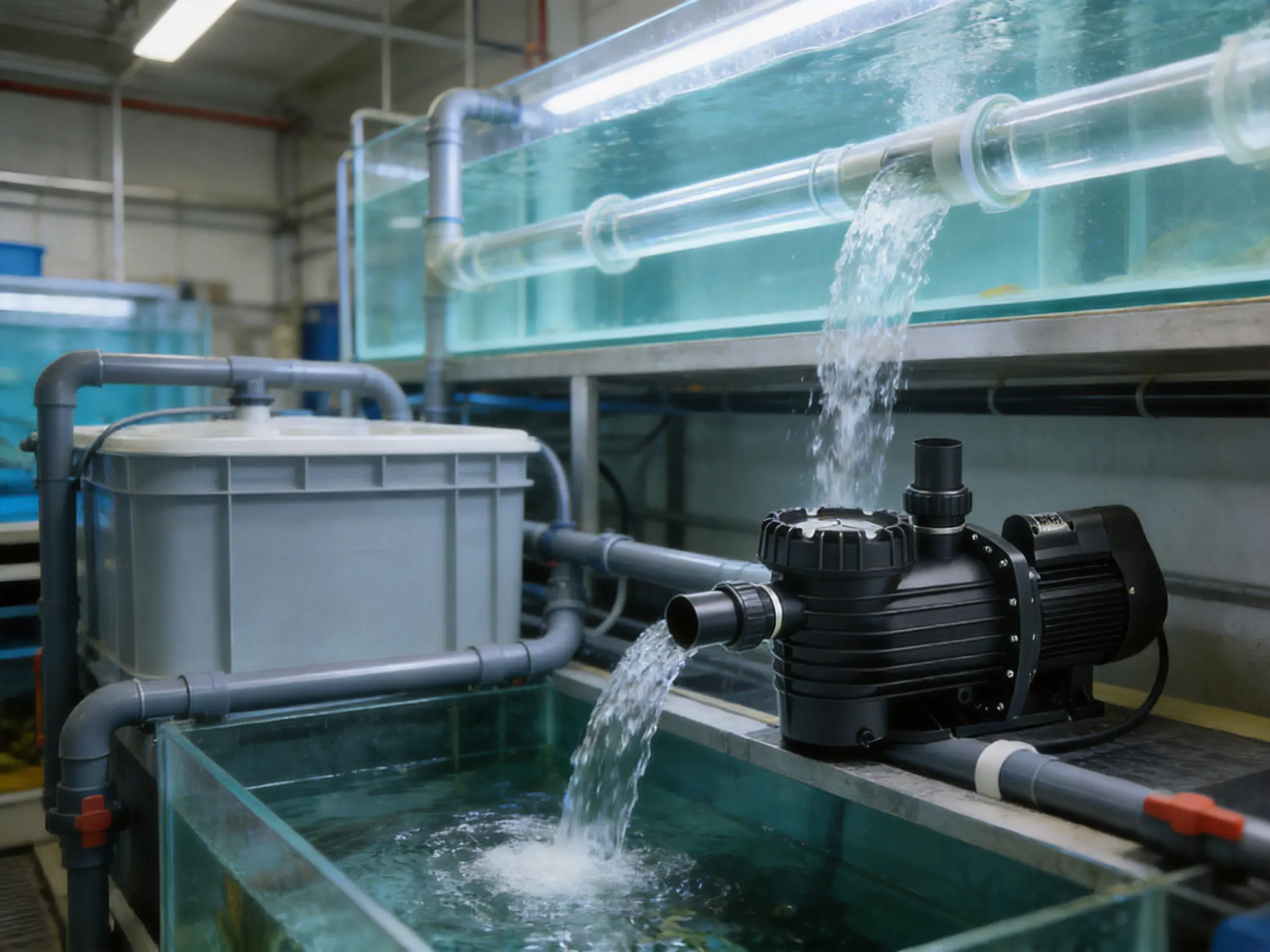
The product is supported by a manufacturer with a long operating history in aquarium products, aquaculture machinery, industrial equipment, and related aquatic technologies. The company was established in 1985 and has developed a broad organizational structure around research, production, quality control, administration, finance, education, sales, and international business. This breadth is important because dependable pump manufacturing requires more than the assembly of individual components. It requires coordinated product development, supplier management, testing, quality oversight, documentation, and after-sales support.
The manufacturer’s organizational structure includes a dedicated research institute and a quality control department. These functions can support systematic product improvement and help establish consistent inspection procedures across the manufacturing process. For a pump range intended for demanding circulation duties, quality control is especially important because performance depends on the relationship between the motor, hydraulic components, seals, electrical parts, housing, and connection geometry.
The company also operates through a network of wholly owned subsidiary corporations and affiliated businesses covering different regions and commercial functions. Such a structure can provide wider manufacturing resources, broader market knowledge, and improved support for distribution. It also allows the organization to maintain experience across aquarium equipment, aquatic machinery, pet products, and industrial applications rather than relying on a single narrow product category.
An integrated business structure can strengthen manufacturing in several ways. Research teams can communicate application requirements to production departments. Quality control personnel can monitor recurring issues and feed information back into product development. Sales and service teams can collect field feedback from different markets. Import and export operations can help coordinate international distribution, documentation, and customer communication. Each of these activities contributes to the practical reliability of a product range.
Although the provided product information does not specify every individual production step, advanced pump manufacturing generally depends on controlled processes at several stages. Component preparation must maintain dimensional consistency so that rotating and sealing parts fit correctly. Motor assembly must ensure secure electrical connections and stable mechanical alignment. Hydraulic components need accurate positioning to support predictable water movement. Final assembly must protect the pump from leakage, excessive vibration, and premature wear.
Quality control is particularly significant for self-priming pumps. The suction path must be properly sealed, the internal chamber must function as intended, and the pump must be able to establish circulation under the specified operating conditions. Inspection and testing can identify problems such as air leakage, abnormal noise, unstable output, excessive vibration, or electrical irregularities before the product reaches the customer.
Consistent manufacturing also supports the usefulness of a multi-model product range. When several models share common design principles and connection sizes, production teams can apply standardized procedures while adjusting motor power, hydraulic performance, and model-specific dimensions. This can improve repeatability and simplify service training, spare-parts management, and distributor support.
The manufacturer’s long experience in aquarium and aquatic equipment is another practical strength. Pumps used in aquatic systems must account for continuous water movement, wet environments, filtration resistance, biological sensitivity, and user expectations for dependable operation. Experience across these fields can help the company understand the real conditions in which circulation pumps are installed.
The HLG and HLW series can serve a wide range of applications where water must be moved at substantial flow rates and through significant system resistance.
Large aquariums and public aquatic displays often contain complex filtration systems, elevated return lines, protein skimmers, cooling equipment, treatment chambers, and decorative circulation routes. A high-capacity pump can help maintain continuous movement through these systems. The available head ratings are useful when water must be raised to an upper return point or pushed through several filtration stages.
The self-priming arrangement can also simplify maintenance in installations where circulation equipment is located outside the main display tank. After pipes or filters have been emptied, restoring flow can be more convenient than with a pump that requires extensive manual priming.
Aquaculture facilities depend on stable water circulation to support filtration, aeration, temperature management, and water exchange. Different systems may require different flow rates, and the model range allows operators to select a pump according to tank volume, pipe length, elevation, and treatment equipment. The pump should always be evaluated alongside the biological requirements of the species, the total water volume, and the desired turnover rate.
In recirculating aquaculture systems, the pump is one part of a larger process that may include mechanical filtration, biological filtration, degassing, oxygenation, ultraviolet treatment, and temperature control. The selected model should provide adequate flow through all components without creating excessive turbulence or unnecessary energy use.
Large ponds, cascading water features, architectural fountains, and landscape installations may require substantial flow and lift. The HLG and HLW series can be considered where water must be moved from a reservoir to a raised outlet, waterfall, or display channel. The self-priming capability may be valuable in outdoor installations where the pump is located separately from the main basin.
Outdoor applications require suitable protection from weather, flooding, debris, and unauthorized access. The pump room or enclosure should be designed to prevent water accumulation around electrical components. Intake protection should also be considered when leaves, gravel, algae, or other debris may enter the system.
The pumps may also be used in selected industrial or commercial water circulation duties where the fluid characteristics are compatible with the equipment. Possible examples include process-water movement, cooling circulation, equipment wash systems, and large-scale water displays. Before selecting a pump for an industrial application, users should confirm fluid temperature, chemical compatibility, solids content, operating cycle, and required safety controls.
Power consumption is an important consideration for any pump that operates for many hours each day. The listed power ratings range from 1,500 watts to 3,000 watts. Selecting the correct capacity is therefore essential. An undersized pump may fail to achieve the required circulation, while an unnecessarily oversized pump may consume more energy than the system needs.
The most economical installation is not always the pump with the lowest purchase price. Lifecycle value includes electrical consumption, maintenance frequency, downtime, ease of replacement, and the effect of stable circulation on other equipment. A pump that reliably supports filtration and water treatment may help the wider system operate more effectively. Conversely, an incorrectly selected pump can increase operating costs through poor flow, excessive throttling, or repeated service interruptions.
Hydraulic design has a direct effect on efficiency. Large, properly sized pipes reduce friction losses. Smooth routing with fewer sharp bends reduces resistance. Clean filters and unobstructed intakes help the pump operate closer to its intended performance. These installation practices improve the value obtained from the pump and may reduce the need to select a larger model than necessary.
Routine maintenance also supports lifecycle performance. Operators should inspect the pump for abnormal sound, vibration, leaks, reduced output, and unusual electrical behavior. The intake and connected filtration components should be kept clean. Any service should be carried out with the power isolated and the system depressurized where applicable.
A pump designed for continuous circulation still requires appropriate care. Before startup, the operator should verify that the connections are secure, the suction path is unobstructed, the valves are correctly positioned, and the water level is sufficient. The electrical supply must match the selected model. Running the pump without adequate water can damage internal components and compromise the seal.
During operation, users should monitor flow, sound, vibration, and temperature. A gradual reduction in output may indicate a blocked intake, dirty filter, air entering the suction line, a partially closed valve, or wear in a hydraulic component. Sudden noise or vibration should be investigated rather than ignored.
In seasonal or outdoor systems, the pump should be protected from freezing conditions, heavy debris, and prolonged exposure to unsuitable water. If the equipment is removed for storage, it should be cleaned and stored according to the applicable service guidance. Replacement parts should be selected carefully to preserve compatibility with the model.
The company’s broad product and service organization can be valuable for distributors and professional users who need support beyond the initial purchase. A manufacturer with research, quality control, export, and regional business capabilities is better positioned to provide product information, model selection assistance, and ongoing commercial coordination.
The first specification step is to calculate the required flow. This may be based on tank turnover, filtration capacity, process requirements, waterfall width, cooling demand, or another application-specific target. The required flow should be measured at the actual operating head rather than at the pump’s free-flow condition.
The second step is to determine total dynamic head. This includes the vertical distance from the water surface to the discharge point as well as friction losses in pipes, fittings, valves, filters, treatment equipment, and outlets. If the installation has a long discharge route or several restrictive components, the total head can be substantially higher than the simple vertical lift.
The third step is to confirm the electrical supply. Sites with a 220-volt single-phase supply should use a compatible model. Facilities equipped for 380-volt three-phase power may select a three-phase version where appropriate. Electrical protection, control equipment, isolation switches, and installation standards should be reviewed by a qualified professional.
The fourth step is to verify the physical installation space. The listed dimensions should be compared with the available pump room, cabinet, platform, or service area. Space should be provided for pipe connections, cable routing, inspection, and future removal of the unit.
The fifth step is to review fluid compatibility and operating conditions. The published product information describes circulating water pump applications. If the fluid contains aggressive chemicals, abrasive solids, high temperatures, oils, or unusual additives, technical confirmation should be obtained before use.
The HLG and HLW series are self-priming circulating water pumps intended for high-volume aquatic and water circulation applications. They are suitable for systems that require substantial flow, useful lifting height, and compatibility with larger pipe connections.
The published models provide outputs from 29 cubic meters per hour to 37 cubic meters per hour. The HLG-200 and HLW-200 provide 29 cubic meters per hour, while the HLW-400 provides the highest listed output at 37 cubic meters per hour.
Maximum head ratings range from 16 meters to 21 meters. The 200 models are listed at 16 meters, the 300 models at 18 meters, the HLW-350 and HLG-400 at 20 meters, and the HLW-400 at 21 meters.
Many models are available in 220-volt and 380-volt, 50-hertz versions. The HLG-400 and HLW-400 are listed with 380-volt, 50-hertz power. Users should confirm the exact electrical specification before ordering and installation.
Self-priming means that the pump is designed to help remove air from the suction side and establish circulation during startup. It can simplify operation after maintenance or when air enters the suction line. It does not eliminate the need for correct pipe sealing, adequate water supply, and proper installation.
The listed tube diameters are 63 millimeters and 60 millimeters. Suitable connectors and adapters should be selected according to the actual pipe standard and installation design.
The correct model depends on the aquarium volume, desired turnover, filtration resistance, pipe length, and elevation. The 200 models may suit moderate high-volume systems, while the 300, 350, or 400 models may be more appropriate for larger systems or installations with higher head requirements. A hydraulic calculation should be completed before selection.
They can be considered for compatible aquaculture circulation systems, including filtration and water movement duties. The final selection should account for species requirements, water quality, temperature, solids, biological filtration, and the total system design.
Efficiency can be supported by selecting a correctly sized model, using properly sized pipes, reducing unnecessary bends, keeping filters clean, preventing air leaks, and maintaining unobstructed intake and discharge paths. Avoiding excessive throttling can also help the pump operate more effectively.
Operators should regularly inspect connections, intake paths, filters, valves, seals, sound, vibration, and flow. The pump should not be operated dry. Electrical maintenance and repairs should be performed by qualified personnel with the power isolated.
The manufacturer has operated since 1985 and has developed experience in aquarium products, aquaculture machinery, industrial equipment, and related fields. Its organizational resources include research, quality control, administrative, financial, business, and international trade functions. This broad structure can support product development, manufacturing coordination, quality management, and distribution.
The HLG and HLW series self-priming circulating water pumps are designed for aquatic and water circulation systems that demand more than a basic low-head pump can provide. Their combination of 29 to 37 cubic meters per hour output, 16 to 21 meters of maximum head, 1,500 to 3,000 watts of power, and 220-volt or 380-volt options gives system designers a broad range of choices.
The self-priming configuration can simplify startup and recovery after maintenance, while the high-flow and high-head characteristics support large aquariums, aquaculture systems, decorative ponds, water features, filtration installations, and compatible industrial applications. Consistent connection sizes and relatively standardized dimensions can also simplify equipment planning and integration.
Beyond the pump specifications, the manufacturer’s long history and broad organizational structure provide important support. Research resources, quality control capabilities, regional operations, and experience across aquatic and industrial equipment contribute to a stronger manufacturing and supply foundation. For professional users, this combination of product performance and organizational capability can be more valuable than a pump selected on price alone.
Successful operation ultimately depends on correct model selection, sound hydraulic design, suitable electrical installation, proper priming conditions, and regular maintenance. When these factors are addressed, the HLG and HLW series provide a strong solution for reliable, high-capacity water circulation.
1. HLG and HLW Series Product Specification Sheet, including model, voltage, power, output, head, tube diameter, and dimensional data.
2. Manufacturer Company Information, including organizational structure, research resources, quality control functions, subsidiary companies, and industry experience.
3. General Principles of Pump Selection, Hydraulic Head Calculation, and Water Circulation System Design.
4. General Maintenance Practices for Self-Priming Pumps, Aquaculture Circulation Equipment, and Large Aquarium Systems.
5. General Electrical Safety Practices for Single-Phase and Three-Phase Pump Installation.


 No. 61-79, Baima Street, Maao Town, Dinghai District, Zhoushan City, Zhejiang Province, China.
 0086 580 8082088 / 8081168
 0086 580 8080978
 songhua@sunsun-china.com