

 English
 русский
 España
 Portugal
 عربي
Chen Xiao | Customer Service & After-Sales Coordinator
Home / Author / Chen Xiao | Customer Service & After-Sales Coordinator / UV-C Lamp for Efficient Aquarium Water Clarification and System Control
Content
Maintaining clear, healthy, and visually attractive aquarium water requires more than mechanical filtration alone. Fine particles can be removed by filter media, but suspended microorganisms and other biological contaminants may continue to circulate through the aquarium system. A properly selected ultraviolet-C lamp can provide an additional treatment stage by exposing passing water to UV-C radiation. This helps aquarium operators improve water clarity and support a more controlled aquatic environment.
The UV-C Lamp described in this article is an aquarium-oriented ultraviolet treatment device available in several models from 3W to 14W. Its range is designed to cover aquarium systems from smaller installations of up to 500 liters to larger systems of up to 2,600 liters. Each model operates on 220VAC/50Hz input power and is matched with a specified lamp length and recommended water volume.
The product range includes AUV-03A, AUV-06A/B, AUV-08A/B, AUV-10A/B, AUV-12A/B, and AUV-14A/B. This model structure gives users the flexibility to select a UV-C lamp according to aquarium size, system flow, available installation space, and desired treatment capacity.
Unlike a single-size ultraviolet product, this range provides a practical selection for different aquarium applications. Small tanks can use a compact 3W unit, while larger aquariums and professionally managed systems can choose higher-output models. The range also includes models with a lens hood, which can support safer and more controlled installation when the lamp is positioned within an appropriate water-treatment chamber or filtration system.
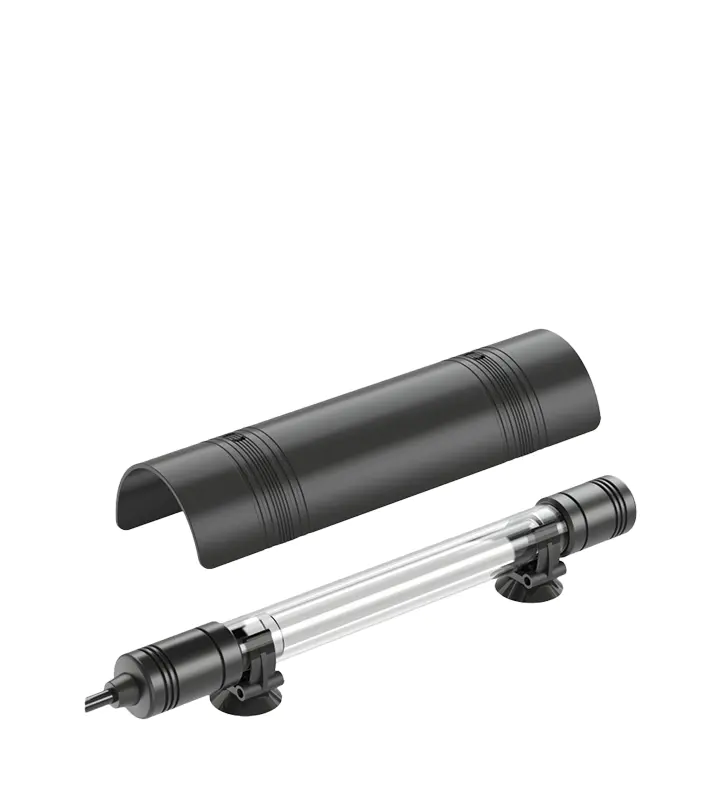
UV-C LAMP
Aquarium water quality is influenced by many factors, including stocking density, feeding practices, biological filtration, water circulation, lighting, maintenance frequency, and the introduction of new fish or plants. Even when an aquarium has a suitable filter, water may become cloudy or develop an undesirable appearance when microscopic organisms multiply rapidly.
Mechanical filtration captures particles, while biological filtration supports beneficial bacteria that help process waste compounds. UV-C treatment serves a different purpose. It provides an additional water-conditioning stage in which water passes near a UV-C light source. When exposure conditions are suitable, the radiation can help reduce the activity of certain suspended microorganisms and contribute to clearer water.
The UV-C lamp should therefore be viewed as part of a complete aquarium management system rather than a replacement for filtration, water changes, aeration, or responsible fish care. Its performance depends on factors such as water flow rate, exposure time, lamp age, water clarity, installation position, and the cleanliness of the protective housing or quartz surface.
When integrated correctly, UV-C treatment can offer several practical benefits:
• It can support clearer-looking aquarium water.
• It can provide an additional treatment stage after mechanical filtration.
• It can help aquarium operators manage water conditions more consistently.
• It can reduce reliance on repeated corrective treatments for certain water-clarity problems.
• It can be applied to aquariums of different sizes by selecting the correct wattage.
• It can be installed as part of a filtration, circulation, or water-treatment arrangement.
Because ultraviolet treatment acts on water passing through the system, it is especially suitable for closed-loop aquarium circulation. The lamp is not intended to illuminate the aquarium for viewing. It is a treatment component that should be installed so that water is exposed to the UV-C source in a controlled and protected way.
The range has been organized around output power, lamp length, and recommended aquarium volume. This approach makes product selection straightforward for aquarium owners, wholesalers, system integrators, and professional aquatic facilities.
| Model | Input Voltage | Power | Length | Recommended Volume | Lens Hood |
|---|---|---|---|---|---|
| AUV-03A | 220VAC/50Hz | 3W | 85mm | Up to 500L | Not specified |
| AUV-06A/B | 220VAC/50Hz | 6W | 230mm | Up to 1,000L | Included |
| AUV-08A/B | 220VAC/50Hz | 8W | 230mm | Up to 1,400L | Included |
| AUV-10A/B | 220VAC/50Hz | 10W | 280mm | Up to 1,800L | Included |
| AUV-12A/B | 220VAC/50Hz | 12W | 280mm | Up to 2,200L | Included |
| AUV-14A/B | 220VAC/50Hz | 14W | 280mm | Up to 2,600L | Included |
The AUV-03A is the most compact model in the range. With a power rating of 3W and a lamp length of 85mm, it is intended for aquariums up to 500 liters. Its smaller dimensions make it a useful option where space is limited, such as compact filtration cabinets, small indoor aquariums, breeding systems, or ornamental displays.
A smaller lamp can also help users avoid selecting an unnecessarily powerful unit for a modest aquarium. Correct sizing is important because aquarium treatment equipment should match the water volume and circulation design. The AUV-03A offers a focused solution for smaller systems without requiring the physical space associated with longer lamps.
The 6W AUV-06A/B and 8W AUV-08A/B models use a 230mm lamp length and are rated for aquarium volumes up to 1,000 liters and 1,400 liters respectively. These models are suitable for medium-sized ornamental aquariums, retail display systems, fish rooms, and filtration installations where a moderate level of UV-C treatment is required.
Both models are listed with a lens hood. The hood can help direct and contain the lamp assembly within the intended treatment area. It may also support installation planning by providing a defined component around the lamp. However, users must still follow appropriate installation procedures and ensure that people, fish, plants, and other sensitive materials are not directly exposed to UV-C radiation.
The higher-output models are designed for larger aquariums. The AUV-10A/B provides 10W of power and is specified for systems up to 1,800 liters. The AUV-12A/B provides 12W for systems up to 2,200 liters, while the AUV-14A/B provides 14W for systems up to 2,600 liters.
These three models use a 280mm lamp length and include a lens hood. Their extended lamp dimensions and higher power ratings make them appropriate for larger water volumes, display aquariums, institutional installations, and commercial aquatic environments where consistent water circulation is important.
The range allows users to increase treatment capacity in measured steps rather than moving directly from a small unit to a significantly oversized device. This step-by-step selection can make it easier to match equipment to the actual aquarium volume and planned circulation system.

One of the most practical advantages of the UV-C Lamp range is its coverage across several aquarium sizes. The available models serve systems from 500 liters to 2,600 liters. This reduces the need to adapt one generic lamp to every installation.
For distributors, the range creates a clear product ladder. For end users, it simplifies comparison. A customer can begin with aquarium volume and then select an appropriate power rating. System designers can also use the range when developing multiple aquarium configurations for homes, offices, retail stores, restaurants, hotels, educational facilities, or public display areas.
The essential specifications are presented in a concise format: model, voltage, power, length, recommended volume, and lens-hood availability. Clear technical data is important because ultraviolet equipment must be selected according to the relationship between lamp output, water volume, flow, and exposure time.
The inclusion of lamp length is particularly useful for installation planning. A 3W model with an 85mm length may fit into a compact unit, while the 230mm and 280mm models require more available space. By providing both power and physical dimensions, the range helps users evaluate whether a model can be integrated into an existing filter cabinet or treatment chamber.
All listed models are designed for 220VAC/50Hz input power. This common electrical specification supports use in regions and facilities that operate on this supply standard. It also gives distributors a consistent electrical platform across the range.
Electrical compatibility does not remove the need for proper installation. The lamp should be connected by a qualified person when required, and the installation should include suitable protection against water ingress, accidental contact, and electrical shock. Aquarium equipment is normally used near water, so safe cable routing, grounding, isolation, and inspection are essential.
The AUV-06A/B through AUV-14A/B models are specified with a lens hood. A lens hood can contribute to a more controlled installation by helping position the lamp and reduce unintended exposure in the surrounding equipment area. It may also help users identify the active treatment section of the device during maintenance.
Although the AUV-03A is listed without a lens hood, users should not assume that the smaller model can be exposed openly. UV-C radiation can be harmful to eyes and skin. Every model should be installed in a closed, shielded, or otherwise protected arrangement appropriate to its design.
The UV-C Lamp can be considered for freshwater aquariums, ornamental fish systems, planted aquarium support systems, aquatic retail displays, breeding facilities, and other controlled water environments. The actual suitability depends on the aquarium design, water chemistry, species requirements, filtration system, and operating conditions.
Its use as a separate treatment component allows the lamp to be combined with mechanical filters, biological filters, protein skimmers, water pumps, and other aquarium equipment. This modular approach is useful because aquarium systems differ greatly in layout and maintenance objectives.
A typical installation places the UV-C lamp in a water path after mechanical filtration. This arrangement can be beneficial because removing larger particles before ultraviolet exposure helps reduce shading and allows more direct contact between the water and the UV-C source.
A common sequence may include an intake, mechanical filter media, biological filter media, pump, UV-C treatment chamber, and return line. The precise arrangement depends on the aquarium design. Some systems may place the lamp before biological media, while others may use it on a bypass line. Professional system designers should evaluate the effect of UV-C treatment on the overall biological process and select a layout that supports the intended aquarium ecology.
Flow rate should be considered carefully. If water moves too quickly, exposure time may be insufficient for the intended treatment objective. If flow is too slow, the aquarium may not circulate through the lamp frequently enough. The recommended aquarium volumes in the product table provide a selection reference, but they should not be treated as a universal guarantee for every water-quality problem.
Water clarity also affects ultraviolet performance. Suspended particles can block or scatter UV-C radiation. This is why a mechanical filter and regular maintenance remain important even when a UV-C lamp is installed. A clear lamp sleeve, clean treatment chamber, and stable water flow help the equipment operate more effectively.
UV-C lamps should be installed in a housing or treatment chamber designed to prevent direct exposure. Direct viewing of a UV-C source is unsafe, and exposure to skin or eyes can cause injury. The aquarium system should be arranged so that the lamp cannot be accidentally touched while energized.
Where a model includes a lens hood, the hood should be used according to the installation design. Users should not modify the lamp, remove protective components, or operate it in a way that allows radiation to escape into the room.
The lamp operates at 220VAC/50Hz, so water protection is essential. Electrical connections should be positioned away from splash zones and should use suitable waterproofing practices. Cables should be routed to prevent water from running along the cable into sockets or control components.
Before maintenance, the power supply should be switched off and isolated. Users should never remove a lamp or open a treatment chamber while the unit is energized. If the equipment, cable, plug, or housing shows damage, operation should stop until the problem is inspected and corrected.
The stated volume guidance provides a practical starting point for selection. The AUV-03A is intended for systems up to 500 liters, while the AUV-14A/B is intended for systems up to 2,600 liters. Users should also consider whether the aquarium is heavily stocked, whether water is frequently cloudy, and whether the system has a high circulation rate.
For a system close to the upper recommended volume, professional advice may be useful. A large aquarium with heavy biological loading may require a different circulation arrangement than a lightly stocked aquarium with the same volume. The lamp should be selected as part of the complete treatment design rather than according to volume alone.
A UV-C lamp can only treat water that passes through its effective exposure area. Pumps, hoses, valves, and filter media should be checked regularly to ensure that circulation is stable. Blocked filter media can reduce flow, while a damaged hose or loose connection can introduce air and disrupt the treatment path.
System operators should monitor the water return and inspect the equipment during routine aquarium maintenance. Unexpected changes in flow may indicate a blockage, pump problem, fouling, or installation issue.
If the lamp is installed inside a transparent sleeve or treatment chamber, deposits can reduce UV-C transmission. Mineral buildup, algae, biofilm, and dirt may develop over time, especially in hard water or heavily stocked systems.
The protective surface should be cleaned according to the equipment design and maintenance instructions. The lamp must be switched off and allowed to cool before service. Abrasive tools or unsuitable chemicals should be avoided if they could scratch or damage the surface.
Ultraviolet lamps can continue to produce visible light while their effective UV-C output declines. Therefore, visual brightness alone is not a reliable method for determining lamp performance. Replacement intervals should follow the supplier’s maintenance recommendations and the operating conditions of the system.
Old lamps should be handled and disposed of responsibly. Users should avoid breaking the lamp, and disposal should comply with applicable local requirements for electrical or specialized lighting products.
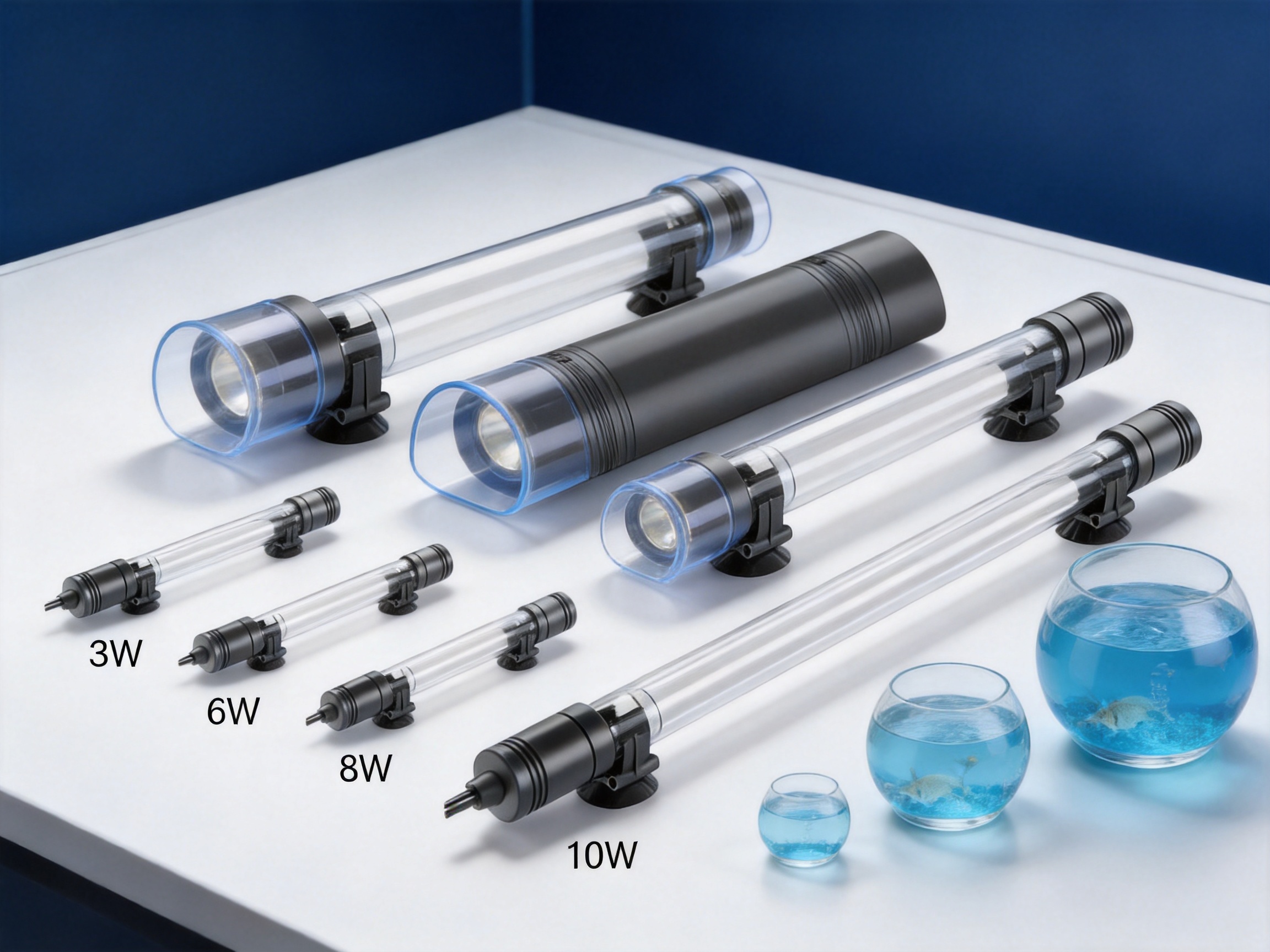
Many aquarium equipment buyers encounter ultraviolet products that provide limited information about power, dimensions, or recommended water volume. A product without clear capacity guidance can be difficult to size correctly. Oversizing may create unnecessary cost and installation challenges, while undersizing may produce disappointing results.
The UV-C Lamp range offers a more structured alternative by presenting six defined model groups with specific power and volume references. The difference is not simply the number of products. It is the clarity of the selection process. Users can compare 3W, 6W, 8W, 10W, 12W, and 14W models while also considering lamp length and lens-hood availability.
Another advantage is the use of a consistent 220VAC/50Hz input specification across the range. A consistent platform can simplify distributor inventory, technical training, replacement planning, and system design. Service personnel can become familiar with the general product family while still selecting the appropriate output for each aquarium.
The inclusion of lens hoods on the 6W to 14W models is also relevant for installations that require a more defined lamp arrangement. While protective features must always be evaluated against the actual installation, the availability of a hood demonstrates attention to controlled equipment integration rather than treating the lamp as an exposed light source.
Compared with a basic aquarium light, this product is designed for a completely different function. Aquarium display lighting is selected for visual appearance, plant growth, color rendering, and viewing comfort. A UV-C lamp is selected for water treatment and must be enclosed. This distinction is important when comparing products: a UV-C lamp should be judged by its treatment design, technical capacity, installation safety, and compatibility with the water system.
The product is associated with a large aquatic-equipment manufacturing organization that has operated since 1985. According to the supplied company information, the organization has developed activities across aquarium pets, aquaculture machinery, industrial equipment, and related fields. This broad industrial background is relevant to the production of aquarium treatment equipment because UV-C systems require coordination between electrical design, mechanical structure, water-system integration, quality control, and after-sales support.
The company information identifies a dedicated research institute and a quality control department among its functional departments. These organizational resources can support product development and manufacturing discipline. A research function can contribute to design improvement, model development, and technical evaluation, while quality control can establish inspection procedures for components, assembly, electrical performance, and product consistency.
The organization also reports multiple wholly owned subsidiary companies and an import and export company. A broad corporate structure may provide access to different production capabilities, supply-chain resources, market knowledge, and distribution channels. For international buyers, the presence of export-oriented business operations can be valuable when discussing product documentation, packaging, shipping, commercial terms, and regional market requirements.
However, manufacturing strength should not be measured only by company size. It should also be evaluated through product standardization, traceability, process control, inspection, engineering responsiveness, and the ability to support different markets. The UV-C Lamp range reflects several useful signs of product standardization: a defined model series, specified power levels, consistent input voltage, stated dimensions, recommended volumes, and clear lens-hood information.
Aquarium equipment is a specialized field. A product may need to fit within a compact cabinet, operate near water, withstand repeated maintenance, and integrate with pumps and filtration components. Research and development should therefore consider not only the lamp itself but also installation, user handling, circulation, enclosure, and long-term service.
The reported research institute provides an organizational basis for continued technical development. For a UV-C product family, development priorities may include improving lamp housing design, optimizing installation convenience, refining protective features, improving compatibility with aquarium systems, and developing future models for changing market requirements.
Product development can also benefit from feedback gathered through domestic and international sales networks. Aquarium equipment is used in homes, retail stores, public displays, aquaculture-related environments, and professional maintenance operations. These different applications can reveal practical requirements that are not always visible during laboratory design.
Consistency is especially important for electrical aquarium equipment. Buyers expect each unit in a model series to provide the stated power rating, fit the specified dimensions, and operate reliably under appropriate conditions. Quality control processes may include incoming component inspection, assembly checks, electrical testing, visual inspection, packaging verification, and final product review.
The supplied information identifies a dedicated quality control department, which indicates that quality assurance is treated as a defined organizational function. The exact inspection standards and certifications for a particular shipment should be confirmed with the supplier, but the existence of a structured quality function is a positive foundation for repeatable manufacturing.
For distributors, repeatability supports inventory planning and customer service. For project buyers, it supports the delivery of multiple units with consistent specifications. For end users, it helps ensure that replacement units can be selected from the same product family.
The company reports a large production and marketing network and a history of continuous innovation. Industrial scale can support component sourcing, production scheduling, tooling, packaging, export preparation, and after-sales coordination. It can also allow a manufacturer to maintain several related product categories, which may help buyers source aquarium pumps, filters, lighting, controllers, and accessories from a broader portfolio.
For the UV-C Lamp range, this wider product ecosystem is valuable because ultraviolet treatment is rarely purchased in isolation. A complete aquarium system may also need a water pump, mechanical filter, air pump, aquarium lighting, controller, hose, fittings, and maintenance accessories. A manufacturer familiar with these product categories may better understand how the lamp is used within the complete system.
Home aquarium owners often prioritize water clarity, compact equipment, straightforward operation, and safe installation. The 3W model may be considered for smaller systems, while the 6W and 8W models can serve medium-sized aquariums when the installation space and filtration design are suitable.
Home users should remember that a UV-C lamp cannot correct poor husbandry. Overfeeding, excessive stocking, infrequent water changes, inadequate filtration, and dead organic material can continue to affect water quality. The lamp should support a good maintenance routine rather than replace it.
Large display aquariums in offices, hotels, restaurants, shopping centers, and public facilities often require consistent visual quality. Cloudy or discolored water can reduce the appearance of fish, plants, rockwork, and decorative features. The 10W, 12W, and 14W models provide options for larger water volumes up to the stated recommendations.
In public or commercial locations, equipment access and safety are particularly important. The UV-C lamp should be installed inside a locked or protected technical compartment, with maintenance procedures documented for staff. The electrical installation should be performed according to local requirements.
Fish rooms may contain multiple aquariums connected to central filtration or separate circulation loops. In such environments, a UV-C lamp can be installed on a shared treatment line or assigned to an individual system, depending on water flow and biosecurity objectives.
Breeding facilities should evaluate the effects of ultraviolet treatment on the specific organisms being cultured. The lamp treats water passing through the chamber, not the entire aquarium environment directly. System designers must determine whether the treatment schedule and flow arrangement are appropriate for eggs, fry, sensitive invertebrates, plants, and beneficial biological processes.
Aquarium retailers often operate many display tanks and need equipment that is easy to classify, stock, replace, and explain to customers. A clear model range from 3W to 14W supports a practical sales structure based on aquarium volume.
Retail staff can use the product table to explain the differences between models, while technical staff can evaluate length and lens-hood details before installation. The consistent 220VAC/50Hz platform may also make stock management more convenient in compatible markets.
UV-C radiation is not harmless visible light. Direct exposure can damage the eyes and skin. The lamp must always be installed in a way that prevents people and animals from viewing or contacting the active source.
Users should disconnect power before opening the housing, removing the lamp, cleaning the treatment chamber, or servicing adjacent equipment. If the unit is connected to a timer or controller, the power supply should still be physically isolated before maintenance because an automatic switching function may restart the lamp unexpectedly.
The lamp should not be used as an open aquarium light. It should not be placed directly in the aquarium unless the product design specifically provides a fully safe and waterproof installation method. The supplied model information does not replace the need to follow the product’s complete installation documentation.
Children and untrained personnel should not service the unit. Commercial operators should provide written procedures, warning labels, and appropriate training. Any unusual smell, overheating, flickering, damaged cable, cracked housing, water leakage, or abnormal noise should be treated as a reason to switch off the equipment and arrange inspection.
A maintenance plan helps preserve the performance and safety of the complete aquarium system. The plan should include inspection of the lamp housing, protective sleeve, cables, connectors, pump, hoses, filter media, and water return.
Mechanical filter media should be cleaned or replaced according to the aquarium’s waste load. If the mechanical stage becomes blocked, water flow through the UV-C chamber may fall. If the protective surface becomes coated, UV-C transmission may decline. Both conditions can reduce the value of the treatment system even if the lamp remains electrically operational.
Maintenance records can be useful for commercial aquariums and multiple-tank facilities. A record may include installation date, model number, lamp replacement date, cleaning date, flow observations, and any abnormal operating conditions. This information supports preventive maintenance and helps staff identify gradual changes in performance.
Replacement planning should take into account the lamp’s operating hours and the manufacturer’s service recommendations. Keeping a replacement unit or compatible lamp available can reduce downtime, particularly for retail displays and public installations where water clarity is part of the customer experience.
When purchasing the UV-C Lamp range, buyers should first confirm the required market voltage and frequency. The listed products use 220VAC/50Hz input. Buyers should then match the selected model to the aquarium volume and available installation length.
For larger orders, distributors may wish to organize inventory by application category: compact systems, medium systems, large systems, and high-capacity systems. The model structure supports this approach and can make product training easier for sales teams.
Project buyers should also confirm packaging, user documentation, spare-part availability, warranty terms, shipping conditions, and any market-specific compliance requirements. These details may vary by destination and order configuration, so they should be discussed directly with the supplier before purchase.
Technical buyers should provide the manufacturer with information about water volume, pump flow, filtration sequence, available chamber dimensions, installation orientation, operating hours, and the aquatic species involved. Accurate project information helps prevent the selection of a model that is physically unsuitable or incorrectly applied.
The manufacturer’s history in aquarium pets, aquaculture machinery, and industrial equipment provides a broad foundation for continued product development. The reported business structure includes research, quality control, administration, finance, business training, import and export, and multiple subsidiary operations.
This type of organizational structure can support a complete product cycle: market research, concept development, engineering, production, inspection, packaging, export, distribution, and customer support. It also creates opportunities for product families to be developed together. For example, UV-C treatment can be coordinated with pumps, filters, controllers, and other aquarium equipment instead of being designed as an isolated component.
Continuous innovation is particularly important in the aquarium industry because users are looking for equipment that is safer, quieter, easier to maintain, more efficient in space, and better suited to modern aquarium layouts. Future product improvements may focus on installation convenience, service access, intelligent controls, monitoring, energy management, and system integration.
The current UV-C Lamp range already demonstrates a structured approach to product segmentation. Six model groups cover a broad range of aquarium volumes, and the product information identifies key parameters needed for selection. This creates a foundation for professional distribution and for future expansion of the range.
The lamp is designed to provide ultraviolet-C treatment for aquarium water passing through a protected installation chamber. It can support water clarity and help reduce certain suspended microorganisms when used with suitable flow, filtration, and maintenance practices.
No. The UV-C lamp is a supplementary treatment device. It does not replace mechanical filtration, biological filtration, water changes, aeration, or responsible aquarium care.
The AUV-03A is listed for aquariums up to 500 liters. It has a 3W power rating and an 85mm lamp length.
The AUV-06A/B, AUV-08A/B, AUV-10A/B, AUV-12A/B, and AUV-14A/B models are listed with a lens hood. The AUV-03A specification lists no lens hood.
All models in the supplied specifications use 220VAC/50Hz input power. Buyers should confirm compatibility with the electrical system in the intended installation location.
The AUV-08A/B is listed for aquarium volumes up to 1,400 liters. It has an 8W power rating and a 230mm lamp length.
The AUV-14A/B is the highest-power model in the listed range. It provides 14W of power, has a 280mm lamp length, and is listed for aquarium volumes up to 2,600 liters.
No. UV-C radiation can injure eyes and skin. The lamp should be installed in a closed, shielded, or otherwise protected housing that prevents direct exposure.
Many systems install the lamp after mechanical filtration so that larger particles are removed before water reaches the treatment chamber. The exact arrangement depends on the aquarium design, pump, flow rate, and treatment objectives.
Not necessarily. The correct model depends on aquarium volume, flow rate, exposure time, installation design, water clarity, and maintenance. A properly matched model is generally more useful than selecting a higher wattage without considering the complete system.
Suspended particles can block or scatter UV-C radiation. Mechanical filtration helps remove these particles and can improve the conditions under which the UV-C lamp operates.
Replacement timing depends on operating hours, lamp type, system conditions, and the manufacturer’s service guidance. Visible light is not a reliable indicator of remaining UV-C output, so users should follow a planned replacement schedule.
It may be used in a planted aquarium system when correctly installed, but the system designer should consider the plant species, water flow, treatment schedule, and effects on the aquarium’s biological balance. The lamp should treat water inside a protected chamber rather than expose the aquarium directly.
The range includes models for larger water volumes and can be considered for commercial displays, fish rooms, retail systems, and other professional applications. Commercial users should develop appropriate electrical, maintenance, and safety procedures.
Buyers should confirm voltage and frequency, model selection, aquarium volume, lamp dimensions, lens-hood configuration, packaging, documentation, replacement parts, warranty conditions, shipping requirements, and any local compliance obligations.
The UV-C Lamp range provides a structured solution for aquarium water treatment across a wide range of system sizes. With models from 3W to 14W, lamp lengths from 85mm to 280mm, and recommended capacities from 500 liters to 2,600 liters, the range gives users a practical way to match treatment equipment to aquarium volume and installation space.
Its main advantages include clear model differentiation, consistent 220VAC/50Hz input, defined lamp dimensions, higher-capacity options, and lens-hood availability on the 6W through 14W models. These characteristics make the range suitable for home aquariums, large displays, retail systems, fish rooms, and other controlled aquatic environments.
The product should be installed as one part of a complete water-management system. Mechanical filtration, biological filtration, circulation, water changes, cleaning, and safe electrical practices remain essential. When correctly sized, properly enclosed, and regularly maintained, UV-C treatment can contribute to clearer aquarium water and more controlled system operation.
The manufacturer’s reported history since 1985, research institute, quality control department, broad industrial activities, subsidiary network, and international business structure provide an organizational foundation for producing and supporting aquarium equipment. Combined with a defined UV-C product family, these capabilities offer distributors and system designers a practical platform for sourcing aquarium water-treatment equipment.
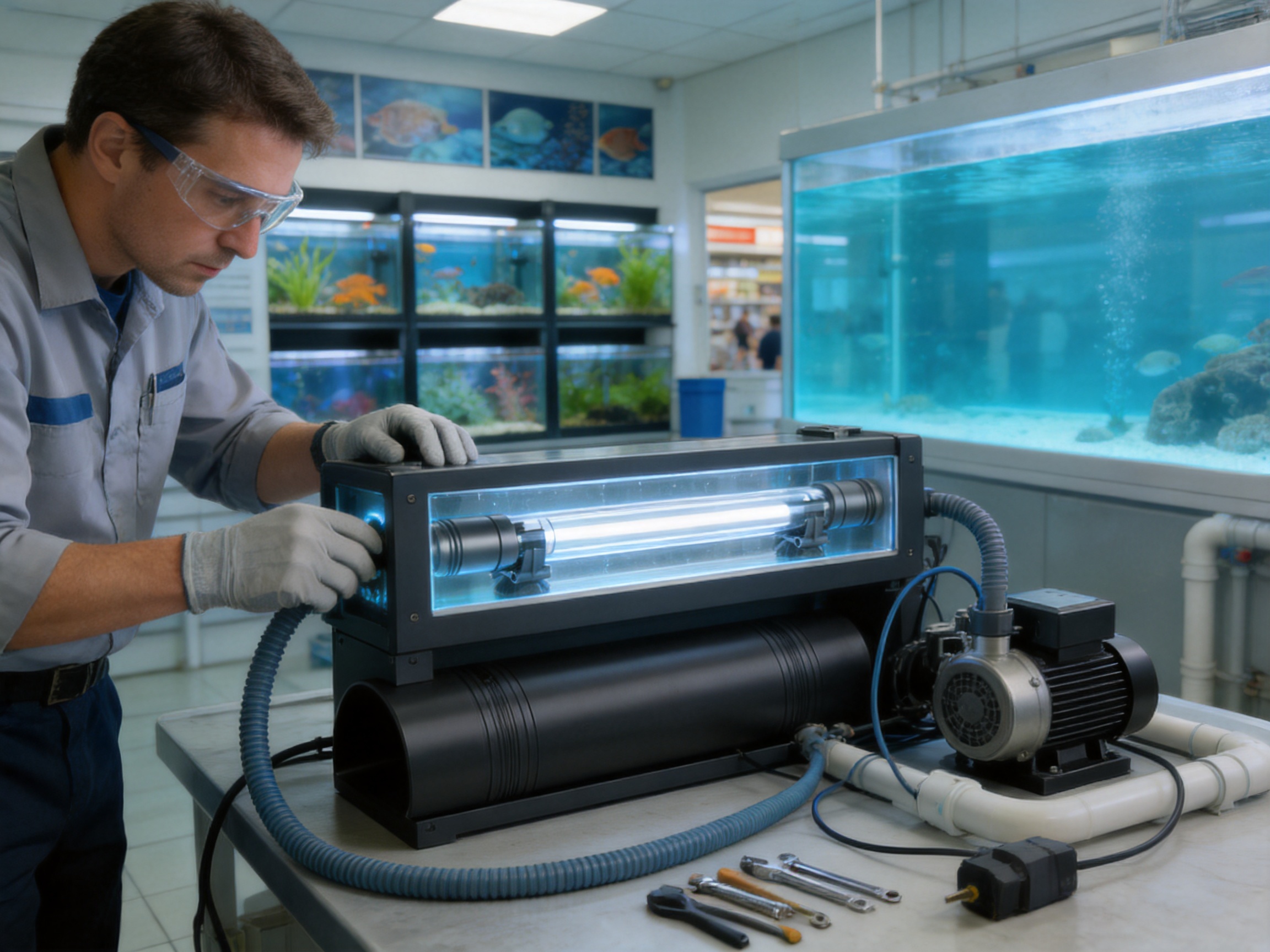
1. Supplied product specification for the UV-C Lamp model range, including model numbers, input voltage, power, lamp length, recommended aquarium volume, and lens-hood information.
2. Supplied company profile describing the manufacturer’s history, research institute, quality control department, subsidiary companies, production network, and aquarium-equipment activities.
3. General principles of aquarium filtration, circulation, mechanical filtration, biological filtration, and ultraviolet water treatment.
4. General electrical safety principles for equipment operated near water.
5. General ultraviolet-C handling principles concerning shielding, direct exposure, maintenance, and responsible lamp replacement.


 No. 61-79, Baima Street, Maao Town, Dinghai District, Zhoushan City, Zhejiang Province, China.
 0086 580 8082088 / 8081168
 0086 580 8080978
 songhua@sunsun-china.com