

 English
 русский
 España
 Portugal
 عربي
Li Mei | Aquarium Equipment Sales Specialist
Home / Author / Li Mei | Aquarium Equipment Sales Specialist / ADP Series Aquarium Lamp: Compact, Flexible Lighting for Modern Aquariums
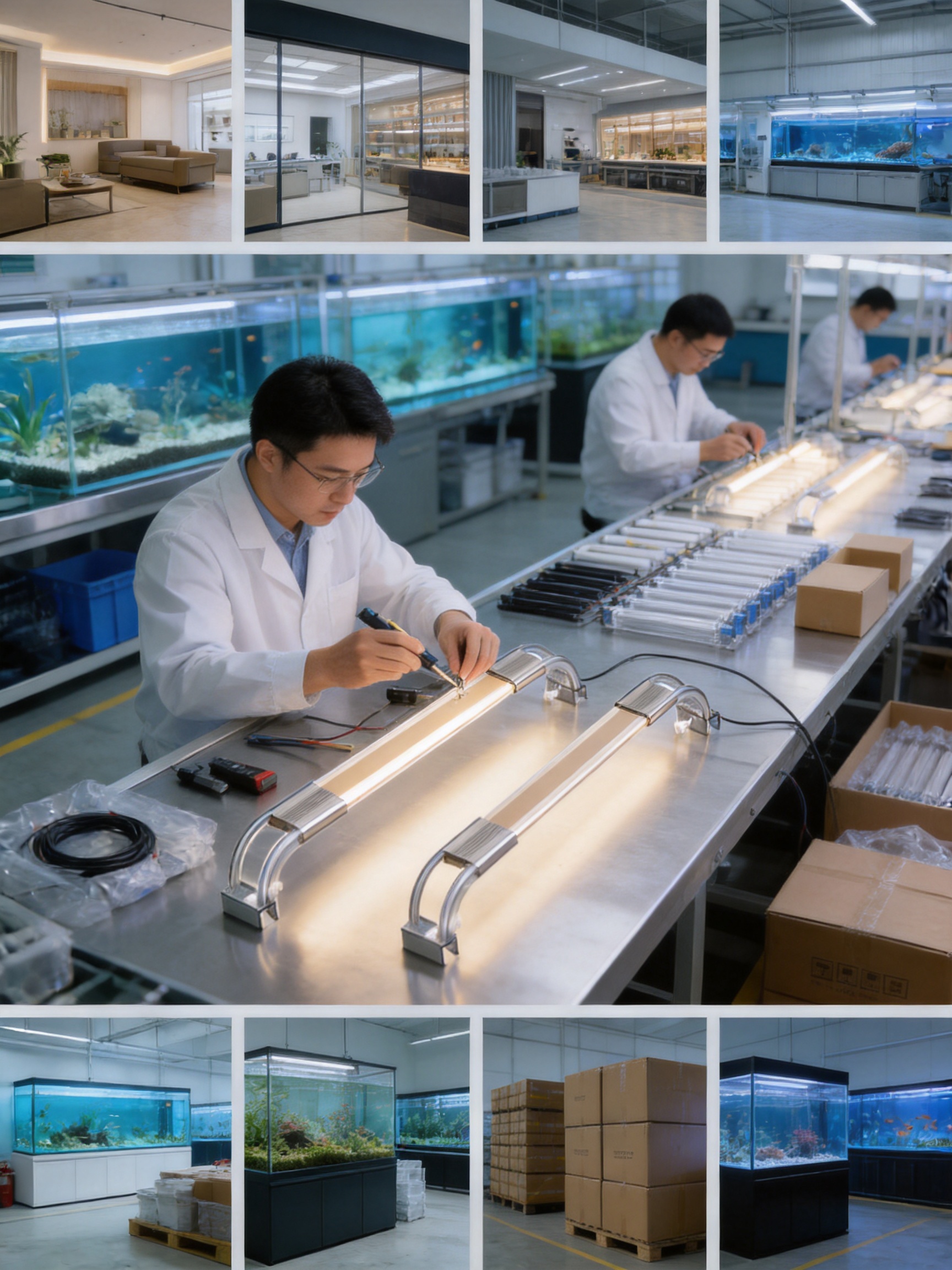
Choosing the right aquarium lamp is an important part of creating a healthy, attractive, and practical aquatic environment. A light must do more than simply illuminate the tank. It should fit the aquarium securely, provide suitable coverage, consume an appropriate amount of power, maintain a clean appearance, and remain convenient for everyday use. The ADP Series Aquarium Lamp has been developed around these essential requirements, offering a compact lighting solution for aquariums across a wide range of lengths.
With multiple models from ADP-080J to ADP-1050J, the series is designed to serve small desktop aquariums, medium home tanks, display aquariums, and larger installations. Each model is matched with a recommended aquarium size range and supports aquarium glass up to 12 millimeters thick. This model-based approach helps aquarium owners select a lamp according to the actual dimensions of their tank rather than relying on a one-size-fits-all product.
The ADP Series is manufactured and supplied by Sensen Group Co., Ltd., an established Chinese company with extensive experience in aquarium products, aquaculture machinery, industrial equipment, and related manufacturing fields. The company’s long-term development, research structure, quality control organization, production scale, and international market experience provide a strong foundation for the design and supply of aquarium lighting products.
This article examines the design, specifications, application advantages, manufacturing strengths, selection considerations, and maintenance practices associated with the ADP Series Aquarium Lamp. It also explains why a structured range of aquarium lamps can offer practical advantages over generic lighting products that lack precise sizing information or aquarium-specific mounting compatibility.
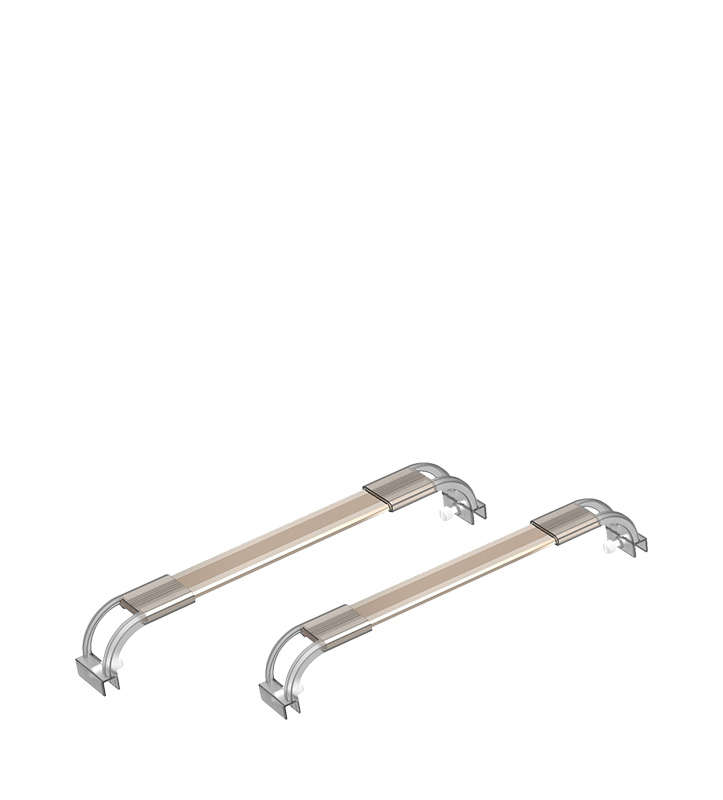
ADP Series Aquarium Lamp
Content
The ADP Series Aquarium Lamp is a slim aquarium lighting product designed for tanks with different lengths. Its compact dimensions help it remain visually discreet above the aquarium while providing a dedicated source of illumination for aquatic displays. The lamp series includes eleven listed models, with lamp power ranging from 1.5 watts to 20 watts.
The product dimensions are based on a narrow body measuring approximately 42 millimeters in width and 7 millimeters in height. The length varies according to the model. This low-profile construction is especially suitable for aquarium installations where a bulky light housing could interfere with the visual appearance of the tank, occupy excessive space, or make routine aquarium maintenance less convenient.
Every listed model is designed for a particular aquarium length range. The recommended fit generally extends beyond the physical lamp length, allowing the lamp to serve an aquarium that is longer than the lamp body. This design makes the series adaptable for tanks of different sizes while maintaining a compact product format.
The ADP Series also supports aquarium glass thicknesses of up to 12 millimeters. This specification is important because the glass thickness influences the compatibility of the lamp’s mounting structure. By clearly identifying the maximum supported thickness, the product information helps distributors, installers, and end users make a more reliable purchasing decision.
Instead of forcing consumers to choose between a few oversized or undersized lighting products, the series provides a progressive range of models. This product structure is suitable for retailers, aquarium shops, project suppliers, and consumers who need to match lighting equipment to different aquarium dimensions.
The following table summarizes the listed specifications for the ADP Series Aquarium Lamp. Dimensions are presented according to the supplied product information. The model, recommended aquarium size, power, and supported glass thickness should be checked before installation.
| Model | Approximate Product Size | Lamp Power | Recommended Aquarium Size | Maximum Glass Thickness |
|---|---|---|---|---|
| ADP-080J | L 80 × W 42 × H 7 mm | 1.5 W | 180–220 mm | ≤12 mm |
| ADP-160J | L 130 × W 42 × H 7 mm | 2 W | 230–270 mm | ≤12 mm |
| ADP-200J | L 180 × W 42 × H 7 mm | 2.5 W | 280–320 mm | ≤12 mm |
| ADP-250J | L 250 × W 42 × H 7 mm | 3.5 W | 350–390 mm | ≤12 mm |
| ADP-300J | L 300 × W 42 × H 7 mm | 4.5 W | 400–440 mm | ≤12 mm |
| ADP-400J | L 400 × W 42 × H 7 mm | 6.5 W | 500–540 mm | ≤12 mm |
| ADP-500J | L 500 × W 42 × H 7 mm | 8 W | 600–640 mm | ≤12 mm |
| ADP-700J | L 700 × W 42 × H 7 mm | 12 W | 800–840 mm | ≤12 mm |
| ADP-800J | L 800 × W 42 × H 7 mm | 14 W | 900–940 mm | ≤12 mm |
| ADP-900J | L 900 × W 42 × H 7 mm | 16 W | 1000–1040 mm | ≤12 mm |
| ADP-1050J | L 1100 × W 42 × H 7 mm | 20 W | 1200–1240 mm | ≤12 mm |
The specifications show a clear progression in both lamp length and power. Smaller models are intended for compact aquariums, while the longer models provide a practical option for larger tanks. The range is particularly useful for aquarium retailers because it allows them to stock a coherent family of products rather than unrelated lamps with different construction standards and mounting methods.
One of the most noticeable advantages of the ADP Series is its slim form factor. At approximately 7 millimeters in height, the lamp is designed to occupy minimal vertical space. This is valuable in living rooms, offices, bedrooms, reception areas, retail displays, and other locations where the aquarium is part of the interior design.
A low-profile lamp can also help preserve an unobstructed view of the aquarium. Oversized lighting fixtures may distract from fish, aquatic plants, stones, wood, and other decorative elements. A slim lighting body is less visually dominant, allowing the aquarium itself to remain the center of attention.
The narrow 42-millimeter width contributes to a clean installation. It can be positioned above the tank without creating the impression of a heavy structure. This compact geometry is also useful for aquarium owners who need access to the water surface for feeding, pruning, cleaning, or rearranging decorations.
The product’s design is suited to the practical realities of aquarium use. Aquarium equipment must coexist with moisture, regular maintenance, and changing interior layouts. A compact lamp is easier to incorporate into a tank system and can reduce the amount of equipment competing for space around the aquarium.
Although appearance is important, the slim construction also supports product standardization. Using a consistent width and height across different models helps create a unified product family. Retailers and users can recognize the series easily, while replacement or expansion decisions become simpler when the products share a common design language.
A major limitation of generic aquarium lamps is the lack of precise sizing options. A lamp that is too short may leave parts of the aquarium insufficiently illuminated. A lamp that is too long may be difficult to install, look unbalanced, or extend beyond the aquarium in an inconvenient way. The ADP Series addresses this issue by providing multiple models for progressively larger aquarium lengths.
The recommended aquarium ranges begin at 180–220 millimeters for the ADP-080J and extend to 1200–1240 millimeters for the ADP-1050J. This creates a selection suitable for small aquariums as well as larger domestic or display tanks. The range also helps suppliers serve customers with different tank formats without depending on custom modifications.
Model selection should be based on the actual external length of the aquarium and the position of the lamp’s support or mounting points. The recommended ranges provide a starting point, but installers should always verify the dimensions of the tank, the available support area, and the glass thickness before purchase.
The size range is valuable for aquarium projects involving several tanks. For example, a retailer may use shorter models on nano aquariums, medium models on standard home aquariums, and longer models on display tanks. A consistent product family can improve the visual unity of a showroom while simplifying stock management and staff training.
For consumers, the range makes it easier to replace an existing lamp without changing the aquarium itself. If the tank size remains the same, a properly selected replacement from the same series can maintain a consistent installation format and appearance.
The ADP Series includes power levels from 1.5 watts to 20 watts. This broad range allows the lamp to be selected according to aquarium size and intended use. Smaller tanks can use lower-power models, while longer aquariums can use higher-power models designed for broader coverage.
Power should not be considered in isolation. Aquarium owners should also consider tank depth, water clarity, plant requirements, décor, desired visual brightness, and operating duration. The wattage information helps establish the electrical demand of each model, but it does not by itself define the complete lighting result in every aquarium.
A correctly sized lamp can help avoid unnecessary energy consumption. Using a much larger lamp than required may increase operating costs without providing a meaningful benefit for a small aquarium. Conversely, using an undersized lamp may produce an unsatisfactory display and encourage users to add extra equipment. The progressive power structure of the ADP Series supports more balanced product selection.
The lower-power models are appropriate for compact aquariums and simple display applications where a modest lighting source is required. The higher-power models extend the range to larger aquariums, where a longer body and greater electrical output are more appropriate.
Users should operate the lamp according to the instructions supplied with the specific product and use compatible electrical accessories. Any installation near water should be completed carefully, with attention to electrical safety, cable management, and the protection requirements of the complete aquarium system.

All listed ADP Series models are specified for aquarium glass thicknesses of up to 12 millimeters. This common compatibility limit simplifies product selection because customers do not need to compare a different glass-thickness specification for every model.
Glass thickness can affect the stability and fit of an aquarium lamp. A support that is suitable for thin glass may not fit securely over a thicker aquarium wall. If the lamp is installed on glass outside the stated specification, it may not sit correctly, may become unstable, or may place unnecessary stress on the aquarium edge.
Before installation, the user should measure the aquarium glass or confirm its thickness from the aquarium manufacturer. The support area should be clean, stable, and free from obstructions. Any protective pads, clips, or brackets supplied with the product should be installed according to the product instructions.
The stated compatibility provides a practical advantage over lighting products with unclear mounting information. Clear technical data helps reduce installation errors, supports more accurate quotations for projects, and gives distributors useful information for advising customers.
The ADP Series competes through practical design, product range, and specification clarity rather than relying only on decorative features. Several advantages distinguish it from basic aquarium lamps that offer limited model choices or incomplete technical information.
The series covers a wide range of aquarium lengths. This means that users can choose a lamp designed for their tank instead of adapting an unsuitable product. The eleven-model structure is also useful for wholesalers and retailers that need a coordinated product portfolio.
Each model is associated with a recommended aquarium size range. This makes the selection process easier for customers and sales personnel. Clear matching information can also reduce returns caused by customers ordering a lamp that is too short or too long.
The approximately 42-millimeter width and 7-millimeter height create a consistent appearance across the range. A uniform product family is easier to present in a showroom and easier for customers to recognize when they need an additional or replacement lamp.
The defined glass-thickness specification provides a practical installation reference. Customers can compare the lamp with the actual construction of their aquarium before purchase, rather than discovering a compatibility issue during installation.
Power levels are distributed across the model range, from 1.5 watts to 20 watts. This allows users to choose an appropriate electrical output for different aquarium sizes and display objectives.
For professional buyers, a standardized series can simplify purchasing, warehousing, and after-sales support. Common design features across the range can reduce the need to manage many unrelated product types.
The compact design and broad size selection make the lamps suitable for home aquariums, office aquariums, aquarium shops, hospitality environments, and other display applications. The product can therefore serve more than one market segment.
These advantages do not mean that every model is suitable for every aquarium. The correct choice still depends on the tank’s dimensions, glass thickness, lighting goals, and operating conditions. However, the structured design of the series gives customers a more reliable starting point than an unclassified generic lamp.
The strength of an aquarium lighting product depends not only on its visible design but also on the organization behind its development and production. Sensen Group Co., Ltd. was established in November 1985 and has developed through more than three decades of activity in aquarium products, aquaculture machinery, and industrial equipment.
This long operating history provides experience in developing products for aquatic environments and serving both domestic and international markets. Product knowledge accumulated across aquarium equipment and related machinery can support practical decisions in design, materials, production organization, quality management, and distribution.
The company has established several functional departments, including a research institute, business school, quality control department, personnel and administrative information department, and financial department. The presence of dedicated research and quality functions is important for a product series that requires consistent dimensions, reliable electrical performance, accurate specifications, and repeatable production.
A dedicated research structure can support continuous product improvement. In aquarium lighting, improvements may involve compactness, mounting compatibility, visual appearance, production efficiency, packaging, electrical reliability, and the ability to provide multiple model sizes. A company with an established innovation organization is better positioned to review these factors systematically than a supplier that only assembles products for individual orders.
Quality control is equally important. Aquarium products operate close to water and are handled frequently during maintenance. Consistent inspection helps manufacturers identify dimensional variation, assembly problems, appearance defects, and electrical issues before products reach the market. Although specific inspection procedures for each ADP model are not provided in the source material, the company’s dedicated Quality Control Department indicates that quality management is treated as an organizational responsibility.
The company also operates or holds interests in multiple subsidiary and trading organizations in different regions of China. This broader structure supports manufacturing coordination, market access, sourcing, distribution, and customer service. For international buyers, an established organization can provide greater confidence in continuity of supply than a small, short-term supplier with limited production resources.
Large-scale production and marketing can also support better product standardization. When a product is manufactured for broad domestic and overseas markets, specifications must be documented clearly and applied consistently. The ADP Series model table reflects this approach by identifying model numbers, dimensions, power, aquarium size range, and glass compatibility.
Another strength is the company’s experience in building sales and service networks. The business has developed aquarium stores and distribution channels and has worked to integrate online and offline services. This kind of market structure can help manufacturers receive product feedback, understand common customer needs, and improve the availability of technical information.
An aquarium lamp must pass through several important stages before it becomes a finished commercial product. The first stage is product design, where the intended aquarium sizes, lamp dimensions, power levels, mounting requirements, and appearance are defined. The progressive ADP model structure suggests that the series has been organized around a repeatable design platform with different lengths and outputs.
The second stage is component planning. A lighting product requires a suitable housing, light-emitting components, electrical connections, mounting parts, and packaging materials. Component selection must consider compatibility, production consistency, and the conditions in which the product will be used.
During assembly, components must be positioned correctly and secured consistently. The slim 7-millimeter height requires careful control of internal layout and external construction. Compact products often require more disciplined assembly because there is less space to accommodate variation or misalignment.
Dimensional inspection is important for a product that must fit a specific aquarium. Length, width, height, and mounting interfaces should remain within controlled tolerances. If dimensions vary excessively, the product may not sit evenly or may fail to match the recommended aquarium range.
Electrical inspection is another essential part of manufacturing. A finished lamp should be checked for appropriate operation, connection integrity, and consistency with its rated power. Testing procedures should be applied in accordance with the manufacturer’s internal quality system and the requirements of the destination market.
Appearance inspection helps ensure that the lamp is suitable for visible installation. Surface marks, uneven assembly, loose components, and packaging damage can affect customer perception even when the lamp functions correctly. In aquarium products, visual quality is particularly important because the equipment is displayed in homes and commercial spaces.
Packaging and logistics are also part of the manufacturing process. A slim lamp can be vulnerable to bending or impact if it is not protected adequately during storage and transportation. Appropriate packaging helps preserve product condition from the factory to the distributor, retailer, installer, or end user.
Manufacturing strength is therefore not limited to a single machine or assembly line. It includes product planning, supplier coordination, process control, inspection, documentation, packaging, warehouse management, and after-sales support. The company’s organizational scale and quality-oriented departments provide a foundation for coordinating these activities.
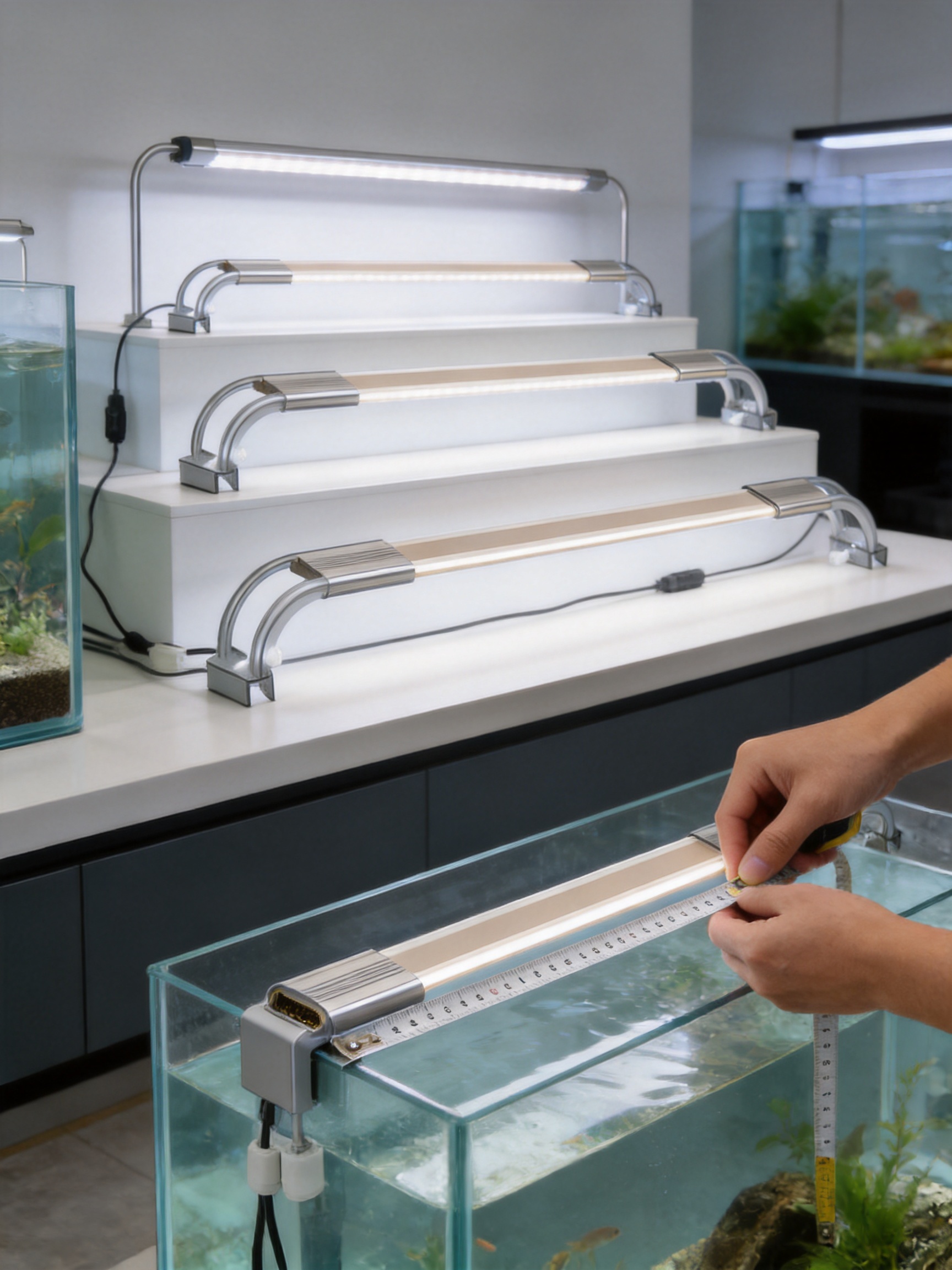
For home users, the ADP Series can provide a clean and compact lighting solution for aquariums in living rooms, study areas, bedrooms, and family spaces. The low-profile shape helps maintain a neat appearance, while the model range allows the lamp to be matched to different tank lengths.
Compact aquariums often have limited space above the water surface. A slim low-power model can be more appropriate than a large lighting fixture. The ADP-080J and other shorter models offer options for small tanks within their recommended size ranges.
Aquarium retailers often operate multiple tanks with different dimensions. A coordinated lighting family can make displays look more professional and simplify replacement planning. Retail staff can use model numbers and aquarium size ranges to guide customers toward a suitable product.
Aquariums in offices, hotels, restaurants, clinics, and reception spaces are often selected for their decorative value. The slim structure of the ADP Series can help maintain a refined display without making the lighting equipment visually dominant.
Schools, training facilities, and public demonstration areas may require aquarium lighting that is easy to identify, replace, and maintain. A clearly organized model range helps institutions document their equipment and select replacements more efficiently.
Before installation, confirm the aquarium length, glass thickness, and available support area. Compare these measurements with the recommended specifications for the selected model. Do not assume that a model is suitable solely because its physical length appears close to the aquarium length.
Clean the installation area and remove dust, algae, salt residue, or other material that could prevent the lamp from sitting securely. The aquarium rim should be inspected for cracks, chips, or structural damage before equipment is mounted.
Place the lamp evenly and ensure that it does not rest on an unstable edge. Cables should be routed in a way that avoids tension, sharp bends, and unnecessary contact with water. Electrical connections should remain dry and should be handled only with appropriate safety precautions.
Do not modify the lamp, cut its cable, remove safety components, or combine it with incompatible electrical equipment unless the manufacturer specifically permits the modification. Unapproved changes can affect performance, safety, warranty coverage, and compliance with local requirements.
When installing several aquarium devices together, allow sufficient space for maintenance and inspection. Lighting should not obstruct access to filters, pumps, air lines, feeding areas, or removable aquarium covers.
Regular maintenance helps preserve the appearance and performance of aquarium lighting. Before cleaning, disconnect the lamp from the power supply and allow it to cool if necessary. Use a soft, dry or appropriately damp cloth for exterior cleaning, and prevent water from entering electrical openings or connections.
Mineral deposits and water droplets can accumulate on aquarium equipment over time. These deposits may affect the appearance of the lamp and can make cleaning more difficult if they are left for long periods. Wiping the product regularly can help maintain a clean installation.
Users should inspect the lamp body, support areas, power cable, and connections for visible damage. If there are signs of cracking, exposed wiring, overheating, unusual odor, flickering, or unstable mounting, discontinue use and seek qualified assistance.
The lamp should not be submerged unless the product documentation explicitly states that it is designed for underwater use. Aquarium lighting is normally installed above or beside the aquarium, and its electrical parts should be protected from direct water contact.
Correct operating habits also contribute to service life. Users should avoid repeatedly switching the lamp on and off in rapid succession, overloading power strips, or operating the lamp with damaged accessories. A stable installation environment is beneficial for both the lamp and the wider aquarium system.
Begin by measuring the aquarium’s external length or the length relevant to the lamp support. Next, measure or confirm the glass thickness. The selected model should fall within the recommended aquarium size range and should be compatible with glass no thicker than 12 millimeters.
The ADP-080J is listed for aquariums measuring 180–220 millimeters and has a rated power of 1.5 watts. The ADP-160J is listed for 230–270 millimeters at 2 watts, while the ADP-200J is listed for 280–320 millimeters at 2.5 watts.
For medium aquarium sizes, the ADP-250J, ADP-300J, ADP-400J, and ADP-500J cover recommended ranges from 350–390 millimeters through 600–640 millimeters. Their power levels range from 3.5 watts to 8 watts.
For longer aquariums, the ADP-700J, ADP-800J, ADP-900J, and ADP-1050J are listed for recommended ranges from 800–840 millimeters to 1200–1240 millimeters. Their rated power increases from 12 watts to 20 watts.
Buyers should also consider whether the aquarium contains live plants and whether the intended use is decorative viewing or plant growth. The available product information identifies model dimensions, power, aquarium size, and glass thickness, but it does not provide detailed photometric data or plant-specific performance claims. For demanding planted aquariums, purchasers should request additional technical information before final selection.
Distributors benefit from products that are easy to explain and categorize. The ADP Series has simple model identification and a clear relationship between model number, size, power, and aquarium range. This can make catalog preparation, shelf labeling, quotation writing, and customer support more efficient.
A multi-size series can also support repeat purchasing. Once a retailer understands the product family, the retailer can add different models as customer demand develops. The common appearance across the range makes it easier to present the products as a complete lighting solution rather than as unrelated individual items.
Project buyers may value the company’s broader production organization. Aquarium installations for hotels, retail stores, offices, public venues, and residential developments may require multiple sizes, reliable supply, and consistent product appearance. A manufacturer with research, quality control, production, and export experience is better positioned to coordinate such requirements.
For overseas buyers, communication with the supplier should cover model availability, packaging, electrical standards, labeling, minimum order quantities, delivery schedules, warranty terms, and destination-market compliance. The product specifications supplied for the ADP Series provide a technical foundation, but commercial details should be confirmed for each order.
Sensen Group Co., Ltd. is based in Zhoushan City, Zhejiang Province, China. The company began operations in November 1985 and has expanded its activities across aquarium pets, aquaculture machinery, industrial equipment, and related fields.
The company describes a development strategy based on industrial technicalization, marketing globalization, and brand internationalization. Its business structure includes research, quality control, education, administration, finance, manufacturing subsidiaries, trading companies, and import and export operations.
This broad structure can support product development from multiple directions. Research teams can focus on innovation, quality personnel can coordinate inspection and standards, manufacturing organizations can support production, and trading or export teams can assist with international market requirements.
The company’s experience with aquarium stores and sales networks also provides contact with end users. Customer feedback from retailers and consumers can help identify common requirements related to installation, appearance, product range, packaging, and after-sales service.
For the ADP Series, these capabilities are relevant because aquarium lighting is often purchased as part of a broader aquarium equipment system. Customers may also need filters, pumps, air equipment, accessories, and other products. A manufacturer with a wide aquarium product portfolio can understand how lighting interacts with the practical needs of the complete aquarium environment.
Before ordering an ADP Series Aquarium Lamp, confirm the exact model number and the corresponding recommended aquarium range.
Check that the aquarium glass thickness is no more than 12 millimeters and that the mounting area is structurally sound.
Confirm the rated power and ensure that the electrical supply and accessories are suitable for the product and the destination market.
Ask the supplier about product availability, packaging, labeling, warranty conditions, and any required compliance documentation.
For planted aquariums or specialized displays, request additional information about light output, spectrum, color temperature, operating recommendations, and plant suitability where needed.
For commercial projects, confirm the quantity of each model, delivery schedule, spare-unit requirements, and after-sales support arrangements.
Retain the product model information and purchase records for future maintenance or replacement. A clear record helps ensure that the correct model can be reordered later.
The ADP Series is a family of compact aquarium lamps available in multiple lengths and power levels. The listed models are designed for aquariums ranging from approximately 180–220 millimeters to 1200–1240 millimeters in recommended size.
The supplied specifications list eleven models: ADP-080J, ADP-160J, ADP-200J, ADP-250J, ADP-300J, ADP-400J, ADP-500J, ADP-700J, ADP-800J, ADP-900J, and ADP-1050J.
The listed power range is from 1.5 watts for the ADP-080J to 20 watts for the ADP-1050J. Each model has a specified power level associated with its size and recommended aquarium range.
All listed models are specified for aquarium glass up to 12 millimeters thick. The glass thickness should be checked before installation to confirm compatibility.
The ADP-300J is listed for aquariums measuring 400–440 millimeters. Its listed lamp power is 4.5 watts. The aquarium’s glass thickness and mounting arrangement should also be verified.
The ADP-500J is listed for aquariums measuring 600–640 millimeters and has a listed power of 8 watts.
The ADP-1050J is listed for aquariums measuring 1200–1240 millimeters and has a listed power of 20 watts.
The product information identifies the lamp dimensions, power, aquarium size range, and glass compatibility, but it does not provide detailed plant-lighting specifications. Owners of demanding planted aquariums should request information about spectrum, intensity, and plant suitability before making a final decision.
A slim lamp takes up less space above the aquarium and can provide a cleaner, less intrusive appearance. It may also make feeding, cleaning, and routine aquarium maintenance more convenient.
Check the aquarium length, glass thickness, mounting area, electrical compatibility, cable condition, and product model. The lamp should be installed securely and kept away from direct water contact unless the documentation states otherwise.
User modification is not recommended unless specifically authorized by the manufacturer. Altering electrical components, cables, supports, or housings may create safety risks and may affect product performance or warranty coverage.
The company has operated since 1985, maintains research and quality control functions, has a broad manufacturing and trading structure, and supplies products for domestic and international markets. These capabilities can support product development, standardized production, export coordination, and after-sales communication.
The ADP Series Aquarium Lamp is a practical lighting family designed around the real requirements of aquarium owners and suppliers. Its principal strengths include a compact profile, a consistent 42-millimeter width and approximately 7-millimeter height, eleven model options, power ratings from 1.5 watts to 20 watts, recommended aquarium ranges, and compatibility with aquarium glass up to 12 millimeters thick.
Compared with generic aquarium lighting products, the series offers clearer model selection and a more structured approach to aquarium compatibility. Users can choose a lamp according to tank length and power requirements, while retailers and project buyers can manage a coordinated product range.
The manufacturing background of Sensen Group Co., Ltd. further supports the product’s market position. More than thirty years of development, dedicated research and quality departments, multiple subsidiaries and trading organizations, broad production experience, and established sales networks provide the organizational foundation required for consistent aquarium equipment supply.
Before purchase, users should confirm aquarium dimensions, glass thickness, electrical requirements, and the intended lighting application. When properly matched and installed, the ADP Series can provide a neat, adaptable, and commercially practical lighting solution for small, medium, and larger aquariums.
Sensen Group Co., Ltd. Product Information. ADP Series Aquarium Lamp specification sheet.
Sensen Group Co., Ltd. Company Profile. Corporate history, organizational structure, research activities, quality control, and market development information.
ADP Series Aquarium Lamp Model Table. Model dimensions, rated lamp power, recommended aquarium size, and supported glass thickness.
General Aquarium Equipment Installation Principles. Guidance concerning aquarium measurement, equipment mounting, electrical safety, and routine maintenance.
General Aquarium Lighting Selection Principles. Considerations relating to aquarium size, lamp power, visual display, plant requirements, and operating conditions.
Note: Buyers should consult the latest manufacturer documentation for final technical, electrical, installation, compliance, warranty, and maintenance requirements.


 No. 61-79, Baima Street, Maao Town, Dinghai District, Zhoushan City, Zhejiang Province, China.
 0086 580 8082088 / 8081168
 0086 580 8080978
 songhua@sunsun-china.com