

 English
 русский
 España
 Portugal
 عربي
Li Mei | Aquarium Equipment Sales Specialist
Home / Author / Li Mei | Aquarium Equipment Sales Specialist / Advanced 500W Glass Aquarium Heaters for Large Home Aquariums

Maintaining a stable water temperature is one of the most important responsibilities in aquarium care. Tropical fish, aquatic plants, shrimp, and many other aquatic organisms depend on a controlled thermal environment. Even a moderate temperature change can affect feeding behavior, metabolism, immunity, breeding, and overall activity. For this reason, aquarium heating equipment must do more than simply produce heat. It must provide dependable temperature regulation, even heat distribution, convenient adjustment, safe operation, and compatibility with the aquarium environment.
The YRB/ARB Series Aquarium Glass Heater is designed around these practical requirements. With a 500W heating capacity, a 455 mm body length, an external temperature controller, and a stated operating range of 20°C to 35°C, the series is intended for aquariums measuring approximately 100 to 120 cm in length. The available models include YRB-250, YRB-250B, and ARB-250. Although the model names differ, the supplied specifications identify the same principal electrical rating and aquarium application range for all three versions.
This product combines a glass heater body with a temperature adjustment system that places control outside the aquarium. It also incorporates a uniform heating wire intended to collect and distribute heat efficiently. The result is a heating solution suitable for large domestic aquariums and other controlled aquatic environments where stable temperature management is essential.
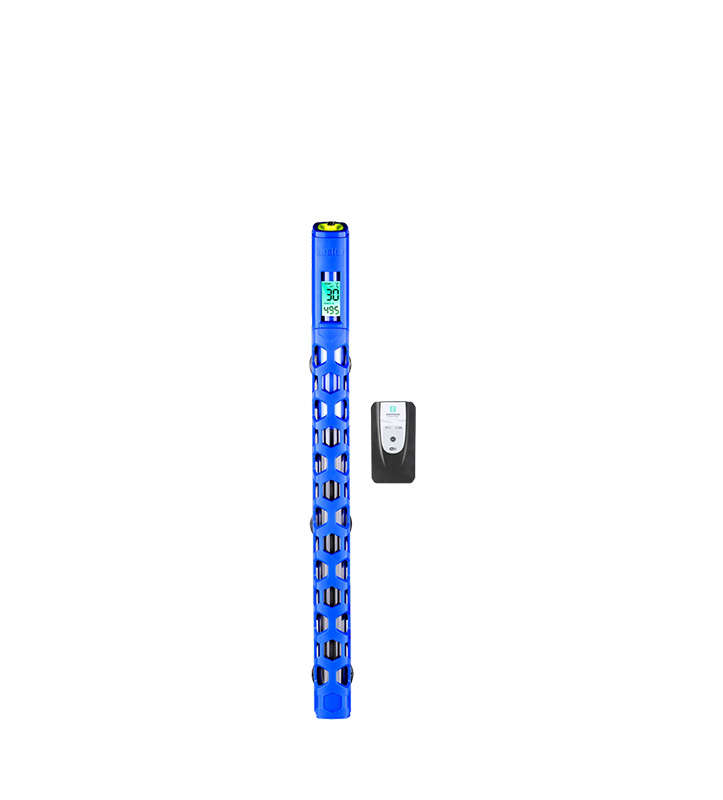
YRB/ARB Series Aquarium Glass Heater
Content
Aquarium water does not naturally remain at the temperature required by tropical species. Room temperature may fluctuate between day and night, and seasonal changes can create even larger variations. Lighting systems, ventilation, water movement, and the location of the aquarium can also affect thermal conditions. A heater must therefore compensate for environmental changes while avoiding excessive temperature swings.
A suitable heater should deliver heat gradually and consistently. A concentrated heat source can create local hot spots, while insufficient circulation can cause different areas of the aquarium to have different temperatures. Such uneven conditions may be stressful for fish and can make it difficult for the aquarist to determine the actual temperature experienced by aquatic life.
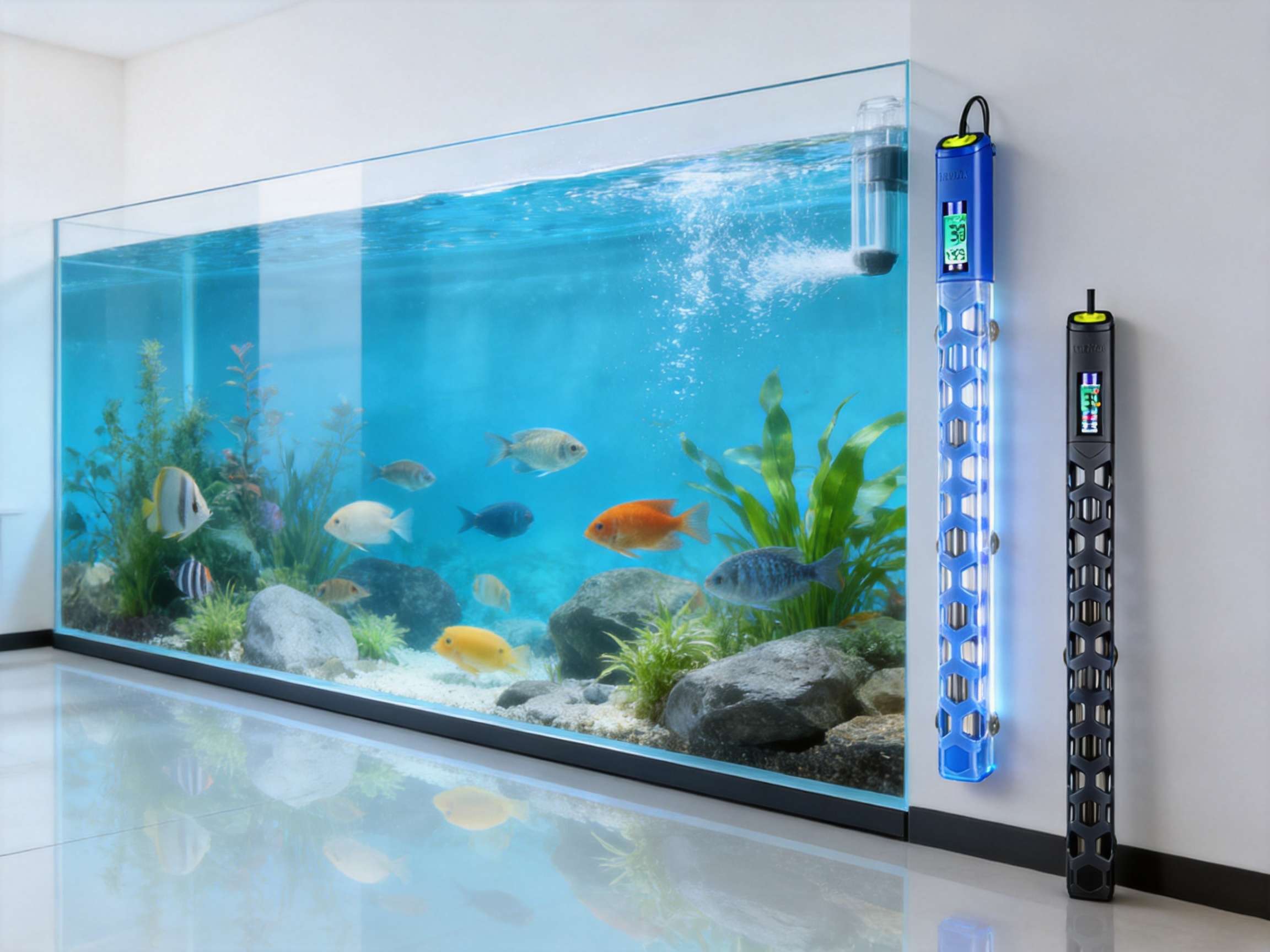
The YRB/ARB Series addresses this challenge through a heating wire designed for fast heat collection and uniform heating. The product information emphasizes the purpose of this construction: ensuring that thermal energy is distributed consistently rather than being concentrated in one small part of the heater. In a properly circulated aquarium, this feature can support more balanced water conditions.
Temperature regulation is equally important. The product provides an adjustment range of 20°C to 35°C, covering many commonly maintained tropical aquarium temperatures. This range allows the heater to be adapted to different fish species, plant environments, acclimation requirements, and seasonal conditions. The external controller also makes it possible to adjust the set temperature without placing hands or tools inside the aquarium.
The YRB/ARB Series Aquarium Glass Heater is a high-capacity aquarium heating product intended for large household aquariums. Its 500W rating gives it substantially more heating capacity than compact heaters designed for nano tanks or small community aquariums. The 455 mm length helps distribute the heating element over a practical area for aquariums measuring approximately 100 to 120 cm.
The series is available in the following configurations:
| Model | Voltage | Power | Length | Recommended Tank Size | Temperature Range |
| YRB-250 | 220V-240V / 50Hz-60Hz | 500W | 455 mm | 100-120 cm | 20-35°C |
| YRB-250B | 220V-240V / 50Hz-60Hz | 500W | 455 mm | 100-120 cm | 20-35°C |
| ARB-250 | 220V-240V / 50Hz-60Hz | 500W | 455 mm | 100-120 cm | 20-35°C |
The electrical specification is designed for 220V-240V systems operating at either 50Hz or 60Hz. Users should always confirm compatibility with the local power supply before installation. The aquarium dimensions listed by the manufacturer are a practical reference rather than a substitute for evaluating water volume, room temperature, aquarium cover, insulation, circulation, and the temperature requirements of the livestock.
The main product characteristics include a glass heater body, uniform heating wire, external temperature adjustment, repeated temperature setting, and a remote-control function described in the supplied product material. Together, these features create a product intended for convenient and controlled aquarium heating rather than basic on-and-off heat generation alone.
Glass is widely used in aquarium heating products because it provides a rigid, smooth, and water-resistant housing for the internal heating components. A glass heater can be positioned inside the aquarium while protecting the heating element from direct contact with the water. Its smooth surface is also relatively easy to inspect and clean when routine aquarium maintenance is performed.
The glass body must be treated as a precision component. Aquarium heaters are exposed to water, temperature changes, suction-cup mounting, cleaning activities, and occasional movement during maintenance. Product reliability therefore depends not only on the heating wire but also on the quality of the glass housing, the connection between the housing and electrical components, and the overall assembly process.
The manufacturing strength of a large professional producer is particularly important in this area. A company with dedicated research, quality-control, production, and administrative functions can organize the heater around a controlled series of design and inspection stages. These stages may include component preparation, heating-wire installation, glass-body assembly, electrical connection, controller integration, appearance inspection, and functional testing. The supplied company information confirms the existence of a Sensen Research Institute and a Quality Control Department, supporting a structured approach to product development and quality management.
For the user, the benefit is a heater designed as an integrated aquarium appliance rather than an improvised heating element. The glass housing, internal heating system, control components, and operating instructions must work together. This integrated approach can improve usability and reduce the likelihood that one isolated component will determine the performance of the whole unit.
The product description specifically highlights a uniform heating wire. This component is central to the heater’s operation because it converts electrical energy into thermal energy. A well-arranged heating wire can help distribute heat along the length of the heater, limiting the formation of excessively concentrated areas.
Uniform heating is valuable for several reasons. First, it helps the heater transfer thermal energy more evenly into the surrounding water. Second, it can support a more predictable relationship between the selected temperature and the actual aquarium temperature. Third, it reduces the risk that one small section of the heater will become significantly hotter than the rest of the assembly during normal operation.
Heat distribution also depends on aquarium circulation. A heater should normally be installed in a location where water movement can carry warmed water through the aquarium. Filters, circulation pumps, and air movement can assist this process. The heater’s uniform heating design works most effectively when installation and water circulation are also appropriate.
Compared with a basic low-cost heater that may concentrate heat in a short element, the 455 mm body of the YRB/ARB Series provides a longer heating surface for a 500W output. This combination is particularly suitable for larger aquariums in which the water volume and tank length require stronger and more broadly distributed heating capacity.
It is important to understand that no heater can replace circulation or correct an incorrectly sized aquarium system. However, the combination of a relatively long heating body and a uniform heating wire provides a practical advantage for large home aquariums. It supports a more balanced thermal design and makes the heater suitable for tanks where a small compact heater would be underpowered or forced to work continuously.
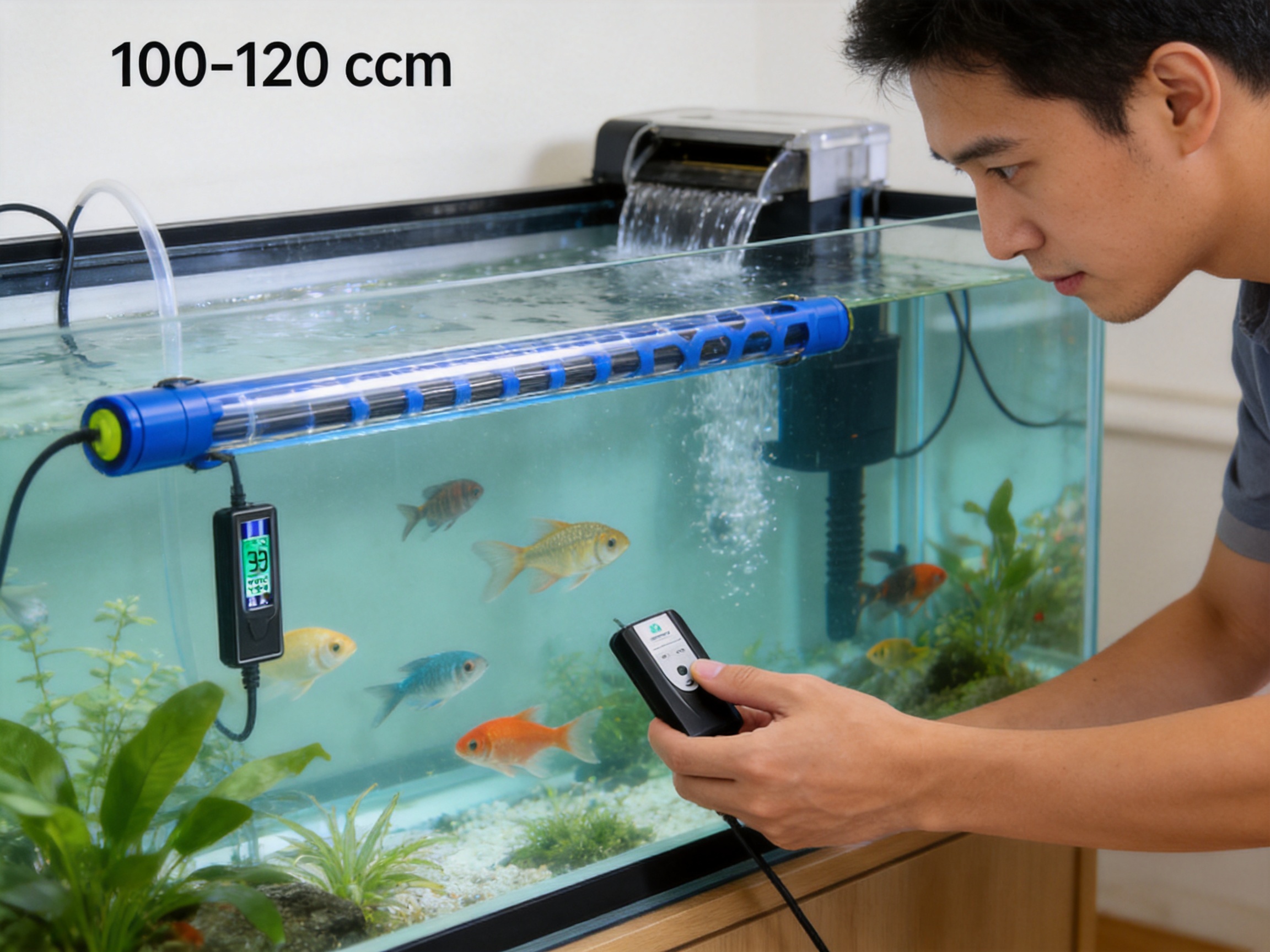
One of the most convenient features of the series is the external temperature controller. Conventional aquarium heaters often require the user to reach into the tank or remove equipment before changing the setting. This can be inconvenient in a deep aquarium, especially when the aquarium is heavily planted, covered, or positioned against a wall.
An external controller places the temperature adjustment function outside the water. The aquarist can change the setting while keeping hands, tools, and unnecessary objects away from aquatic life. This arrangement can make routine maintenance simpler and reduce disturbance to fish, plants, decorations, and substrate.
The external arrangement also improves visibility. The temperature setting can be checked and adjusted at the controller rather than by attempting to read a small scale through water or behind aquarium equipment. This is especially useful when a heater must be adapted to seasonal changes, quarantine conditions, breeding programs, or the introduction of a new species.
The product material describes the controller as simple, convenient, and safe. These advantages are connected to the separation between the electrical adjustment interface and the submerged heater body. Nevertheless, safe operation still requires correct installation, proper grounding and power protection where applicable, and compliance with the operating instructions. The controller should be kept dry, and the heater should not be handled while connected to power.
Stable aquarium management often requires a repeatable temperature setting. Once an aquarist has determined the appropriate temperature for a particular aquarium, it is useful to return to that setting after cleaning, maintenance, or a temporary adjustment. The product description refers to repeated set temperature cycling, indicating that the heater is designed around consistent temperature selection and continued regulation.
Repeatability is valuable in commercial fish rooms, breeding systems, educational aquariums, and home displays. It helps the operator establish a routine rather than making a new estimation each time the heater is adjusted. A clear and accessible controller further supports this consistency.
Temperature stability is not the same as choosing the highest possible setting. Different species have different needs, and the aquarist should follow reliable husbandry guidance. The 20°C to 35°C range gives the user flexibility, but the correct point within that range depends on the livestock and the purpose of the aquarium.
A dependable setting system can also help reduce unnecessary stress during maintenance. Sudden changes in temperature are generally undesirable for aquatic organisms. By returning to a known setting and monitoring the aquarium with a separate thermometer, the user can create a more controlled maintenance routine.
The product material includes a remote-control feature described as easy to operate when the user is not at home. Remote operation can be useful for aquarists who travel, work long hours, or manage aquariums in locations that are not continuously occupied. It can provide an additional level of convenience when the aquarium requires attention outside normal household routines.
Remote operation should be regarded as a management aid rather than a replacement for responsible aquarium supervision. Users should confirm how the remote function operates, whether it requires a compatible control system, and what functions can be changed remotely. It is also recommended to monitor the aquarium with an independent thermometer and to inspect water level, circulation, and equipment condition regularly.
When used appropriately, remote capability can support a modern aquarium management system. It allows the aquarist to integrate heating with other routines such as lighting, filtration, water movement, and seasonal temperature adjustment. This is a practical advantage over simple heaters that provide only local manual control.
The YRB/ARB Series is specified for aquariums approximately 100 to 120 cm in length. This places it in a different application category from small heaters designed for desktop tanks, breeding boxes, and nano aquariums. A 500W heater is intended to supply a higher level of thermal energy for larger water volumes and for environments where heat loss may be significant.
Larger aquariums typically have greater thermal inertia, meaning that they require more energy to change temperature. At the same time, the larger water volume can lose heat through a broad surface area, exposed glass, open tops, room ventilation, and filtration equipment. Selecting an appropriately powerful heater helps the system maintain the target temperature without relying on multiple undersized units.
The 455 mm length is also suitable for a large aquarium layout. Instead of concentrating all heating activity in a very short area, the heater offers a longer heating zone. With adequate water movement, this can help distribute thermal energy through the tank and reduce the likelihood of pronounced temperature differences near the heater.
Compared with competing products that may be limited to one small tank size or one narrow temperature range, the YRB/ARB Series offers a clear application profile: high power, long body length, external adjustment, and a 20°C to 35°C setting range. These features make it easier for buyers and aquarium professionals to match the product with a defined category of installation.
At the same time, product selection should consider actual water volume rather than tank length alone. A heavily insulated 100 cm aquarium and an open-top aquarium in a cold room may have very different heating requirements. The user should consider the aquarium’s volume, ambient temperature, cover, filtration, water movement, and species requirements before final installation.
Basic aquarium heaters can provide useful heating at an economical price, but they may have limited adjustment convenience, shorter bodies, lower power ratings, or fewer control options. Some compact products are designed for small aquariums and are not suitable for larger systems. Attempting to use an undersized heater in a large tank can result in slow warming, continuous operation, and difficulty maintaining the desired temperature during cold conditions.
The YRB/ARB Series distinguishes itself through several combined features:
| Product characteristic | Practical benefit |
| 500W power rating | Provides higher heating capacity for larger aquariums |
| 455 mm heater length | Offers a longer heating area for more balanced placement |
| 20-35°C adjustment range | Supports a wide range of tropical and controlled aquarium applications |
| Uniform heating wire | Helps collect and distribute thermal energy more evenly |
| External controller | Allows adjustment without placing hands inside the aquarium |
| Remote-control function | Improves convenience for users who are away from the aquarium |
| Glass heater body | Provides a rigid, smooth housing designed for submerged aquarium use |
The most important competitive advantage is not one isolated specification, but the combination of capacity and control. A high-power heater without convenient regulation can be difficult to manage. A convenient controller attached to an undersized heating element may not perform adequately in a large aquarium. The YRB/ARB Series combines a 500W rating with a dedicated control approach and a longer heater body, creating a more complete solution for its intended tank size.
Competitor specifications vary widely, so buyers should compare electrical compatibility, rated aquarium size, heater length, control method, temperature range, warranty terms, and safety instructions. The YRB/ARB Series offers a clear specification set that makes this comparison easier.
The quality of an aquarium heater depends on more than its published specifications. The production process must consistently combine glass components, heating wire, electrical connections, controller parts, sealing structures, and packaging. Small variations in any of these stages can affect durability, performance, or user confidence.
Sensen Group Co., Ltd., also identified in the supplied company information as Sunsun Group Co., LTD, has operated since November 1985. More than three decades of activity have allowed the group to develop experience across aquarium products, aquaculture machinery, industrial equipment, and related sectors. This broad industrial background is relevant to aquarium heater production because it combines product knowledge with experience in mechanical, electrical, manufacturing, and commercial systems.
The company information identifies several organizational resources, including a Sensen Research Institute, a Quality Control Department, a personnel and administrative information department, a financial department, and a business school. These functions indicate that product development is supported by more than a simple assembly operation. Research, quality supervision, personnel training, and operational management all contribute to repeatable manufacturing.
An advanced manufacturing process for a product such as the YRB/ARB Series can be understood as a connected quality chain. It begins with product design and component selection. The heating wire must be matched to the required power rating and physical length. The glass body must be prepared to accommodate the internal structure. Electrical connections must be assembled securely, and the controller must provide the expected adjustment function. Finally, the completed unit must be inspected and tested before packaging.
Quality control is especially important because the heater operates in an electrically demanding environment: the product is connected to mains voltage while the heating body is placed in water. Controlled assembly and inspection are therefore essential. The presence of a dedicated Quality Control Department provides an organizational foundation for checking materials, assembly consistency, electrical performance, appearance, and final product condition.
The group also operates wholly owned subsidiary corporations in several locations, including Zhejiang Jialu, Jiangsu Sensen, Chongqing Sensen, Zhongshan Sensen, Tianjin Sensen, Roll-Tail Pet Company, and Marine Organism. It also maintains an import and export company and holdings in several trading companies. This broad network can support procurement, manufacturing coordination, product distribution, and service for domestic and international markets.
The YRB/ARB Series demonstrates the importance of matching design choices to the user’s actual needs. The product is not limited to a heating wire placed in a tube. Its design includes the relationship between the heating element, the glass body, the external controller, and the intended aquarium size.
During product development, the power rating must be considered together with the heater length. A 500W element requires a construction that can manage heat over an appropriate surface area. The temperature range must be compatible with the adjustment mechanism. The controller must remain practical for daily use. The final assembly must be suitable for installation in a wet aquarium environment.
A research institute can support this process by studying user requirements, improving product structure, evaluating new materials, and coordinating product upgrades. A quality-control department can then translate the design requirements into inspection procedures. Manufacturing teams can follow these procedures to reduce variation from one production batch to another.
Continuous innovation is identified as a central part of the company’s development direction. In the aquarium equipment market, innovation does not always mean adding unnecessary complexity. It can mean improving the heating wire arrangement, simplifying the controller, making temperature adjustment easier, strengthening quality consistency, or making the product more compatible with modern aquarium management practices.
The external controller and remote-control function illustrate this type of user-oriented innovation. They respond to common aquarium problems: reaching into the tank, disturbing livestock, and maintaining equipment while away from home. The result is a product that focuses not only on heating capacity but also on the practical experience of operating an aquarium.
Production consistency is important for distributors, retailers, aquarium installers, and end users. When a product series has defined voltage, power, length, and temperature specifications, each unit should reflect those specifications as closely as possible. Consistency simplifies inventory management, installation planning, replacement decisions, and customer support.
A company with dedicated quality-control functions can establish checks at multiple points. Incoming materials can be reviewed before they enter production. Work-in-process assemblies can be inspected before the heater is sealed or finalized. Finished products can be examined for appearance, controller response, electrical behavior, and packaging condition.
For glass heaters, visual inspection is particularly valuable. The glass should be checked for visible damage, irregularities, or contamination. The electrical connections and controller should be examined for correct assembly. The finished heater should be packaged in a way that protects the glass body during transportation and storage.
Although specific inspection procedures and certifications are not included in the supplied information, the company’s stated organizational structure demonstrates an emphasis on quality management. Buyers requiring particular certification documents, testing reports, or regional compliance information should request those documents directly before purchase or importation.
Before installation, verify that the aquarium has sufficient water volume for the heater’s 500W rating and that the local power supply matches the stated 220V-240V, 50Hz-60Hz specification. Inspect the glass body and cable for signs of damage. Do not install a heater that appears cracked, broken, or otherwise compromised.
Place the heater in a location with reliable water circulation. A position near the output of a filter or circulation pump can help move warmed water through the aquarium. Avoid placing the heater in a stagnant corner where heat may accumulate locally. The heater should be securely mounted according to the product instructions, using appropriate supports or suction cups if supplied.
The heater should remain adequately submerged during operation. Water evaporation can lower the water level and expose part of the heater. Users should check the water level regularly, particularly in open-top aquariums or installations with strong lighting and ventilation.
Do not power the heater outside water unless the product instructions specifically permit that operation. During maintenance, disconnect the power and allow the heater to cool before removing or touching it. Sudden contact with cold water after heating can place unnecessary stress on glass components, so the unit should be handled carefully.
After installation, use an independent aquarium thermometer to verify the actual water temperature. The controller setting is an important reference, but the aquarium environment, circulation, room temperature, and water volume can affect the measured result. A separate thermometer gives the aquarist a practical way to confirm that the target condition is being achieved.
Routine maintenance helps preserve heater performance. Inspect the glass body during water changes and equipment cleaning. Remove mineral deposits or algae carefully, following the manufacturer’s instructions. Do not use sharp tools that could scratch or damage the glass. Keep the external controller dry and check that the power cable remains in good condition.
Water movement should also be monitored. A heater may continue to operate, but poor circulation can reduce the consistency of aquarium-wide temperature distribution. Filters and circulation pumps should be maintained so that warmed water can move through the tank.
Seasonal conditions may require a change in the temperature setting. The external controller makes this adjustment more convenient, but changes should be made gradually when appropriate for the livestock. Avoid making unnecessary large changes simply because the weather changes for a short period.
If the aquarium is being relocated, drained, or heavily cleaned, disconnect the heater first and allow it to cool. Never pull the heater from the water while it is energized. If the glass is damaged or the controller behaves abnormally, discontinue use and seek professional advice or replacement.
The stated application is an aquarium measuring approximately 100 to 120 cm, but the product’s capabilities may also suit other controlled aquatic environments when the electrical and thermal requirements are appropriate. Potential applications can include large ornamental fish displays, breeding aquariums, quarantine tanks, educational installations, and aquaculture-related systems.
In a breeding or quarantine environment, stable temperature management can be especially important. Fish may already be experiencing stress from relocation, treatment, or changes in water chemistry. A reliable heating system can help maintain a consistent environment while the aquarist focuses on observation and water quality.
Commercial and institutional users may also value the repeatable settings and external adjustment. When several aquariums require similar conditions, a clearly specified heater series can simplify purchasing and maintenance. However, every installation should still be evaluated individually, and local electrical requirements must be observed.
The YRB/ARB Series stands out through a balanced design that combines strong heating capacity, a long glass body, uniform heat distribution, and external control. Many aquarium heaters compete primarily on power rating or price. This series offers a broader set of practical features for users who want both performance and convenience.
Its 500W capacity is appropriate for a larger aquarium category rather than a small desktop setup. The 455 mm length supports a more distributed heating arrangement. The 20°C to 35°C range is broad enough for many tropical aquarium applications. The controller reduces the need to reach into the aquarium, while remote operation adds flexibility for modern aquarium management.
The company’s long operating history, research resources, quality-control organization, subsidiary network, and international business structure provide additional confidence for buyers seeking a supplier with industrial scale. The product is supported by a broader manufacturing and distribution system rather than being presented as an isolated item.
For distributors, the clearly defined model specifications can simplify product positioning. For aquarium shops, the series can serve customers who require more power than compact heaters provide. For experienced aquarists, the external controller and repeated temperature setting support a more controlled maintenance routine.
Before purchasing, confirm the following points:
First, verify the local electrical supply. The listed voltage is 220V-240V at 50Hz-60Hz. Use the product only with a compatible power system and suitable electrical protection.
Second, evaluate the actual aquarium volume and environmental conditions. Tank length alone does not determine heating requirements. Consider water depth, room temperature, aquarium cover, insulation, filtration, and evaporation.
Third, confirm the required temperature range for the fish, plants, or other aquatic organisms. The heater can be adjusted from 20°C to 35°C, but the livestock should determine the selected temperature.
Fourth, compare the product’s 455 mm length with the available installation space. The heater should be positioned securely and fully submerged according to the instructions.
Fifth, ask the supplier about model differences between YRB-250, YRB-250B, and ARB-250 if the purchase requires a particular controller configuration, packaging format, or regional version. The supplied specifications show the same basic electrical and dimensional ratings, but buyers should confirm details before placing a large order.
Finally, request any documentation needed for import, distribution, electrical compliance, warranty, installation, or after-sales support. Professional buyers may require technical drawings, packaging information, test reports, or spare-part availability.
The series is specified for aquariums approximately 100 to 120 cm in length. It is intended for larger home aquariums and other aquatic systems requiring a 500W heating capacity.
Each listed model, including YRB-250, YRB-250B, and ARB-250, is specified at 500W.
The listed electrical specification is 220V-240V and 50Hz-60Hz. Users should confirm compatibility with their local electrical supply before installation.
The stated heater length is 455 mm for all three listed models.
The stated adjustment range is 20°C to 35°C.
The external controller allows the user to adjust the temperature without placing hands or tools inside the aquarium. This improves convenience and can reduce disturbance to fish, plants, and decorations.
The product description identifies a uniform heating wire designed for fast heat collection and even heating. Effective aquarium-wide distribution also depends on adequate water circulation and correct installation.
The supplied product information describes a remote-control function intended to make operation easier when the user is not at home. Buyers should confirm the exact remote-control configuration and compatibility for their intended installation.
The product is a 500W heater specified for aquariums approximately 100 to 120 cm in length. It should not be selected for a small aquarium unless the water volume and installation requirements have been professionally evaluated.
No. An independent thermometer is recommended so that the aquarist can verify the actual water temperature in the aquarium.
Check the power supply, inspect the glass body and cable for damage, confirm the aquarium size, provide adequate water circulation, and ensure that the heater can remain properly submerged during operation.
Its competitive strengths include a 500W output, 455 mm length, uniform heating wire, 20°C to 35°C adjustment range, external controller, remote-operation capability, and support from a manufacturer with long-term aquarium and industrial production experience.
Buyers can contact Sensen Group Co., Ltd. for model-specific documentation, purchasing information, electrical details, distribution support, and clarification of the differences between the available versions.
The YRB/ARB Series Aquarium Glass Heater is designed for aquarists who need more than a basic compact heating element. Its 500W power rating and 455 mm length make it suitable for aquariums approximately 100 to 120 cm in length, while its 20°C to 35°C adjustment range supports a variety of tropical and controlled aquatic environments.
The uniform heating wire is intended to improve thermal distribution, and the glass body provides a practical submerged housing for the heating system. The external controller simplifies temperature adjustment, and the described remote-control function adds convenience for users who manage aquariums away from home.
Its strongest advantage is the combination of capacity, distribution, control, and manufacturing support. The product is associated with a company that has operated since 1985 and has developed resources including research, quality control, subsidiary production organizations, and international business capabilities. These strengths provide a foundation for organized product development and large-scale supply.
For the best results, the heater should be selected according to actual aquarium conditions, installed with appropriate circulation, monitored with an independent thermometer, and maintained according to the operating instructions. When correctly matched to the aquarium, the YRB/ARB Series offers a practical and professionally developed solution for stable temperature management in large home aquariums and related aquatic applications.
1. Product specification sheet for the YRB/ARB Series Aquarium Glass Heater, including model, voltage, power, length, tank-size, and temperature-range information.
2. Product feature information describing temperature setting, uniform heating wire, external temperature adjustment, and remote operation.
3. Sensen Group Co., Ltd. company profile and organizational information.
4. General aquarium equipment installation and maintenance principles for submerged electrical heaters.
5. General aquatic husbandry guidance concerning temperature stability, water circulation, and independent temperature monitoring.


 No. 61-79, Baima Street, Maao Town, Dinghai District, Zhoushan City, Zhejiang Province, China.
 0086 580 8082088 / 8081168
 0086 580 8080978
 songhua@sunsun-china.com