

 English
 русский
 España
 Portugal
 عربي
Li Mei | Aquarium Equipment Sales Specialist
Home / Author / Li Mei | Aquarium Equipment Sales Specialist / Advanced Submersible Filtration Pump Technology for Reliable Aquarium Water Management
Content
A dependable water pump is one of the most important components in a modern aquarium system. It keeps water moving, supports filtration, improves oxygen distribution, and helps maintain a stable environment for fish, aquatic plants, and beneficial microorganisms. When a pump operates continuously, even small differences in efficiency, flow consistency, construction quality, and installation flexibility can have a significant effect on aquarium performance.
The JP Series Multi-Function Submersible Filtration Pump JP-014F is designed for aquarium filtration and water circulation applications that require dependable performance in a compact submersible format. With a rated power consumption of 16 watts, a maximum head height of 1.4 meters, and an output of up to 800 liters per hour, the JP-014F provides a practical balance between circulation capacity and energy use. Its submersible configuration allows it to operate inside a filtration chamber, sump, reservoir, or aquarium system while maintaining a relatively discreet installation profile.
The JP-014F is part of a broader pump family that includes models with different power levels, capacities, dimensions, and head heights. This wider product range allows aquarium builders, retailers, maintenance professionals, and hobbyists to select a model according to tank size and circulation requirements rather than relying on a single universal pump. Within that range, the JP-014F occupies a useful middle position for systems that need more capacity than compact 300 or 600 liter-per-hour units but do not require the higher power consumption of 1,200 or 1,600 liter-per-hour models.
This article examines the JP-014F in detail, including its operating characteristics, construction concept, application advantages, manufacturing strengths, maintenance considerations, and comparison with conventional aquarium pump alternatives. It also explains how the experience and production capabilities of the manufacturer support the development of aquarium equipment for domestic and international markets.
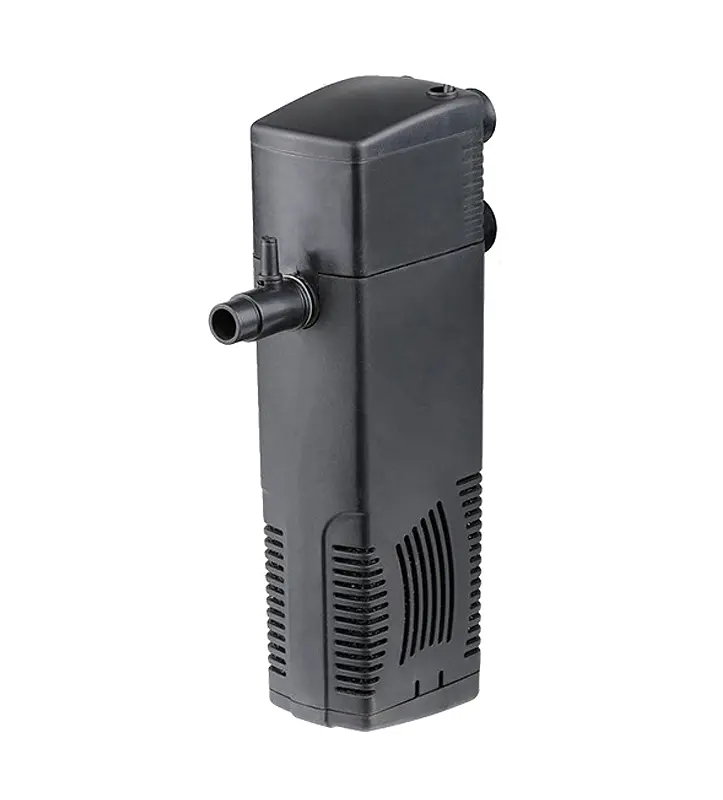
JP Series Multi-Function Submersible Filtration Pump JP-014F
The JP-014F is a multi-function submersible filtration pump intended for use in aquarium water circulation and filtration systems. The supplied specifications identify the model as a 110V, 220V, or 240V product compatible with both 50Hz and 60Hz electrical frequencies. This broad electrical specification is useful for distributors and system integrators serving different markets, although users should always verify the exact electrical configuration supplied for their region before installation.
The pump has a rated power of 16 watts and a maximum head height of 1.4 meters. Its rated output is 800 liters per hour. The 1.5-meter cable provides additional installation flexibility, particularly where the pump is positioned inside a cabinet, rear filtration compartment, or lower reservoir and the electrical connection is located outside the aquarium enclosure.
The listed product weight is 0.6 kilograms, while the dimensions are 71 millimeters in length, 50 millimeters in width, and 209 millimeters in height. This vertical form factor is suited to installations where the available footprint is limited but sufficient operating depth is available. Unlike an external pump that requires additional plumbing space outside the aquarium, the submersible design places the pumping unit directly in the water system.
The JP-014F is listed without a hose adapter in the supplied product table. This indicates that the model is configured primarily as a filtration or internal circulation pump rather than as a universal hose-connected pump. The absence of a fixed hose adapter can be advantageous in systems where the pump is integrated directly into a filter chamber or used with a dedicated internal outlet arrangement. At the same time, installers should check outlet compatibility and required accessories before planning a custom plumbing configuration.
| Specification | JP-014F |
|---|---|
| Product type | Multi-function submersible filtration pump |
| Rated voltage | 110V, 220V, or 240V |
| Frequency | 50Hz or 60Hz |
| Power consumption | 16W |
| Maximum head height | 1.4m |
| Maximum output | 800L/h |
| Hose adapter | Not specified |
| Cable length | 1.5m |
| Product weight | 0.6kg |
| Dimensions | 71 × 50 × 209mm |
These specifications make the JP-014F suitable for many medium-duty aquarium circulation tasks. The stated output should be understood as a nominal pump rating. Actual flow in an installed aquarium will depend on water depth, outlet design, filter media resistance, pipe length, bends, elevation, water cleanliness, and the condition of the impeller and intake area.
The principal advantage of the JP-014F is the balance between power consumption and circulation capacity. At 16 watts, it provides an output of 800 liters per hour under the stated rating. This makes it more capable than smaller three-watt and five-watt models in the same family while remaining less demanding than larger 22-watt and 35-watt units.
This balance is valuable because aquarium pumps often operate continuously. A pump that consumes unnecessarily high power can increase operating costs and add heat to the water system. A pump that is too small may fail to circulate water effectively through the filter, create stagnant areas, or provide insufficient turnover for the aquarium inhabitants. The JP-014F offers an intermediate option for users who need consistent movement without automatically stepping up to a larger pump.
The maximum head height of 1.4 meters gives the pump useful flexibility in systems where water must be lifted from a lower compartment to a higher return point. Head height is especially important in cabinet aquariums, sump systems, planted displays with concealed filtration, and multi-level water features. However, the actual flow rate will normally decrease as lifting height increases. System designers should therefore treat the 800-liter-per-hour figure as a reference rating rather than a guaranteed flow rate at the maximum head.
For filtration applications, stable circulation is often more important than extreme flow. Beneficial bacteria require a continuous supply of oxygenated water, while mechanical and biological media perform best when water passes through them at a controlled rate. Excessive velocity can reduce contact time with media or disturb fish and plants. The JP-014F can therefore be useful in installations where dependable turnover and manageable flow are more important than maximum pressure.
Biological filtration depends on maintaining a suitable environment for nitrifying bacteria and other microorganisms. These organisms colonize filter media and convert harmful nitrogen compounds into less toxic forms. For this process to function efficiently, water must move consistently through the media and carry dissolved oxygen to the biological surface.
The JP-014F can support this process by maintaining circulation between the aquarium and the filtration area. Its use in a filter chamber, internal filter, or compact sump can help prevent dead zones where water becomes poorly oxygenated. In planted aquariums, the pump can also help distribute nutrients and dissolved gases more evenly throughout the water column, provided that the flow is adjusted appropriately for the plants and livestock.
Mechanical filtration removes suspended particles such as uneaten food, plant debris, and waste fragments. A properly positioned submersible pump can draw water through sponge, floss, or other mechanical media before returning the cleaner water to the aquarium. The JP-014F’s rated flow is suitable for many compact and medium-sized filtration arrangements, although media density should be considered carefully.
Fine mechanical media can become clogged more quickly than coarse media. As resistance increases, the actual output of any pump will decline. Regular inspection and cleaning of the intake and filter media help preserve circulation. The pump should not be judged only by its initial performance; long-term performance depends on maintaining an unobstructed water path.
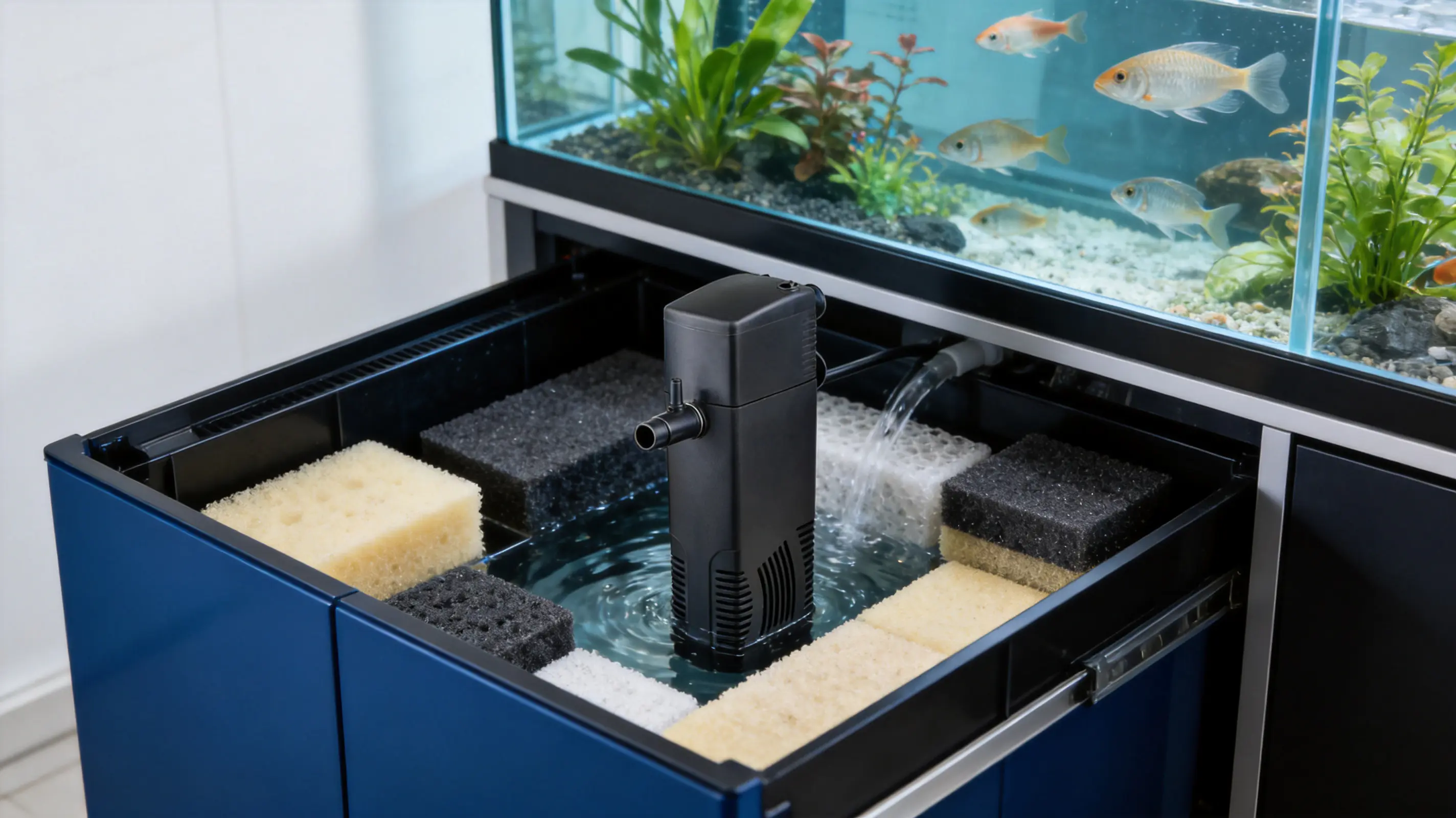
Submersible pumps offer several practical advantages over conventional external pumps. The most immediate benefit is installation simplicity. Because the pump is placed directly in the water, the system generally requires fewer external fittings, less exposed plumbing, and less cabinet space. This can make the JP-014F suitable for aquariums where a clean appearance and compact equipment arrangement are important.
A submersible design can also reduce the complexity of initial setup. External pumps often require careful priming, secure inlet and outlet connections, and protection against air entering the suction line. A submerged pump is surrounded by water at the inlet, which can simplify startup when it is installed correctly. Users should still ensure that the pump is fully submerged to the required operating level before switching it on.
The 209-millimeter height of the JP-014F creates a relatively narrow and elongated profile. This shape can be useful in vertical filter chambers and slim compartments. The footprint of 71 by 50 millimeters does not require a large horizontal area, leaving additional room for filter media, heaters, air lines, or other aquarium equipment.
The 1.5-meter cable length provides practical reach for many standard aquarium cabinets and display systems. Cable routing should be planned so that water cannot travel along the cable into the electrical outlet. A drip loop is recommended for all aquarium electrical equipment, and the connection should be positioned away from possible splashes or leaks.
The pump should be installed on a stable surface or secured according to the filtration system design. It should not rest on loose gravel or abrasive material that could enter the intake. The intake area must remain clear of large debris, plant leaves, substrate fragments, and filter fibers.
When the pump is used with filter media, the media should be arranged to prevent excessive restriction. Coarse pre-filtration can help protect the impeller and extend cleaning intervals. If fine media is placed directly over the intake, it may become blocked rapidly and cause a noticeable reduction in output.
The pump should never be operated dry. Running without sufficient water can cause overheating, accelerate wear, and damage internal components. Before every initial startup, the user should confirm that the pump body and intake area are submerged and that water can circulate freely.
Although the JP-014F is designed for aquarium filtration and water circulation, the exact application should match the product’s intended operating conditions. Users should not operate it in corrosive chemicals, flammable liquids, or water containing materials that may attack the pump housing, seals, cable, or impeller.
Competition in the aquarium pump market includes compact circulation pumps, external canister pumps, air-driven filters, and high-capacity pond pumps. The JP-014F does not replace every type of pump, but it offers a useful combination of characteristics that can be advantageous in specific applications.
Very small aquarium pumps can be efficient for nano tanks, desktop aquariums, and low-resistance filter systems. However, their lower output and head height may limit their use in larger systems or installations with elevated return points. The JP-014F offers an 800-liter-per-hour rating and a 1.4-meter maximum head, giving it more capacity for systems that require stronger circulation.
Compared with selecting a very small pump and operating it close to its limit, the JP-014F may provide a more comfortable operating margin for medium-duty filtration. A pump with adequate reserve capacity can continue to deliver useful circulation as filter media gradually accumulates debris, although regular cleaning remains essential.
Larger pumps can deliver higher output, but they may consume more electricity, occupy more space, produce stronger currents, and require larger plumbing. For an aquarium that does not need 1,200 or 1,600 liters per hour, choosing a larger model can be inefficient. The 16-watt rating of the JP-014F makes it a more proportionate choice for systems needing an intermediate level of circulation.
A correctly sized pump can also make aquarium management easier. Excessive flow may stress slow-moving fish, disturb fine substrates, uproot plants, or create noise at the return outlet. The JP-014F allows system designers to prioritize controlled circulation rather than simply selecting the highest available output.
External pumps can be valuable in large or complex systems, especially where heat transfer, service access, or high flow is a priority. However, they typically involve more plumbing, external fittings, and installation planning. They may also require more room outside the aquarium and careful attention to priming and leak prevention.
The JP-014F’s submersible format can reduce the number of external connections and simplify equipment integration. It is particularly useful where a pump can be placed inside a rear compartment, internal filter, or sump. The trade-off is that submersible pumps transfer some operating heat to the water and may be less convenient to access in a tightly packed filtration chamber. The best selection depends on the application.
Air-driven filters are gentle and effective in many small aquariums, but they depend on a separate air pump and may offer less flexibility for lifting water through a higher return path. The JP-014F directly moves water and can be integrated with a filtration arrangement that requires a defined circulation route.
For systems that need water movement rather than aeration alone, a submersible pump can provide a more direct solution. Additional aeration may still be desirable, particularly in heavily stocked aquariums or warm water systems.
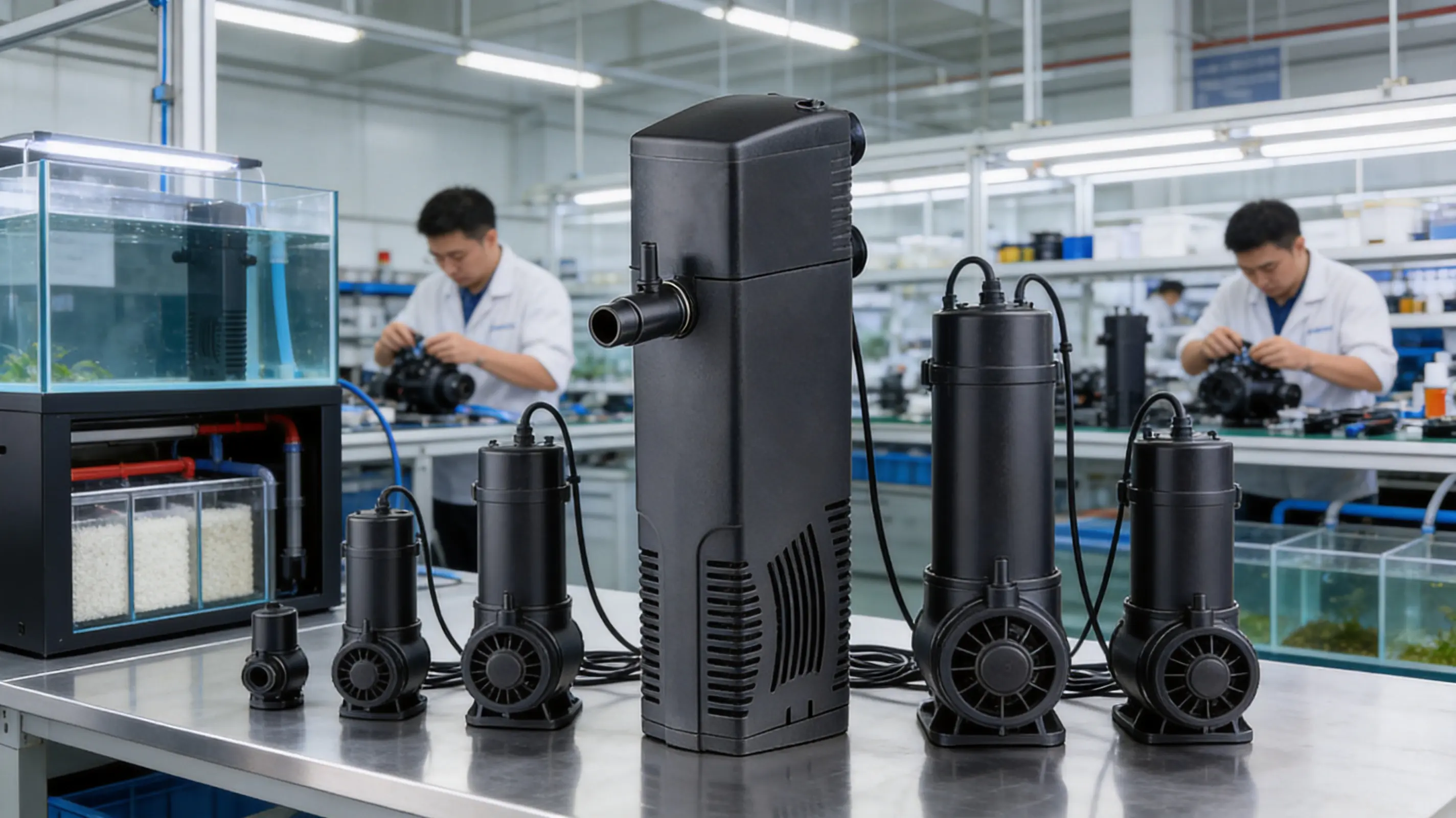
The JP Series includes multiple models that share a common product concept while offering different performance levels. This family structure is an important commercial and engineering advantage because distributors and customers can select a suitable pump without changing to an entirely different design platform.
| Model | Power | Maximum Head | Output | Weight |
|---|---|---|---|---|
| JP-012F | 3W | 0.6m | 300L/h | 0.1kg |
| JP-032F | 5W | 0.6m | 350L/h | 0.2kg |
| JP-013F | 8W | 1.0m | 600L/h | 0.3kg |
| JP-014F | 16W | 1.4m | 800L/h | 0.6kg |
| JP-024F | 22W | 1.6m | 1,200L/h | 0.7kg |
| JP-025F | 35W | 2.5m | 1,600L/h | 1.1kg |
This progression allows a retailer to address different aquarium sizes and installation conditions with a coherent range. It also supports replacement planning. If a customer later upgrades to a larger aquarium, the retailer can offer a higher-capacity model within the same general product family.
The range includes both compact models for low-flow applications and larger units for demanding systems. The JP-014F is positioned between these extremes. Its capacity is high enough for many medium-duty applications while its power rating remains moderate. This makes it a practical model for retailers seeking a versatile stock item rather than a highly specialized pump.
The manufacturer, Sensen Group Co., Ltd., has developed its business across aquarium products, aquaculture machinery, and industrial equipment. The company’s history extends back to 1985, providing a substantial operating background in sectors where water movement, equipment durability, and production consistency are important.
The company information identifies several functional departments, including a research institute, business school, quality control department, personnel and administrative information department, and financial department. It also describes a group structure with multiple subsidiary companies and an import and export company. This organizational scale can support product development, production coordination, quality management, market analysis, and international distribution.
For aquarium pump manufacturing, advanced production is not limited to the assembly of a motor and housing. Product quality depends on the interaction of electrical components, impeller geometry, shaft alignment, sealing, housing accuracy, insulation, cable assembly, and final performance testing. A manufacturer with dedicated research and quality functions is better positioned to coordinate these elements as a complete system.
A research-oriented engineering structure can contribute to improvements in hydraulic performance, motor efficiency, noise control, material selection, and product reliability. For a submersible filtration pump, design work must account for continuous operation in water, the resistance created by filter media, the need to prevent debris from damaging the impeller, and the requirement for stable flow across normal aquarium conditions.
Product families also benefit from platform development. By creating related models with different motor capacities and hydraulic characteristics, the manufacturer can apply established design knowledge across multiple sizes while adjusting performance for each model. This can support consistent product handling and simplify manufacturing controls.
Quality control is especially important for aquarium equipment because the pump operates near water and electrical connections. A well-controlled production process should address component inspection, motor assembly, impeller installation, housing fit, cable integrity, electrical safety, water resistance, and operating performance.
The available company information specifically identifies a quality control department. While detailed test procedures are not provided, the presence of a dedicated quality function indicates that quality management is treated as an organizational responsibility rather than an informal final check. For international buyers, this type of structure can be valuable because it supports more consistent production across large order quantities.
Manufacturing consistency also benefits spare-part planning and product replacement. When models are produced within a coordinated series, distributors can more easily manage product documentation, packaging, stock rotation, and customer support. Consistency is particularly important for professional aquarium stores and installation companies that need reliable equipment across many projects.
The company describes a broad production and marketing network, along with wholly owned subsidiaries and holdings in multiple trading companies. Such a structure may provide advantages in sourcing, manufacturing coordination, logistics, and market access. It can also help the company respond to different regional requirements, including voltage preferences, frequency standards, packaging expectations, and distribution practices.
International experience is relevant to the JP-014F because the product is specified for multiple voltage and frequency environments. Regional electrical standards differ, and successful export production requires attention to product configuration, labeling, documentation, packaging, and customer service. A company with an established import and export operation is positioned to manage these requirements more effectively than a small producer with limited international experience.
Aquarium pumps commonly run for many hours each day, and some operate continuously. Consequently, power consumption has a direct influence on long-term operating cost. The JP-014F is rated at 16 watts, which is moderate for a pump with an 800-liter-per-hour nominal output.
For illustration, if the pump operates continuously for one year, its theoretical energy consumption at the rated power would be approximately 140.16 kilowatt-hours. This calculation is based on 16 watts multiplied by 24 hours per day and 365 days per year. Actual energy use may differ depending on operating conditions, electrical supply, and whether the pump is switched off during maintenance or feeding periods. Electricity prices also vary by region.
Energy efficiency should not be evaluated only by watts. A pump must also provide useful flow at the required head height. A very low-power pump may not be efficient if it fails to circulate water properly and must be supplemented by additional equipment. The practical value of the JP-014F lies in its combination of moderate power consumption and useful head and output ratings.
Users can further reduce unnecessary energy use by keeping the intake clear, cleaning filter media regularly, avoiding excessive outlet restriction, and selecting a pump that matches the actual aquarium requirement. Over-sizing can create unnecessary flow and electrical consumption, while under-sizing can compromise filtration performance.
Noise is an important consideration in home aquariums, offices, retail displays, and public installations. Although the supplied specifications do not provide a decibel rating, stable placement and regular maintenance can help reduce vibration-related noise. The pump should be installed securely, and direct contact with hard surfaces should be checked if vibration is noticeable.
Impeller cleanliness is particularly important. Algae, sand, plant fragments, and mineral deposits can interfere with rotation and create noise. A gradual increase in sound may indicate that the impeller chamber or intake requires cleaning. It may also indicate that the pump is running against increased resistance caused by blocked media or a restricted outlet.
Stable water flow benefits both filtration and livestock. Sudden reductions in circulation can lower oxygen distribution and allow waste to accumulate in less active areas. Regular observation is therefore recommended. Aquarium keepers should watch for changes in surface movement, return flow, water clarity, pump sound, and temperature.
Routine maintenance helps preserve the performance of the JP-014F and extends the useful life of the pump. Before servicing, the electrical supply should be disconnected. The pump should be removed from the water only after it has been switched off and the surrounding area is safe.
The intake area should be inspected regularly for debris. The pump housing, intake screen, impeller chamber, and impeller should be cleaned according to the equipment design. Soft brushes and aquarium-safe cleaning methods are preferable. Abrasive tools or aggressive chemicals may damage surfaces, seals, or electrical components.
Filter media should be rinsed in removed aquarium water when possible, rather than heavily chlorinated tap water, because untreated tap water may harm beneficial bacteria. The correct cleaning method depends on the type of media and the aquarium’s biological filtration strategy.
Mineral deposits may accumulate in hard-water environments. If deposits restrict the impeller or water path, performance may decline. Any cleaning solution used for mineral removal must be fully rinsed before the pump is returned to the aquarium. The pump should never be immersed in a chemical solution unless the product documentation specifically permits that treatment.
During maintenance, users should inspect the power cable for damage, check that the housing is intact, examine the impeller for wear, and verify that all parts are correctly reassembled. A damaged cable or compromised electrical housing should be handled by a qualified service professional or replaced according to the supplier’s recommendation.
If the pump does not start, the user should first verify the power supply, water level, intake condition, and impeller position. The pump should not be repeatedly switched on and off without identifying the cause. Persistent failure may indicate an electrical or mechanical problem requiring professional assessment.
The JP-014F can serve a wide range of aquarium and water circulation applications. It may be used in freshwater aquariums, planted aquariums, community tanks, internal filter systems, rear-compartment filtration, compact sumps, and decorative aquatic displays. Its rated head height also makes it suitable for installations where water must be lifted from a lower level to a return outlet.
In planted aquariums, the pump can help distribute nutrients and prevent stagnant areas. Flow should be directed carefully to avoid uprooting plants or creating excessive surface disturbance. In community aquariums, the outlet can be positioned to provide circulation while preserving calmer areas for fish that prefer gentle water movement.
In breeding systems, flow requirements depend on the species and life stage. Eggs and fry may require gentle circulation and intake protection. If the pump is used in such a system, an appropriate pre-filter or protective sponge should be installed to prevent small fish from entering the intake. The additional resistance created by a pre-filter should be considered when evaluating expected output.
In retail aquarium systems, the JP-014F may be useful where several display tanks require compact and dependable circulation equipment. Its moderate size and broad electrical specification can simplify stocking for distributors serving multiple markets.
For aquaculture-related installations, pump selection should be based on the total system volume, required turnover, elevation, water quality, and biological load. The JP-014F may be appropriate for smaller systems, auxiliary circulation, or specialized filtration tasks, but larger commercial systems may require pumps with greater capacity and additional redundancy.
Choosing a pump should begin with the aquarium volume and the desired turnover rate. Turnover refers to how many times the system’s water volume is circulated through the filtration system in a given period. The appropriate rate varies according to fish stocking, plant density, filter design, water temperature, and species requirements.
For example, a nominal 800-liter-per-hour pump may appear suitable for a 400-liter aquarium if a two-times hourly turnover is desired. However, the actual installed flow may be lower because of elevation, filter media, fittings, and outlet resistance. The pump should therefore be selected with the complete hydraulic system in mind.
The maximum head height is another key factor. If the water must be lifted close to 1.4 meters, the actual flow may be substantially below the nominal 800 liters per hour. If the return point is only slightly above the pump, the available flow will generally be higher. Buyers should request a performance curve when precise flow planning is required.
The JP-014F is most suitable when the required performance falls between the smaller 600-liter-per-hour models and the larger 1,200-liter-per-hour models. Selecting the correct size can reduce energy waste, limit excessive turbulence, and improve the overall balance of the filtration system.
For wholesalers and aquarium equipment retailers, a product should offer more than technical performance. Consistent supply, clear specifications, a recognizable product family, and manufacturer support all influence purchasing decisions. The JP Series provides a range of models that can be marketed to different customer segments.
The JP-014F can be positioned as a versatile mid-range option for customers who need stronger circulation than a nano pump but do not require a high-capacity pond pump. Its 16-watt rating, 1.4-meter head, and 800-liter-per-hour output are straightforward specifications that can be communicated clearly in catalogs and online stores.
A family-based product strategy also helps retailers recommend upgrades. Customers can compare models by power, head height, flow, dimensions, and weight. This structured comparison reduces confusion and allows the retailer to match the pump to the aquarium rather than making a recommendation based solely on price.
The manufacturer’s broad business structure and international market experience may further support export orders, private distribution, and long-term cooperation. Buyers should still confirm current availability, regional certifications, warranty terms, packaging details, and any minimum order requirements before purchasing.
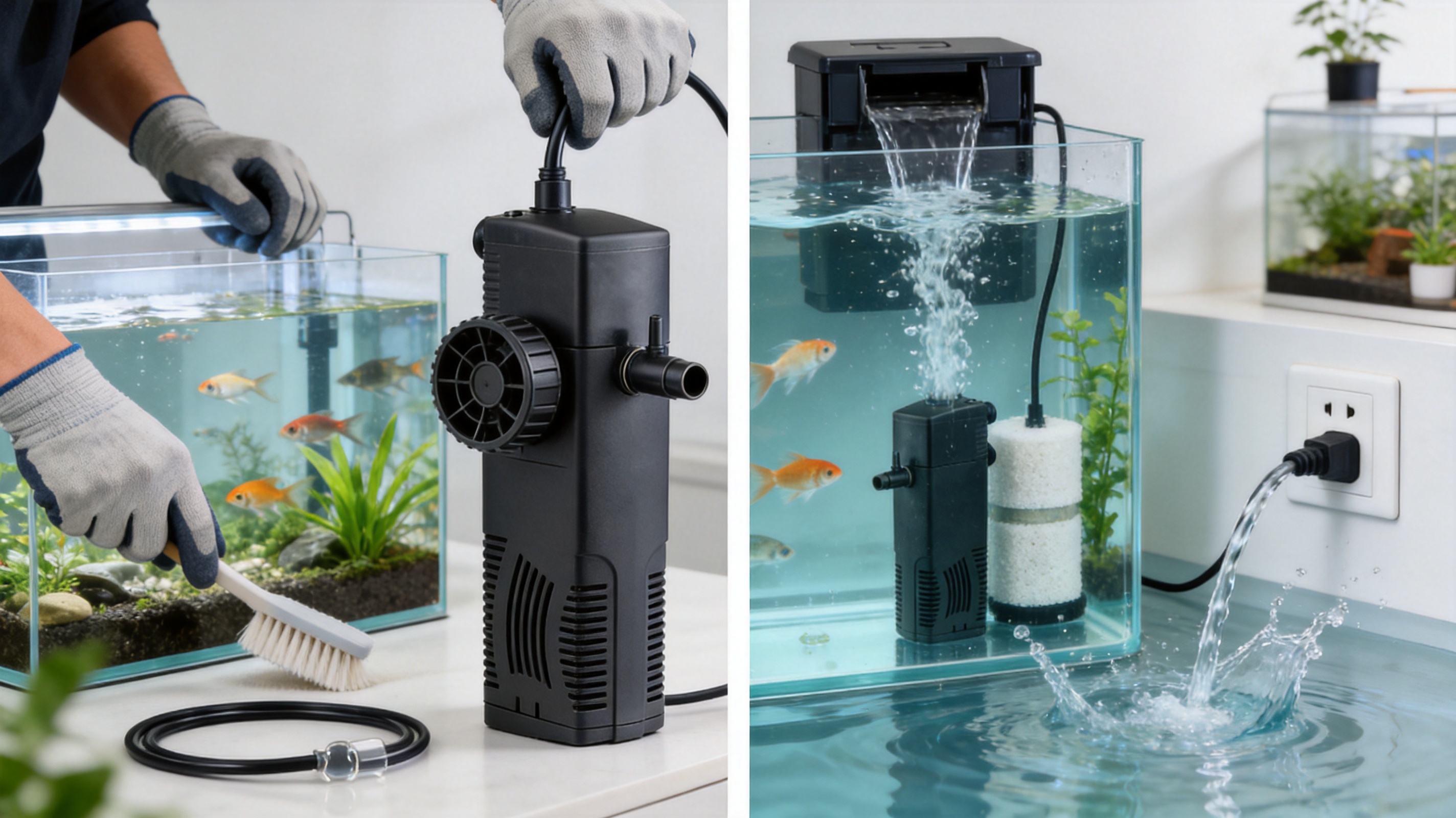
Electrical safety is essential whenever aquarium equipment is used. The pump must be connected to a suitable power source that matches its rated voltage and frequency. The user should follow local electrical regulations and use a properly protected outlet suitable for wet environments.
Always disconnect the pump from the power supply before placing hands in the aquarium, removing the pump, cleaning the filter, or adjusting the intake. A residual-current protection device is recommended where appropriate. The plug and socket should remain dry, and the cable should include a drip loop.
The pump should not be operated outside water unless the instructions for the specific configuration expressly permit it. Users should not modify the cable, housing, motor, or electrical components. If the unit shows signs of overheating, unusual noise, electrical odor, damaged insulation, or irregular operation, it should be disconnected and inspected by a qualified professional.
Safe installation protects the user, livestock, aquarium structure, and equipment. It also supports the long-term reliability expected from a pump intended for continuous circulation.
The JP-014F has a listed output of 800 liters per hour. This is a nominal rating, and actual flow can vary according to head height, filter resistance, outlet design, water level, and maintenance condition.
The maximum head height is listed as 1.4 meters. Flow normally decreases as lifting height increases, so users should not assume that the full 800-liter-per-hour output will be available at the maximum elevation.
The rated power consumption is 16 watts. Actual electrical use may vary slightly with operating conditions and electrical supply, but the 16-watt figure is the stated product rating.
Yes. The pump is designed for aquarium filtration and water circulation applications. It should be used under the intended operating conditions, with a suitable water level and a clean intake.
The supplied material does not specify a separate saltwater certification or corrosion-resistance rating. Users considering marine applications should confirm material compatibility, warranty conditions, and manufacturer recommendations before use.
The supplied specification table shows no hose adapter for the JP-014F. Buyers should confirm the outlet design and required accessories before connecting the pump to custom tubing or external plumbing.
The listed cable length is 1.5 meters. Cable routing should include a drip loop, and the electrical connection should be positioned away from water and splashes.
No. The pump should be fully submerged and supplied with sufficient water before operation. Dry running can cause overheating, accelerated wear, and damage to internal components.
Cleaning frequency depends on aquarium conditions, debris levels, filter media, and water quality. The intake and impeller should be inspected regularly, and the pump should be cleaned whenever flow decreases, noise increases, or visible debris accumulates.
The JP-014F is an aquarium filtration pump with a listed output of 800 liters per hour. It may be suitable for small water features or auxiliary circulation, but a large pond generally requires a pump selected according to pond volume, filtration design, elevation, and outdoor operating conditions.
The JP-014F uses 16 watts of power, provides a 1.4-meter maximum head, and has an 800-liter-per-hour output. Larger models in the family offer higher flow and head values but also consume more power and may require more installation space.
Buyers should confirm the voltage version, frequency, quantity, packaging, outlet arrangement, warranty terms, regional compliance requirements, delivery schedule, and whether additional fittings are required for the intended installation.
The JP Series Multi-Function Submersible Filtration Pump JP-014F is a practical aquarium circulation solution for users seeking a balance between moderate energy consumption, useful lifting capacity, and reliable water movement. Its 16-watt rating, 800-liter-per-hour output, and 1.4-meter maximum head make it suitable for many medium-duty filtration and circulation applications.
Its submersible format simplifies installation in internal filters, rear compartments, reservoirs, and compact sump systems. The relatively narrow dimensions help conserve space, while the 1.5-meter cable provides flexibility for common aquarium cabinet layouts. The pump is also supported by a wider product family, allowing users and distributors to select models for lower- or higher-capacity requirements.
Compared with smaller pumps, the JP-014F offers greater output and head capacity. Compared with larger pumps, it can provide a more proportionate solution for systems that do not require extreme flow. Its value is therefore based on balanced performance rather than a single maximum specification.
The manufacturer’s long operating history, research and quality functions, broad corporate structure, and international market experience provide a foundation for producing and distributing aquarium equipment at scale. Although users must still follow correct installation, maintenance, electrical, and application guidelines, the JP-014F represents a versatile option for aquarium owners, retailers, system integrators, and water-management equipment distributors.
1. Product specification sheet for the JP Series Multi-Function Submersible Filtration Pump, including model ratings, dimensions, output, head height, voltage, frequency, cable length, and weight.
2. Manufacturer-provided company profile describing corporate history, research activities, quality control functions, subsidiary structure, production scope, and international business operations.
3. General aquarium filtration engineering principles concerning pump sizing, hydraulic head, biological filtration, mechanical filtration, flow resistance, and continuous circulation.
4. General electrical safety practices for submerged aquarium equipment, including grounding, residual-current protection, drip-loop installation, and service disconnection procedures.
5. General maintenance principles for aquarium pumps, including intake inspection, impeller cleaning, filter-media care, debris removal, and prevention of dry operation.


 No. 61-79, Baima Street, Maao Town, Dinghai District, Zhoushan City, Zhejiang Province, China.
 0086 580 8082088 / 8081168
 0086 580 8080978
 songhua@sunsun-china.com