

 English
 русский
 España
 Portugal
 عربي
Li Mei | Aquarium Equipment Sales Specialist
Home / Author / Li Mei | Aquarium Equipment Sales Specialist / CWF Series Water Fall: A Practical Guide to High-Flow Decorative Water Feature Performance
Content
A well-designed water feature can transform an ordinary garden, patio, indoor display, commercial entrance, or aquatic installation into a more attractive and engaging environment. Moving water adds sound, motion, reflection, and visual depth, while also creating a natural focal point. However, a reliable water feature requires more than an attractive outlet. It needs a properly matched pump, suitable hose connections, sufficient lifting capacity, dependable electrical reach, and a construction format that can be installed without excessive complexity.
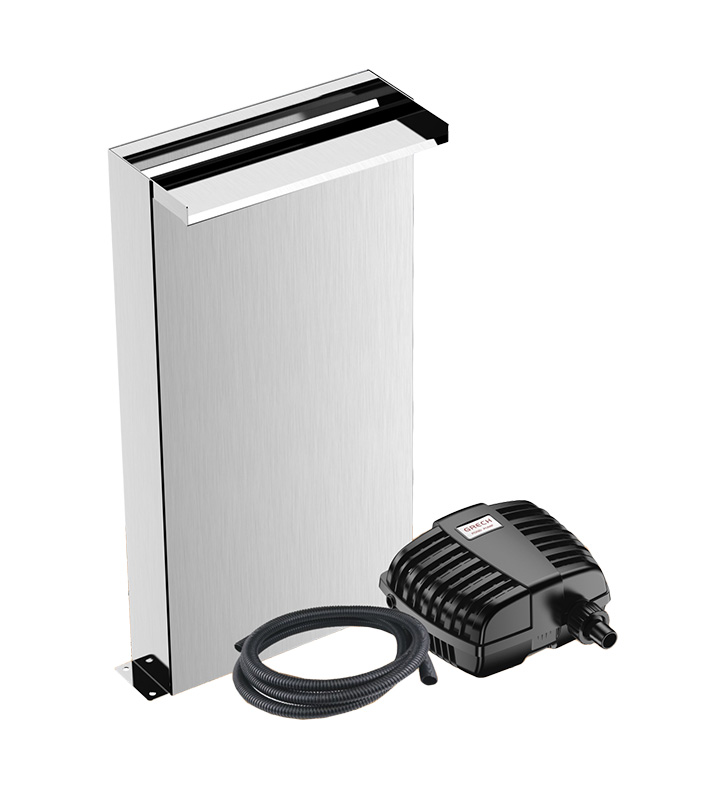
The CWF Series Water Fall, represented by the CWF-30T model, is designed as a compact water-fall system with an integrated CFP-2500 pump. Its specifications combine a 2,500-liter-per-hour output, a maximum head of 2.7 meters, a 45-watt power rating, a 3-meter spiral pipe, and a 10-meter cable. Together, these features make the unit suitable for decorative water circulation where users require noticeable flow without selecting a large and complicated pumping system.
The product is positioned within a broad range of aquatic and garden equipment. It can support decorative waterfalls, pond displays, planted water features, landscape installations, showroom exhibits, and other applications where recirculating water is required. Its compact dimensions also make it easier to incorporate into installations with limited space.
This article examines the product’s specifications, practical advantages, installation considerations, operating characteristics, maintenance requirements, and suitability for different users. It also explains how the manufacturer’s research, quality-control, production, and distribution capabilities support the development of equipment for aquarium, aquaculture, industrial, and garden applications.
The CWF-30T is a water-fall product with dimensions of 140 × 350 × 600 millimeters and a product weight of 5.2 kilograms. Its relatively narrow footprint allows it to be used in installations where width is restricted, while its 600-millimeter height gives it a visible vertical presence. A vertical water-fall structure can serve as a central design element or as part of a larger recirculating water system.
The included CFP-2500 pump is rated for a maximum flow output of 2,500 liters per hour. This flow level is sufficient for creating a clear and active water movement in many decorative applications. The pump has a maximum head of 2.7 meters, meaning that the available pressure is intended to support water lifting through a moderate vertical distance. Actual flow will depend on installation height, hose routing, bends, fittings, outlet resistance, water level, and other hydraulic conditions.
The unit operates at 220–240 volts and 50 hertz, with a power consumption rating of 45 watts. This electrical specification is suitable for compatible regions and should be checked carefully before installation. Users must confirm that the local supply, socket, protective devices, and installation environment match the product requirements.
The system includes a 20-millimeter hose adapter and a 3-meter spiral pipe with a listed diameter of 20 millimeters. Matching the hose diameter to the adapter helps simplify installation and reduces the need for improvised transitions. The 10-meter cable provides useful reach between the water feature and the electrical connection, especially in gardens, displays, and larger decorative layouts.
| Specification | Details |
|---|---|
| Product series | CWF Series Water Fall |
| Model | CWF-30T |
| Product dimensions | 140 × 350 × 600 mm |
| Product weight | 5.2 kg |
| Pump model | CFP-2500 |
| Rated voltage and frequency | 220–240 V / 50 Hz |
| Power | 45 W |
| Maximum head | 2.7 m |
| Maximum listed output | 2,500 L/h |
| Hose adapter | 20 mm |
| Cable length | 10 m |
| Spiral pipe length | 3 m |
| Spiral pipe diameter | 20 mm |
One of the product’s principal advantages is the balance between its compact format and its listed 2,500-liter-per-hour output. Some small decorative water systems use pumps that provide only a weak trickle, while larger systems can be unnecessarily powerful, expensive, and difficult to integrate. The CWF-30T occupies a practical middle position for users seeking visible circulation without a large commercial pumping assembly.
A flow rate of 2,500 liters per hour corresponds to approximately 41.7 liters per minute under rated conditions. This does not mean that every installation will deliver the same flow at the outlet, because pump performance changes with elevation and resistance. Nevertheless, the specification indicates that the system is designed to produce a substantial decorative water movement rather than merely a slow seepage.
The output can be useful for waterfall lips, cascades, wall-mounted water displays, pond returns, and planted installations. Installers can also regulate the visual effect through outlet design, water distribution, spillway width, and the shape of the receiving basin. A narrower outlet may create a more concentrated stream, while a wider spillway can produce a sheet-like waterfall.
The maximum head of 2.7 meters gives the CWF-30T greater flexibility than a pump intended only for short, low-level circulation. It can support a moderate vertical rise, provided that the installation is designed with appropriate hose routing and limited hydraulic resistance.
Maximum head should not be interpreted as the height at which the pump will continue to provide its full rated output. At greater lift heights, flow generally decreases. Installers should therefore evaluate the required vertical distance before construction. A system designed at a height comfortably below the maximum head will normally have more useful flow reserve than one operating at the limit.
This characteristic gives the product an advantage over basic low-head pumps used for tabletop or shallow-basin applications. It allows designers to consider taller decorative structures while still using a relatively compact pump package. It can also help compensate for moderate routing distances and the resistance created by bends or fittings.
The 45-watt power rating provides a practical balance between circulation capability and energy demand. A decorative water feature often operates for many hours, so power consumption is an important consideration for households, retailers, hotels, offices, and public-facing installations.
Compared with a high-capacity pump selected for an oversized pond or industrial circulation task, a 45-watt unit can be more appropriate for a compact or medium decorative feature. Selecting a pump that matches the application helps avoid unnecessary energy use and excessive turbulence. The best operating result comes from matching the pump to the water volume, elevation, outlet design, and desired visual effect.
Actual energy consumption depends on operating time, electrical conditions, pump loading, and installation efficiency. Users should still plan for safe electrical protection and should follow applicable local regulations. The product’s rated voltage and frequency must be confirmed before purchase or installation.
The 10-meter cable is a significant practical feature. Short cables can force a decorative feature to be positioned directly beside an electrical outlet, limiting design options and increasing the temptation to use unsafe extension arrangements. A longer supplied cable can make it easier to plan the water feature and the electrical connection as separate parts of the overall layout.
Even with a long cable, the connection must remain protected from water exposure. The cable should be routed to prevent standing water from traveling toward the socket, and electrical connections should be installed using suitable outdoor-rated equipment where required. The supplied length improves flexibility, but it does not remove the need for proper electrical safety.
The 20-millimeter hose adapter and 20-millimeter spiral pipe create a straightforward connection specification. Matching dimensions can reduce the time spent searching for reducers, adapters, or replacement hose sections. It also makes it easier for installers to plan the plumbing path before assembly.
The 3-meter spiral pipe provides a useful starting length for many installations. It can support routing from a lower reservoir to an elevated waterfall body or from a concealed pump location to a decorative outlet. If the project requires a longer or more complex route, the installer should assess the effect of additional length and fittings on the final flow.
Spiral pipe can be useful where some flexibility is required. It may be easier to route around structural features than rigid pipe, while still maintaining a defined internal passage. Care should be taken to avoid sharp kinks, crushing, or excessive loops, because these conditions can restrict flow and increase pump resistance.
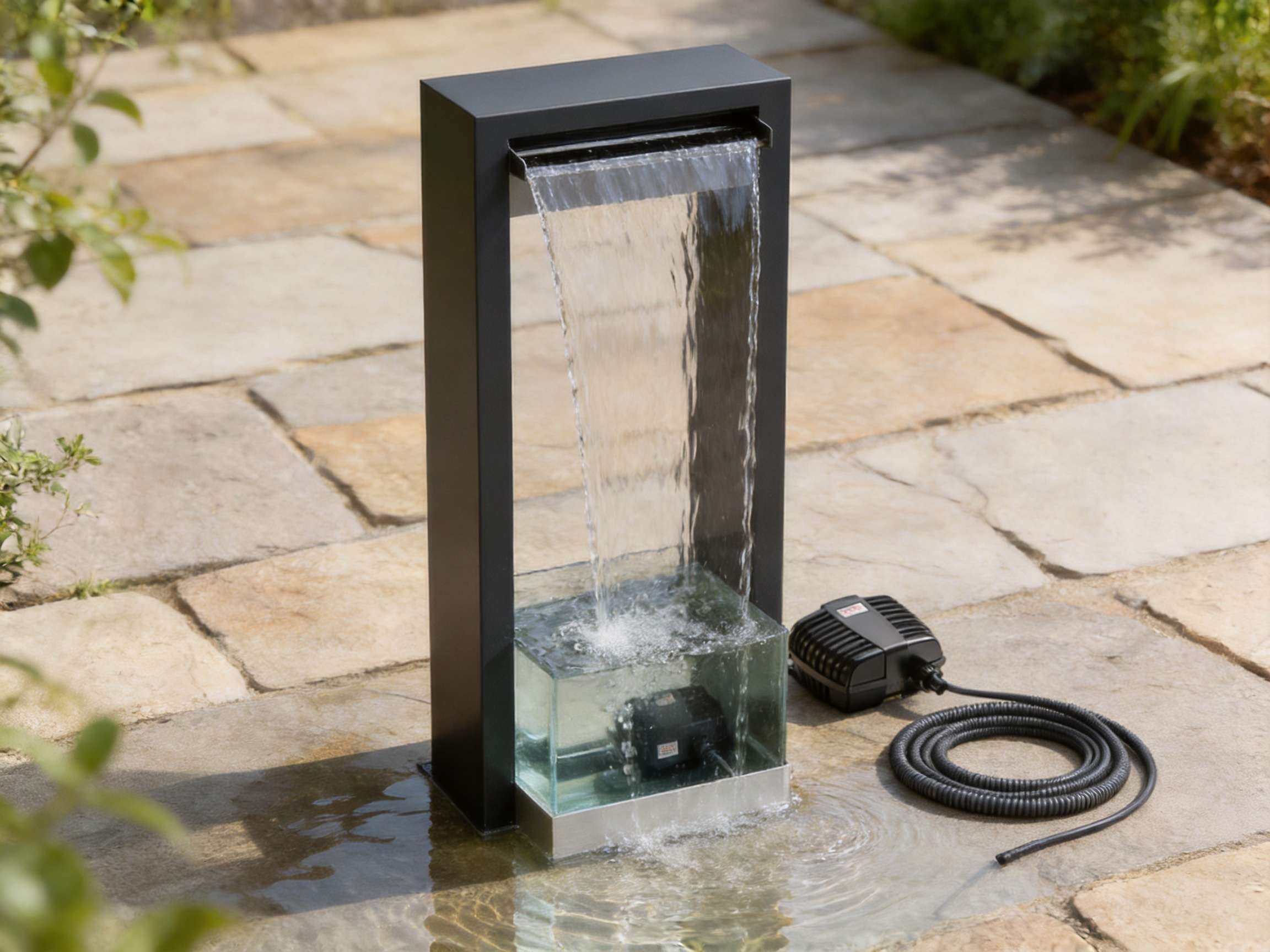
With dimensions of 140 × 350 × 600 millimeters, the CWF-30T can be incorporated into relatively narrow spaces. This is particularly useful in landscaped courtyards, retail displays, balcony gardens, entrance areas, planted walls, and indoor aquatic exhibits where every centimeter may affect the overall design.
The product’s 5.2-kilogram weight also supports manageable handling during preparation and positioning. Although the completed water feature will have a much greater operating weight once water, supports, decorative materials, and a reservoir are added, the core unit can be transported and positioned without the handling demands associated with large commercial equipment.
A compact structure can also simplify concealment. The pump, pipe route, and water collection area can be integrated behind decorative panels, within a lower basin, or beneath a raised platform. Designers should ensure that the pump remains accessible for inspection and cleaning rather than permanently sealing it inside a structure.
The CWF-30T can be used in a range of water-feature concepts. In a garden, it may support a vertical cascade that returns water to a pond or concealed reservoir. In an aquarium-related environment, it may be used for a specialized display or an external decorative circulation system, provided that all materials and water conditions are suitable for the intended aquatic life.
It can also be used in commercial spaces. Restaurants, hotel lobbies, shopping areas, offices, and exhibition venues often use water movement to create a more distinctive atmosphere. The relatively low power rating and compact dimensions can make the model easier to incorporate into a display where appearance and sound level are important design considerations.
For planted walls and landscape features, the unit can help distribute water from a lower collection point to an elevated outlet. The precise distribution pattern will depend on the water feature’s structure. A separate manifold, flow divider, or carefully designed spillway may be needed if the installation contains multiple outlets.
Before installation, the user should identify the water source or collection basin, the intended outlet height, the hose route, the electrical connection, and the access point for future maintenance. Planning these elements in advance helps prevent unnecessary bends, inaccessible components, and poor drainage.
The receiving basin should be large enough to collect the returned water without overflowing. The basin must also maintain sufficient water depth to keep the pump properly submerged if the pump is designed for submerged operation. Water loss from evaporation and splash should be considered, especially in warm or windy locations.
The pump should be placed on a stable surface or suitable support. It should not be allowed to rest on sharp debris, loose stones, or unstable decorative materials that could obstruct the intake or damage the housing. If the installation uses gravel or landscaping media, a protective separation layer may help prevent unwanted material from entering the pump.
The hose should be routed as directly as practical. Every bend, narrow fitting, elevation change, and outlet restriction can influence flow. Installers should avoid unnecessary hose length and should inspect the full path for kinks. A smooth and well-supported route generally makes it easier to obtain consistent performance.
The CWF-30T has several characteristics that distinguish it from simple decorative pumps and unintegrated waterfall components. Its value does not depend on one specification alone. Instead, it comes from the combination of a matched pump, substantial listed output, moderate lifting capacity, long cable, compatible pipe dimensions, and compact product format.
A bare pump may provide circulation but leave the user responsible for sourcing the correct pipe, adapter, and cable arrangement. This can create uncertainty during installation and may increase the risk of incompatible components. The CWF-30T includes a defined pump model, a 20-millimeter hose adapter, a 3-meter spiral pipe, and a 10-meter cable, giving users a clearer starting point.
This integrated approach can be particularly valuable for retailers, installers, and project designers who need repeatable product specifications. Rather than developing every water feature from unrelated components, they can work from a known pump and connection format.
Many small water features are limited by their ability to lift water only a short distance. The listed 2.7-meter maximum head of the CWF-30T allows more freedom when creating a raised waterfall, vertical cascade, or elevated return. The unit is not intended to replace a large commercial pump, but it offers useful performance for applications above the scale of a simple tabletop fountain.
The 10-meter cable can simplify placement compared with products supplied with very short cables. This is useful when the water feature is located in a garden, display area, or room where the power source is not immediately adjacent to the basin. Longer cable reach can also reduce the need to position the decorative structure around an inconvenient outlet.
Choosing a pump that is too large can cause excessive turbulence, higher energy demand, difficult installation, and unnecessary cost. For applications requiring moderate circulation, the 45-watt CWF-30T offers a more proportionate option. Its compact size and 2,500-liter-per-hour rating can make it easier to incorporate without building a large technical room or oversized reservoir.
Performance comparisons should always be made against the actual requirements of the project. A larger installation may require a higher-capacity system, while a very small display may need a lower-flow pump. The product’s advantage is its balanced specification for a broad range of decorative water applications.
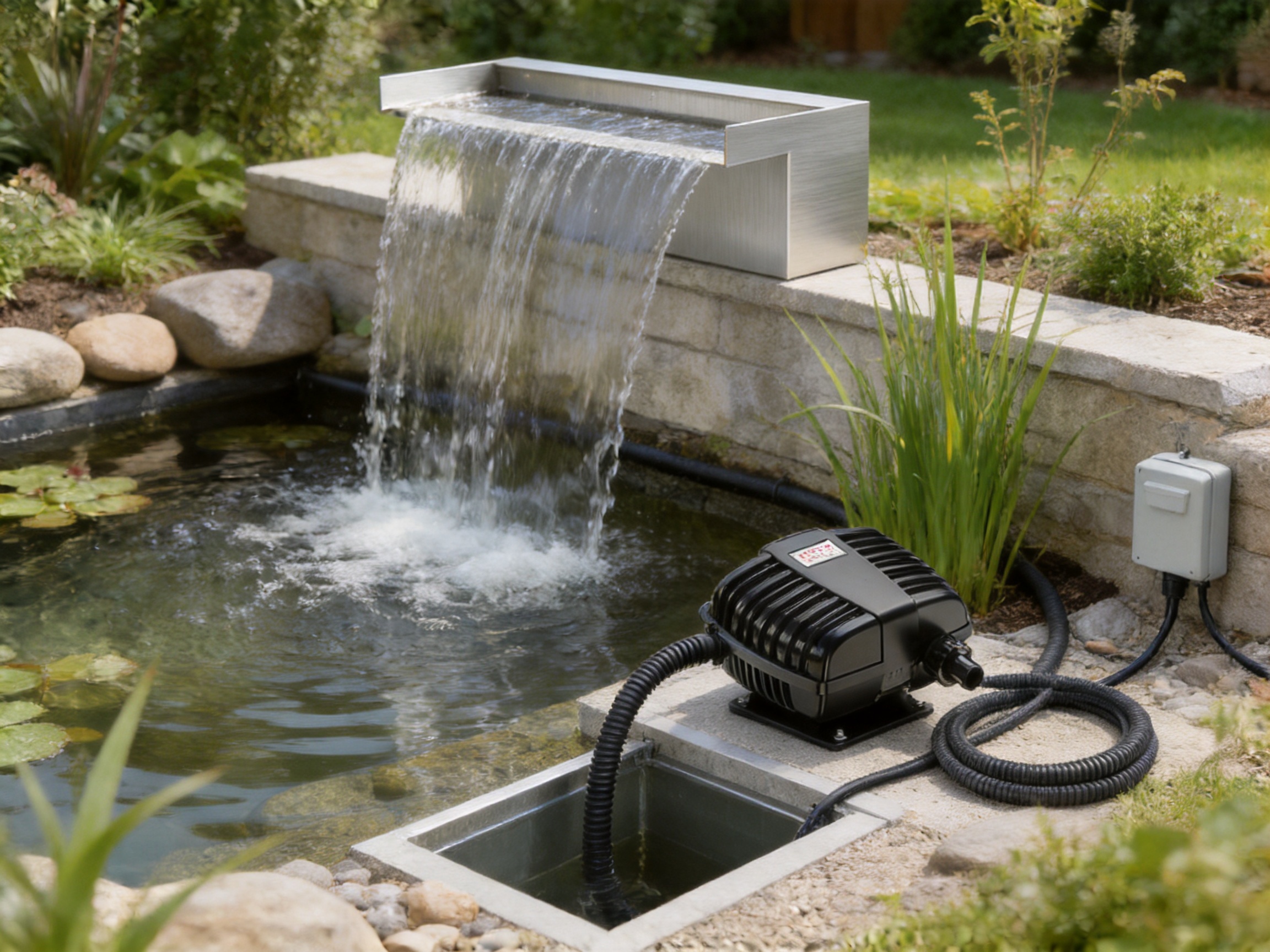
The company information supplied for this product identifies Sensen Group Co., Ltd., while the broader corporate description refers to Sunsun Group Co., LTD. The group was established in November 1985 and has developed activities across aquarium pets, aquaculture machinery, industrial equipment, and related product fields. More than three decades of industry experience provide a substantial foundation for understanding circulation, aquatic environments, pumping requirements, and equipment distribution.
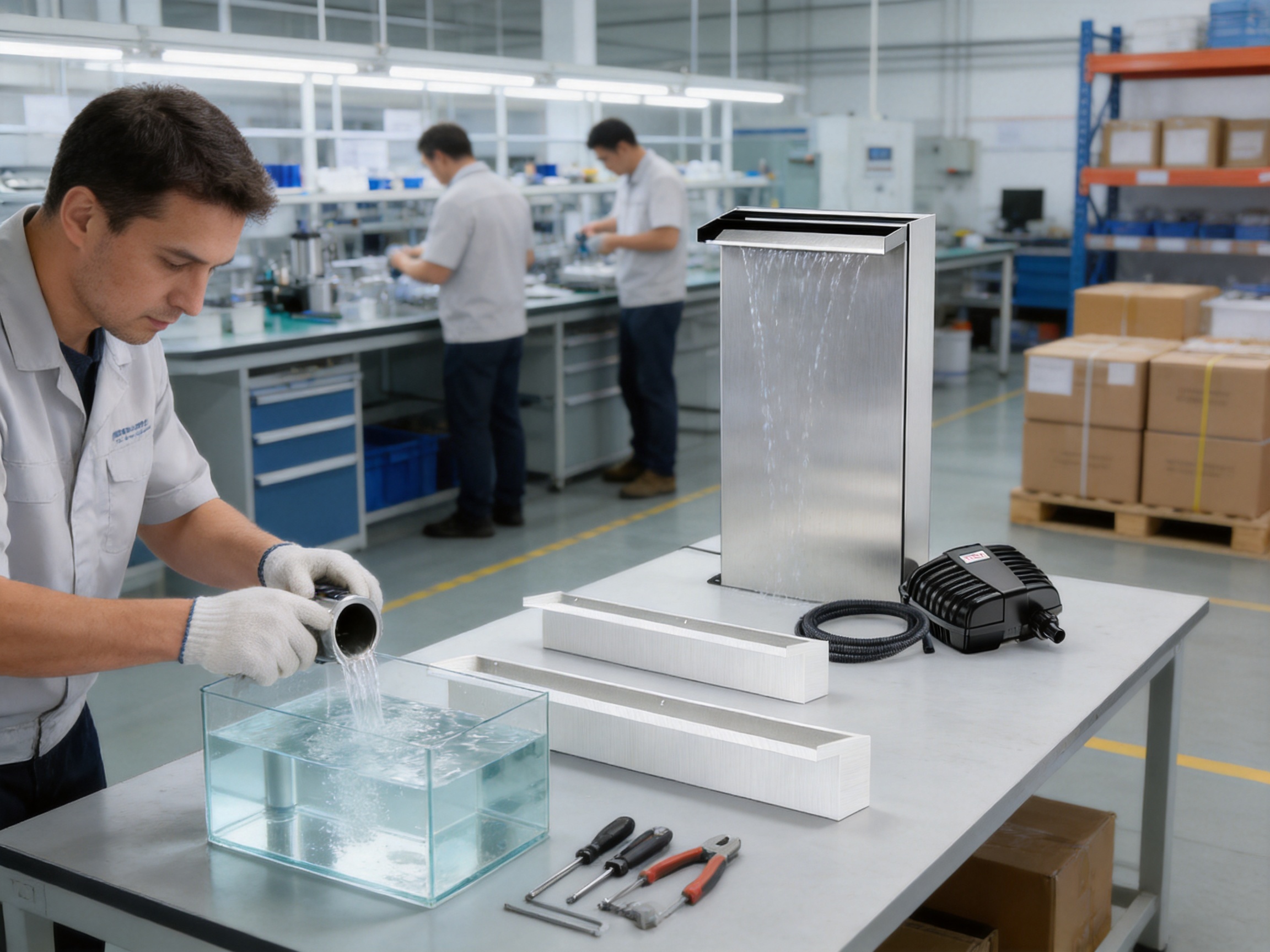
The company has established a Sensen Research Institute and maintains multiple functional departments, including a Quality Control Department. The presence of dedicated research and quality functions is important for products such as water-fall systems because reliable performance depends on more than motor power. Pump hydraulics, sealing, electrical design, material selection, hose compatibility, noise, durability, and ease of maintenance all influence the end-user experience.
A structured research organization can support the evaluation and improvement of product designs. In a water feature, engineering decisions may involve the relationship between impeller geometry, motor output, water resistance, pipe diameter, and head height. Product development also needs to consider how the pump will be packaged, transported, installed, cleaned, and serviced.
For the CWF Series, the listed specifications provide a clear technical framework. Model identification, dimensions, weight, pump model, voltage, power, head, output, adapter size, cable length, and pipe details help distributors and installers understand what the product is designed to do. Clear specifications also support more consistent project planning.
A dedicated quality-control function can help organize inspection activities throughout the production process. For a pump-based product, relevant checks may include dimensional consistency, electrical safety, cable integrity, water-tightness, pump operation, flow performance, packaging condition, and accessory completeness. The specific inspection procedures and certifications applicable to a particular market should be confirmed with the manufacturer or authorized supplier.
Quality control is especially important for equipment used near water and electricity. A product must be manufactured and supplied with attention to the conditions in which it will operate. Proper testing and documentation can reduce installation uncertainty, support after-sales service, and improve confidence among distributors and professional users.
The corporate information describes several wholly owned subsidiary companies and an import and export company, together with holdings in multiple trading companies. This broader structure indicates access to organized production, marketing, supply, and distribution resources. Such a network can support product availability in different regions and help the company serve both domestic and international markets.
A group with multiple industry activities may also benefit from cross-sector experience. Aquarium products, aquaculture machinery, industrial equipment, garden equipment, water pumps, air pumps, lighting products, controllers, and accessories often share technical requirements involving motors, plastics, electrical components, sealing, packaging, and user safety. Experience across these areas can support a more complete understanding of aquatic equipment needs.
The company describes continuous innovation as part of its development direction. For the CWF Series, innovation can be understood not only as adding complex functions, but also as improving the relationship between performance, installation, energy use, physical size, and practical usability.
A product such as the CWF-30T demonstrates the value of application-focused design. Its specifications are directed toward a defined use: creating a visible waterfall or water-circulation effect with a compact pump and accessible connection system. The combination of moderate power consumption, useful head capacity, matched pipe components, and long cable reach represents a practical form of product development.
Future improvements in this type of equipment may involve enhanced energy efficiency, quieter operation, easier cleaning, improved intake protection, more flexible connection options, and smarter flow control. A company with established research and quality functions is positioned to evaluate these needs as customer applications develop.
Before switching on the pump, the system should be assembled according to the intended water path. The basin or reservoir should contain enough water to cover the pump’s required operating area. The hose should be firmly connected to the adapter, and the outlet should be positioned so that water returns safely to the collection area.
The first test should be performed at a controlled flow and with the surrounding area observed carefully. The installer should check for leaks, unstable fittings, splashing outside the basin, unusual vibration, and insufficient water return. Any problem should be corrected before the system is left operating unattended.
The actual flow may be lower than the maximum listed output if the water is lifted to a significant height or pushed through a long route. This is normal for pump systems. If the flow is lower than expected, the installer should first inspect the intake, hose, fittings, water level, and outlet for restrictions.
Water features accumulate debris over time. Leaves, dust, algae, sediment, plant fragments, and mineral deposits can reduce pump performance and affect the appearance of the waterfall. Routine inspection of the intake and hose can help maintain circulation.
The pump should be disconnected from the electrical supply before cleaning or handling. The user should follow the manufacturer’s maintenance guidance and should avoid operating the pump without sufficient water. Cleaning tools and methods should be selected to prevent damage to the housing, cable, seals, and internal components.
In hard-water regions, mineral deposits may build up more quickly. In outdoor installations, seasonal debris and temperature changes can increase maintenance needs. A planned cleaning schedule is preferable to waiting until the waterfall becomes visibly weak or irregular.
Evaporation is a normal source of water loss. Splashing, wind, and plant absorption can also reduce the reservoir level. If the water level drops too far, the pump may draw air, operate irregularly, or suffer damage depending on its design.
Users should inspect the water level regularly, particularly during hot weather or continuous operation. The reservoir should be designed with adequate capacity and a practical refill point. Automatic top-up systems may be appropriate for larger installations, but they should be installed with suitable overflow protection and water-quality controls.
The CWF-30T is specified for 220–240 volts and 50 hertz. Before use, the installer must confirm compatibility with the local electrical system. Water and electricity should be separated through careful routing, suitable protective devices, and weather-appropriate electrical equipment.
The cable should not be buried or exposed in a way that creates a trip hazard or allows mechanical damage. Connections should be kept away from splash zones and standing water. If the product is installed outdoors or in a damp commercial environment, a qualified professional should assess the electrical arrangement and relevant local requirements.
Homeowners can use the CWF-30T to create a garden focal point without selecting a large pump system. It can support a compact waterfall, a raised pond return, or a decorative basin feature. The 10-meter cable may help position the feature where it looks best rather than where the nearest outlet happens to be located.
Residential users should consider noise, access, child safety, pets, splash control, and seasonal maintenance. The feature should be positioned on a stable foundation, and the water should not be allowed to undermine nearby paving or building structures.
Landscape professionals can incorporate the unit into modular water-feature designs. Its known dimensions and connection specifications make it easier to plan a cabinet, wall cavity, basin, or raised platform. The 2.7-meter maximum head can support moderate vertical features, while the 2,500-liter-per-hour rating provides a useful basis for estimating circulation.
Designers should calculate the actual hydraulic requirements of each project rather than relying only on the maximum specification. Long runs, multiple outlets, narrow channels, and decorative filtration materials can all change performance.
Retailers, showrooms, hotels, offices, and restaurants may use moving water to improve atmosphere and attract attention. A compact unit can support a display without occupying the space required by a larger technical system. The product can also be incorporated into seasonal or promotional installations where the layout changes periodically.
Commercial users should establish an inspection schedule because a public display must remain clean, stable, and safe. Overflow protection, accessible maintenance panels, and clear responsibility for water-level monitoring are essential for reliable operation.
Distributors serving aquarium and aquatic-equipment customers may find the product relevant because it sits at the intersection of water circulation, decorative design, and garden equipment. The pump model, flow specification, pipe size, and cable length can be presented clearly to professional buyers and end users.
However, the product should be selected according to the intended water environment. If it is used with fish, aquatic plants, or sensitive organisms, the installer should confirm material compatibility, water-quality requirements, temperature conditions, and any biological considerations. Decorative water circulation does not automatically replace filtration, aeration, or life-support equipment.
The first selection question is the required waterfall height. Measure the vertical distance from the water surface in the collection basin to the outlet, then account for the hose route and any additional resistance. If the required height approaches the 2.7-meter maximum head, the expected outlet flow should be evaluated carefully.
The second question is the desired visual effect. A gentle trickle may require a different outlet arrangement from a broad sheet of water. The pump provides circulation, but the waterfall structure determines how that flow appears. Spillway width, lip shape, channel depth, and surface texture can significantly alter the final result.
The third question is the reservoir size. The system must contain enough water to maintain safe pump operation and prevent frequent refilling. A larger reservoir may offer greater stability, while a smaller reservoir may be easier to conceal but more sensitive to evaporation and splash loss.
The fourth question is maintenance access. The pump, hose connection, and basin should be reachable for inspection. A visually attractive design that cannot be cleaned or repaired efficiently may become costly over time.
The fifth question is electrical compatibility. Confirm the 220–240V/50Hz specification and arrange suitable protection. The long cable offers flexibility, but the final installation must still meet electrical safety requirements.
| Planning Area | Recommended Consideration |
|---|---|
| Waterfall height | Keep the required lift below the maximum head where possible to preserve useful flow. |
| Hose route | Use the shortest practical route and avoid sharp bends or kinks. |
| Reservoir | Provide adequate volume for stable operation and account for evaporation and splash. |
| Outlet design | Match spillway width and shape to the desired waterfall appearance. |
| Electrical supply | Confirm 220–240 V/50 Hz compatibility and use suitable protective equipment. |
| Maintenance access | Keep the pump, intake, hose, and basin accessible for routine inspection. |
| Water quality | Control debris, algae, sediment, and mineral deposits to protect performance. |
| Structural support | Install the product on a stable surface capable of supporting the complete wet system. |
Water-feature equipment is often purchased as part of a larger project rather than as an isolated consumer item. Buyers may need technical information, spare parts, shipping coordination, product selection assistance, and after-sales communication. A manufacturer with an established export structure and broad product portfolio can provide advantages during these stages.
The company information describes an import and export company, multiple subsidiaries, trading-company holdings, and a broad sales network. These resources can support international distribution and help products reach aquarium stores, garden-equipment suppliers, installers, and project buyers.
The company also describes a unified sales network and an effort to integrate online and offline services. For users and distributors, organized channels can make it easier to identify product information, obtain support, and coordinate purchasing. Availability and service terms vary by region, so buyers should confirm details with the relevant supplier.
For professional purchasers, the manufacturer’s experience across aquarium, aquaculture, industrial, and pet-related sectors can be useful. These sectors require different combinations of pumps, air systems, lighting, controllers, filtration, and accessories. A broad technical product base may make it easier to source compatible equipment for a complete aquatic or landscape project.
Continuous water movement can improve the visual and sensory quality of a space, but responsible operation also requires attention to energy, water, and maintenance. The 45-watt rating provides a basis for estimating electricity consumption. For example, operating the unit continuously for 24 hours would use approximately 1.08 kilowatt-hours under the rated power assumption, although actual consumption may vary.
Users can reduce unnecessary operating time by applying schedules suited to the location. A commercial display may operate during opening hours, while a residential garden feature may run during selected periods. Any operating schedule should still account for water temperature, pump cooling requirements, and the need to prevent stagnant conditions in the system.
Water conservation is also important. A properly designed basin, controlled outlet, and stable foundation can reduce splash loss. Plants and decorative materials should be arranged so that they do not obstruct the intake or cause excessive water displacement.
When replacing components or retiring the product, electrical and mechanical parts should be handled according to local waste and recycling requirements. Packaging materials should be separated where possible. Responsible maintenance can extend the service life of the system and reduce unnecessary replacement.
The CWF-30T is designed for decorative water-fall and water-circulation applications. It can be used in gardens, landscape features, commercial displays, planted installations, and suitable aquatic environments where a compact pump system is required.
The listed output is 2,500 liters per hour. This is a rated maximum specification. Actual flow depends on lifting height, hose length, bends, fittings, outlet design, water level, and other system resistance.
The maximum head is listed as 2.7 meters. Installations designed below this limit will generally provide more practical flow reserve than installations operating at the maximum height.
The listed power rating is 45 watts. Actual energy use can vary with operating conditions, but the rating provides a useful basis for electrical planning and operating-cost estimation.
The product is specified for 220–240 volts and 50 hertz. Users must confirm compatibility with the local electrical supply and use appropriate protection for installations near water.
The cable length is 10 meters. This can provide additional flexibility when positioning the water feature, although the connection must still be protected from water and mechanical damage.
The hose adapter and spiral pipe are both listed at 20 millimeters. Installers should use compatible connections and avoid restrictions that could reduce pump performance.
The listed spiral pipe length is 3 meters. Longer routes may be possible with suitable additional components, but increased length and fittings can reduce the final flow.
No. Pump output normally decreases as lifting height and system resistance increase. The 2,500-liter-per-hour figure should be treated as a rated maximum rather than a guaranteed flow at every installation height.
It may be suitable for outdoor decorative applications when installed correctly, but users should confirm the product’s applicable environmental and electrical requirements. The installation must protect electrical connections, provide stable support, prevent overflow, and allow routine maintenance.
The CWF-30T is a water-fall and circulation product. It should not automatically be treated as a substitute for a biological filter, mechanical filter, aeration system, or other life-support equipment. Aquarium users should select equipment according to the needs of the aquatic organisms and the complete system.
Its combination of a CFP-2500 pump, 2,500-liter-per-hour output, 2.7-meter maximum head, 45-watt power rating, 10-meter cable, 20-millimeter connections, and 3-meter spiral pipe provides a more complete and flexible package than a simple bare pump.
Cleaning frequency depends on water quality, debris, algae, mineral content, operating time, and the installation environment. The intake, hose, basin, and outlet should be inspected regularly, and the pump should be disconnected before cleaning.
Buyers should contact the manufacturer, authorized distributor, or regional supplier for current availability, manuals, spare parts, regional compliance information, and installation guidance.
The CWF Series Water Fall offers a practical combination of compact construction and useful circulation performance. The CWF-30T model provides a listed 2,500-liter-per-hour output, 2.7-meter maximum head, 45-watt power rating, 10-meter cable, 20-millimeter hose connection, and 3-meter spiral pipe. These specifications make it suitable for a wide range of decorative water applications, from residential garden features to commercial displays and specialized aquatic installations.
Its advantages over basic alternatives come from the completeness of the package and the balance among flow, lifting capacity, energy demand, connection compatibility, and physical size. It is more flexible than a low-head decorative unit, more complete than a bare pump, and more proportionate than oversized equipment for moderate water-feature projects.
The manufacturer’s established history, research institute, quality-control department, multiple subsidiaries, export organization, and broad aquatic-equipment experience provide important support behind the product. These resources indicate an organized approach to product development, manufacturing, quality management, and international distribution.
Successful performance still depends on correct design and installation. Users should plan the waterfall height, hose route, reservoir, outlet, electrical supply, support structure, water level, and maintenance access. When these factors are addressed properly, the CWF-30T can provide an attractive and dependable foundation for a recirculating water feature.
1. Product specification sheet for the CWF Series Water Fall, model CWF-30T.
2. Supplied manufacturer information for Sensen Group Co., Ltd.
3. Supplied corporate profile for Sunsun Group Co., LTD.
4. General principles of centrifugal pump operation, head pressure, and flow resistance.
5. General guidance for electrical safety in water-feature and outdoor equipment installations.
6. General maintenance principles for decorative ponds, waterfalls, recirculating pumps, and aquatic displays.


 No. 61-79, Baima Street, Maao Town, Dinghai District, Zhoushan City, Zhejiang Province, China.
 0086 580 8082088 / 8081168
 0086 580 8080978
 songhua@sunsun-china.com