

 English
 русский
 España
 Portugal
 عربي
Li Mei | Aquarium Equipment Sales Specialist
Home / Author / Li Mei | Aquarium Equipment Sales Specialist / High-Performance Bottom Suction Pumps for Aquariums, Water Features, and Aquaculture
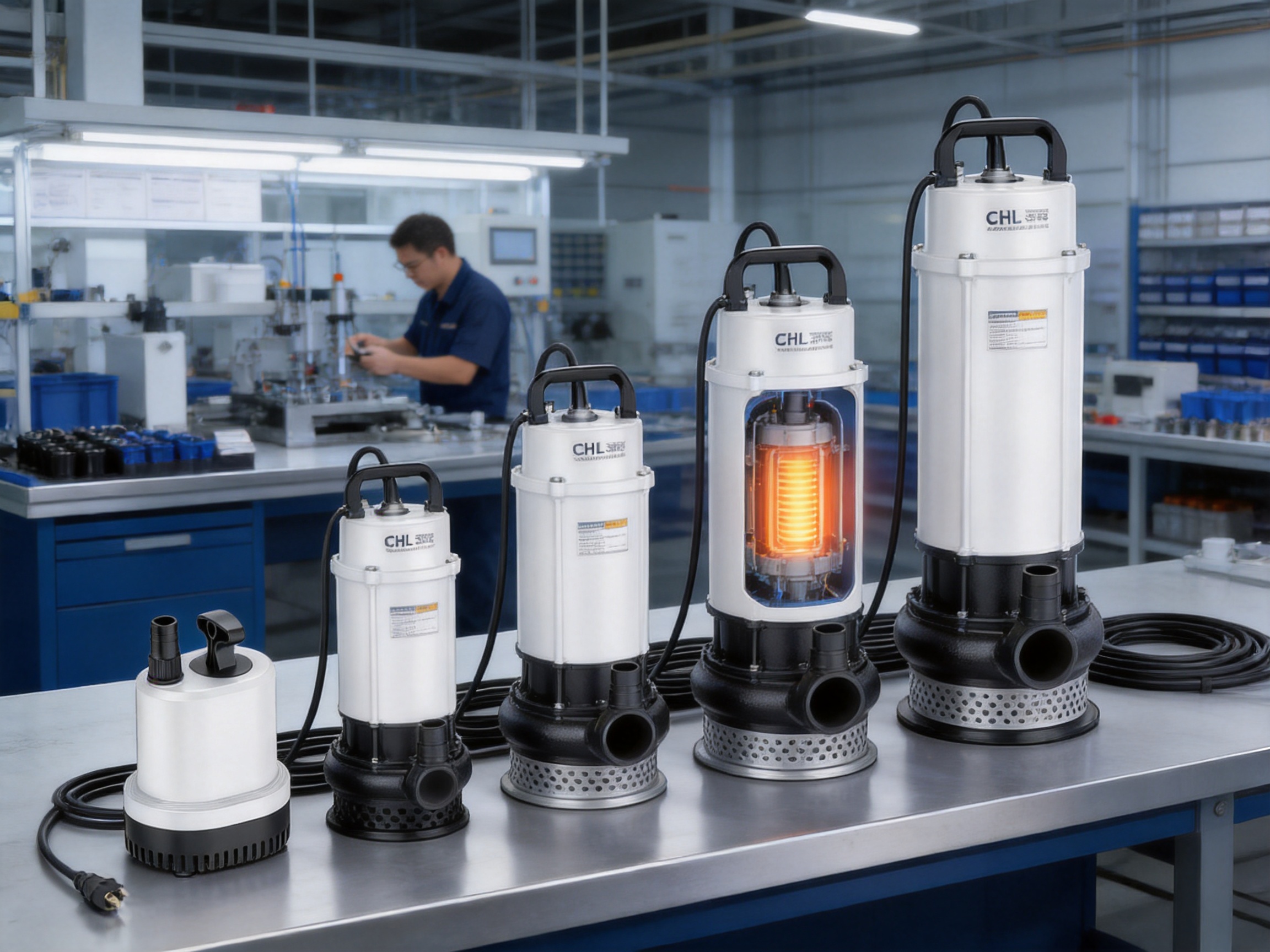
Water movement is one of the most important elements in a healthy aquarium, pond, water feature, or small aquaculture installation. Reliable circulation supports filtration, distributes oxygen, helps prevent stagnant areas, and allows waste and suspended particles to move toward the appropriate collection or filtration point. When a conventional pump leaves a layer of water or debris at the bottom of a tank, maintenance becomes more difficult and the aquatic environment may become less consistent.
The CHL Series Bottom Suction Pump is designed to address this challenge with a compact, multifunctional submersible configuration. Its bottom-suction structure is intended to absorb water from close to the base of the installation, while its 360-degree suction concept helps reduce dead angles around the intake area. The series is available in six performance levels, from 1,000 L/h to 4,500 L/h, allowing users to select a model according to tank size, circulation requirements, hose configuration, and pumping height.
In addition to water movement, the pump incorporates a built-in temperature-control chip for intelligent dry-burning protection. Its integrated handle improves portability during installation, cleaning, or repositioning. These features make the series suitable for aquariums, decorative ponds, water-change operations, filtration systems, garden water installations, and selected aquaculture applications.
Content
Many water pumps are designed primarily to transfer water from one point to another. Although this basic function is essential, the location and design of the intake can have a major effect on practical performance. If the pump intake is positioned too high above the bottom, a residual layer of water may remain after draining. If the intake is placed close to the bottom but is surrounded by a narrow or directional inlet, some areas may receive little or no suction.
A bottom suction design places the intake function close to the lowest practical operating position. This is useful when users need to remove water during maintenance, reduce residual water, or improve circulation near the floor of a tank. In aquariums, the design may assist with the movement of settled particles toward a filtration or drainage route. In garden water features, it can help maintain circulation in basins, reservoirs, and decorative pools.
The CHL Series uses a 360-degree bottom suction concept. Rather than concentrating intake in only one narrow direction, the surrounding suction arrangement is intended to improve water absorption from multiple directions. This can reduce the number of areas where water movement is weak, especially when the pump is placed on a relatively flat surface.
Bottom suction does not eliminate the need for proper system design. Users should still prevent large debris from entering the pump, maintain adequate water depth, and select a suitable hose and discharge route. However, the intake structure provides a practical foundation for more complete water removal and more consistent circulation.
The primary feature of the series is its 360-degree bottom suction. This design supports water absorption without relying on a single narrow intake direction. The result is a pump that can be positioned close to the base of a container or water feature while continuing to draw water from around the intake area.
For aquarium maintenance, this can be especially useful when water must be removed efficiently during partial water changes or equipment cleaning. In a pond or garden installation, the pump can support circulation while reducing the amount of water that remains inaccessible near the bottom. In an equipment room, it may also serve as a compact transfer pump for drainage and water movement.
Dry running is a common risk for submersible pumps. When water levels fall below the intake or the pump is accidentally operated outside the water, the motor and internal components may lose the cooling and lubrication provided by the surrounding water. Prolonged dry operation can increase heat and shorten service life.
The CHL Series incorporates a built-in temperature-control chip designed to provide intelligent anti-dry-burning protection. The protection system is intended to respond to abnormal temperature conditions, helping limit the risk associated with insufficient water coverage or accidental dry operation. This feature is valuable during water changes, drainage work, and installations where water levels may change quickly.
Protective electronics are not a substitute for correct operation. The pump should be installed according to the operating instructions, inspected regularly, and kept free of excessive blockage. Nevertheless, integrated temperature protection adds an important layer of operational security compared with a basic pump that relies entirely on user supervision.
Submersible equipment is often removed from the water for cleaning, storage, inspection, or repositioning. A pump without a suitable gripping point can be awkward to lift, particularly when wet or covered with residue. The CHL Series includes a handle designed to make carrying and handling more convenient.
The handle supports faster routine maintenance and reduces the need to pull the pump by its electrical cable or connected hose. This is a small design detail, but it contributes significantly to everyday usability. Easy handling is especially helpful in commercial aquarium rooms, garden water installations, service areas, and locations where equipment is moved regularly.
The range includes six models: CHL-1000, CHL-1500, CHL-2500, CHL-3000, CHL-3500, and CHL-4500. Their rated outputs extend from 1,000 L/h to 4,500 L/h, while maximum pumping heights range from 1.4 meters to 3.8 meters.
This graduated product structure allows users to choose a pump more precisely. A small aquarium or maintenance container may require the compact CHL-1000, while a larger installation with a longer discharge route may benefit from the CHL-3500 or CHL-4500. Offering multiple capacities also helps distributors and professional installers build a more complete product selection without changing to an entirely different pump platform.
Hose compatibility is a practical consideration in every pumping system. Existing installations may use different hose diameters, and a replacement pump is more convenient when it can connect to common sizes. Depending on the model, the CHL Series supports hose adapters covering sizes from 13 mm to 25 mm.
The CHL-1000 uses a 16 mm hose adapter. The CHL-1500 and CHL-2500 accommodate 13 mm, 16 mm, and 20 mm connections. The CHL-3000 supports 16 mm and 20 mm connections, while the CHL-3500 and CHL-4500 support 16 mm, 20 mm, and 25 mm connections. This range allows the pump to be matched with different plumbing layouts and discharge requirements.
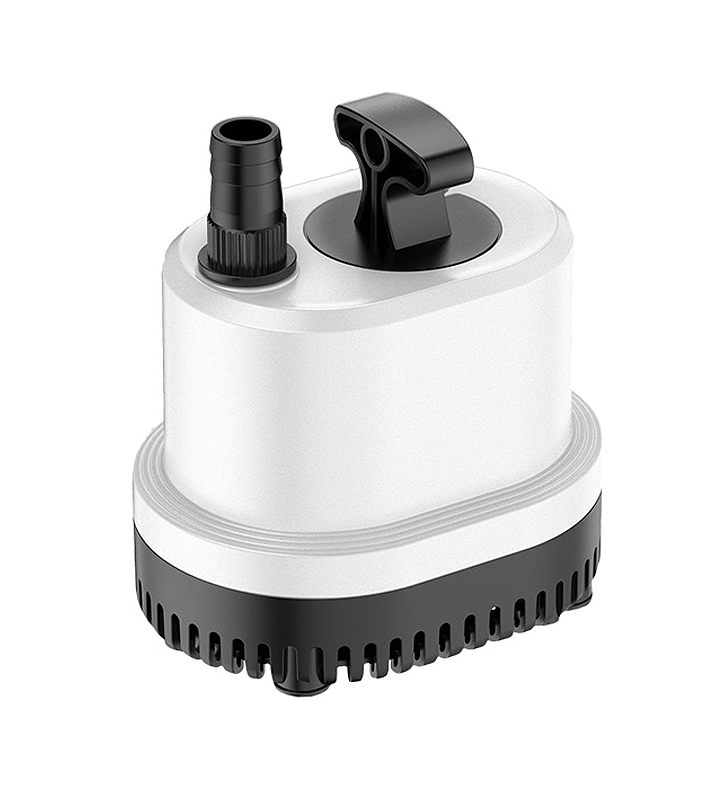
CHL Series Bottom Suction Pump
The following table summarizes the available models and their principal specifications. The stated output represents the rated water flow under the manufacturer’s specified test conditions. Actual flow may vary according to pumping height, hose length, bends, restrictions, water quality, and installation arrangement.
| Model | Voltage | Frequency | Power | Maximum Head | Output | Hose Adapter | Cable Length | Weight | Dimensions L × W × H |
|---|---|---|---|---|---|---|---|---|---|
| CHL-1000 | 220–240 V | 50 Hz | 15 W | 1.4 m | 1,000 L/h | 16 mm | 1.6 m | 0.5 kg | 113 × 85 × 128 mm |
| CHL-1500 | 220–240 V | 50 Hz | 25 W | 1.8 m | 1,500 L/h | 13/16/20 mm | 1.6 m | 0.65 kg | 123 × 91 × 137 mm |
| CHL-2500 | 220–240 V | 50 Hz | 40 W | 2.3 m | 2,500 L/h | 13/16/20 mm | 2.3 m | 0.9 kg | 133 × 97 × 147 mm |
| CHL-3000 | 220–240 V | 50 Hz | 55 W | 2.8 m | 3,000 L/h | 16/20 mm | 2.3 m | 1.3 kg | 151 × 107 × 169 mm |
| CHL-3500 | 220–240 V | 50 Hz | 70 W | 3.2 m | 3,500 L/h | 16/20/25 mm | 2.3 m | 2.1 kg | 170 × 122 × 190 mm |
| CHL-4500 | 220–240 V | 50 Hz | 100 W | 3.8 m | 4,500 L/h | 16/20/25 mm | 2.3 m | 2.3 kg | 170 × 122 × 202 mm |
The CHL-1000 is the most compact option in the series. With a rated output of 1,000 L/h, a 15 W power rating, and a maximum head of 1.4 meters, it is appropriate for smaller water-transfer tasks where a compact footprint is important. Its 0.5 kg weight and 1.6-meter cable make it convenient to position and remove.
Typical applications may include small aquarium water changes, compact filtration layouts, temporary drainage, and circulation in modest decorative installations. Users should compare the pump output with the actual aquarium volume and avoid selecting a capacity so high that it creates excessive turbulence for delicate livestock.
The CHL-1500 and CHL-2500 provide a step up in flow and pumping height. Their support for 13 mm, 16 mm, and 20 mm hose connections offers flexibility for users who are adapting the pump to an existing installation. The CHL-1500 reaches a maximum head of 1.8 meters, while the CHL-2500 reaches 2.3 meters.
These models can be considered for medium-sized aquariums, water-change work, biological filtration support, reservoir transfer, and small garden water features. The correct choice depends not only on tank volume but also on the vertical distance and resistance in the discharge line.
The CHL-3000, CHL-3500, and CHL-4500 are designed for higher flow requirements. Their rated outputs range from 3,000 L/h to 4,500 L/h, and their maximum heads range from 2.8 meters to 3.8 meters. These models are suitable for larger aquariums, more demanding filtration circuits, pond circulation, drainage, and water features that require water to travel through a longer or higher route.
The CHL-4500 provides the highest capacity in the series, with a rated output of 4,500 L/h and a maximum head of 3.8 meters. Its 25 mm hose compatibility can be useful in installations where a larger discharge route is required. However, the pump should always be evaluated against the complete system curve rather than its free-flow rating alone.
Rated output and maximum head are two different performance indicators. Output describes the amount of water the pump can move under a specified condition. Maximum head describes the greatest vertical height to which the pump can raise water before flow becomes extremely low or stops. A pump generally delivers less water as the discharge height increases.
For example, a model rated at 3,000 L/h may not deliver 3,000 L/h when connected to a long hose that rises several meters. Hose friction, connectors, bends, filters, valves, and outlet restrictions further reduce the actual flow. Therefore, the user should select a model with sufficient head capacity and allow a practical margin above the required installation height.
When calculating a system, measure the vertical distance from the pump outlet to the final discharge point. Then consider the length of hose and the number of bends. A larger hose may reduce resistance, while a narrow or excessively long hose may reduce flow. Selecting the correct hose adapter and maintaining a clear discharge route are important for achieving stable performance.
The CHL Series offers a progressive relationship between power, output, dimensions, weight, and head capability. As the models increase in capacity, their physical size and power consumption also increase. This allows the user to choose an appropriate balance instead of automatically selecting the largest pump.
A basic submersible pump may provide adequate water transfer, but it often lacks features that improve handling, protection, and bottom-level water movement. The CHL Series combines several functions in one compact product platform.
Many conventional pumps use a side intake or a limited suction opening. Such designs can leave a noticeable volume of water below the intake or create low-flow zones around the base. The CHL Series is specifically organized around bottom suction, making it better suited to tasks where water needs to be collected from a low position.
Not every pump includes temperature-based protection against dry operation. The built-in temperature-control chip adds a protective function that is particularly relevant during water changes and drainage. This gives the series an advantage in situations where water level changes cannot be monitored continuously.
The integrated handle distinguishes the series from many compact pumps that must be lifted by their housing or hose connection. A dedicated handle makes it easier to place the pump accurately and remove it safely for inspection. It also encourages better maintenance practices because the pump is less awkward to handle.
The six-model range covers both light-duty and higher-capacity requirements. A single small pump platform may not be sufficient for every aquarium, pond, or garden application. The graduated CHL range gives distributors and installers more options while maintaining a consistent design concept across the product family.
Support for multiple hose sizes on most models improves installation flexibility. Users can select a hose according to the desired balance of flow, resistance, and physical routing. This is more convenient than a pump that accepts only one specialized connection.
The product is supplied by a large, long-established manufacturer with experience in aquarium products, aquaculture machinery, industrial equipment, and related water-management applications. The company was established in 1985 and has developed a broad organizational structure covering research, quality control, finance, administration, business training, sales, and production-related operations.
This type of organizational depth supports more than simple assembly. A successful pump manufacturer must coordinate product design, motor development, plastic housing production, electrical protection, performance testing, packaging, logistics, and after-sales support. The presence of dedicated research and quality functions provides a foundation for systematic product development and continuous improvement.
The company’s stated business direction emphasizes industrial technical development, global marketing, and international brand development. Its activities extend across aquarium pets, aquaculture machinery, and industrial equipment. This cross-sector experience is valuable because pump design requirements often overlap across these fields. Aquarium circulation, aquaculture water movement, filtration equipment, and industrial transfer systems all require attention to flow, reliability, energy use, and operating safety.
The group structure includes several wholly owned subsidiaries and an import and export company, together with holdings in multiple trading organizations. This broad network can support material sourcing, production coordination, market distribution, export activity, and customer service. For international buyers, a manufacturer with established export capability may provide greater consistency in documentation, order handling, and product availability.
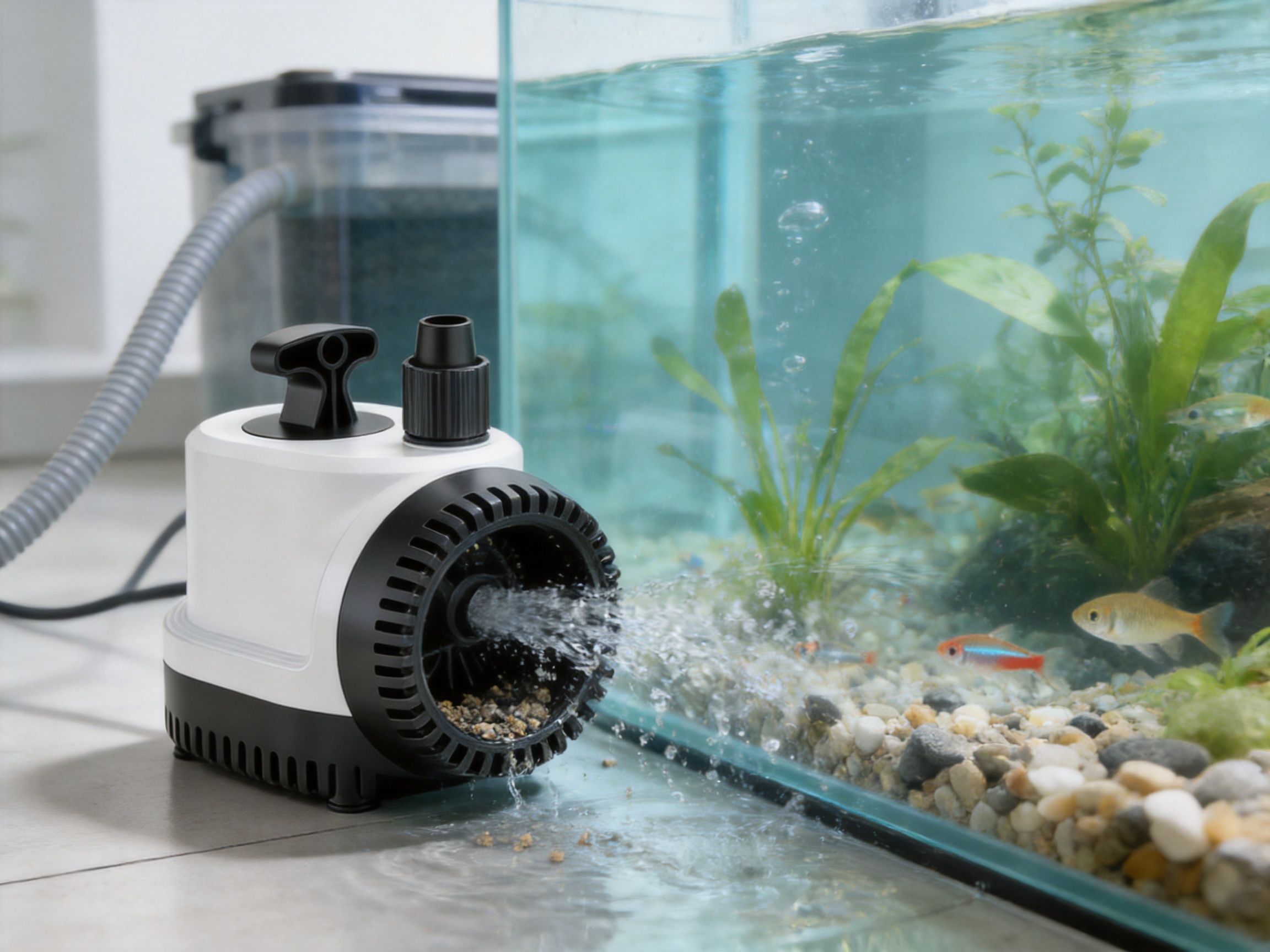
Although the supplied product information does not list individual production machines or detailed inspection procedures, the company identifies a dedicated Quality Control Department as part of its organizational structure. Quality control is especially important for submersible pumps because the product combines electrical components, moving parts, seals, molded housings, thermal protection, and water-contact surfaces.
A robust quality-management approach for this type of product typically begins with incoming-material inspection. Components such as motors, cables, molded plastic parts, impellers, connectors, and electronic protection modules must meet defined specifications before entering assembly. Consistency at this stage helps reduce dimensional variation and prevents unsuitable parts from moving further into production.
During assembly, accurate alignment of rotating components is essential. The impeller, shaft, motor housing, and protective cover must work together with minimal unnecessary friction. Electrical connections must be secure, insulation must be maintained, and the cable entry area must be appropriately protected for a submersible product. Proper assembly procedures reduce the risk of vibration, noise, overheating, or premature wear.
Functional testing is another central stage. A pump may be assessed for start-up behavior, water output, pumping height, power consumption, operating temperature, and abnormal conditions. Testing the anti-dry-burning protection is also important because the protective circuit is a key feature of the CHL design. Final inspection can include visual checks, dimensional checks, cable review, labeling, and packaging verification.
Advanced manufacturing is not defined only by automated machines. It also includes repeatable processes, traceability, standardized work instructions, controlled inspection points, engineering feedback, and continuous product improvement. A company that integrates research, quality control, production management, and international distribution is better positioned to maintain consistent performance across large production volumes.
For buyers, these strengths have practical consequences. Consistent production can help reduce variation between units, simplify installation, lower the likelihood of early failure, and improve confidence when purchasing replacement units or larger quantities for a project. It also allows the manufacturer to support a family of related models with common design principles and a familiar user experience.
In an aquarium, water circulation must be matched to the needs of the fish, plants, filtration media, and tank layout. A pump that is too weak may fail to distribute water effectively, while an oversized pump may create unnecessary turbulence. The CHL Series provides several capacity choices so that the user can select an output appropriate to the installation.
The pump may be used as part of a filtration arrangement, a water-change system, a circulation loop, or a temporary transfer setup. It should be placed on a stable surface with sufficient water coverage. The intake area should be kept clear of gravel, leaves, substrate fragments, and other material that could restrict flow or enter the pump.
For planted aquariums or aquariums containing delicate species, the discharge should be directed in a way that avoids excessive disturbance. A diffuser, outlet fitting, or suitable hose arrangement may help distribute the flow. The pump’s output should be considered together with the tank volume and the desired turnover rate, while also accounting for the reduction caused by lift height and plumbing resistance.
During maintenance, the handle can be used to remove the pump without pulling on the cable. The pump should be disconnected from the power supply before inspection or cleaning. Any biological residue, algae, mineral deposits, or debris should be removed according to the maintenance instructions, and the pump should not be operated with damaged cables or housings.
The CHL Series is also relevant to garden water installations. Decorative ponds, fountains, water basins, and small circulation systems require dependable water movement to maintain visual activity and limit stagnant areas. The bottom suction concept is useful where the pump must draw water from a low point in the basin.
In a water feature, the pump’s maximum head should be compared with the height of the fountain outlet or waterfall. The hose diameter should be chosen to avoid unnecessary restriction, particularly when the discharge route is long. A properly sized model can provide a stable flow while avoiding the excessive energy use associated with an unnecessarily large pump.
Outdoor installations require additional attention to debris, weather exposure, water chemistry, and electrical safety. Leaves and sediment should not be allowed to accumulate around the intake. The electrical connection should be protected using appropriate equipment and installation practices suitable for the local environment. The pump itself should only be used within its intended operating conditions.
For seasonal applications, the pump should be removed, cleaned, and stored appropriately when freezing conditions or extended shutdowns are expected. Regular inspection can identify obstructions, cable damage, unusual sounds, or reduced flow before these issues become more serious.
Water movement is central to many aquaculture systems. Pumps may be used to transfer water, support filtration, circulate reservoirs, or assist with tank cleaning. The CHL Series offers a compact solution for selected low- to medium-capacity applications where submersible operation and bottom-level intake are useful.
In aquaculture environments, reliability and ease of maintenance are particularly important. Equipment may operate for extended periods and may be exposed to organic material, suspended solids, and changing water conditions. The pump should therefore be installed with suitable pre-screening or protection when the water contains larger particles. The actual suitability of a model depends on the water quality, solids content, operating schedule, and required flow.
The built-in temperature-control feature may help reduce risk during changing water levels, but it should not be treated as a complete monitoring system. Commercial operators should maintain operating procedures, inspect equipment regularly, and use backup or alarm systems where the application demands high continuity.
Before installation, confirm that the power supply matches the pump specification. The models described here are rated for 220–240 V and 50 Hz operation. Users should verify compatibility with the local electrical system and follow applicable electrical safety requirements.
Place the pump on a stable, level surface where the bottom suction openings are not blocked. Avoid positioning the unit directly in deep sediment or loose substrate. If the installation contains leaves, gravel, algae, or other solids, use appropriate screening or pre-filtration to help protect the intake.
Choose a hose adapter that matches the hose being used. Keep the discharge line as short and direct as practical. Minimize sharp bends and unnecessary restrictions. If the water must be raised close to the pump’s maximum head, select a larger model or reduce resistance where possible, because the actual flow will decrease as the lift approaches the maximum rating.
Secure the hose so that its movement does not pull on the pump. The cable should be routed safely and should never be used as a lifting handle. Before energizing the unit, confirm that the pump is adequately submerged and that the discharge route is open.
After start-up, observe the water flow, sound, vibration, and temperature. An unusual noise, weak output, repeated stopping, or excessive heat may indicate a blockage, incorrect installation, insufficient water, or another problem that requires attention.
Regular maintenance helps preserve pump performance. The frequency depends on water quality and operating conditions. Systems with heavy algae growth, high mineral content, or substantial suspended solids may require more frequent cleaning than clear aquarium water.
Disconnect the pump from the power supply before removing it from the water. Use the integrated handle when lifting the unit. Inspect the intake openings, housing, hose adapter, cable, and outlet for visible damage or blockage. Clean deposits carefully using methods compatible with the pump materials and the manufacturer’s instructions.
Reduced flow is often associated with a blocked intake, restricted hose, excessive lift, or deposits around the impeller. If the pump becomes noisy, check whether debris has entered the moving assembly. Do not continue operating a pump with a damaged power cable, cracked housing, or signs of water entering areas that should remain protected.
The temperature-control chip provides an important protective function, but preventive maintenance remains necessary. Thermal protection may stop or limit operation under abnormal conditions, yet repeated overheating can indicate an underlying installation or maintenance issue. Identifying and correcting the cause is preferable to relying on protection repeatedly.
Energy efficiency should be evaluated in relation to the amount of useful water movement delivered. The CHL models range from 15 W to 100 W, with output increasing from 1,000 L/h to 4,500 L/h. Selecting the smallest model that meets the actual head and flow requirement can help avoid unnecessary energy consumption.
However, choosing a pump solely by wattage may lead to poor results. A lower-power pump may consume less electricity but fail to provide adequate flow at the required height. Conversely, a much larger pump may use more power than necessary and create excessive circulation. The best choice balances rated output, maximum head, hose resistance, operating duration, and the needs of the aquatic environment.
Keeping the intake and impeller clean also supports efficient operation. A partially blocked pump may consume energy while delivering less water. Correct hose sizing and a direct discharge route can improve the amount of useful flow produced by the system.
For distributors, retailers, aquarium specialists, and project suppliers, a clearly structured model range is easier to present to customers. The six CHL models cover different capacity levels, while the common bottom-suction concept provides a simple product story. Retail staff can guide users according to flow, head, hose size, and application rather than offering a single universal pump.
The compact construction, integrated handle, and protective temperature-control function are also straightforward benefits for end users. These features can reduce the difficulty of installation and maintenance, which may improve customer satisfaction and reduce avoidable service questions.
The manufacturer’s broad product portfolio and international business structure can support customers seeking more than one category of aquatic equipment. Its experience includes aquarium products, aquaculture machinery, industrial equipment, pumps, air pumps, lighting, controllers, and accessories. This wider capability may be valuable for projects that require coordinated equipment from one established source.
For larger orders, buyers should confirm current production lead times, packaging specifications, electrical certifications, regional plug requirements, warranty conditions, and technical documentation. These details may vary according to destination market and order configuration.
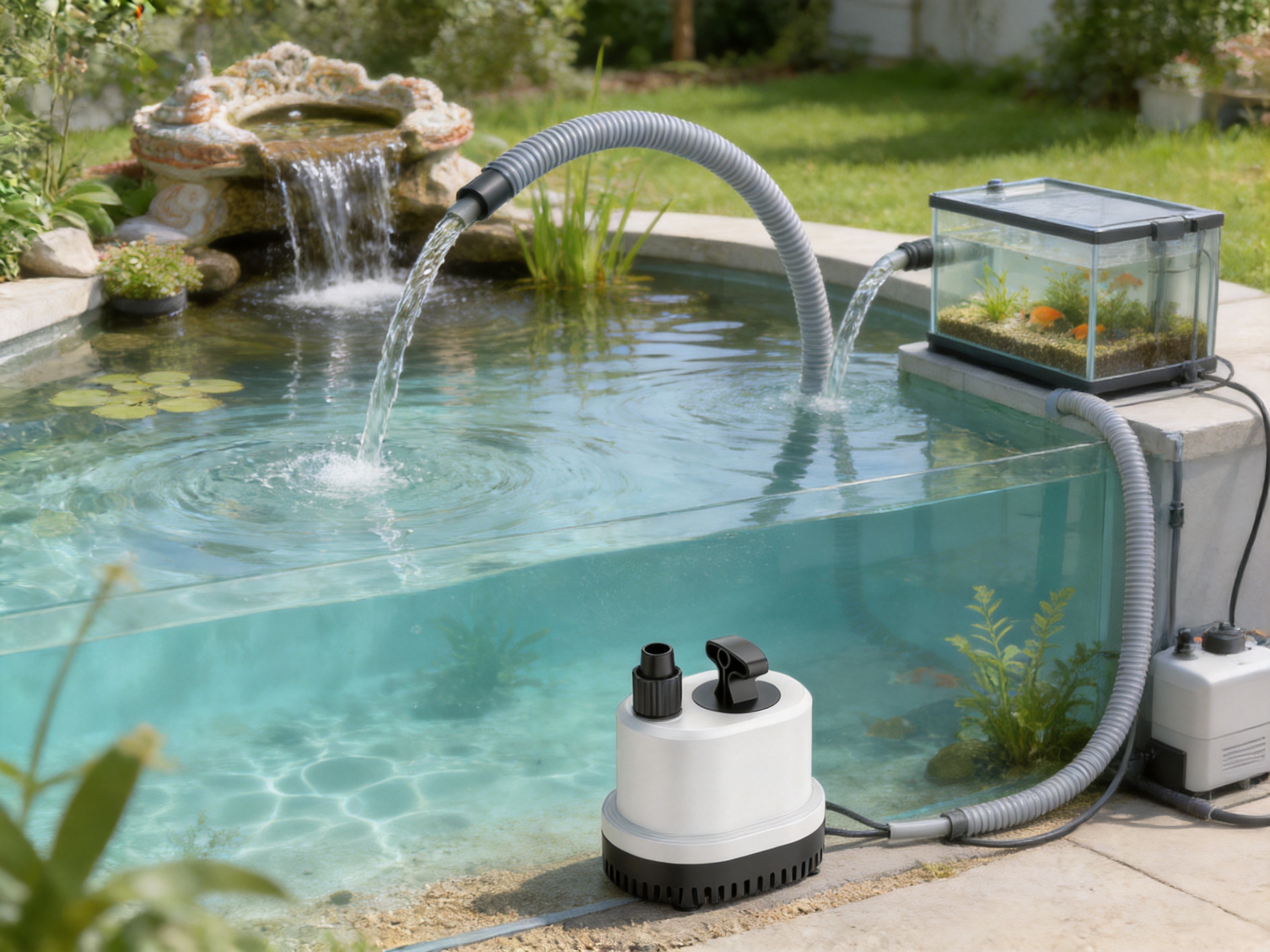
Compared with a basic transfer pump, the CHL Series offers a more application-focused design. Its bottom suction structure is intended for low-level water absorption, whereas many ordinary pumps are optimized for general transfer from a fixed intake position. This can make the CHL design more suitable for drainage and maintenance tasks.
Compared with a pump that has no integrated protection, the temperature-control chip offers an additional safeguard against abnormal heat associated with dry operation. This does not remove the need for supervision, but it can improve resilience during changing water conditions.
Compared with a product offered in only one capacity, the six-model range provides better selection flexibility. Users can choose a compact 15 W unit for a smaller task or move to a 100 W model for higher flow and greater head capability. This range also makes it easier for professional suppliers to standardize around a related family of products.
Compared with a pump that is difficult to handle, the built-in handle improves portability. Since cleaning and inspection are normal parts of submersible pump ownership, this practical detail can provide a meaningful advantage over designs that require lifting by the hose or housing.
All electrical equipment used near water requires careful handling. Confirm the voltage and frequency before use, and follow local electrical regulations. Use suitable residual-current protection and ensure that connections are protected from water exposure. Never handle the plug, socket, or cable with wet hands.
Disconnect the power before moving, cleaning, or inspecting the pump. Do not pull the unit by its cable. Do not operate the pump if the housing, cable, or plug is damaged. Keep the intake free from objects that could block the flow or damage the internal mechanism.
The anti-dry-burning feature is designed to provide protection, but users should still prevent dry operation whenever possible. The pump must be installed at an appropriate water level, and the system should be checked after power interruptions, water changes, or changes to the discharge arrangement.
Users should also confirm that the intended water chemistry and temperature are compatible with the product. If the application involves chemicals, saltwater, high temperatures, abrasive solids, or heavy contamination, technical suitability should be confirmed before purchase.
The CHL Series is a multifunctional submersible pump designed for bottom-level water absorption, circulation, drainage, aquarium maintenance, garden water features, and selected aquaculture applications.
It refers to an intake design intended to absorb water from around the bottom area rather than from only one narrow side. This helps reduce dead angles and supports more complete water movement near the base of a tank or basin.
The CHL-1000 is the smallest model. It has a rated output of 1,000 L/h, a power rating of 15 W, a maximum head of 1.4 meters, and a weight of 0.5 kg.
The CHL-4500 is the highest-capacity model, with a rated output of 4,500 L/h, a maximum head of 3.8 meters, and a power rating of 100 W.
The series includes a built-in temperature-control chip designed to provide intelligent anti-dry-burning protection. Users should still maintain adequate water coverage and follow safe operating procedures.
Depending on the model, hose adapter options range from 13 mm to 25 mm. The CHL-1000 uses a 16 mm adapter, while the larger models support combinations of 16 mm, 20 mm, and 25 mm. The CHL-1500 and CHL-2500 also support 13 mm connections.
Yes, the series can be used for suitable pond, basin, fountain, and garden water applications. The user should select a model according to the required flow, vertical lift, hose resistance, water quality, and installation conditions.
No. Pump output generally decreases as pumping height and system resistance increase. The rated output should be understood as a reference value under specified conditions. Actual performance depends on the complete installation.
Disconnect the power first, then use the integrated handle to lift and reposition the pump. Do not pull or carry the pump by its electrical cable.
The manufacturer has operated since 1985 and works across aquarium products, aquaculture machinery, industrial equipment, and related fields. Its organizational structure includes research, quality control, business, administration, finance, and international trade functions, supporting product development and large-scale market service.
No single pump is suitable for every aquarium. The correct choice depends on aquarium size, desired circulation, livestock requirements, plumbing layout, vertical lift, hose diameter, and water quality. Users should select the model that meets the application without creating excessive turbulence.
The CHL Series Bottom Suction Pump combines practical water movement with features aimed at improving daily use and operational protection. Its 360-degree bottom suction structure supports water absorption close to the base of a tank or basin. The built-in temperature-control chip provides intelligent anti-dry-burning protection, while the integrated handle makes installation and maintenance easier.
With six models covering outputs from 1,000 L/h to 4,500 L/h, the series can serve a broad selection of aquarium, pond, garden, water-transfer, and aquaculture requirements. Multiple hose-adapter options add installation flexibility, and the range of maximum heads allows users to match the pump to different discharge heights.
The product is supported by a long-established manufacturer with experience in aquatic products, aquaculture machinery, industrial equipment, research, quality control, and international distribution. This combination of product-focused design and organizational capability makes the series a practical option for both individual users and professional equipment suppliers.
Correct model selection, suitable installation, regular cleaning, and responsible electrical handling remain essential. When these factors are properly managed, the CHL Series can provide dependable and convenient water circulation for a wide variety of aquatic environments.
1. Product specification sheet for the CHL Series Bottom Suction Pump, including model capacities, electrical ratings, hose adapters, dimensions, cable lengths, weights, and maximum heads.
2. Manufacturer-provided product description covering 360-degree bottom suction, temperature-control protection, and handle design.
3. Manufacturer company information concerning organizational structure, research activities, quality control, subsidiary operations, and international business capabilities.
4. General principles of submersible pump selection, including flow rate, pumping head, hose resistance, installation conditions, and maintenance requirements.
5. General aquarium and aquaculture equipment practices concerning water circulation, filtration support, drainage, equipment handling, and electrical safety near water.


 No. 61-79, Baima Street, Maao Town, Dinghai District, Zhoushan City, Zhejiang Province, China.
 0086 580 8082088 / 8081168
 0086 580 8080978
 songhua@sunsun-china.com