

 English
 русский
 España
 Portugal
 عربي
Li Mei | Aquarium Equipment Sales Specialist
Home / Author / Li Mei | Aquarium Equipment Sales Specialist / HJ Series Submersible Fountain Pump: A Versatile Water Feature Solution for Aquariums and Gardens
Content
Water movement is one of the most important elements in an attractive fountain, ornamental pond, display tank, and many other aquatic installations. It creates visual interest, supports circulation, improves the movement of decorative water patterns, and gives an installation a more dynamic and natural appearance. The HJ Series Submersible Fountain Pump is designed for applications that require dependable submerged water movement together with interchangeable fountain effects.
Rather than functioning only as a basic circulation device, the HJ Series combines a submersible pump platform with dedicated print head assemblies. These assemblies allow users to create several different water patterns, including Rain Forest, Volcano, Tent, Foam, Champagne, and Rocket effects, depending on the compatible pump model and selected accessory. This approach gives installers and end users greater freedom when designing a water feature, while also simplifying the process of changing the appearance of the installation.
The product belongs to a broad equipment portfolio that serves aquarium, fountain, garden, water-pump, and pet-related applications. Its design is particularly suitable for users who want a practical fountain solution that can be adapted to different decorative requirements without replacing the complete pump system.
The HJ Series is available with accessory compatibility covering several model groups. The CFA-05 print head assembly is intended for the HJ-743, HJ-943, and HJ-1143 models. The CFA-03 print head assembly is intended for the HJ-1543 and HJ-1843 models. Compatibility should always be checked before installation, because the correct relationship between pump output and print head design is essential for achieving a stable and attractive water pattern.
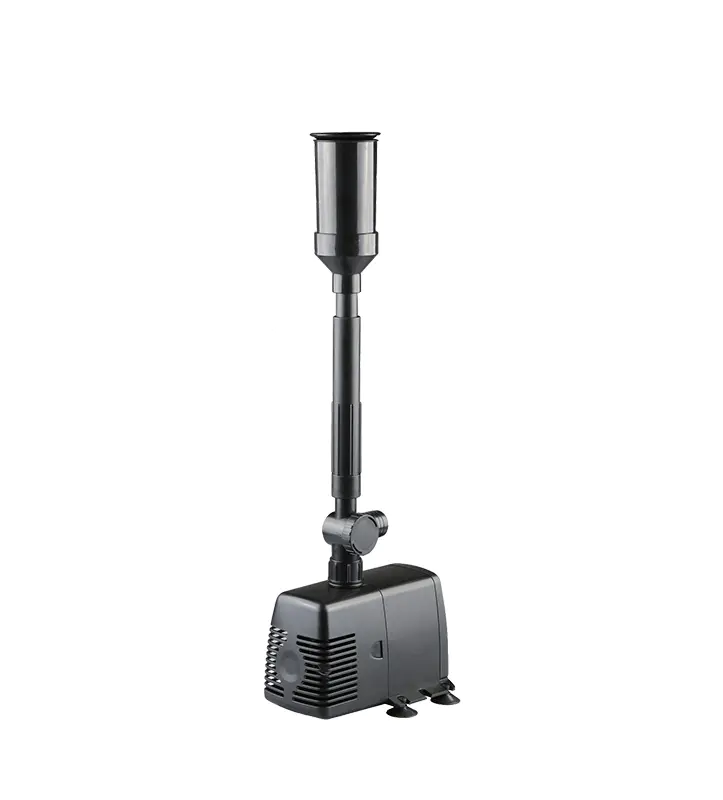
HJ Series Submersible Fountain Pump
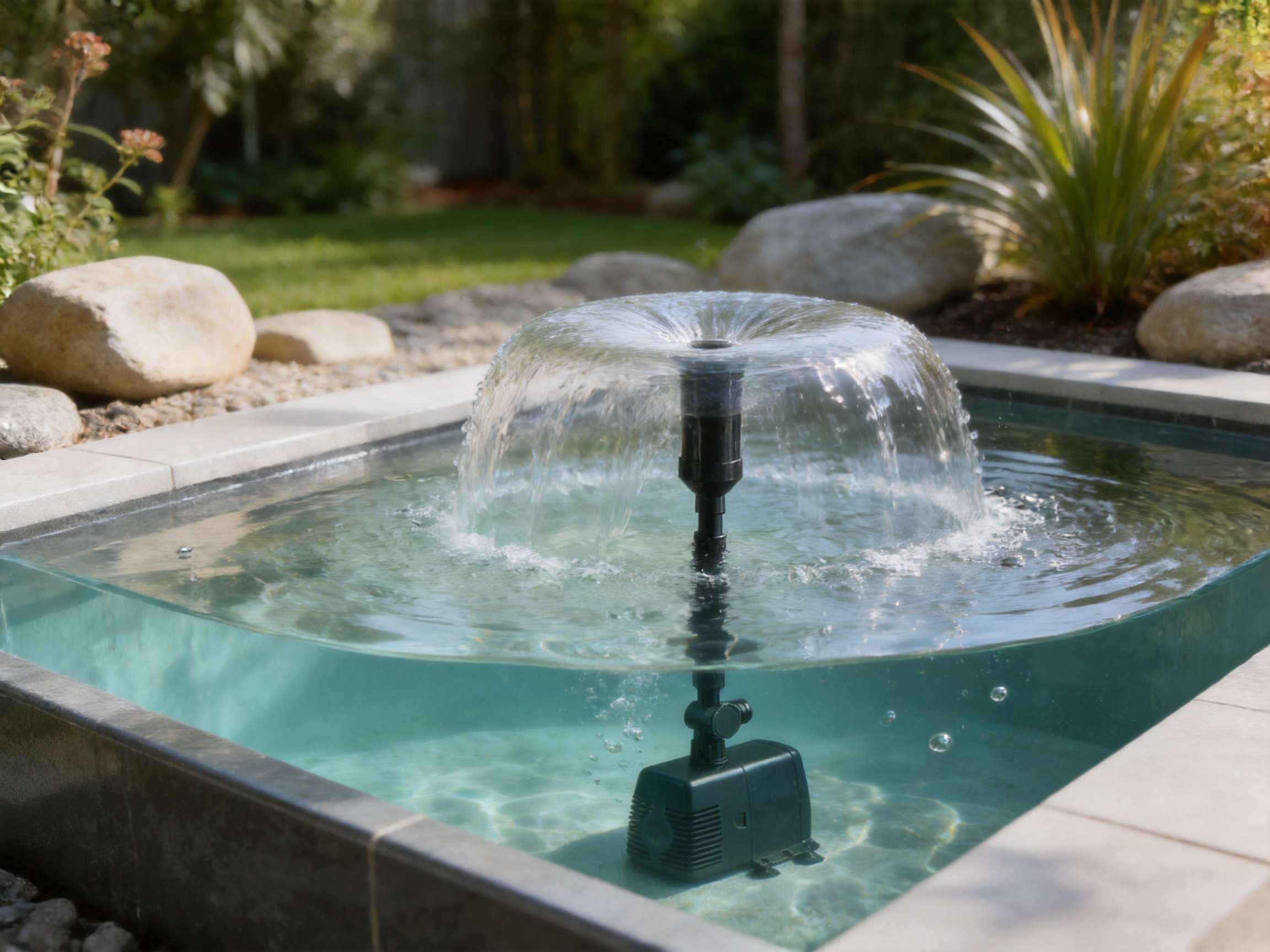
The HJ Series Submersible Fountain Pump is designed to operate beneath the water surface and deliver water to a fountain print head. A submersible configuration offers several practical advantages. The pump can remain concealed inside a suitable water container, pond, tank, or fountain basin, reducing the visual impact of mechanical equipment. This helps the water feature maintain a cleaner and more integrated appearance.
Submersible installation can also simplify the layout of a fountain system. Because the pump is positioned directly in the water, the distance between the water source and the discharge point can be reduced. This may make installation more convenient than systems that require a separate external pump housing, extended suction plumbing, and additional priming arrangements.
The HJ Series can be considered for decorative garden fountains, landscape water features, indoor display fountains, exhibition installations, ornamental ponds, and selected aquarium-related applications where the available water movement and accessory configuration are appropriate. The product title identifies it as a fountain pump, while the wider product portfolio includes aquarium equipment and water pumps. For every project, users should evaluate the water volume, installation depth, operating environment, electrical requirements, and desired fountain effect before selecting a model.
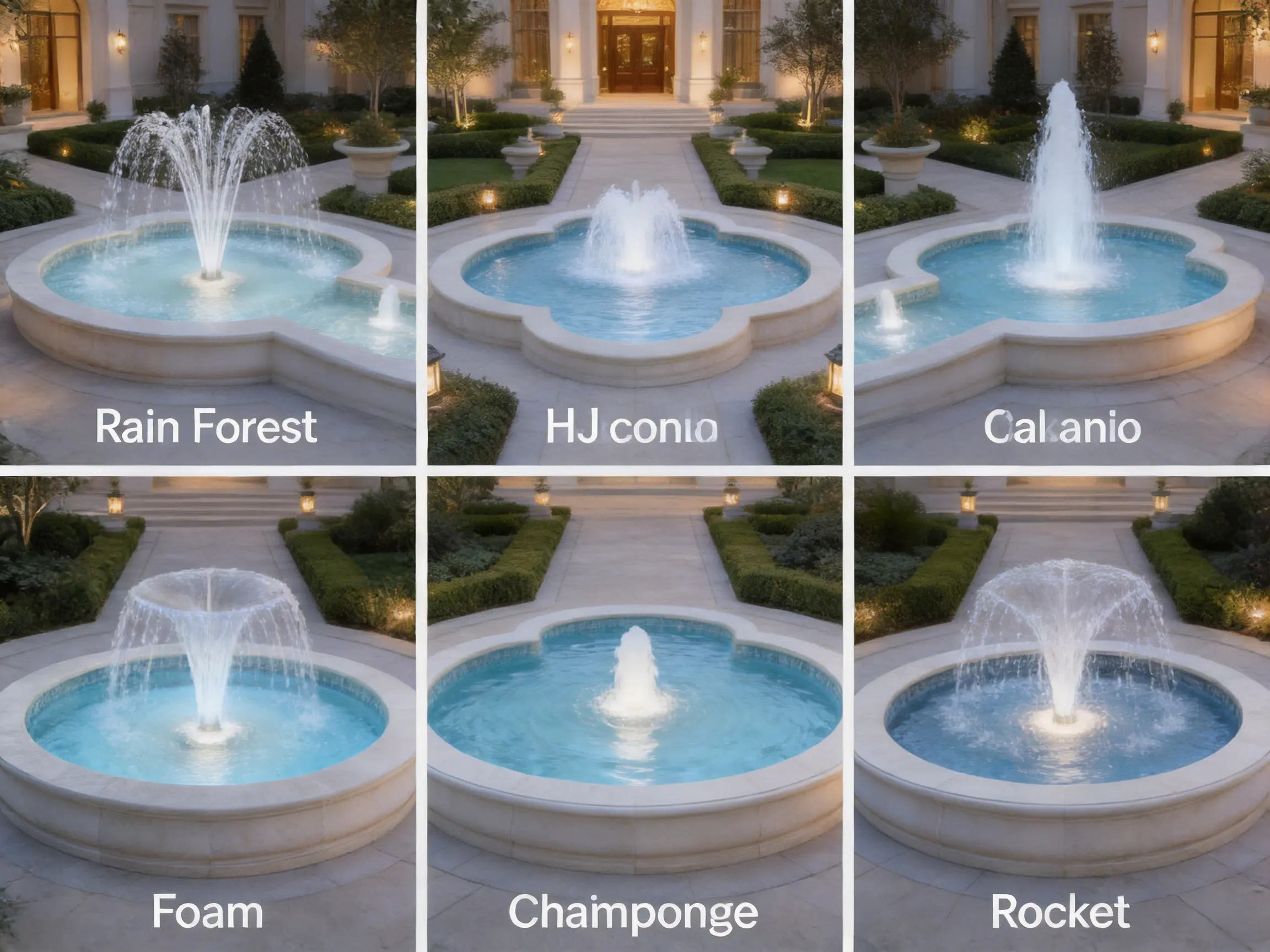
A major characteristic of the product is its print head compatibility. The print head controls the shape and visual character of the discharged water. Instead of producing only a single generic jet, the system allows a compatible head to create a recognizable pattern. This helps designers match the fountain effect to the surrounding environment, whether the project calls for a broad natural spray, a dramatic vertical formation, a compact tent shape, a foaming effect, or a celebratory champagne-style pattern.
The available accessory groups are organized around two primary print head assemblies. The CFA-05 assembly is listed for the HJ-743, HJ-943, and HJ-1143 pump models. It supports three named effects: Rain Forest, Volcano, and Tent. These options cover different visual styles and allow the same compatible pump family to serve several decorative purposes.
The Rain Forest effect is suited to installations that seek a spreading, lively, and natural water appearance. The Volcano effect is more dramatic and may be appropriate for a stronger central visual element. The Tent effect creates a structured, canopy-like form that can be used in symmetrical or geometric fountain layouts.
The CFA-03 assembly is listed for the HJ-1543 and HJ-1843 models. It supports five named effects: Rain Forest, Foam, Tent, Champagne, and Rocket. This wider range offers additional creative flexibility for larger or more powerful configurations within the HJ Series.
The Foam effect can provide a denser and more textured water appearance. The Champagne effect is associated with a lively, sparkling visual style, while the Rocket effect can provide a more concentrated and energetic vertical display. Together with the Rain Forest and Tent options, this group enables users to select a fountain pattern according to the installation’s size, theme, and desired atmosphere.
| Print Head Assembly | Compatible Pump Models | Available Water Effects |
|---|---|---|
| CFA-05 | HJ-743, HJ-943, HJ-1143 | Rain Forest, Volcano, Tent |
| CFA-03 | HJ-1543, HJ-1843 | Rain Forest, Foam, Tent, Champagne, Rocket |
The accessory structure is an important advantage compared with a basic pump that has no dedicated fountain attachments. A standard pump may move water effectively, but it may not provide a convenient way to alter the appearance of the discharge. With compatible HJ Series print heads, the water feature can be adapted to different visual concepts while retaining the same general pump platform.
One of the clearest advantages of a submersible pump is the ability to conceal the main pump body below the waterline. In a decorative installation, visible equipment can distract from the fountain itself. Submerged placement allows the surrounding design to remain the focus, particularly when the pump is positioned inside a basin, reservoir, pond, or suitable tank.
Concealed installation can also reduce the need for a separate pump enclosure. This may help simplify the overall visual design and make the fountain more suitable for spaces where appearance is especially important, such as gardens, hotel landscapes, public displays, retail environments, and indoor decorative settings.
The interchangeable print head approach gives the HJ Series a level of versatility that is not normally available from a pump with a fixed outlet. Users can choose among several patterns according to the project requirements. A single compatible pump family can therefore support different fountain themes and presentation styles.
This flexibility is useful for contractors and distributors because different customers may require different water effects. It is also valuable for property owners who may want to refresh the appearance of an existing fountain without replacing every major component. Subject to model compatibility and proper installation, changing a print head can offer a straightforward method of creating a new visual result.
Fountain water patterns contribute strongly to the character of a landscape or display. A broad spray may create a calm and natural atmosphere, while a stronger vertical pattern may become a focal point. A tent pattern can work well in formal arrangements, and a foam or champagne effect can add movement and texture to an otherwise simple basin.
Because the HJ Series supports multiple named effects, it can be integrated into a variety of design concepts. Designers may use one central fountain, several coordinated fountain points, or a group of different patterns within a larger water installation. The product can therefore support both individual decorative features and more complex arrangements.
A pump system that accepts dedicated accessories can help reduce the need to source unrelated components from multiple suppliers. When the pump and print head assembly are designed as a compatible combination, selection becomes more organized. Users can identify the appropriate model group, select the corresponding print head, and plan the installation around the expected water effect.
This does not eliminate the need for professional evaluation. Water depth, basin dimensions, electrical safety, filtration, maintenance access, and environmental conditions still require attention. However, a clearly structured product family can make the specification process more efficient than selecting a pump and fountain nozzle independently without confirmed compatibility.
The HJ Series includes several model numbers, and the available information identifies different model groups for the CFA-05 and CFA-03 assemblies. The model structure allows users to select an appropriate configuration rather than treating every fountain installation as identical. A smaller decorative basin, a medium landscape feature, and a larger display fountain may require different water delivery characteristics and accessory combinations.
When planning a fountain, the desired visual effect should be considered together with the physical dimensions of the site. A pattern that appears attractive in a compact basin may not have the same visual balance in a larger pond. Similarly, a high-output arrangement may be unsuitable for a small indoor feature if splash control is limited. The print head and pump must be selected as a coordinated set so that the resulting water pattern remains stable and manageable.
Users should also consider the height and width of the basin, the available water depth, the distance between the pump and the visible discharge point, and the possibility of wind affecting the fountain. Outdoor installations may require additional attention to splash containment and water loss caused by evaporation. Indoor systems may require stronger protection against moisture around electrical connections and nearby surfaces.
The best fountain performance is achieved when the pump, print head, water volume, and installation environment are treated as one integrated system. The HJ Series provides the pump and compatible print head options, while the installer remains responsible for confirming that the selected configuration is suitable for the specific site.
Many basic fountain pumps are designed primarily to move water from one point to another. They may be suitable for circulation or for a simple outlet, but they do not necessarily offer a broad selection of purpose-designed water patterns. The HJ Series distinguishes itself through its combination of submerged operation and interchangeable fountain print head assemblies.
Compared with a basic fixed-outlet pump, the HJ Series can provide more control over the visual character of the fountain. This is particularly valuable in decorative projects where appearance is as important as water movement. The available effects extend beyond a single jet and give users several ways to shape the water display.
Compared with a system requiring an external pump and separate plumbing enclosure, a submersible configuration can offer a more compact installation concept. Concealed placement may help reduce visible equipment and simplify the appearance of the completed project. It can also be useful in locations where building a dedicated mechanical room or external pump housing would be inconvenient.
Compared with a product line offering only one accessory size, the HJ Series provides separate CFA-05 and CFA-03 compatibility groups. This makes it possible to align the print head assembly with the intended pump model rather than applying one universal fitting to every system. Correct matching supports more predictable installation planning and helps reduce the risk of using an unsuitable accessory.
The product should not be judged only by the pump body itself. Its broader value lies in the system concept: a submersible water-moving unit, a range of compatible print head assemblies, and a manufacturing organization with dedicated research, quality-control, administrative, financial, production, and market-support functions. These elements contribute to a more complete equipment solution.
The manufacturer describes a long operating history beginning in 1985 and identifies continuous innovation as a central part of its development. Its activities cover aquarium products, aquaculture machinery, industrial equipment, and related sectors. This broad exposure is relevant to fountain-pump production because water equipment must balance mechanical performance, operational reliability, material selection, assembly quality, and user convenience.
The company has established a research institute and a quality-control department within its organizational structure. These functions indicate an approach in which product development and quality management are treated as important parts of the manufacturing process rather than as afterthoughts. A research function can support product improvement, accessory development, application analysis, and technical problem solving. A quality-control function can support inspection procedures, process consistency, and the evaluation of finished products.
The company also operates multiple wholly owned subsidiaries and maintains an import and export business. Such a structure can provide access to broader manufacturing resources, specialized production capabilities, regional support, and international distribution experience. For customers, a wider organizational network may make it easier to obtain product information, coordinate orders, and support projects that require consistent equipment supply.
Although the supplied product information does not specify individual materials, motor ratings, flow curves, protection classes, factory certifications, or automated production equipment, the company’s organizational scale and dedicated functional departments provide a foundation for systematic product development. It is important for buyers to request detailed technical documentation for the exact model before final specification.
Water equipment is affected by many variables, including water quality, installation depth, operating duration, temperature, debris, pressure losses, and accessory geometry. A research-oriented development process can help a manufacturer consider these factors when improving a pump family or designing compatible fountain attachments.
For the HJ Series, the existence of several pump models and two print head assembly groups suggests an effort to organize the product around different application needs. The named water effects also indicate attention to the user-facing result, not only to the internal movement of water. Fountain equipment must deliver a visually consistent pattern, and accessory design plays a major role in achieving that objective.
A quality-control department can contribute to several stages of production. Incoming materials may be checked before entering assembly. Components may be inspected for dimensions and consistency. Assemblies may be reviewed during production, and completed units may be examined before packaging and shipment. The exact inspection methods for the HJ Series should be confirmed with the manufacturer or authorized supplier, but a formal quality-control function is an important organizational strength.
Quality control is especially significant for submersible products. A pump placed in water must be assembled with attention to sealing, electrical safety, mechanical alignment, and resistance to the intended operating environment. Small variations in manufacturing can influence noise, vibration, service life, and water delivery. Consistent processes help reduce these variations and support more dependable field performance.
The manufacturer reports a broad group structure, multiple subsidiaries, a domestic sales network, and international business operations. This scale may benefit distributors and project buyers who need repeatable supply rather than one-time purchasing. Large or multi-site projects often require stable product availability, standardized packaging, documentation, and coordinated logistics.
Manufacturing scale alone does not guarantee that every product is suitable for every project. Technical verification remains necessary. However, a large production and service organization can provide practical advantages in product continuity, purchasing support, replacement-part coordination, and communication across different markets.
Before installing an HJ Series pump, users should identify the pump model, the intended print head assembly, the water container or basin, and the required fountain pattern. The CFA-05 assembly is associated with HJ-743, HJ-943, and HJ-1143 models, while the CFA-03 assembly is associated with HJ-1543 and HJ-1843 models. This compatibility information should be treated as a starting point for selection.
The installation location should provide sufficient water depth for the pump to remain properly submerged during operation. The water level should not fall below the manufacturer’s minimum operating requirement. If the pump operates without adequate water coverage, it may experience excessive heating, unstable performance, or premature wear. A reservoir or basin should therefore be designed to account for evaporation, splash, drainage, cleaning, and normal water loss.
The pump should be positioned on a stable surface or supported in a manner that prevents it from being trapped by sediment or debris. If the installation contains leaves, gravel, algae, or other contaminants, a suitable intake protection method may be required. The exact maintenance arrangement depends on the site and the model, but keeping the pump inlet clear is essential for maintaining water movement.
The print head should be installed securely and aligned with the intended fountain area. Alignment is important because even a well-designed water pattern can appear uneven if the outlet is tilted, obstructed, or positioned too close to the basin edge. For outdoor fountains, the effect of wind should also be considered. A spray that looks balanced in calm conditions may drift when exposed to strong air movement.
Electrical installation should follow local safety requirements and the manufacturer’s instructions. Connections must be protected from water exposure, and users should provide suitable isolation and protection for maintenance. The pump should be disconnected from the power source before inspection, cleaning, print head replacement, or any adjustment near the water.
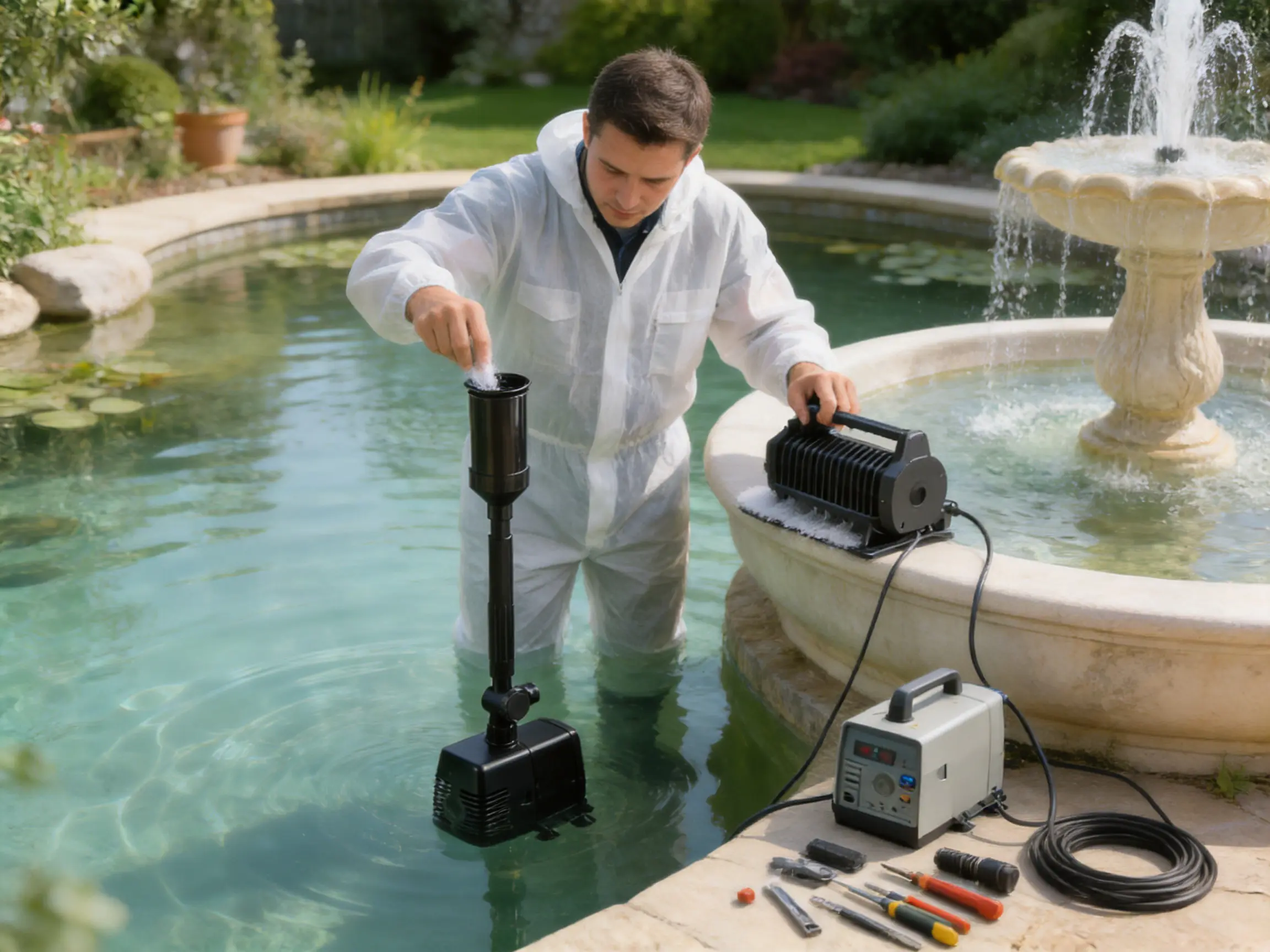
Routine maintenance is essential for any submerged fountain pump. Even a well-manufactured product can experience reduced performance if the intake is blocked, the print head is contaminated, or the water contains excessive debris. A regular inspection schedule helps preserve the appearance of the fountain and can reduce the likelihood of unexpected interruption.
The intake area should be checked for leaves, fibers, algae, sediment, and other material that may restrict water entry. The print head should also be inspected because small particles can alter the shape of a fountain pattern. A Rain Forest, Tent, Foam, Champagne, Volcano, or Rocket effect depends on clear and correctly positioned passages. If these passages become partially blocked, the display may become uneven or lose its intended form.
Cleaning should be carried out according to the manufacturer’s instructions. Abrasive tools or unsuitable chemical cleaners may damage surfaces or change the geometry of an accessory. Components should be handled carefully during removal and reinstallation. The pump should never be lifted by a power cable, and all electrical parts should remain protected from unnecessary contact with water.
Water quality can also influence service intervals. Hard water may create mineral deposits, while organic debris may accumulate more quickly in outdoor ponds and garden basins. Indoor decorative systems may require attention to dust, biofilm, and stagnant areas. Establishing a suitable cleaning routine for the actual environment is more effective than applying the same schedule to every installation.
The Rain Forest pattern can be selected when the design objective is a lively, spreading, and natural-looking water display. It may suit garden landscapes, tropical themes, public relaxation areas, or installations intended to suggest rainfall and dense natural water movement.
When using this effect, designers should consider the spray diameter, surrounding planting, basin size, and potential splash zone. The pattern should have enough open space to develop without striking nearby surfaces. In a multi-fountain layout, several Rain Forest effects may be arranged in a coordinated group, provided the available water supply and basin design support the arrangement.
The Volcano pattern offers a more dramatic visual character. It may be used as a central focal point in a garden basin, entrance feature, public display, or themed installation. Its visual strength can help draw attention to a particular location, especially when paired with suitable lighting or surrounding landscape materials.
The surrounding area should be designed to contain splash and maintain a balanced relationship between the fountain and the basin. The pattern should be evaluated at the actual installation site because water height and shape can be influenced by the selected model, water level, and environmental conditions.
The Tent pattern is suitable for structured and symmetrical layouts. It may complement formal gardens, geometric basins, hotel courtyards, retail displays, and decorative arrangements in which the water shape should appear controlled and organized.
Several Tent effects can potentially be arranged in a row, circle, grid, or other planned pattern. The success of such an arrangement depends on consistent model selection, stable water levels, accurate positioning, and careful alignment. A coordinated installation can create a strong architectural appearance while retaining the movement and sound of flowing water.
The Foam pattern is available with the CFA-03 assembly for the HJ-1543 and HJ-1843 models. It can add texture and density to a fountain display. This type of effect may be appropriate when the design requires a fuller water form rather than a fine spray or narrow jet.
Because foam-like water displays can appear visually dense, designers should evaluate the relationship between the effect and the basin size. Adequate space around the outlet helps prevent unwanted overflow and allows the pattern to remain clearly visible.
The Champagne pattern provides a lively and celebratory appearance. It may suit hospitality venues, event areas, entrance displays, entertainment spaces, and decorative projects that require a bright and active water effect.
Its visual character can be enhanced by appropriate illumination, although lighting should be selected and installed with careful attention to water and electrical safety. The water pattern should be tested under the lighting conditions in which the fountain will normally operate.
The Rocket pattern is also available for the CFA-03 assembly. Its name suggests a focused and energetic water display that may serve as a vertical accent or central feature. It can be considered for installations that require a stronger sense of upward movement.
As with every fountain pattern, the actual result depends on the compatible pump model, print head, water level, installation conditions, and surrounding air movement. Testing before final completion is recommended so that the fountain can be adjusted for visual balance and splash control.
In residential gardens, the HJ Series can support ornamental basins, small landscape fountains, patio water features, and decorative pond installations. The interchangeable effects allow homeowners to select a style that matches the character of the garden. A Tent pattern may complement formal landscaping, while a Rain Forest or Foam pattern may be better suited to a more natural setting.
In commercial landscapes, fountain effects can strengthen the identity of entrances, courtyards, plazas, hotel grounds, shopping areas, and recreational facilities. The ability to select different patterns gives landscape designers more options when integrating water into a larger architectural concept.
In retail and exhibition environments, a fountain can attract attention and create a memorable display. The compact concept of a submerged pump may help maintain a clean presentation, while the print head choices can be changed to support different campaigns, seasons, or display themes.
In aquarium-related environments, application suitability must be assessed carefully. The product portfolio includes aquarium equipment, but not every fountain configuration is appropriate for every aquarium. Aquatic animals, water chemistry, splash, noise, electrical protection, and flow intensity must all be considered. The HJ Series should be used in an aquarium only when the specific model and installation have been confirmed as suitable.
In aquaculture or industrial settings, the product should likewise be evaluated against the process requirements. Fountain print heads are primarily decorative accessories, and a fountain pump should not automatically be treated as a substitute for specialized circulation, aeration, filtration, or process equipment.
Compatibility is central to the HJ Series concept. The CFA-05 and CFA-03 assemblies are associated with different model groups, and selecting the correct pairing is necessary for reliable installation. An incompatible print head may not fit correctly, may produce an unstable pattern, or may place unsuitable demands on the pump.
Distributors and installers should record the exact pump model before ordering replacement or additional print heads. Product names can appear similar, but model numbers are essential for confirming the intended accessory. This simple verification step can reduce installation delays and avoid the cost of returning unsuitable components.
Compatibility also involves the operating environment. A print head that fits mechanically may still be unsuitable if the basin is too small, the water level is unstable, or the installation is exposed to excessive wind. Technical selection should therefore include both product matching and site evaluation.
The manufacturer presents itself as an established group with operations extending across aquarium pets, aquaculture machinery, industrial equipment, and related fields. Its organizational structure includes research, business, quality-control, personnel and administration, information management, and financial departments. These resources suggest that the product is supported by more than a single production line.
A research institute can help connect market needs with technical development. A business school and commercial network can support product education and distributor communication. A quality-control department can contribute to manufacturing consistency. Administrative and information functions can help coordinate production, documentation, orders, and internal management.
The group also identifies several wholly owned subsidiary corporations and holding interests in trading companies across different regions. Such a network can strengthen purchasing, manufacturing coordination, domestic distribution, export activity, and after-sales communication. For international customers, an established import and export operation may be particularly useful when arranging product documentation, shipping, and commercial support.
The company reports that it has continuously innovated over more than three decades. For water equipment, long-term experience can provide practical knowledge of pump applications, consumer expectations, installation problems, and product-service requirements. Experience should be combined with current technical review, but it remains a meaningful factor when buyers evaluate a supplier.
Buyers should begin by defining the purpose of the installation. Is the pump intended for a garden fountain, an indoor display, a decorative pond, a public landscape, or another application? The answer affects the desired water pattern, pump model, basin design, operating schedule, and maintenance plan.
The next step is to select a compatible model and print head group. The CFA-05 assembly is listed for HJ-743, HJ-943, and HJ-1143. The CFA-03 assembly is listed for HJ-1543 and HJ-1843. Buyers should request current technical information for the exact model, including electrical requirements, performance data, installation recommendations, and maintenance instructions.
The operating environment should then be assessed. Outdoor sites may require protection from leaves, sediment, wind, freezing conditions, and unauthorized access. Indoor sites may require careful splash control, floor protection, ventilation, and electrical isolation. Public installations may require additional safety measures and scheduled inspection.
Distributors should also consider the availability of replacement accessories. Since the print head is central to the visual result, stocking compatible assemblies can improve service response and help customers maintain or redesign their fountains. Clear model identification is especially important when multiple HJ Series models are sold in the same market.
The long-term value of a fountain pump depends on more than its initial purchase price. A system that is easy to select, install, clean, and adapt may reduce the practical cost of ownership over time. The HJ Series contributes to this value through its accessory structure and the possibility of changing the fountain effect without replacing the complete pump platform.
Reliable operation also depends on correct use. The pump must be installed with adequate water coverage, protected from excessive debris, and maintained according to the applicable instructions. The correct print head must be used for the selected model, and electrical connections must be handled safely. Proper installation protects the equipment and helps the fountain maintain its intended appearance.
For commercial users, maintainability can be particularly important. A fountain that is easy to inspect and whose visual accessories can be replaced may reduce downtime during routine service. For residential users, a manageable maintenance routine can make the water feature more enjoyable and less demanding.
The manufacturer’s research, quality-control, and organizational resources provide a foundation for supporting consistent product development. Customers should still evaluate the exact technical specifications and service terms for their market, but the broader manufacturing structure is an important consideration when comparing suppliers.
Water features should be designed with responsible water management in mind. Splash, wind, evaporation, and leakage can reduce water levels over time. A properly sized basin, suitable splash containment, and regular water-level checks can help reduce unnecessary water loss.
Users should avoid operating a submerged pump without sufficient water. Maintaining the correct water level supports stable operation and helps prevent avoidable stress on the equipment. Cleaning the intake and print head can also help preserve performance, which may reduce the need for premature replacement.
Energy consumption depends on the exact model, operating duration, electrical configuration, and installation conditions. Buyers should request the relevant electrical and performance data before choosing a pump for continuous or extended operation. Timers or control systems may be considered where appropriate, provided they are compatible with the installation and local safety requirements.
The product’s interchangeable print head concept may also support more sustainable project updates. If a property owner wants a different visual effect, changing a compatible accessory may be preferable to discarding an entire pump system. This advantage depends on continued product availability and proper maintenance, but it demonstrates how modular design can support longer use.
Water and electricity must be treated as a high-risk combination. Installation should be completed by a qualified person when required by local regulations. The electrical supply should include appropriate protection, and all connections should be kept away from direct water exposure.
The pump should be switched off and disconnected before it is removed from the water or before any print head, intake, or housing is handled. Users should not reach into the water while the equipment is energized. Public installations should include suitable barriers or other measures to prevent unsafe access.
The pump should be used only in the environment for which it is intended. Chemical exposure, extreme temperatures, abrasive materials, or unsuitable water conditions may affect service life. Buyers should consult the manufacturer for model-specific limitations rather than assuming that every HJ Series configuration is suitable for every water application.
It is a submerged water pump designed for decorative fountain applications. It works with compatible fountain print head assemblies to create different water patterns.
The CFA-05 print head assembly is listed for the HJ-743, HJ-943, and HJ-1143 models.
The CFA-05 assembly supports Rain Forest, Volcano, and Tent effects.
The CFA-03 print head assembly is listed for the HJ-1543 and HJ-1843 models.
The CFA-03 assembly supports Rain Forest, Foam, Tent, Champagne, and Rocket effects.
The product information identifies compatible print head assemblies for different model groups. A compatible assembly may be selected or changed when the installation requirements allow it, but users should confirm model compatibility before making any replacement.
A submersible design can conceal the pump below the waterline and may simplify the visible layout of a fountain. It can be suitable for basins, ornamental ponds, garden features, and decorative displays when installed correctly.
The wider product portfolio includes aquarium equipment, but suitability depends on the exact model and aquarium design. Water flow, livestock safety, electrical protection, water chemistry, and splash control must all be evaluated before use.
Buyers should confirm the pump model, compatible print head assembly, electrical requirements, water volume, installation depth, desired fountain pattern, maintenance access, and local safety requirements.
Keep the pump intake and print head clear of debris, maintain the correct water level, inspect the installation regularly, and follow the manufacturer’s cleaning and safety instructions.
The manufacturer describes a long operating history, a research institute, a quality-control department, multiple subsidiaries, an import and export company, and experience in aquarium, aquaculture, and industrial equipment. These resources support product development, manufacturing coordination, quality management, and international supply.
The HJ Series Submersible Fountain Pump is a flexible solution for decorative water installations that require concealed pump placement and adaptable fountain effects. Its principal advantage is the combination of a submerged pump design with compatible CFA-05 and CFA-03 print head assemblies. Through Rain Forest, Volcano, Tent, Foam, Champagne, and Rocket patterns, the system gives users several ways to shape the appearance of a fountain.
The product can be considered for residential gardens, ornamental ponds, landscape features, indoor displays, commercial properties, and selected aquarium-related applications. Correct model selection remains essential. The CFA-05 assembly is intended for HJ-743, HJ-943, and HJ-1143 models, while the CFA-03 assembly is intended for HJ-1543 and HJ-1843 models.
Beyond the product itself, the manufacturer’s research, quality-control, subsidiary, export, and organizational resources provide a broad foundation for production and market support. Its experience across aquarium, aquaculture, industrial, and water-equipment fields is relevant to the development of practical aquatic products.
For the best result, buyers should evaluate the complete application rather than selecting a pump by model number alone. Basin size, water depth, desired pattern, electrical safety, environmental conditions, maintenance requirements, and accessory compatibility all influence performance. When these factors are properly coordinated, the HJ Series can provide a visually engaging, serviceable, and adaptable foundation for modern fountain design.
1. Product information supplied for the HJ Series Submersible Fountain Pump and compatible CFA-05 and CFA-03 print head assemblies.
2. Manufacturer-provided company profile describing organizational history, research activities, quality-control functions, subsidiaries, and international business operations.
3. General principles of submersible pump installation, fountain maintenance, water-feature design, and electrical safety.
4. General guidance for selecting compatible pump accessories according to model, water pattern, basin dimensions, and operating environment.


 No. 61-79, Baima Street, Maao Town, Dinghai District, Zhoushan City, Zhejiang Province, China.
 0086 580 8082088 / 8081168
 0086 580 8080978
 songhua@sunsun-china.com