

 English
 русский
 España
 Portugal
 عربي
عربيLi Mei | Aquarium Equipment Sales Specialist
Home / Author / Li Mei | Aquarium Equipment Sales Specialist / How to Choose and Use a Compact High-Flow Submersible Wave Pump
Water movement is one of the most important operating conditions in a modern aquarium. Fish, aquatic plants, corals, beneficial bacteria, and filtration systems all depend on water circulation. A tank may contain an efficient filter and still develop stagnant areas if the water is not moved in a broad, controlled pattern. Uneven circulation can allow waste to settle, reduce oxygen exchange, create temperature differences, and limit the distribution of nutrients.
The XVA series submersible wave pump is designed to address these challenges in a compact format. It combines strong wave-making performance, adjustable direction, quiet operation, compact dimensions, and a ceramic shaft intended for freshwater use. Available in three performance levels, the series provides options for smaller aquariums as well as tanks measuring approximately 80 to 100 centimeters in length.
This article examines the design, operating advantages, model differences, installation considerations, maintenance requirements, and manufacturing strengths behind this type of aquarium circulation equipment. It also explains how to compare a wave pump with competing circulation solutions and how to select the most suitable model for a particular aquarium.
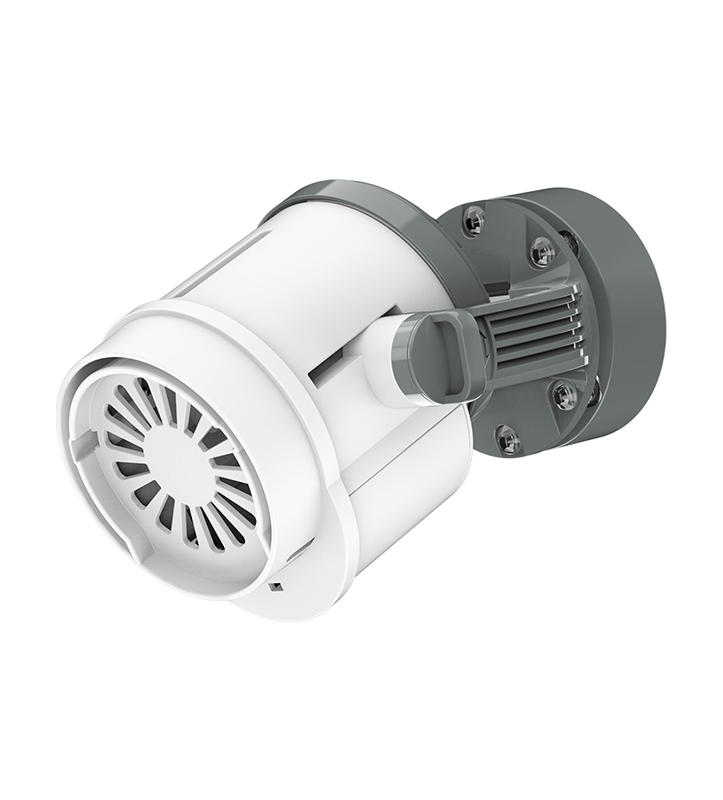
XVA series submersible wave pump
Content
Water movement is more than a visual effect. It supports several biological and mechanical processes that influence aquarium stability. When water circulates properly, oxygen-rich water reaches a larger portion of the tank, dissolved waste is more likely to travel toward the filtration intake, and temperature is distributed more evenly throughout the aquarium.
In freshwater aquariums, circulation also helps prevent dead zones behind decorations, in plant groups, and near the bottom substrate. These areas can accumulate uneaten food, organic debris, and fish waste. In marine systems, flow is especially important because many corals and invertebrates rely on water movement to receive oxygen and food while removing waste products.
A circulation device must create enough movement to be effective without producing excessive turbulence. Fish should be able to swim comfortably, plants should not be permanently flattened, and loose substrate should not be blown across the aquarium. The best circulation pattern depends on tank size, livestock, decoration, filtration layout, and the position of the pump.
A wave pump differs from a conventional outlet nozzle because it is intended to move a broad volume of water rather than produce only a narrow jet. This broad movement can improve circulation across a larger area while reducing the need to operate the pump at an unnecessarily high pressure.
The XVA series is a submersible wave pump range offered in three principal performance classes. The models are identified as XVA-600/600E, XVA-800/800E, and XVA-1000/1000E. The numerical designations correspond to approximate maximum flow classes of 6,000, 8,000, and 10,000 liters per hour respectively.
Each model uses a magnetic mounting system designed for aquarium glass with a thickness of up to 12 millimeters. The mounting arrangement allows the pump to be positioned securely on the aquarium wall while maintaining a compact appearance. The wave-making direction can be adjusted through 180 degrees, giving the aquarist considerable flexibility when directing flow.
The series emphasizes a compact body with comparatively high water-moving capacity. This design approach is useful where internal aquarium space is limited or where the aquarist wants to avoid the visual bulk associated with larger circulation equipment.
| Product model | Rated power | Maximum flow | Maximum magnetic glass thickness | Recommended aquarium size | Dimensions |
| XVA-600/600E | 8 watts | 6,000 liters per hour | Up to 12 millimeters | Below 60 centimeters | 70 × 100 × 120 millimeters |
| XVA-800/800E | 22 watts | 8,000 liters per hour | Up to 12 millimeters | Below 60 centimeters | 78 × 105 × 140 millimeters |
| XVA-1000/1000E | 45 watts | 10,000 liters per hour | Up to 12 millimeters | Approximately 80–100 centimeters | 88 × 115 × 160 millimeters |
The published aquarium recommendations should be treated as starting points rather than absolute rules. A densely stocked tank, a heavily decorated aquarium, or a system requiring stronger circulation may need a different model or more than one circulation device. Conversely, a lightly stocked aquarium with delicate fish may require careful positioning and reduced effective flow.
One of the main advantages of the XVA series is the relationship between its physical size and its stated flow capacity. Compact equipment gives aquarists more freedom to arrange rocks, wood, plants, ornaments, and other interior elements. It also reduces the amount of equipment visible through the front glass.
A compact pump can be especially valuable in small and medium-sized aquariums. In these systems, a large circulation unit may dominate the visual field or restrict the usable swimming area. A smaller body can be placed toward the rear or side of the tank while still generating meaningful movement across the aquarium.
The phrase “small volume makes big waves” reflects the intended design purpose of the series. The pump is not simply a small motor producing a narrow stream. It is designed as a wave-making device that distributes flow into the surrounding water. This can help create broader circulation and reduce isolated areas where water barely moves.
Strong flow should always be matched to aquarium requirements. High flow is not automatically better. A pump that is too powerful for a small tank can stress fish, uproot plants, disturb substrate, or create excessive surface agitation. The pump’s value lies in its ability to provide the required circulation while allowing the user to adjust its direction and position.
Compared with basic internal filters that rely mainly on a single outlet, a dedicated wave pump can provide a more direct approach to circulation. The filter can focus on mechanical and biological filtration, while the wave pump handles the movement of water through the tank. Separating these functions may improve layout flexibility and make it easier to fine-tune the overall system.
Aquariums are often installed in bedrooms, offices, reception areas, living rooms, restaurants, and retail environments. In these locations, operating noise is an important consideration. A pump that creates persistent vibration or mechanical rattling can reduce the enjoyment of the aquarium and become especially noticeable at night.
The XVA series is designed for quiet operation. Noise performance depends on several factors, including the condition of the shaft and impeller, the position of the pump, the stability of the magnetic mount, water depth, and the presence of debris. Even a well-designed pump can become noisy if it is allowed to run with a damaged impeller, obstructed inlet, or poorly seated mounting assembly.
Quiet operation is also linked to a stable installation. A secure magnetic mount can help prevent the pump body from touching the glass or vibrating against nearby equipment. The pump should be positioned so that cables are not pulling the housing sideways and so that the water intake remains unobstructed.
For aquarists who want to create a calm viewing environment, a quiet wave pump can be a significant improvement over a louder circulation motor. It enables the aquarium to provide movement and oxygen exchange without becoming the dominant sound in the room.
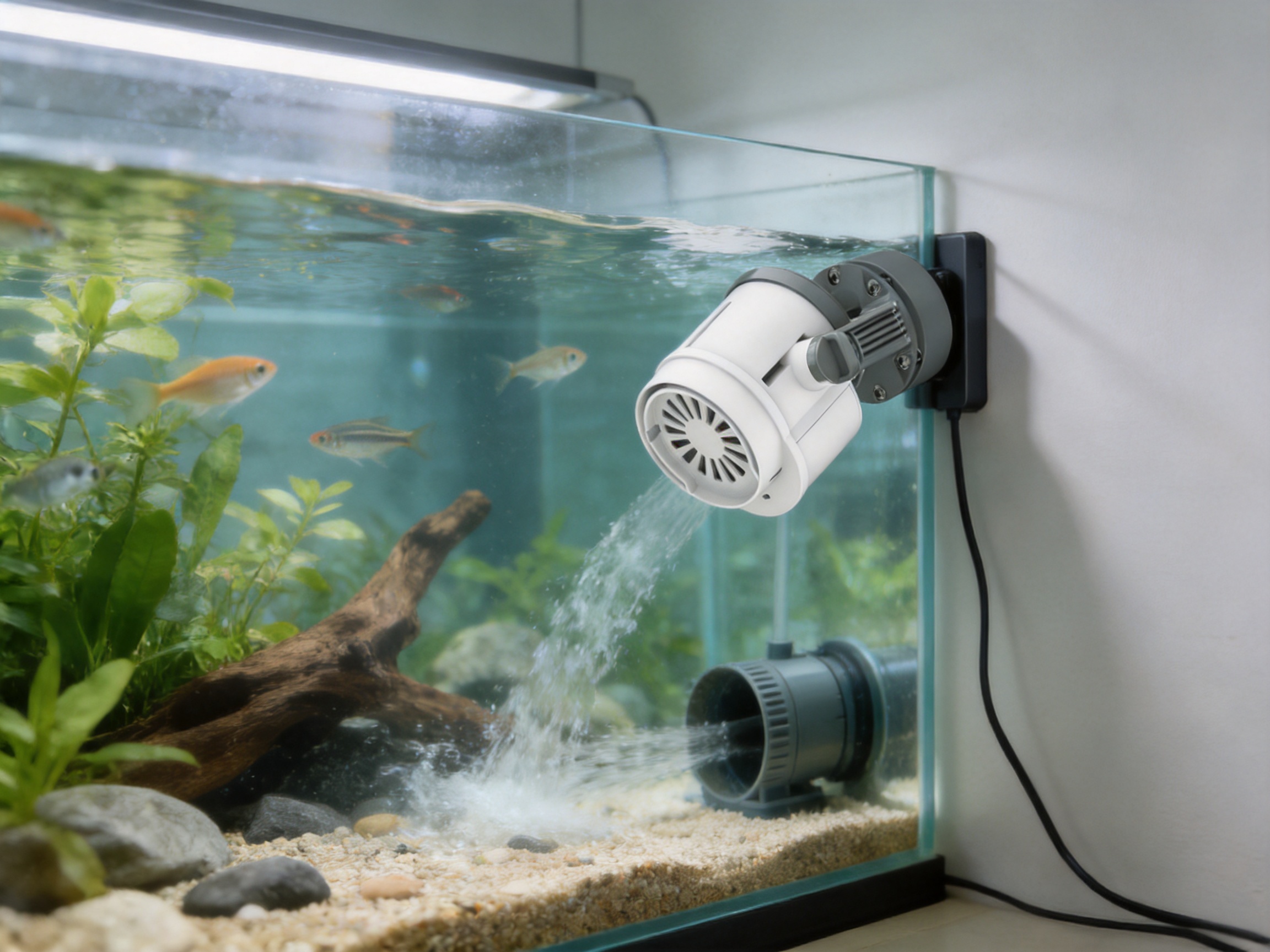
The ability to adjust the wave-making direction through 180 degrees is one of the most practical features of the series. Aquarium circulation is rarely solved by pointing a pump straight ahead. The ideal direction often depends on the position of the filter outlet, the surface level, the substrate, and the location of plants or decorations.
The directional range allows users to aim flow upward toward the surface, across the central swimming area, downward toward the substrate, or diagonally across the tank. Upward positioning can increase surface movement and support gas exchange. A horizontal position can establish a broad circulation path. A slightly downward angle may help move settled debris toward a filter intake.
Adjustability also makes the pump more suitable for changing aquarium layouts. Plants grow, rocks are rearranged, and livestock needs can change over time. A fixed circulation device may become unsuitable after a redesign, while an adjustable pump can be redirected without relocating the entire mounting assembly.
Users should make adjustments gradually. A small change in angle can produce a substantial difference in circulation, particularly in a compact aquarium. After changing the position, it is useful to observe fish behavior, plant movement, surface agitation, and the direction in which fine debris travels.
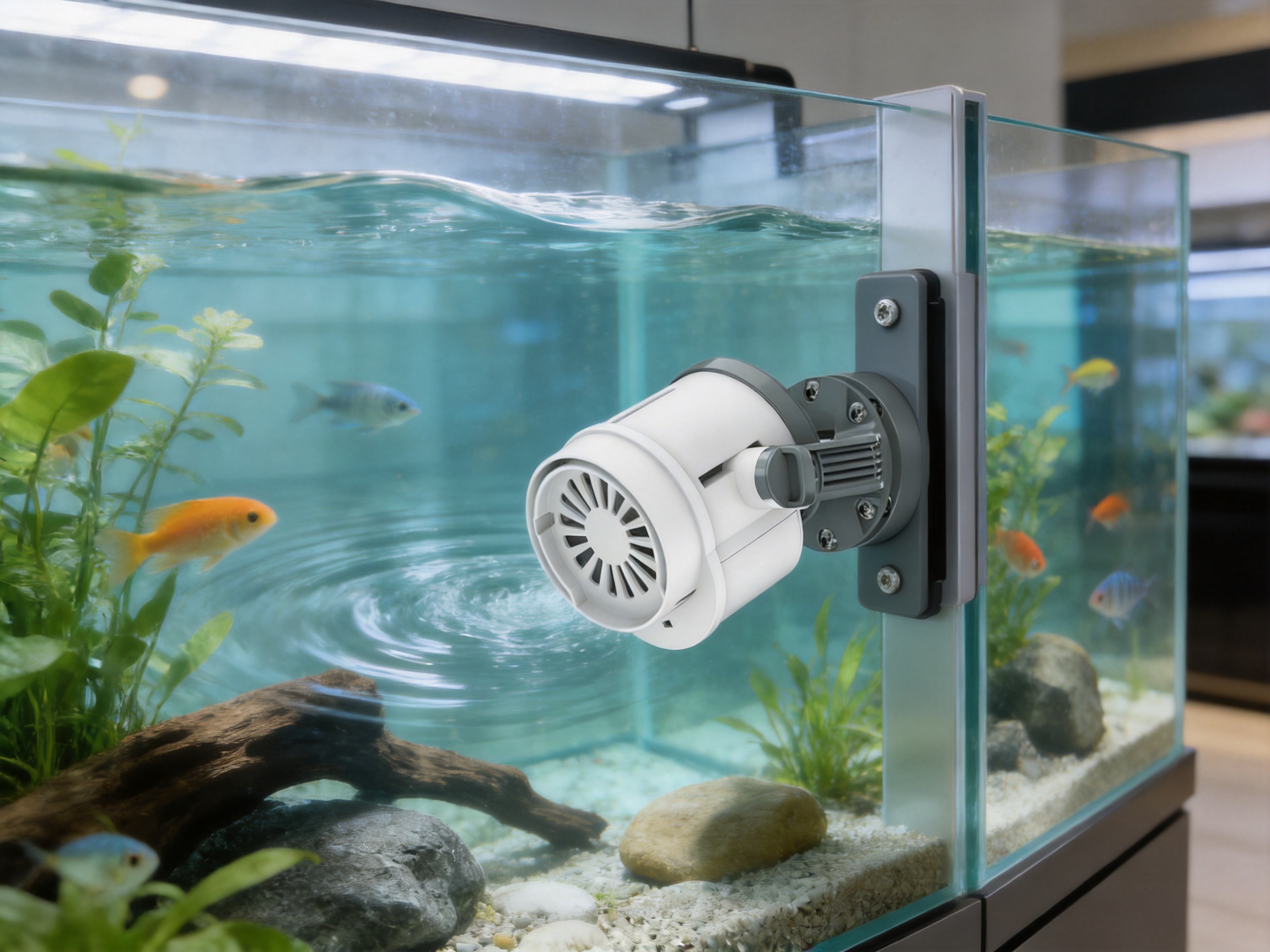
The XVA series uses a magnetic mounting arrangement intended for aquarium walls up to 12 millimeters thick. Magnetic mounting is widely valued because it avoids drilling, permanent brackets, or complicated support hardware. The pump can be installed and repositioned from outside the aquarium with less disturbance to the water and livestock.
A magnetic mount can also make cleaning and maintenance more convenient. The pump may be removed from the aquarium wall without dismantling a large bracket system. This is useful when the impeller needs inspection or when mineral deposits and biological growth must be removed.
Before installation, the user should confirm that the aquarium glass thickness is within the stated limit. The mounting surfaces should be clean and free from gravel, sand, or other particles that could become trapped between the magnet and glass. Foreign material can reduce holding strength and may scratch the aquarium surface.
The pump should never be allowed to operate outside water unless the operating instructions specifically permit it. A submersible pump depends on water for cooling and proper hydraulic operation. The electrical connection should be kept away from splashing and arranged with a suitable drip loop where appropriate.
The XVA series uses a ceramic shaft and is described as suitable for freshwater. Shaft material is important because it supports the rotating impeller and influences friction, wear, noise, and long-term reliability.
Ceramic components are commonly selected for aquarium pumps because they offer resistance to corrosion and can provide a smooth bearing surface when properly manufactured and maintained. In freshwater environments, a ceramic shaft can help the pump continue operating reliably despite regular exposure to water, dissolved minerals, and biological deposits.
The shaft is only one part of the operating system. Reliable performance also depends on the impeller, bushings, housing, seals, electrical insulation, and the quality of assembly. Routine maintenance remains essential. Fine debris, algae, and mineral scale can accumulate around the shaft and increase resistance. If cleaning is neglected, the pump may become noisy, lose flow, or draw more power.
The freshwater suitability of the product should be considered carefully when selecting an application. Users should follow the manufacturer’s operating guidance and confirm whether a particular model is appropriate for brackish or marine environments. Product suitability should not be assumed solely from the presence of a ceramic shaft.
Aquarium circulation can be provided by internal filters, external filters, return pumps, air-driven equipment, powerheads, and dedicated wave pumps. Each type has a different primary purpose. A wave pump is generally selected when the main need is broad water movement rather than filtration media capacity.
An internal filter combines water movement and filtration in one unit. This can be convenient for basic aquariums, but its outlet may produce a narrower flow pattern and its filter chamber may require frequent cleaning. A separate wave pump allows the filtration unit and circulation unit to be positioned independently.
An external filter or sump return pump can move water between different parts of a system. This is useful for filtration and equipment integration, but the return outlet may not distribute water evenly throughout a large aquarium. A dedicated circulation pump can supplement the return flow and reduce stagnant areas.
An air pump primarily supports aeration through bubbles and air-driven devices. It can improve gas exchange but usually does not provide the same broad horizontal circulation as a wave pump. Air pumps and wave pumps can serve different purposes and may be used together when appropriate.
A conventional powerhead often produces a more concentrated jet. Concentrated flow can be helpful in specific situations, such as directing debris toward an intake, but it may create a harsh current in a small tank. The XVA series is intended to create a stronger wave-making effect in a compact body, offering a different flow profile from a simple narrow outlet.
When comparing competitors, purchasers should examine more than maximum flow figures. Important factors include power consumption, physical dimensions, mounting thickness, directional adjustment, noise, shaft material, freshwater suitability, ease of maintenance, and available model sizes. The most appropriate product is the one that balances these factors for the intended aquarium.
| Evaluation factor | Why it matters | Potential advantage of the XVA approach |
| Flow capacity | Determines how much water can be moved through the aquarium | Three flow classes provide options from 6,000 to 10,000 liters per hour |
| Power consumption | Affects operating cost and system efficiency | Models are offered at 8, 22, and 45 watts |
| Direction control | Helps adapt flow to tank layout and livestock | Wave-making direction can be adjusted through 180 degrees |
| Mounting | Influences installation flexibility and stability | Magnetic mounting supports glass up to 12 millimeters thick |
| Noise | Important for homes, offices, and display environments | The series is designed for quiet operation |
| Maintenance | Determines long-term performance and serviceability | Compact construction and removable mounting can simplify access |
| Material suitability | Influences durability in the intended water type | Ceramic shaft design is intended for freshwater use |
The XVA-600/600E is the lowest-power option in the series, with a rated power of 8 watts and a maximum flow of 6,000 liters per hour. It is listed for aquariums below 60 centimeters and may be suitable where the aquarist needs meaningful movement in a relatively compact tank without selecting the highest-capacity model.
The XVA-800/800E provides a maximum flow of 8,000 liters per hour and has a rated power of 22 watts. It is also listed for aquariums below 60 centimeters. This model may be considered when the aquarium contains more decorations, requires stronger circulation, or has a layout that restricts natural water movement.
The XVA-1000/1000E is the largest model in the series. It is rated at 45 watts, reaches a maximum flow of 10,000 liters per hour, and is listed for aquariums measuring approximately 80 to 100 centimeters. Its larger dimensions should be considered when planning the interior layout and selecting a mounting position.
Tank length alone should not determine the decision. The user should also assess aquarium width, water depth, livestock type, plant density, substrate, filter flow, and the desired circulation pattern. A tank with a powerful return filter may require a different wave pump setting from a tank with gentle filtration.
Maximum flow is a reference value rather than a guarantee of the exact flow achieved in every installation. Actual movement is affected by water depth, obstructions, pump orientation, glass position, filter outlets, and the condition of the impeller. Aquarists should observe the real circulation pattern after installation and adjust the pump accordingly.
Installation begins with selecting a position that supports a complete circulation path. In many aquariums, placing the wave pump on a side wall and directing the flow along the length of the tank can create a broad movement pattern. The return flow may travel back along the opposite side and descend toward the filter intake.
Another arrangement is to position the pump toward the rear and angle it slightly upward. This can encourage surface movement and improve gas exchange while preventing the pump from blasting directly into fish or delicate plants.
The pump should be kept away from areas where loose sand or fine substrate can be drawn into the intake. If the pump is placed too close to the bottom, it may stir the substrate or collect debris more quickly. If it is placed too close to the surface, it may create excessive splashing or draw air into the impeller.
Before switching on the unit, check the magnetic mount, power cable, intake area, and clearance around the pump. Confirm that the unit is completely submerged and that the aquarium glass is within the supported thickness. Start the pump and watch the aquarium for several minutes.
Healthy circulation usually produces visible but controlled movement. Fish should not be forced continuously against the current, plants should not be uprooted, and the substrate should remain reasonably stable. If the flow is too aggressive, redirect the pump toward the glass, surface, or a larger open area rather than immediately moving to a different model.
In a new installation, it is wise to make only one adjustment at a time. This makes it easier to understand the effect of each change. Marking the preferred position on the outside of the aquarium can also help when the pump is removed for cleaning and later reinstalled.
Planted aquariums need circulation to distribute nutrients and carbon dioxide, prevent stagnant areas, and carry waste toward filtration. However, many aquatic plants are sensitive to excessive direct flow. A strong current can bend stems, uproot newly planted specimens, or cause floating plants to collect in one corner.
The directional adjustment of the XVA series allows the user to aim flow across the surface or behind a plant group instead of directly at the leaves. Hardscape can also be used to diffuse the current. Rocks and wood may divide the flow and create areas of higher and lower movement for different species.
When installing a pump in a planted tank, observe new growth and plant stability over several days. Some movement is beneficial, but continuous violent motion may indicate that the pump should be redirected. Plant density changes as the aquarium matures, so the initial position may need to be modified later.
Fish species have different swimming abilities and flow preferences. Active river fish may benefit from stronger circulation, while slow-moving, long-finned, or surface-oriented species may prefer calmer areas. The aquarium should provide both moving water and places where fish can rest.
A wave pump should not be aimed directly at a fish that cannot escape the current. The pump can be positioned to create a circulation loop with sheltered zones near plants, rocks, or the opposite end of the aquarium. This arrangement supports activity without forcing every fish to remain in strong flow.
Fish behavior is a useful indicator of whether the pump is correctly adjusted. Persistent hiding, exhaustion, difficulty feeding, or continuous swimming against the current may suggest that the flow is too strong or poorly directed. Normal behavior, stable feeding, and the presence of calm areas generally indicate a more balanced setup.
Regular maintenance is essential for any submersible wave pump. The frequency depends on aquarium conditions, but inspection should be more frequent in tanks with heavy feeding, fine substrate, algae growth, or high mineral content.
Before removing the pump, disconnect the power supply and follow safe handling procedures. Remove the unit from the magnetic mount and inspect the intake openings, impeller chamber, impeller, shaft, and surrounding seals. Do not use sharp metal tools that could damage plastic parts or the ceramic shaft.
Soft brushes can help remove algae and deposits from the housing and impeller. Where mineral scale is present, a suitable cleaning method should be used according to the product instructions. All parts should be rinsed appropriately before the pump is returned to the aquarium.
The ceramic shaft should be handled carefully. Although ceramic is resistant to corrosion and wear, it can be damaged by impact or excessive force. A cracked or worn shaft may produce vibration, abnormal noise, reduced flow, or intermittent starting.
Inspect the magnetic mount for cracks, loss of strength, or trapped particles. A damaged mounting assembly should not be used because the pump could shift, fall, or make contact with the aquarium glass. The cable should also be checked for cuts, hardening, or other damage.
Cleaning intervals should be recorded for commercial displays and professional installations. A maintenance schedule makes performance easier to monitor and can reduce unexpected stoppages. If the pump becomes noisier or its flow visibly declines, it should be inspected rather than operated indefinitely in that condition.
Electrical efficiency is an important consideration because circulation equipment often runs continuously. The three listed models consume 8, 22, and 45 watts respectively. The correct selection should provide adequate movement without unnecessarily choosing a higher-power model.
Power consumption can be estimated by multiplying rated watts by operating hours and the local electricity price. For a pump operating 24 hours per day, even a small difference in wattage becomes meaningful over a full year. However, energy savings should not come from reducing circulation below the level needed for fish health, filtration performance, and oxygen exchange.
A lower-power model may be more efficient for a smaller tank, while a larger model may offer better practical performance in a longer aquarium where a low-capacity pump would leave stagnant areas. Efficiency should therefore be considered as useful circulation per watt, not simply the lowest wattage on the specification sheet.
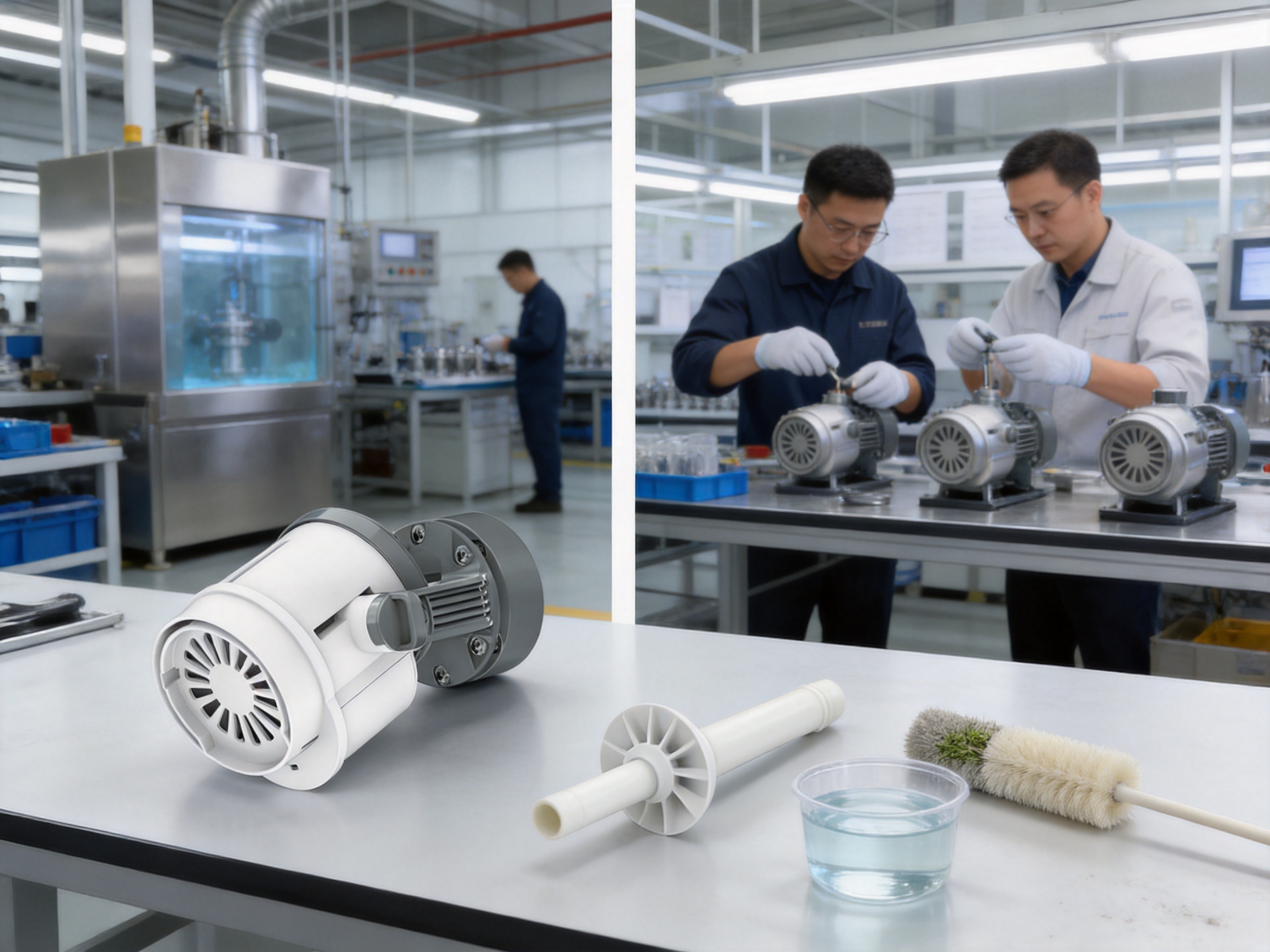
The product is associated with Sensen Group Co., Ltd., an established manufacturer with roots dating to November 1985. The company operates across aquarium products, aquaculture machinery, industrial equipment, and related sectors. This broad industrial background is relevant to the production of pumps because reliable circulation equipment requires knowledge of motors, rotating assemblies, water-resistant construction, quality control, and repeatable assembly.
The company reports a structured organization that includes a research institute, business school, quality control department, personnel and administrative information functions, and financial management. A dedicated research function can support product development, testing, and improvement. A quality control department can help establish inspection procedures for components, electrical assemblies, dimensions, and finished products.
The group also reports several wholly owned subsidiary corporations and an import and export company, together with holdings in multiple trading companies. This structure indicates experience with large-scale production, distribution, and domestic and international market support. For buyers of aquarium equipment, manufacturing scale can be valuable when consistent supply, product documentation, replacement parts, and technical communication are important.
The company’s stated development direction includes industrial technicalization, marketing globalization, and brand internationalization. For a product such as a wave pump, industrial technicalization means that design and production should be approached as an engineering process rather than as a purely decorative aquarium accessory.
A professional manufacturing process typically begins with product specification. Engineers define target flow, electrical power, dimensions, mounting capacity, material requirements, noise expectations, and the intended water environment. These parameters must be balanced because increasing flow, reducing size, lowering noise, and controlling power consumption can create competing design requirements.
Component selection follows the design stage. The motor, impeller, shaft, housing, magnetic mount, cable, and sealing elements must be compatible with submerged operation. The ceramic shaft used in this series reflects attention to the rotating support system and freshwater durability requirements.
Precision in molding and machining is also important. The pump housing must fit correctly around the impeller, and the rotating components must maintain appropriate clearances. Poor alignment can increase vibration and noise. Inconsistent parts can also lead to variation in flow performance from one unit to another.
Assembly quality is equally important. Electrical connections must be secure and insulated, the impeller must be correctly seated, and the magnetic mounting components must be installed in the proper orientation. A consistent assembly process helps reduce defects and supports predictable operation.
Quality control should include visual inspection, dimensional checks, electrical safety checks, operational testing, and observation of flow and noise. Submersible products require particular attention to insulation and water resistance because they operate in direct contact with aquarium water. Finished units should be checked before packaging and shipment.
Large-scale manufacturing can also improve process repeatability. When a manufacturer produces a broad range of aquarium and water-related equipment, it can develop specialized knowledge in motors, water circulation, plastic components, packaging, and service requirements. This experience may support continuous improvements in future versions of the product.
Aquarium equipment is used in a wide range of conditions, from simple freshwater tanks to demanding commercial displays. Product development must therefore consider practical use rather than laboratory specifications alone. Feedback from distributors, aquarium stores, maintenance technicians, and end users can reveal issues involving noise, mounting, cleaning, installation, and long-term reliability.
The company’s research-oriented organizational structure provides a foundation for continuing development. Improvements may involve hydraulic efficiency, impeller geometry, vibration control, motor protection, mounting stability, cable design, or ease of disassembly. Even small changes can improve the experience of daily aquarium maintenance.
Product development should also account for international requirements. Export markets may differ in electrical standards, packaging expectations, language requirements, and customer support needs. An established import and export capability can help a manufacturer coordinate these requirements more systematically than a small informal supplier.
For aquarium retailers, wholesalers, project contractors, and commercial display operators, a product range is often more useful than a single pump size. The three-model XVA series allows a buyer to offer different flow capacities while maintaining a consistent product concept and installation method.
Shared design characteristics can simplify staff training. Retail employees can explain the same basic mounting principle, directional adjustment, and maintenance routine across the range. Customers can move from one model to another when aquarium size or circulation requirements change.
The compact dimensions may also reduce storage and display requirements. Retailers can present the pumps as a family of products, while service teams can use a familiar maintenance approach across multiple aquarium installations.
For commercial aquariums, restaurants, offices, hotels, and public displays, quiet operation and discreet appearance can be important purchasing factors. A circulation device that is visually compact and does not produce distracting noise is easier to integrate into a customer-facing environment.
Electrical aquarium products should be installed and operated responsibly. The pump must be connected according to its instructions and used with an appropriate power supply. Connections should be protected from splashes, and the cable should be arranged so that water cannot run along it into an electrical outlet.
Always disconnect the pump before placing hands in the aquarium or removing the unit for cleaning. Do not operate a damaged pump, damaged cable, cracked housing, or compromised magnetic mount. If unusual heat, burning odor, repeated stopping, or abnormal noise occurs, discontinue use and inspect the product.
Keep the intake area clear of fish, plants, and loose materials. Small fish or invertebrates may be vulnerable to strong suction at the intake. Aquarium layout and livestock behavior should be considered when choosing the position.
Water flow should be adjusted with animal welfare in mind. The goal is a healthy, oxygenated, well-circulated aquarium, not maximum turbulence. Providing sheltered areas is especially important for weaker swimmers and newly introduced livestock.
After installation, the pump should be evaluated using several observations rather than a single visual impression. Watch the surface for moderate movement, check whether fine debris travels toward the filtration intake, and look for stagnant zones behind decorations. Observe the fish during feeding and resting periods.
Plant movement can reveal whether the current is evenly distributed. If only one plant group is moving violently while the rest of the aquarium remains still, the flow may be too concentrated. Redirecting the pump toward the glass or a hardscape feature can help diffuse the current.
Water clarity may also provide useful information. A properly positioned wave pump can keep suspended particles moving toward filtration, but a pump that constantly stirs the substrate may make the water cloudy. The solution may be a higher mounting position, a different angle, or a lower-capacity model.
Performance should be reviewed after maintenance as well. If the pump was quiet and powerful when new but becomes weak or noisy after several weeks, a cleaning or impeller inspection may be required. Monitoring changes over time helps distinguish installation problems from maintenance issues.
The main purpose is to create broad water movement in an aquarium. It is a dedicated submersible wave pump rather than a filter designed primarily to hold filtration media.
The listed range includes the XVA-600/600E, XVA-800/800E, and XVA-1000/1000E. Their maximum stated flows are approximately 6,000, 8,000, and 10,000 liters per hour respectively.
The XVA-600/600E and XVA-800/800E are both listed for aquariums below 60 centimeters. The final choice depends on livestock, decoration, filtration flow, and the desired circulation strength.
The XVA-1000/1000E is listed for aquariums approximately 80 to 100 centimeters in length. Users should still evaluate the full aquarium layout and adjust the pump direction after installation.
The rated power is 8 watts for the XVA-600/600E, 22 watts for the XVA-800/800E, and 45 watts for the XVA-1000/1000E.
Yes. The wave-making direction can be adjusted through 180 degrees. This allows the user to aim the flow upward, horizontally, downward, or at an angle depending on the aquarium design.
The stated maximum magnetic thickness is up to 12 millimeters. The aquarium glass should be checked before installation, and the mounting surfaces should be clean and free from particles.
The product specifications describe the ceramic shaft as suitable for freshwater. Users should follow the applicable product instructions and confirm suitability before using the pump in brackish or marine water.
Normally, no. A wave pump primarily circulates water, while a filter provides mechanical, biological, or chemical filtration. The two devices can work together, with the wave pump helping move water toward the filtration system.
Ensure that the pump is securely mounted, completely submerged, free from debris, and not touching the aquarium glass or decorations. Inspect the impeller and ceramic shaft if noise increases over time.
Cleaning frequency depends on aquarium conditions. Tanks with algae, fine substrate, heavy feeding, or mineral deposits may require more frequent cleaning. The pump should be inspected whenever flow decreases or abnormal noise appears.
Direct the current toward the glass, surface, or hardscape instead of directly at the fish. Create calm areas where fish can rest and observe their behavior after each adjustment.
Compare maximum flow, rated power, dimensions, mounting capacity, directional range, shaft material, freshwater suitability, noise, maintenance access, warranty support, and supplier reliability. Maximum flow alone does not determine the best product.
Some aquariums may benefit from multiple circulation points, especially when the tank is long or contains large obstructions. Multiple pumps must be positioned carefully to avoid excessive turbulence or conflicting currents.
The manufacturer has operated since 1985 and reports capabilities spanning research, quality control, aquarium products, aquaculture machinery, industrial equipment, domestic distribution, and international trade. These capabilities can support product development, production consistency, and market service.
The XVA series submersible wave pump is designed for aquarists who need strong circulation from a compact unit. Its principal features include three flow capacities, quiet operation, 180-degree directional adjustment, magnetic mounting for glass up to 12 millimeters, and a ceramic shaft intended for freshwater applications.
Its strongest practical advantage is flexibility. The pump can supplement filtration, improve oxygen exchange, reduce stagnant areas, and adapt to different aquarium layouts without requiring permanent installation hardware. Its compact form is useful where internal space and visual appearance matter.
Selection should be based on the complete aquarium environment rather than tank length alone. The XVA-600/600E, XVA-800/800E, and XVA-1000/1000E provide different combinations of flow, power, and physical size. Correct positioning, gradual adjustment, and regular cleaning are essential for achieving reliable performance.
The manufacturing background behind the product adds further value for buyers seeking an established supplier. Experience in aquarium equipment, aquaculture machinery, industrial production, research, quality control, distribution, and export support can contribute to a more dependable product-development and supply system.
When installed responsibly and maintained regularly, a compact wave pump can become an important part of a stable aquarium system. It does not replace filtration or good husbandry, but it can help every other part of the aquarium operate more effectively by keeping water moving where it is needed.
1. XVA Series Submersible Wave Pump Product Specification, supplied product materials.
2. Aquarium Water Circulation and Oxygen Exchange, general aquarium equipment principles.
3. Freshwater Aquarium Filtration and Flow Management, professional aquarium maintenance guidance.
4. Submersible Pump Maintenance Practices, general rotating equipment and aquarium service procedures.
5. Sensen Group Company Information, supplied corporate profile and manufacturing background.
6. Aquarium Equipment Selection Criteria, general comparison principles for circulation pumps, filters, and powerheads.


 No. 61-79, Baima Street, Maao Town, Dinghai District, Zhoushan City, Zhejiang Province, China.
 0086 580 8082088 / 8081168
 0086 580 8080978
 songhua@sunsun-china.com