

 English
 русский
 España
 Portugal
 عربي
Li Mei | Aquarium Equipment Sales Specialist
Home / Author / Li Mei | Aquarium Equipment Sales Specialist / Industrial DC Permanent Magnetic Aerators for High-Performance Air Systems
Modern aquaculture, water-treatment, industrial ventilation, and large-scale air-handling operations require equipment that can deliver dependable airflow under demanding working conditions. Small aquarium air pumps are suitable for household tanks and light-duty applications, but large facilities need a different class of machine: high-capacity aerators that can operate continuously, resist corrosion, maintain stable pressure, and use energy responsibly. The HS Series DC Permanent Magnetic Aerator is designed for this industrial requirement.
The HS Series combines a vortex impeller, a corrosion-resistant Teflon coating, a high-efficiency motor design, and a broad range of operating capacities. Its available models extend from 4,000 W to 30,000 W, with air outputs reaching as high as 4,100 m³/h depending on the selected model and operating range. Pressure performance reaches up to 29 kPa, while vacuum capability extends to approximately -27 kPa on selected units.
This product family is intended for users who need more than basic aeration. It is suitable for large aquaculture systems, industrial water treatment, biological filtration, fish-farming operations, oxygenation systems, pneumatic equipment, and other applications in which reliable air movement is essential. Its configuration provides a practical balance between airflow, pressure, structural durability, and operating efficiency.
Content
The HS Series is a heavy-duty air-moving machine built around a permanent magnetic motor and vortex impeller system. Rather than relying on a small diaphragm or piston mechanism, the aerator uses high-speed impeller movement to create a continuous flow of air. This makes it appropriate for applications that require large volumes of air and stable operation over extended periods.
The product range includes eight principal models: HS-4000W, HS-5500W, HS-7500W, HS-11000W, HS-15000W, HS-22000W, and HS-30000W. The supplied specification list includes the HS-4000W through HS-30000W series, allowing customers to select a configuration according to their required output, pressure, vacuum, installation space, and available power supply.
All listed models use a 380 V supply at 50 Hz. This electrical configuration is commonly associated with industrial three-phase power systems, although final installation should always be completed by qualified electrical personnel in accordance with local regulations. Correct electrical protection, grounding, ventilation, and overload control are essential for safe and reliable operation.
The product is not limited to a single type of facility. In aquaculture, the aerator can provide air to diffusers, oxygenation lines, tanks, raceways, and biological treatment basins. In industrial environments, the same principle can support air circulation, pneumatic conveying assistance, wastewater treatment, and other processes that require continuous low-to-moderate pressure airflow.
The HS Series is available in several output classes so that customers can avoid selecting a machine that is either undersized or unnecessarily large. Proper sizing improves system efficiency, helps maintain suitable pressure, and reduces the possibility of excessive energy consumption.
| Model | Voltage | Power | Output | Pressure | Vacuum | Weight | Dimensions L × W × H |
|---|---|---|---|---|---|---|---|
| HS-4000W | 380 V / 50 Hz | 4,000 W | 960 m³/h | 23 kPa | -21 kPa | 66 kg | 605 × 595 × 345 mm |
| HS-5500W | 380 V / 50 Hz | 5,500 W | 1,200 m³/h | 24 kPa | -22.5 kPa | 93 kg | 665 × 600 × 387 mm |
| HS-7500W | 380 V / 50 Hz | 7,500 W | 1,440 m³/h | 26 kPa | -22.5 kPa | 105 kg | 665 × 600 × 387 mm |
| HS-11000W | 380 V / 50 Hz | 11,000 W | 1,700 m³/h | 24 kPa | -22 kPa | 135 kg | 715 × 635 × 495 mm |
| HS-15000W | 380 V / 50 Hz | 15,000 W | 2,124 m³/h | 29 kPa | -27 kPa | 155 kg | 715 × 635 × 495 mm |
| HS-22000W | 380 V / 50 Hz | 22,000 W | 1,500–3,200 m³/h | 24 kPa | -22 kPa | 230 kg | 1,012 × 653 × 496 mm |
| HS-30000W | 380 V / 50 Hz | 30,000 W | 2,100–4,100 m³/h | 29 kPa | -27 kPa | 255 kg | 1,012 × 653 × 496 mm |
The output values should be interpreted together with the pressure requirements of the complete air system. Actual airflow can vary according to piping length, diffuser resistance, water depth, filtration, valves, bends, and other system factors. A professional system designer should confirm the required duty point before selection.
One of the most important features of the HS Series is its permanent magnetic motor configuration. A permanent magnetic motor can contribute to efficient energy conversion because the magnetic field is generated by permanent magnets rather than solely through electrical excitation of the rotor. The resulting motor architecture is intended to support efficient operation, reduced energy loss, and a long service life when properly installed and maintained.
The supplied product information states that the motor meets IE2/IE3 standards. These efficiency classifications are widely used to indicate motor performance under applicable testing conditions. Higher-efficiency motor construction can be particularly valuable in aeration systems because industrial aerators may run for many hours per day. Even a modest improvement in efficiency can become meaningful when multiplied across long operating schedules and multiple machines.
Energy consumption is only one part of operating cost. A reliable motor can also reduce interruptions, production losses, emergency maintenance, and replacement expenses. For aquaculture operators, an aerator failure may affect dissolved oxygen levels and place fish or other aquatic organisms under stress. For treatment facilities, a failure can interfere with biological processes. The emphasis on motor durability therefore has both economic and operational importance.
Motor selection should be matched with suitable electrical protection. Recommended installation planning may include overload protection, short-circuit protection, phase-loss monitoring, proper grounding, and appropriate ventilation. The exact requirements depend on local electrical standards and the configuration of the facility.
The HS Series uses a vortex impeller design to generate airflow. The impeller creates a continuous air stream by accelerating air through the machine. This design is well suited to applications in which the user needs substantial airflow and stable pressure rather than a small intermittent pulse.
A well-designed vortex impeller can provide several practical advantages. It supports a compact air-moving assembly, reduces dependence on complex reciprocating components, and is suitable for continuous-duty industrial use. It can also produce a smooth, consistent flow that is useful for diffuser networks and other systems where regular air delivery is important.
The impeller is a central performance component, so the cleanliness of the air path matters. Dust, moisture, foreign objects, and restricted inlet conditions can affect performance and increase wear. Operators should follow an appropriate maintenance program that includes inlet inspection, cleaning, checking for obstruction, and verifying that the surrounding area provides sufficient ventilation.
The vortex arrangement also helps the aerator serve multiple operating functions. In addition to positive-pressure aeration, the specifications provide vacuum values for the models. This gives system designers greater flexibility when evaluating suction, extraction, or combined air-handling requirements. The intended use should always be assessed against the complete performance curve and the requirements of the application.
Aeration equipment is often installed in environments where moisture, humidity, salt, chemical vapors, or biological contaminants are present. These conditions can accelerate corrosion and shorten the service life of ordinary metal surfaces. The HS Series addresses this challenge with a Teflon anti-corrosion coating.
The coating is described as resistant to bad environments and is intended to protect relevant surfaces from corrosive exposure. This is a valuable feature for aquaculture facilities, wastewater treatment plants, coastal operations, and industrial sites where air equipment may be exposed to damp or aggressive surroundings.
Corrosion resistance can provide several benefits. It may help preserve the condition of the housing, reduce surface deterioration, make cleaning easier, and support longer service intervals. It can also help maintain the integrity of the air-handling assembly in locations where ordinary finishes may degrade more quickly.
However, a protective coating should not be treated as a substitute for proper installation. The aerator should be placed in a suitable location, protected from direct water spray when the installation design requires it, and kept clear of chemical spills or standing water. Routine inspection remains important because coating performance depends on correct use, handling, and maintenance.
Compared with standard unprotected equipment, a corrosion-resistant construction can offer a practical advantage in harsh environments. It may help reduce the frequency of premature replacement and lower the risk that external deterioration will affect the equipment. This is especially relevant for facilities that operate continuously and cannot easily remove machinery for repair.
HS Series DC Permanent Magnetic Aerator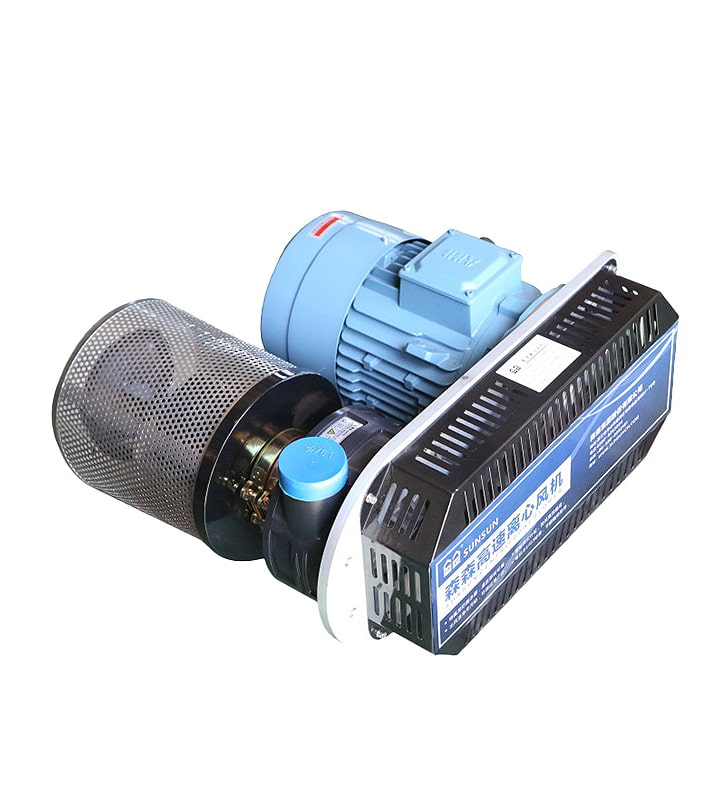
The product features emphasize clean operation and freedom from contamination. This characteristic is important wherever the air supplied by the aerator enters water, biological treatment systems, or controlled production environments. Clean air delivery helps support the quality of the process and reduces the possibility that unwanted particles or residues will enter the system.
In aquaculture, air is commonly introduced through diffusers placed in tanks, ponds, raceways, or biofiltration vessels. The aerator therefore becomes part of the living environment. Equipment selection should consider not only airflow and pressure but also the cleanliness of the air path, the condition of filters, the surrounding installation environment, and the maintenance procedures used by operators.
In wastewater treatment, clean and consistent aeration supports the microorganisms responsible for biological treatment. While the aerator itself does not replace water-quality monitoring or process control, dependable air delivery can contribute to stable operating conditions.
Industrial users may also benefit from a cleaner air-moving process when the machine is connected to equipment that is sensitive to contamination. The correct accessories, intake filtration, piping materials, and maintenance schedule should be selected according to the application.
Aquaculture facilities depend on oxygen management. Fish, shrimp, shellfish, and other aquatic organisms consume dissolved oxygen, while organic matter and biological filtration processes also influence oxygen demand. During periods of high stocking density, warm water, feeding activity, or biological treatment, the air requirement can increase significantly.
The HS Series provides a range of output levels that can be matched to different facility sizes. Smaller models in the range may be appropriate for medium-duty systems, while the 22,000 W and 30,000 W units are designed for much larger airflow requirements. Multiple aerators can also be integrated into a larger system to provide zoned control or operational redundancy, subject to professional system design.
High airflow is particularly useful where air must travel through extensive diffuser networks. Long pipe runs and deep-water installations create resistance, so the aerator must be selected according to both required volume and pressure. The HS Series offers pressure values from 23 kPa to 29 kPa across the listed models, giving operators options for applications that require more demanding air delivery.
Reliable aeration can support several aquaculture objectives:
It can help maintain dissolved oxygen levels throughout tanks and culture areas.
It can improve circulation by creating movement in the water column.
It can support biological filtration and microbial treatment processes.
It can reduce dead zones where oxygen levels may otherwise become uneven.
It can contribute to better environmental conditions during periods of high biological demand.
The aerator should be combined with dissolved oxygen sensors, suitable diffusers, valves, check valves, backup equipment, and an operating plan appropriate to the species and facility. The machine is an important component, but successful aquaculture depends on the complete oxygen-management system.
Industrial and municipal water-treatment processes often rely on aeration to transfer oxygen into water and support biological activity. Aeration may be used in activated-sludge systems, equalization basins, biological reactors, aquaculture wastewater treatment, sludge stabilization, and other processes.
The HS Series can be considered for installations that need high-volume air delivery under moderate pressure. Its range of positive-pressure and vacuum specifications allows engineers to evaluate the product for different air-handling arrangements. The appropriate model will depend on basin depth, diffuser type, air distribution layout, required oxygen transfer, operating schedule, and local environmental conditions.
In treatment applications, energy efficiency is a major consideration. Aeration can represent a significant portion of the electrical consumption of a biological treatment plant. A motor that meets IE2/IE3 efficiency standards, combined with a correctly sized impeller and properly designed piping system, can help operators manage energy use more effectively.
Maintenance access is equally important. Industrial equipment should be installed with sufficient clearance for inspection, cleaning, electrical checks, and component replacement. The listed dimensions and weights should be incorporated into the layout at the design stage. Heavy models may require lifting equipment and a properly engineered foundation.
Not every aeration project requires an industrial machine. Small diaphragm pumps, piston pumps, and compact aquarium pumps remain useful for household aquariums, laboratory tanks, and low-volume applications. The HS Series is differentiated by its capacity, pressure range, motor power, industrial construction, and ability to support large air networks.
Compared with small consumer pumps, the HS Series offers much greater airflow. The smallest listed model delivers 960 m³/h, while the largest listed model reaches up to 4,100 m³/h within its stated output range. This makes the series appropriate for facilities where a collection of small pumps would be impractical, difficult to maintain, or unable to provide the necessary pressure.
Compared with basic uncoated equipment, the Teflon anti-corrosion coating offers an advantage in environments where humidity and corrosive exposure are concerns. Compared with less efficient motor designs, the IE2/IE3 motor specification indicates a stronger focus on energy performance. Compared with simple fixed-capacity equipment, the broad model range makes it easier to choose a unit that corresponds to the required operating duty.
These advantages should be evaluated objectively. Performance depends on installation conditions, air temperature, system resistance, maintenance, and correct model selection. The strongest competitive value of the HS Series is not a single specification but the combination of high capacity, corrosion-conscious construction, vortex impeller technology, motor efficiency, and industrial application flexibility.

The manufacturer behind the HS Series has developed experience across aquarium products, aquaculture machinery, industrial equipment, water pumps, air pumps, and related technologies. This broad product background is valuable because aeration equipment is closely connected to other water-management and aquatic systems.
The company maintains a research institute, quality control department, business school, personnel and administrative information department, and financial department within its organizational structure. The presence of dedicated research and quality functions indicates an approach that combines product development with process control and organizational management.
Manufacturing strength is not limited to the final assembly of a machine. It includes material selection, motor design, impeller balancing, housing construction, protective coating, electrical integration, dimensional control, inspection, packaging, and after-sales support. Every stage can influence the reliability of the final aerator.
A strong industrial manufacturing process should begin with controlled incoming materials. Metals, coatings, magnets, motor components, bearings, fasteners, wiring, and insulation materials need to meet defined specifications. Consistent materials support repeatable production and help reduce variation between units.
Motor manufacturing requires careful control of winding quality, insulation, rotor balance, bearing installation, magnetic components, and thermal behavior. Since the motor is central to the aerator’s service life, production inspection should verify electrical characteristics and mechanical operation before the finished product is released.
Testing may include checks for voltage compatibility, current draw, rotation direction, vibration, noise, temperature rise, insulation condition, and overload response. The exact procedures depend on the production standard and model. Proper testing helps identify issues before shipment and supports a more dependable field installation.
The vortex impeller must be manufactured and installed with precision. An imbalance can create vibration, noise, bearing stress, and reduced service life. The assembly process should therefore include dimensional checks, balancing controls, alignment verification, and functional testing.
The relationship between the impeller and housing is also important. Clearances, air passages, seals, fasteners, and inlet arrangements affect airflow and pressure. Consistent assembly helps ensure that each model performs close to its intended specification.
The Teflon anti-corrosion coating is an important part of the product’s environmental protection strategy. Coating quality depends on surface preparation, application consistency, curing conditions, thickness control, and inspection. A controlled process helps ensure that the protective layer adheres correctly and remains intact during transport and operation.
Quality control should also consider potential damage during handling. Even a well-applied coating can be compromised by impact, sharp tools, incorrect lifting, or unsuitable installation practices. Packaging and transport procedures therefore form part of the product’s overall quality assurance.
Final assembly should verify that mechanical and electrical parts work together correctly. The product’s nameplate, model designation, voltage, frequency, power rating, and safety information should correspond to the actual unit. Connections should be checked, guards should be fitted, and moving parts should be inspected before shipment.
Functional testing under controlled conditions can help confirm the expected operating behavior of the finished aerator. Depending on the manufacturer’s procedures, this may include running tests, airflow verification, pressure checks, vibration assessment, and visual inspection. A structured quality-control system reduces the chance that manufacturing variation will reach the customer.
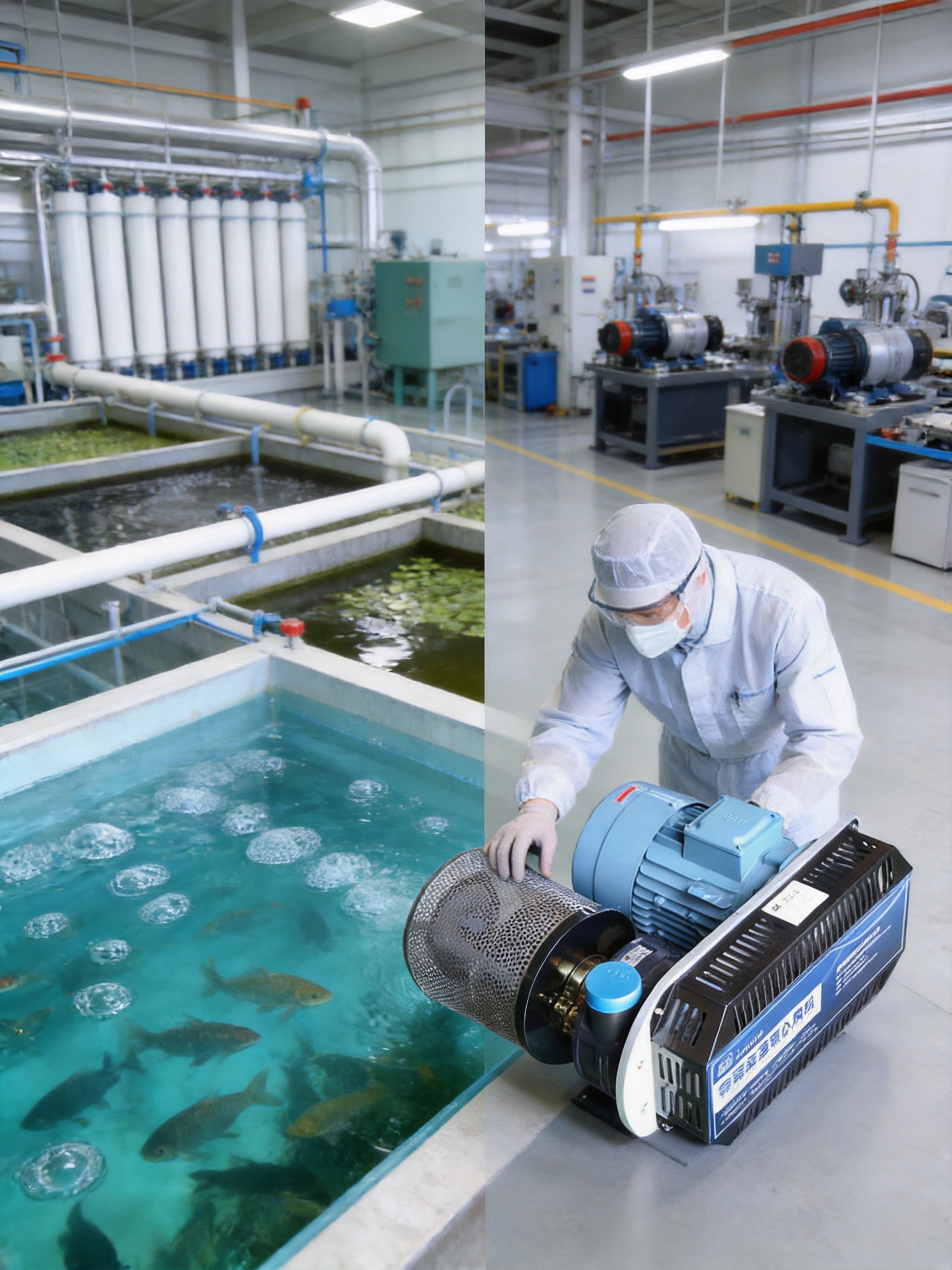
Correct installation has a direct effect on aerator performance. Before placing an HS Series unit, the customer should confirm the available electrical supply, foundation strength, access space, ventilation, air intake conditions, discharge piping, and maintenance requirements.
The machine should be installed on a stable and level base capable of supporting its operating weight. The listed weights range from 66 kg for the HS-4000W to 255 kg for the HS-30000W. Larger units may require mechanical lifting equipment during delivery and installation. The foundation and mounting arrangement should prevent excessive movement and vibration.
Ventilation is important because motors and air-moving equipment generate heat during operation. The installation room should provide sufficient air exchange, while the intake should be kept clear of dust, fibers, moisture, and corrosive vapors. If the equipment is installed outdoors, a suitable weather-protection arrangement may be required without restricting airflow.
Piping should be sized to limit unnecessary resistance. Excessive bends, narrow tubing, blocked diffusers, and undersized valves can reduce delivered airflow and increase the load on the aerator. Check valves may be useful in systems where water could flow backward toward the machine when it is stopped.
Electrical installation should be completed by qualified personnel. The 380 V / 50 Hz specification must be confirmed against the local power supply. Protective devices should be selected according to the motor rating and applicable regulations. Correct grounding and phase sequence are essential for safety and proper rotation.
Routine maintenance helps preserve performance and extend service life. A maintenance schedule should be established according to operating hours, environmental conditions, and the importance of the application.
Operators should inspect the air intake regularly. A blocked or contaminated intake can restrict airflow, increase operating temperature, and reduce efficiency. Filters, if used, should be cleaned or replaced according to the supplier’s recommendations and the site’s air quality.
Mechanical inspection should include checking for abnormal vibration, unusual noise, loose fasteners, visible coating damage, overheating, and changes in airflow. Any sudden change in sound or performance should be investigated rather than ignored.
Electrical checks may include reviewing connections, protective devices, current draw, grounding, and signs of overheating. Electrical work should only be performed by trained personnel after the equipment has been isolated and made safe.
The air distribution system also requires attention. Diffusers can become clogged, pipes can accumulate deposits, and valves can develop restrictions. A machine that appears to have lost capacity may be operating against increased system resistance rather than experiencing an internal failure.
In corrosive environments, external surfaces should be inspected periodically. Small scratches or coating damage should be addressed promptly according to an appropriate repair procedure. Cleaning agents should be compatible with the protective finish.
Model selection should begin with the required airflow. The customer should estimate the total demand of all connected tanks, diffusers, treatment basins, or pneumatic devices. A reasonable operating margin may be considered, but oversizing should be avoided because an excessively large machine can consume more energy than necessary.
Pressure is equally important. Water depth, diffuser resistance, pipe length, valves, and elevation all contribute to system pressure. The selected model must be able to provide the required flow at the actual operating pressure, not merely at an unrestricted outlet.
The environment should also influence the choice. Facilities with humidity, salt exposure, chemical vapors, or high biological activity may place greater demands on corrosion protection and maintenance. Installation dimensions and weight must be checked against the available plant space and lifting capacity.
The following simplified selection principles can assist preliminary planning:
The HS-4000W provides a listed output of 960 m³/h at 23 kPa pressure and may suit smaller industrial aeration networks.
The HS-5500W and HS-7500W increase output to 1,200 m³/h and 1,440 m³/h respectively, with pressure values of 24 kPa and 26 kPa.
The HS-11000W provides 1,700 m³/h at 24 kPa and is suited to higher-capacity installations requiring a larger machine footprint.
The HS-15000W delivers 2,124 m³/h at 29 kPa and offers a strong combination of high output and pressure capability.
The HS-22000W and HS-30000W are the largest listed models, with variable output ranges reaching 3,200 m³/h and 4,100 m³/h respectively.
These points are for preliminary comparison only. The final selection should be based on a complete duty calculation and the manufacturer’s technical guidance.
Purchase price is only one element of the cost of an aeration system. Electricity, maintenance, downtime, replacement parts, labor, and production losses can be more significant over the equipment’s working life. The HS Series addresses total operating value through its efficient motor specification, durable construction, corrosion-resistant coating, and range of available capacities.
A machine that is correctly sized can operate closer to its intended duty point. This can help avoid unnecessary energy consumption and reduce stress on mechanical components. A durable finish can help limit environmental deterioration, while a robust impeller and motor assembly may reduce the frequency of service interruptions.
Energy savings should be evaluated using actual operating hours and local electricity costs. For example, a machine operating continuously for thousands of hours per year will have a different economic profile from a unit used intermittently. The customer should compare expected energy consumption, maintenance requirements, and production value when selecting among models.
Facilities may also consider installing more than one aerator rather than relying on a single large unit. Multiple machines can provide operational flexibility, staged capacity, and partial redundancy. This arrangement must be evaluated by an engineer because piping, controls, valves, and electrical systems must be designed for safe coordination.
Although the product is strongly associated with aeration, its high-volume air-handling characteristics allow consideration in other sectors. Potential applications include wastewater treatment, biological reactors, sludge treatment, industrial process air, air circulation, pneumatic assistance, and certain vacuum-related systems.
In biological treatment, the aerator can support microorganisms that require oxygen. In industrial process applications, it may be used where continuous air movement is needed and where the pressure requirement falls within the model’s operating range. In selected systems, the vacuum capability may support suction or extraction duties.
Every application must be checked for compatibility. The air may need to be filtered, dried, heated, or otherwise conditioned. Chemical composition, temperature, humidity, dust level, and process safety requirements should be reviewed before installation.
The broad application potential is a competitive advantage because customers can use one product family across several types of equipment and facilities. This can simplify procurement, operator training, spare-parts planning, and maintenance procedures.
Industrial aerators contain rotating components and operate at substantial electrical power. Safety procedures must be established before installation, commissioning, inspection, and maintenance. Guards should remain in place during operation, and access panels should not be removed while the machine is energized.
Lockout and isolation procedures should be followed before service work. The machine should be allowed to stop completely, and stored energy or pressure should be released when necessary. Electrical connections should be handled only by qualified personnel.
Noise and vibration should also be considered. Suitable mounting, alignment, piping support, and room design can help control mechanical transmission and operating sound. Operators should use appropriate personal protective equipment when working near industrial machinery.
Because the unit may be connected to water systems, backflow prevention and drainage should be assessed. Water entering the air-moving assembly can cause damage or create a safety hazard. Installation design should take account of shutdown conditions, flooding, pipe elevation, and emergency procedures.
The HS Series stands out through the combination of features rather than through one isolated specification. Its permanent magnetic motor supports an energy-conscious design. The IE2/IE3 motor classification indicates attention to efficiency. The vortex impeller provides high-volume continuous airflow. The Teflon anti-corrosion coating addresses difficult environmental conditions. The available models cover a broad range of industrial capacity requirements.
This combination gives the product several advantages over basic aeration equipment. It can serve larger facilities, handle more demanding air networks, and offer a construction approach suited to long operating periods. The product is also supported by a manufacturer with experience in aquatic products, aquaculture machinery, pumps, and industrial equipment.
For customers, the practical value lies in reliable process support. A well-selected aerator can help maintain oxygen levels, support biological treatment, improve circulation, and contribute to stable operation. When combined with appropriate controls and maintenance, the HS Series can become a dependable part of a complete air-management system.
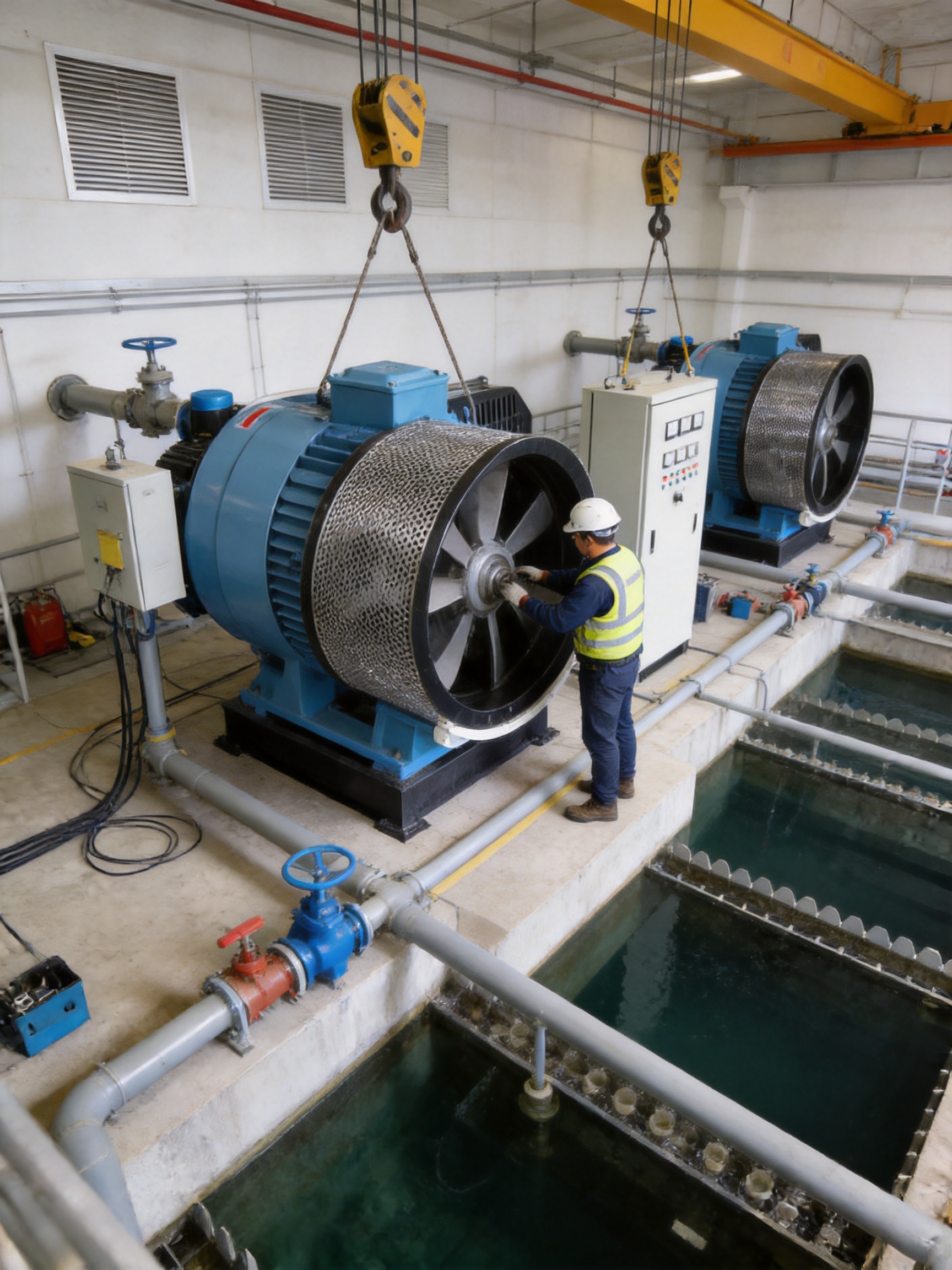
The HS Series is designed to deliver high-volume air for aquaculture, water treatment, industrial aeration, and related air-handling applications. It is intended for larger systems that require more airflow and pressure than ordinary aquarium air pumps can provide.
The listed models are specified for 380 V and 50 Hz operation. Customers must confirm compatibility with the local electrical supply and use qualified personnel for installation.
The HS-30000W has a listed output range of 2,100–4,100 m³/h. Actual output depends on operating conditions, system resistance, and the selected duty point.
The HS-15000W and HS-30000W are listed with pressure performance of 29 kPa. The HS-7500W, HS-22000W, and other models provide different pressure values according to their design.
The coating is intended to improve resistance to corrosive or difficult environments. It can be beneficial in humid, coastal, aquaculture, wastewater, and industrial locations, although proper installation and routine inspection remain necessary.
The industrial construction, vortex impeller, and motor design make the series suitable for demanding operating schedules. Continuous operation should still be planned according to the installation conditions, ventilation, electrical protection, and maintenance requirements.
It may be suitable for wastewater and biological treatment applications requiring high-volume air at moderate pressure. The final selection should consider basin depth, diffuser resistance, oxygen demand, piping losses, and process requirements.
Selection should be based on required airflow, operating pressure, water depth, piping resistance, available electricity, installation space, and environmental conditions. A professional duty-point calculation is recommended before purchase.
Routine maintenance should include air-intake inspection, cleaning, vibration and noise checks, electrical inspection, coating inspection, and examination of the connected piping and diffusers. The exact schedule depends on operating hours and environmental conditions.
The HS Series provides substantially higher airflow, higher industrial power capacity, greater pressure capability, corrosion-conscious construction, and a motor design intended for large-scale applications. Small aquarium pumps remain appropriate for low-volume household systems but are not normally designed for this duty range.
Multiple units can potentially be integrated into a larger air system for staged capacity or redundancy. This requires appropriate piping, valves, electrical controls, foundations, and professional engineering review.
The operator should inspect the air intake, filters, pipes, valves, diffusers, and check valves before assuming that the aerator itself has failed. Blockages and increased system resistance are common causes of reduced delivered airflow.
The HS Series DC Permanent Magnetic Aerator is engineered for industrial users who need dependable, high-capacity air movement. Its combination of permanent magnetic motor technology, IE2/IE3 efficiency performance, vortex impeller design, Teflon anti-corrosion coating, and broad model range makes it suitable for aquaculture, water treatment, and other demanding applications.
The series offers outputs from 960 m³/h to as much as 4,100 m³/h, with pressure performance reaching 29 kPa on selected models. This range allows customers to choose a machine according to their system requirements rather than adapting an oversized or undersized pump to the application.
Its competitive strength is supported by the manufacturer’s experience in aquarium products, aquaculture machinery, water pumps, air pumps, and industrial equipment. Research, quality control, manufacturing, and product-support capabilities contribute to a more complete approach than simple equipment assembly.
For the best results, users should select the model according to a complete airflow and pressure calculation, install it with suitable electrical and mechanical protection, and maintain the air path and motor assembly regularly. When these principles are followed, the HS Series can provide an efficient and durable foundation for large-scale aeration and air-handling systems.
1. Product specification sheet for the HS Series DC Permanent Magnetic Aerator, including model capacities, pressure values, vacuum values, weights, and dimensions.
2. International motor-efficiency classification principles for IE2 and IE3 electric motors.
3. General engineering practices for industrial blower installation, ventilation, grounding, overload protection, and rotating equipment safety.
4. General aquaculture guidance concerning dissolved oxygen management, diffuser systems, water circulation, and biological filtration.
5. General wastewater-treatment engineering principles concerning biological aeration and process-air distribution.
6. Manufacturer-provided corporate information concerning research, quality control, industrial equipment production, aquatic machinery, and international product supply.


 No. 61-79, Baima Street, Maao Town, Dinghai District, Zhoushan City, Zhejiang Province, China.
 0086 580 8082088 / 8081168
 0086 580 8080978
 songhua@sunsun-china.com