

 English
 русский
 España
 Portugal
 عربي
عربيWang Yu | Aquarium Products After-Sales Engineer
Home / Author / Wang Yu | Aquarium Products After-Sales Engineer / A Practical Guide to Viable Probiotics for Healthier Aquariums

Maintaining a healthy aquarium requires more than clean water, attractive decoration, and suitable lighting. Fish, shrimp, aquatic plants, beneficial microorganisms, filtration media, and water chemistry all work together as part of a living system. When this balance is disturbed, waste can accumulate, water quality can decline, and aquatic animals may become stressed. Viable probiotics are designed to support the biological side of aquarium care by introducing useful microorganisms into the aquatic environment.
This article examines viable probiotics as an aquarium accessory, explains their practical role in routine aquarium management, and discusses the product strengths that make them suitable for home aquariums, ornamental fish systems, breeding tanks, and other aquatic environments. It also considers how an experienced manufacturer with a broad industrial structure can support product consistency, quality management, research, packaging, distribution, and customer service.
Content
An aquarium is a miniature ecological system. Fish and other aquatic animals produce organic waste, uneaten food breaks down, and plant material may decompose. These processes create substances that must be managed through water changes, filtration, responsible feeding, aeration, and biological activity. Beneficial microorganisms are an important part of this process because they participate in the natural breakdown and transformation of organic matter.
Viable probiotics are liquid preparations containing living microorganisms intended for use in aquatic environments. The term “viable” emphasizes that the microorganisms are supplied in a living or potentially active condition rather than as an inactive chemical additive. When used appropriately, such products can become part of a broader aquarium maintenance program.
The product is available in 500 milliliters and 1,000 milliliters per bottle. These two sizes provide flexibility for different users. A smaller bottle may be practical for a single household aquarium or for users who want to begin with a manageable quantity. A larger bottle can be more suitable for aquarium enthusiasts who maintain several tanks, retailers who require regular stock, or professional and semi-professional aquatic operations.
Viable probiotics should not be viewed as a replacement for filtration, water testing, regular maintenance, or responsible animal care. Instead, they are best understood as a biological support product. Their value is greatest when they are used together with suitable filtration, adequate oxygenation, appropriate stocking levels, and a consistent maintenance schedule.
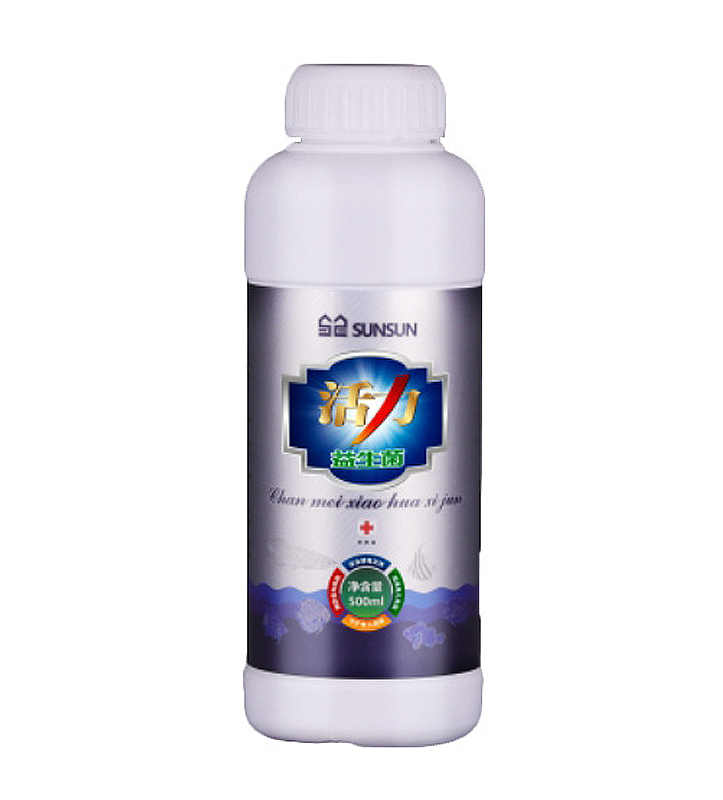
Viable probiotics
The visible appearance of aquarium water does not always reveal its biological condition. Water may look clear while dissolved waste or unstable biological activity is still present. Conversely, a temporary haze may occur while microorganisms are becoming established or adjusting to changing conditions. For this reason, aquarium management involves both visual observation and regular care practices.
Beneficial microorganisms can support the natural biological processes that occur in filter media, substrate, and other wet surfaces. In a mature aquarium, microbial communities contribute to the transformation of waste compounds. In a newly established aquarium, biological support may be especially useful as the system develops a stable microbial population.
Changes in fish population, feeding habits, filtration, water temperature, cleaning routines, or medication use can influence microbial balance. Major water changes and the replacement of filter media may also reduce or disturb established microbial communities. A probiotic product can be considered as part of a recovery or maintenance plan, although the exact application should always follow the product label and the requirements of the aquarium inhabitants.
A healthy biological system can help aquarium keepers manage routine challenges more systematically. Rather than relying only on emergency water changes after a problem appears, users can establish a consistent maintenance routine that includes observation, filtration care, water testing, feeding control, and biological support.
The product is titled Viable Probiotics and belongs to the Aquarium Accessories category. It is supplied as a liquid in bottles with a net content of either 500 milliliters or 1,000 milliliters. Its liquid format is convenient for aquarium applications because it can be measured and distributed into water without the need to dissolve a powder first.
A liquid product may also be practical when aquarium keepers need to apply a biological additive around filter compartments, directly into the aquarium, or during the setup of a new system. The specific dosage, frequency, storage conditions, and handling method should be determined from the product label and technical instructions. Users should not assume that a higher quantity will always produce better results.
| Product Element | Available Information | Practical Significance |
|---|---|---|
| Product name | Viable Probiotics | Identifies a biological aquarium accessory intended to support aquatic system management |
| Category | Aquarium Accessories | Suitable for inclusion in a wider range of aquarium maintenance products |
| Net content | 500 milliliters or 1,000 milliliters per bottle | Offers a choice for smaller and larger maintenance requirements |
| Product form | Liquid | Allows convenient measurement and distribution when used according to instructions |
| Application context | Aquarium maintenance and biological support | Works alongside filtration, water changes, testing, and responsible husbandry |
The product’s straightforward format is one of its practical strengths. Aquarium keepers often manage several tasks at once, including feeding, water changes, filter cleaning, plant trimming, and observing animal behavior. An easy-to-handle liquid can fit naturally into this routine.
One of the main advantages of viable probiotics is that the product is based on biological support. Many aquarium maintenance products are designed to adjust water chemistry, remove specific substances, or provide nutrients. A probiotic product has a different role: it contributes living microorganisms to the aquarium environment.
This biological approach can appeal to users who want to manage aquariums through ecological balance rather than relying exclusively on chemical correction. It supports the idea that an aquarium should be maintained as a living system in which microorganisms, plants, animals, water movement, and filtration work together.
The liquid format simplifies handling. The user does not need to prepare a separate culture medium or dissolve a dry preparation before application. Measured liquid can be added according to the instructions, reducing unnecessary preparation steps.
Convenience is particularly important for beginners. A product that is simple to understand and use is more likely to become part of a consistent maintenance routine. Experienced aquarium keepers can also benefit from the ability to apply a measured quantity during tank setup, after maintenance, or when managing multiple aquariums.
The 500 milliliter and 1,000 milliliter options provide a useful purchasing choice. Smaller aquariums may not need a large bottle, while larger systems or multiple tanks may require more frequent application. Offering two sizes allows users to select a package according to their maintenance habits rather than purchasing one fixed volume.
For distributors and retailers, multiple sizes can make product planning more flexible. A smaller size may be suitable for first-time buyers, while the larger size may serve regular customers who already understand the product and use it as part of an established aquarium care program.
Viable probiotics can be included in a complete aquarium care routine that also involves mechanical filtration, biological filter media, aeration, water movement, water testing, and controlled feeding. This compatibility is valuable because aquarium keepers rarely rely on one product alone.
The product can be positioned as a supporting accessory rather than an isolated solution. This makes it relevant to a broad range of users, including freshwater hobbyists, ornamental fish keepers, aquarium retailers, aquascaping enthusiasts, and owners of several household tanks.
Biological support may be considered during new aquarium setup, after filter maintenance, following a water change, or as part of routine care. The precise use depends on the product instructions and the condition of the aquarium, but the broad application range makes the product adaptable.
New aquarium systems are still developing their biological communities. Established systems may experience changes after equipment replacement or unusually heavy maintenance. A viable probiotic product can be included in a carefully planned approach to these transitions.

Aquarium accessories are designed for different functions, and no single category should be judged as a universal replacement for another. Air pumps improve aeration, water pumps create circulation, filters remove particles and support biological media, lighting supports viewing and plant growth, and water conditioners address particular water preparation needs. Viable probiotics occupy a complementary position by focusing on microbial support.
Compared with a purely mechanical accessory, a probiotic product works through biological activity rather than physical water movement or particle capture. This means that it should be evaluated according to different criteria. Users should consider whether the product is easy to apply, whether the packaging is practical, whether the instructions are clear, whether the product is supported by quality control, and whether it fits the intended aquarium routine.
Compared with a chemical additive, a viable probiotic product offers a biological method of supporting aquarium management. Chemical products may be useful for specific water preparation or treatment purposes, but they do not necessarily serve the same function as a preparation containing living microorganisms. The choice between products should be based on the aquarium’s needs rather than on the assumption that one type is always superior.
Compared with an improvised homemade culture, a commercially prepared product offers greater convenience and a more consistent purchasing experience. Homemade cultures can be difficult to control, store, measure, and reproduce. A professionally manufactured liquid product is intended to provide a standardized packaged solution, supported by organized production and quality procedures.
The strongest competitive advantages of a commercial viable probiotic product are not limited to the liquid itself. They also include manufacturing organization, packaging consistency, product identification, supply capability, and technical communication.
Unregulated or poorly documented alternatives may offer limited information about their contents, handling, storage, or intended application. By contrast, a professionally presented product can give users a clearer basis for purchasing and use. Product labeling, batch management, packaging inspection, and quality procedures all contribute to consumer confidence.
A large and experienced aquatic equipment manufacturer can also integrate the product into a wider ecosystem of aquarium solutions. This is valuable for distributors and retailers that prefer to source complementary products from an established supplier. A broader product portfolio can simplify procurement and support consistent merchandising across aquarium equipment, accessories, pumps, lighting, and related categories.
The company associated with this product has a long history in aquarium pets, aquacultural machinery, and industrial equipment. Its experience across related fields creates a useful foundation for understanding the practical requirements of aquatic systems. Although viable probiotics are biological products and should be managed according to their own technical requirements, knowledge of aquarium equipment and aquatic environments is an important commercial and application advantage.
Users should begin by reading the product label and identifying the recommended dosage, application frequency, storage conditions, and any precautions. The aquarium’s water volume should be estimated accurately. Decorations, substrate, and equipment may reduce the actual water volume, so measurements should be made carefully where dosing instructions require it.
Before application, aquarium keepers should inspect the system. They should check whether filters are operating correctly, whether water is circulating, whether fish are behaving normally, and whether any unusual odor, cloudiness, or accumulation of waste is present. Probiotics should not be used as a substitute for correcting obvious problems such as overstocking, inadequate aeration, or decaying material.
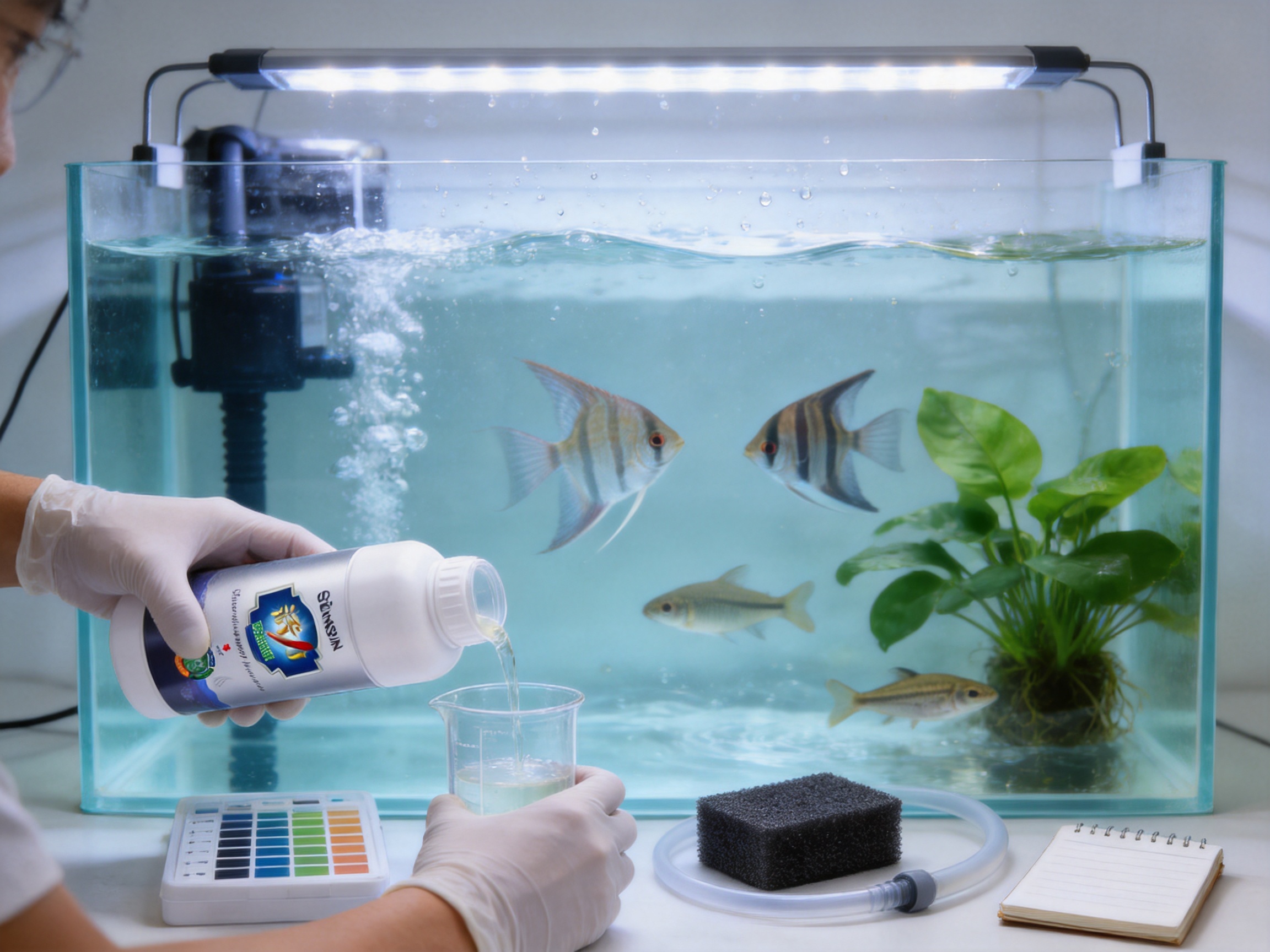
When adding a liquid biological product, gentle distribution can help the product move through the aquarium. Some users may prefer to add it near a filter intake or in an area with moderate circulation, provided that this is consistent with the product instructions. Strong ultraviolet treatment, ozone, or certain chemical treatments may affect living microorganisms. Users should review compatibility information and avoid combining products without appropriate guidance.
After application, observation is important. Aquarium keepers can monitor water appearance, animal behavior, filter performance, and general system stability. If fish show signs of distress, the user should respond according to responsible aquarium care practices and seek professional advice when necessary.
A new aquarium does not immediately possess the same biological maturity as an established system. The filter, substrate, and surfaces gradually develop microbial communities. During this stage, careful stocking, moderate feeding, adequate oxygenation, and regular water testing remain essential.
Viable probiotics may be incorporated into a new aquarium plan according to the product instructions. The purpose is to provide biological support while the system develops. Users should avoid adding too many animals too quickly and should not assume that any biological additive eliminates the need for monitoring.
Filter maintenance is necessary, but excessive cleaning or replacement of biological media can disturb the microbial community. Aquarium keepers should follow suitable cleaning practices and avoid using untreated tap water on biological media when this could damage beneficial microorganisms.
Following maintenance, a viable probiotic product may be considered as part of a restoration routine. The exact timing and quantity should follow the label. Maintaining water movement and oxygenation is also important because microorganisms require a suitable aquatic environment.
Routine use may be appropriate for users who want to include biological support in a regular aquarium schedule. The schedule should be simple enough to follow consistently. A written record of water changes, filter maintenance, feeding, testing, and product use can help aquarium keepers understand how the system responds over time.
Consistency is generally more useful than excessive application. Adding more product than recommended does not guarantee faster or better results. Aquarium management should always emphasize stable conditions, gradual changes, and careful observation.
The company connected with this product was established in November 1985 and has developed through more than three decades of continuous effort. Its activities cover aquarium pets, aquacultural machinery, industrial equipment, and related fields. This long operating history provides a substantial organizational foundation for product development, manufacturing, quality management, and market support.
The company’s headquarters includes ten functional departments. These include a research institute, a business school, a quality control department, personnel and administrative information functions, and a financial department. A structure of this kind indicates that product manufacturing is supported by more than a single production line. Research, quality control, training, administration, and financial management all contribute to a stable industrial operation.
For an aquarium accessory such as viable probiotics, organized management is particularly important. Biological products require careful attention to raw materials, production conditions, filling, sealing, storage, labeling, and inventory rotation. The available company information does not specify individual strains, culture methods, or laboratory parameters, so such details should be confirmed through the manufacturer’s technical documentation. Nevertheless, the company’s established quality control and research functions provide an important framework for controlled product development.
Manufacturing strength also includes the ability to coordinate procurement, production planning, packaging, inspection, warehousing, and shipment. These activities influence whether customers receive products in appropriate condition and whether distributors can maintain reliable stock. A well-organized industrial group is better positioned to coordinate these requirements than a small, informal supplier with limited administrative capacity.
The presence of a research institute reflects an emphasis on continued technical development. Innovation is important in the aquarium industry because users expect products that are practical, reliable, easy to apply, and compatible with changing market needs.
For viable probiotics, research may involve the selection and maintenance of suitable microorganisms, formulation stability, packaging requirements, application guidance, and compatibility with aquarium environments. Specific technical results should be supported by product documentation and testing data. The broader advantage is that a company with dedicated research resources can continue improving products rather than relying only on historical formulations.
A dedicated quality control department is a significant strength. Quality control can cover incoming materials, production procedures, filling accuracy, container integrity, labeling, finished product inspection, and storage management. For a liquid product, bottle sealing and package cleanliness are especially important because they affect usability and product protection.
Quality control also supports consistency between production batches. Aquarium users and distributors need confidence that a product purchased at different times will remain aligned with its stated specifications. Batch identification and appropriate records help manufacturers investigate questions and improve future production.
Because the supplied product information does not list certifications, test standards, or detailed microbiological specifications, buyers should request the relevant documentation when such information is necessary for commercial or professional use. Responsible purchasing includes reviewing storage requirements, shelf life, application instructions, and any available safety or quality statements.
The company’s business school and functional departments suggest an emphasis on organizational development and employee capability. Training supports manufacturing discipline, customer communication, product knowledge, and after-sales service.
In the aquarium industry, product performance depends partly on correct use. A trained sales and service network can explain the difference between probiotics, filtration, water conditioners, medications, and other accessories. This helps reduce misuse and improves the likelihood that customers will obtain the intended value from the product.
The company operates through several wholly owned subsidiary corporations and maintains holdings in multiple trading companies. This broad structure can support production coordination, regional distribution, market development, and product availability. It also indicates that the business is not limited to a single local manufacturing activity.
For international buyers, supplier organization is an important consideration. Importers and distributors need reliable communication, export coordination, documentation, production scheduling, and shipping support. A company with an import and export operation and a developed sales network may be better prepared to handle these requirements.
Scale can also create advantages in purchasing and production planning. Larger organizations may have access to broader supplier relationships, more substantial production resources, and greater capacity to serve different order volumes. These advantages can help support both standard product supply and longer-term distribution partnerships.
At the same time, scale should be combined with product-specific technical verification. Buyers should confirm the available packaging, minimum order quantities, storage conditions, shelf life, labeling language, private-label options if applicable, and export documentation. The existence of a large corporate structure is valuable, but product suitability still depends on clear technical and commercial communication.
Because viable probiotics contain living microorganisms, storage and handling deserve careful attention. Users should follow the manufacturer’s instructions regarding temperature, light exposure, sealing, and use after opening. The bottle should remain closed when not in use, and the product should not be transferred into an unmarked container.
Retailers should store bottles in a clean, organized area and monitor stock rotation. The 500 milliliter and 1,000 milliliter packages should be clearly separated and labeled to reduce picking errors. Distributors should also consider transport conditions and avoid unnecessary exposure to extreme heat, freezing conditions, or direct sunlight when the product instructions advise against them.
Before use, customers should inspect the bottle and label. If the container is damaged, leaking, unusually swollen, or missing essential identification information, it should not be used until the supplier has been contacted. Questions about appearance or odor should be directed to the manufacturer or distributor, because biological products may have characteristics that differ from ordinary water additives.
Clear instructions are a competitive advantage. Customers are more likely to use the product correctly when the label explains the intended application, recommended quantity, storage conditions, warnings, and product identity in an accessible way. For international markets, multilingual labeling and clear unit conversion can further improve usability.
Home aquarium owners often want a simple way to support water quality while maintaining fish, shrimp, or aquatic plants. The liquid format and two bottle sizes make the product accessible to users with different tank volumes and levels of experience.
Beginners can include the product in a broader maintenance checklist, while experienced hobbyists may use it during system establishment or after selected maintenance activities. In both cases, the product should be used with realistic expectations and alongside appropriate husbandry.
Collectors and ornamental fish enthusiasts may maintain multiple aquariums with different stocking levels and filtration systems. A 1,000 milliliter bottle can be convenient for regular use across several tanks. Biological support may be especially relevant when aquariums are frequently maintained, rearranged, or adjusted.
Experienced users are also more likely to track water parameters and observe how a product fits into their existing routine. This allows them to make informed decisions about application frequency and compatibility with other equipment or treatments.
Retailers need products that are easy to explain, display, and recommend. Viable probiotics can be presented as part of an aquarium maintenance section alongside filters, air pumps, water pumps, filter media, test products, and other accessories.
The product’s simple category and recognizable application can support cross-selling. A customer purchasing a new aquarium, filter, or group of fish may also need guidance on biological maintenance. Retail staff should explain that probiotics are supportive products and should not replace cycling, testing, proper stocking, or regular care.
Distributors may value the manufacturer’s broad product portfolio, production experience, export capability, and established market network. A supplier able to provide aquarium equipment and accessories through one commercial relationship can reduce procurement complexity.
Before placing an order, distributors should confirm product specifications, carton dimensions, packaging details, shelf life, documentation, and shipping conditions. They should also evaluate whether the 500 milliliter and 1,000 milliliter sizes match local consumer demand.
Viable probiotics should be marketed with accurate and responsible language. It is appropriate to describe the product as biological support for aquarium management. It is not appropriate to promise that it will eliminate all water quality problems, replace filtration, prevent every disease, or make water changes unnecessary.
Responsible positioning benefits both users and manufacturers. When customers understand the product’s role, they are more likely to apply it correctly and judge it fairly. Clear communication also distinguishes the product from medications, chemical conditioners, and mechanical equipment.
Marketing materials should emphasize the product’s liquid format, available bottle sizes, aquarium accessory category, manufacturing background, quality organization, and compatibility with a complete maintenance routine. Claims about specific microorganisms, performance results, shelf life, or laboratory testing should be included only when supported by official technical records.
This approach can create a stronger competitive position than exaggerated claims. Aquarium keepers generally appreciate products that are practical, transparent, and supported by clear instructions. A manufacturer’s long-term reputation depends on trust, consistent quality, and accurate communication.
Use a suitable aquarium filter and keep water moving. Biological products cannot compensate for a filter that is too small, blocked, or incorrectly installed.
Feed fish carefully. Excess food becomes waste and may place unnecessary pressure on the aquarium’s biological system.
Avoid overstocking. Every aquarium has a limited capacity to process waste and provide adequate oxygen and space.
Perform regular water testing when appropriate. Test results provide information that cannot be obtained from appearance alone.
Make water changes according to the needs of the aquarium. Stable, gradual maintenance is generally preferable to irregular emergency intervention.
Clean filter media carefully. Preserving useful biological media can help maintain microbial stability.
Follow the probiotic label. Use the recommended quantity, observe storage instructions, and do not combine products without checking compatibility.
Observe aquatic animals after application or maintenance. Changes in breathing, swimming, appetite, or behavior should be taken seriously.
Keep the bottle away from children and pets when the product instructions require restricted access. Do not use the product for human consumption.
Professional buyers should request a current product specification sheet before purchasing. The document should identify the product, available sizes, recommended application, storage conditions, shelf life, packaging information, and any relevant quality statements.
Buyers should ask whether batch numbers are printed on each bottle and outer carton. Batch identification supports inventory control and makes it easier to address questions about a particular shipment.
Importers should confirm whether labels meet the requirements of the destination market. Translation, units, warnings, ingredient or microorganism information, and registration requirements may vary by country.
Large purchasers should discuss production lead times, order quantities, packaging arrangements, inspection procedures, and shipping conditions. They may also ask about technical support, product training, and marketing materials for retailers.
Where performance claims are important, buyers should request supporting test information. Such documentation should be reviewed carefully to understand the test conditions, aquarium type, dosage, measurement period, and limitations. Results from one aquarium environment may not apply identically to every tank.
Aquarium products are used in living environments, so manufacturing reliability has practical consequences. A problem with packaging, labeling, storage, or product consistency can affect retailers, distributors, and end users. Working with an established manufacturer can reduce some of these commercial risks through stronger organization and more developed procedures.
The company’s history since 1985, its research and quality departments, its group of subsidiaries, and its import and export capability all contribute to a substantial supplier profile. Its stated development direction includes industrial technicalization, marketing globalization, and brand internationalization. These priorities are relevant to buyers seeking a long-term business relationship rather than a one-time purchase.
The company also operates a broad sales network and has developed retail and service initiatives that connect online and offline experiences. Such a network can provide market insight and help the manufacturer understand how aquarium keepers use products in real situations.
For viable probiotics, this broader aquarium industry experience can support better product presentation and customer education. Biological products perform best when users understand their role within the entire system. A supplier that also produces or distributes filters, pumps, lighting, and other aquarium equipment is well placed to communicate this integrated approach.
Viable probiotics are liquid preparations containing living microorganisms intended to provide biological support in aquarium environments. They are used as part of aquarium maintenance and should be combined with filtration, water movement, appropriate stocking, careful feeding, and water testing.
The available net contents are 500 milliliters and 1,000 milliliters per bottle. The smaller size may suit individual aquarium keepers, while the larger size may be useful for multiple tanks, frequent users, retailers, or professional applications.
No. A probiotic product does not replace mechanical filtration, biological filter media, circulation, aeration, or routine maintenance. It should be regarded as a supporting aquarium accessory.
No. Water changes remain an important part of aquarium care. Probiotics may support biological management, but they do not remove the need to maintain suitable water quality through appropriate husbandry.
Users may consider using it during new aquarium setup, after certain filter maintenance activities, following a water change, or as part of a routine biological support program. The exact timing and dosage should follow the product label.
The product is intended for aquarium use, but every aquarium has different conditions. Fish species, shrimp, plants, temperature, filtration, water chemistry, stocking level, and other treatments should be considered. Users should review the manufacturer’s instructions and seek professional guidance when uncertain.
Compatibility depends on the substances involved. Some treatments may affect living microorganisms. Users should read all labels and avoid combining products unless compatibility has been confirmed by the manufacturer or a qualified aquarium professional.
A commercially prepared product offers a packaged, labeled, and organized purchasing option. It can provide greater convenience in measurement, storage, batch identification, and distribution than an improvised culture. The manufacturer’s quality procedures and technical documents should be reviewed for specific product details.
Buyers should ask about dosage, storage temperature, shelf life, batch identification, packaging, available documentation, shipping conditions, minimum order quantities, and market-specific labeling. If specific microorganism or performance claims are required, buyers should request supporting technical information.
Manufacturer experience supports production planning, quality control, research, packaging management, export coordination, and customer service. The company associated with this product has operated since 1985 and has developed capabilities across aquarium products, aquacultural machinery, and industrial equipment.
Neither size is universally better. The right choice depends on aquarium volume, number of tanks, application frequency, storage conditions, and expected consumption. Users should select the size that can be stored and used according to the product instructions.
Viable probiotics provide aquarium keepers with a practical biological support option. Their liquid format is convenient, and the 500 milliliter and 1,000 milliliter bottle sizes offer flexibility for different users. The product can be included in new aquarium setup, routine maintenance, filter care, and broader biological management plans.
Its greatest value comes from its complementary role. Viable probiotics should work alongside good filtration, adequate aeration, responsible feeding, moderate stocking, water testing, and regular water changes. They are not a substitute for these essential practices, but they can form part of a more complete approach to aquarium care.
The manufacturer’s long operating history, research orientation, dedicated quality control department, broad corporate structure, subsidiary network, and import and export capability provide important commercial strengths. These capabilities can support product consistency, distribution, technical communication, and long-term cooperation with retailers and international buyers.
For customers, the product offers a simple way to add biological support to an aquarium maintenance routine. For professional buyers, it represents an opportunity to source an aquarium accessory from an experienced supplier with broad industry knowledge. Proper instructions, careful storage, accurate product claims, and responsible aquarium management remain essential to achieving the best possible user experience.
1. Product information supplied for Viable Probiotics, including product category, liquid format, and available net contents.
2. Company information supplied for Sensen Group Co., Ltd., including corporate history, departments, subsidiaries, trading company holdings, and business activities.
3. General principles of aquarium biological filtration, microbial balance, water quality management, and responsible aquatic animal husbandry.
4. General guidance for storage, handling, labeling, and inventory management of liquid biological aquarium products.
5. General purchasing considerations for aquarium accessories, including technical documentation, batch identification, packaging, shelf life, and distribution requirements.


 No. 61-79, Baima Street, Maao Town, Dinghai District, Zhoushan City, Zhejiang Province, China.
 0086 580 8082088 / 8081168
 0086 580 8080978
 songhua@sunsun-china.com