

 English
 русский
 España
 Portugal
 عربي
Wang Yu | Aquarium Products After-Sales Engineer
Home / Author / Wang Yu | Aquarium Products After-Sales Engineer / How a Variable-Frequency Fountain Pump Supports Efficient, Flexible Water Feature Design
Fountain pumps are expected to do more than move water. A dependable fountain pump must provide sufficient hydraulic performance, operate consistently in changing conditions, fit different installation environments, and support attractive water patterns without excessive energy consumption. It must also be practical for installers, landscape professionals, water-feature designers, aquarium specialists, and end users who need a reliable solution for ornamental ponds, garden fountains, display pools, and decorative aquatic installations.
The JTP Series Frequency Variation Fountain Pump is designed around these requirements. The series includes models from JTP-1800RF through JTP-9000RF, with rated outputs from 1,800 liters per hour to 9,000 liters per hour. This broad range allows users to select a pump according to the scale of the water feature rather than relying on a single general-purpose unit. The series also combines multiple voltage options, dual-frequency compatibility, long cable lengths, different maximum head capacities, and a selection of fountain effects.
Its product structure is particularly suitable for applications in which water circulation and visual presentation are equally important. The listed fountain configurations include foam, rain forest, tent, champagne, rocket, and volcano effects. These patterns can help designers create different visual atmospheres while using the same general pump platform. Instead of treating the pump as an isolated mechanical component, the JTP Series presents it as part of a complete fountain experience.
This article examines the product range, technical specifications, operating benefits, application value, selection process, and the manufacturing strengths behind the series. It also compares the practical advantages of a variable-frequency fountain pump with conventional fixed-output alternatives, while keeping the discussion grounded in the available product information.
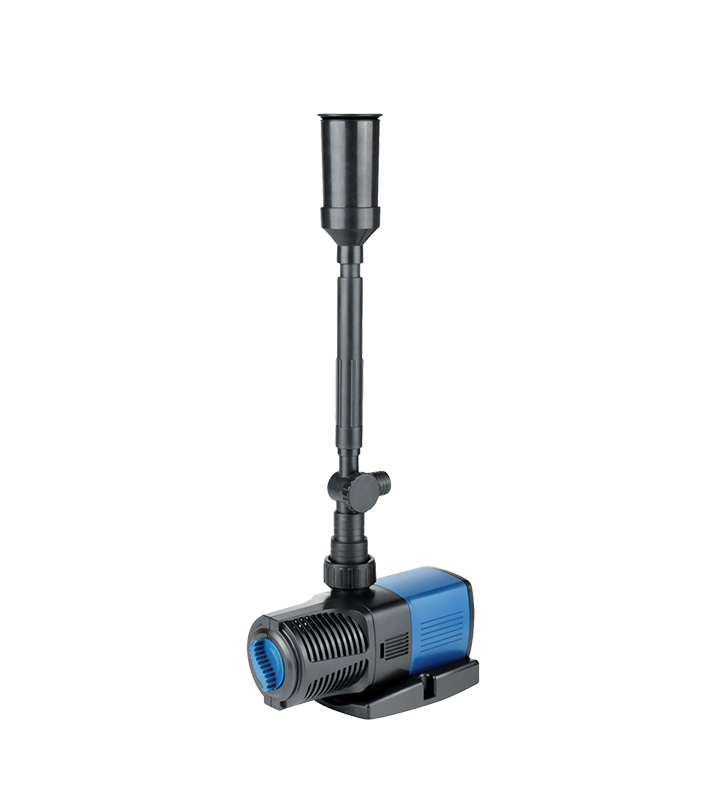
JTP Series Frequency Variation Fountain Pump JTP-4000RF~9000RF JTP-1800RF~5800RF
Content
A fountain pump is the driving component of a decorative water system. It draws water from a reservoir, pond, basin, or tank and delivers it through a nozzle or distribution assembly. The resulting flow creates movement, sound, height, texture, and visual character. Without the correct pump, even a well-designed fountain may produce a weak spray, unstable pattern, excessive noise, or unnecessary operating cost.
The required pump performance depends on several factors. These include the desired water volume, vertical lifting distance, pipe resistance, nozzle design, number of outlets, and the visual effect selected by the designer. A smaller garden fountain may require only a modest output, while a public landscape feature may need substantially greater water circulation. A pump must therefore be matched to the hydraulic requirements of the installation.
Maximum head is another important consideration. The maximum head rating indicates the approximate height to which the pump can raise water under specified conditions. Actual flow decreases as lifting height, pipe length, bends, filters, and fittings add resistance. For this reason, users should not select a pump solely by looking at the maximum liters-per-hour figure. Both output and head must be considered together.
The JTP Series provides a range of maximum head values from 2.2 meters on the JTP-1800RF to 5.2 meters on several higher-capacity models. This makes the series adaptable to compact decorative features as well as taller or more demanding installations. The range gives installers more opportunities to select an appropriately sized unit instead of oversizing a pump and regulating it inefficiently.
One of the strongest advantages of the JTP Series is its model coverage. The range begins with the JTP-1800RF, offering an output of 1,800 liters per hour and a power rating of 11 watts. It continues through intermediate models including the JTP-2800RF, JTP-3800RF, JTP-4800RF, and JTP-5800RF. Higher-capacity models include the JTP-4000RF, JTP-5000RF, JTP-6000RF, JTP-7000RF, JTP-8000RF, and JTP-9000RF.
This structure gives the product family two useful groups. The lower and middle models are suited to smaller installations where compact dimensions and moderate flow are appropriate. The higher-output models serve larger basins, broader spray arrangements, or applications requiring greater water circulation. Because the models are organized by approximate output, product selection is relatively straightforward for installers.
The different model groups also have different physical dimensions and weights. The JTP-1800RF through JTP-5800RF are listed at 182 × 115 × 470–600 millimeters and 3.0 kilograms. The JTP-4000RF through JTP-9000RF are listed at 250 × 123 × 500–630 millimeters and 3.5 kilograms. The variable dimension range reflects the adjustable height of the fountain assembly rather than an unexplained difference in pump identity.
Model |
Power |
Maximum Head |
Output |
Weight |
Dimensions L × W × H |
JTP-1800RF |
11 W |
2.2 m |
1,800 L/h |
3.0 kg |
182 × 115 × 470–600 mm |
JTP-2800RF |
18 W |
3.0 m |
2,800 L/h |
3.0 kg |
182 × 115 × 470–600 mm |
JTP-3800RF |
25 W |
3.8 m |
3,800 L/h |
3.0 kg |
182 × 115 × 470–600 mm |
JTP-4800RF |
32 W |
4.5 m |
4,800 L/h |
3.0 kg |
182 × 115 × 470–600 mm |
JTP-5800RF |
38 W |
5.2 m |
5,800 L/h |
3.0 kg |
182 × 115 × 470–600 mm |
JTP-4000RF |
25 W |
3.2 m |
4,000 L/h |
3.5 kg |
250 × 123 × 500–630 mm |
JTP-5000RF |
30 W |
3.6 m |
5,000 L/h |
3.5 kg |
250 × 123 × 500–630 mm |
JTP-6000RF |
40 W |
4.0 m |
6,000 L/h |
3.5 kg |
250 × 123 × 500–630 mm |
JTP-7000RF |
50 W |
4.4 m |
7,000 L/h |
3.5 kg |
250 × 123 × 500–630 mm |
JTP-8000RF |
60 W |
4.8 m |
8,000 L/h |
3.5 kg |
250 × 123 × 500–630 mm |
JTP-9000RF |
70 W |
5.2 m |
9,000 L/h |
3.5 kg |
250 × 123 × 500–630 mm |
The table shows a general relationship between power, output, and head. As the model capacity increases, the rated power rises to support higher water delivery. At the same time, the series avoids forcing every customer into the largest available pump. This can simplify inventory management for distributors and make project specification more precise.
The frequency-variation concept is central to the value of the JTP Series. Conventional fixed-speed fountain pumps generally operate at one predetermined performance level. If the pump produces more flow than the fountain requires, the user may have to restrict the flow mechanically or accept an oversized water pattern. A variable-frequency design can provide greater flexibility by allowing the operating behavior to be adjusted to the needs of the installation.
In a decorative fountain, the ideal flow is not always the maximum flow. A calm foam pattern may require a different delivery rate from a tall rocket or volcano pattern. Weather conditions can also influence the desired setting. On windy days, a lower spray height may reduce water loss caused by drift. During a public event or evening display, a stronger pattern may be preferred for greater visibility.
Adjustable operation can also help during commissioning. Installers may initially operate the pump at a lower setting while checking the basin, pipework, nozzle alignment, and splash containment. After the system has been inspected, the output can be adjusted toward the intended display level. This approach is more practical than treating the pump as an all-or-nothing device.
Compared with a basic fixed-output competitor, a variable-frequency fountain pump may offer advantages in three areas: display control, system matching, and operating efficiency. The first advantage is visual control because the user can adapt the water movement. The second is hydraulic matching because the pump can be selected and adjusted for a more appropriate working condition. The third is potential energy efficiency because a system does not always need to operate at full capacity.
Actual energy performance depends on the operating setting, installation resistance, water level, nozzle, and maintenance condition. It would therefore be inappropriate to claim a universal energy saving for every installation. Nevertheless, the ability to regulate output is a meaningful advantage over a pump that has no comparable adjustment capability.
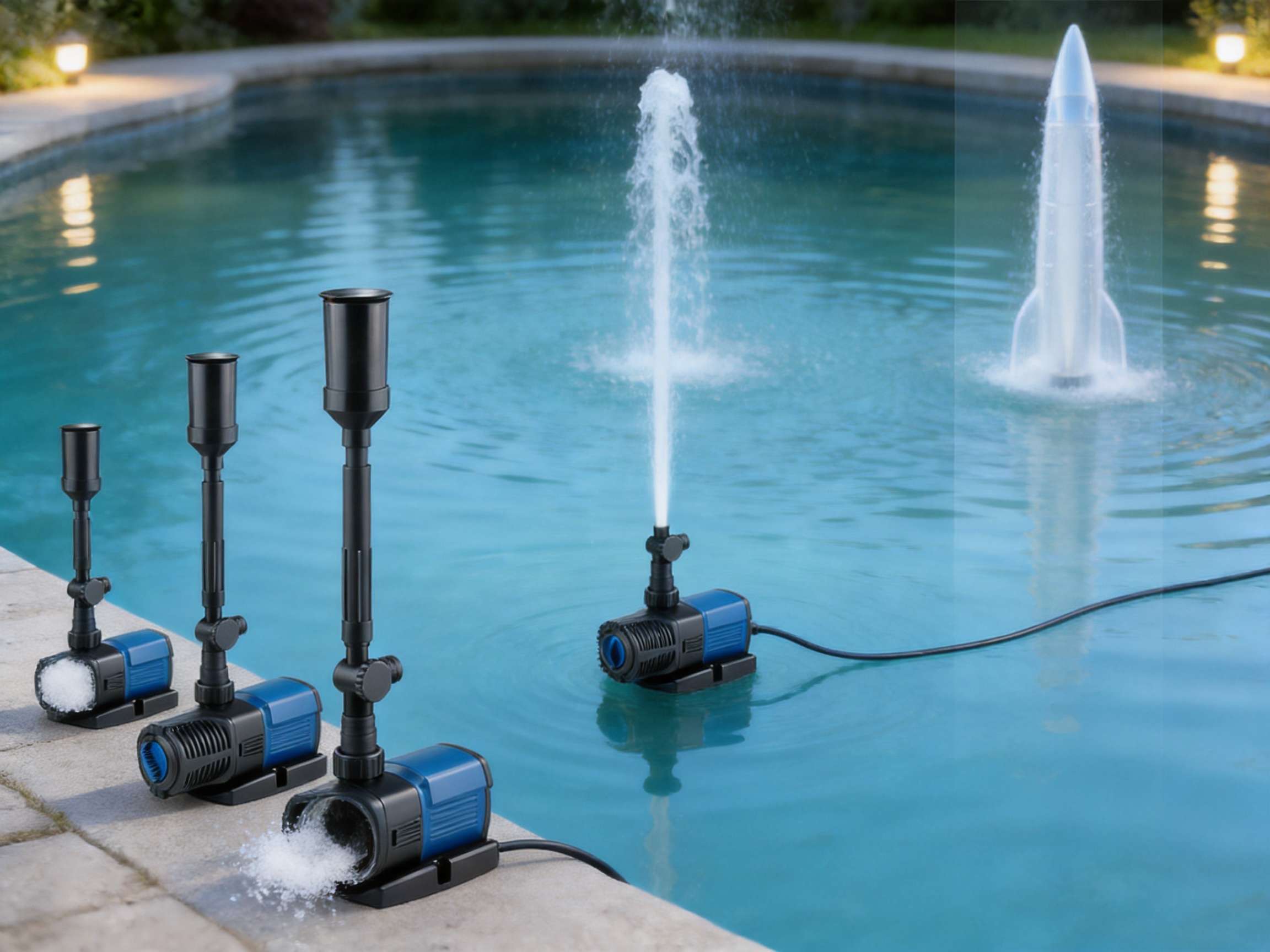
The JTP Series is listed for 110-volt, 220-volt, and 240-volt applications, with compatibility for both 50-hertz and 60-hertz frequency environments. This specification is valuable for an international product line because electrical standards differ between countries and regions. A pump family designed for multiple voltage and frequency conditions can reduce the need for completely different product platforms.
For distributors, this flexibility may simplify product planning. For contractors, it can make the series more adaptable to projects in different markets. For users, it reduces the risk of selecting a product that is limited to one electrical environment. Electrical compatibility must always be confirmed before installation, and users should follow the product’s wiring and safety instructions. The listed voltage options do not remove the need for proper local electrical protection.
Water and electricity require careful separation and professional installation. A suitable circuit, grounding arrangement, residual-current protection where required, weather-resistant connections, and appropriate cable routing are essential. The pump should be installed according to applicable electrical codes and the instructions supplied with the unit.
The 10-meter cable length listed for every model is another practical feature. A long cable can provide greater flexibility when the electrical connection is positioned away from the basin. It may help keep connectors and power equipment outside splash zones and support cleaner project layouts. Cable routing should still be planned carefully, with protection from abrasion, standing water, sharp edges, and unauthorized access.
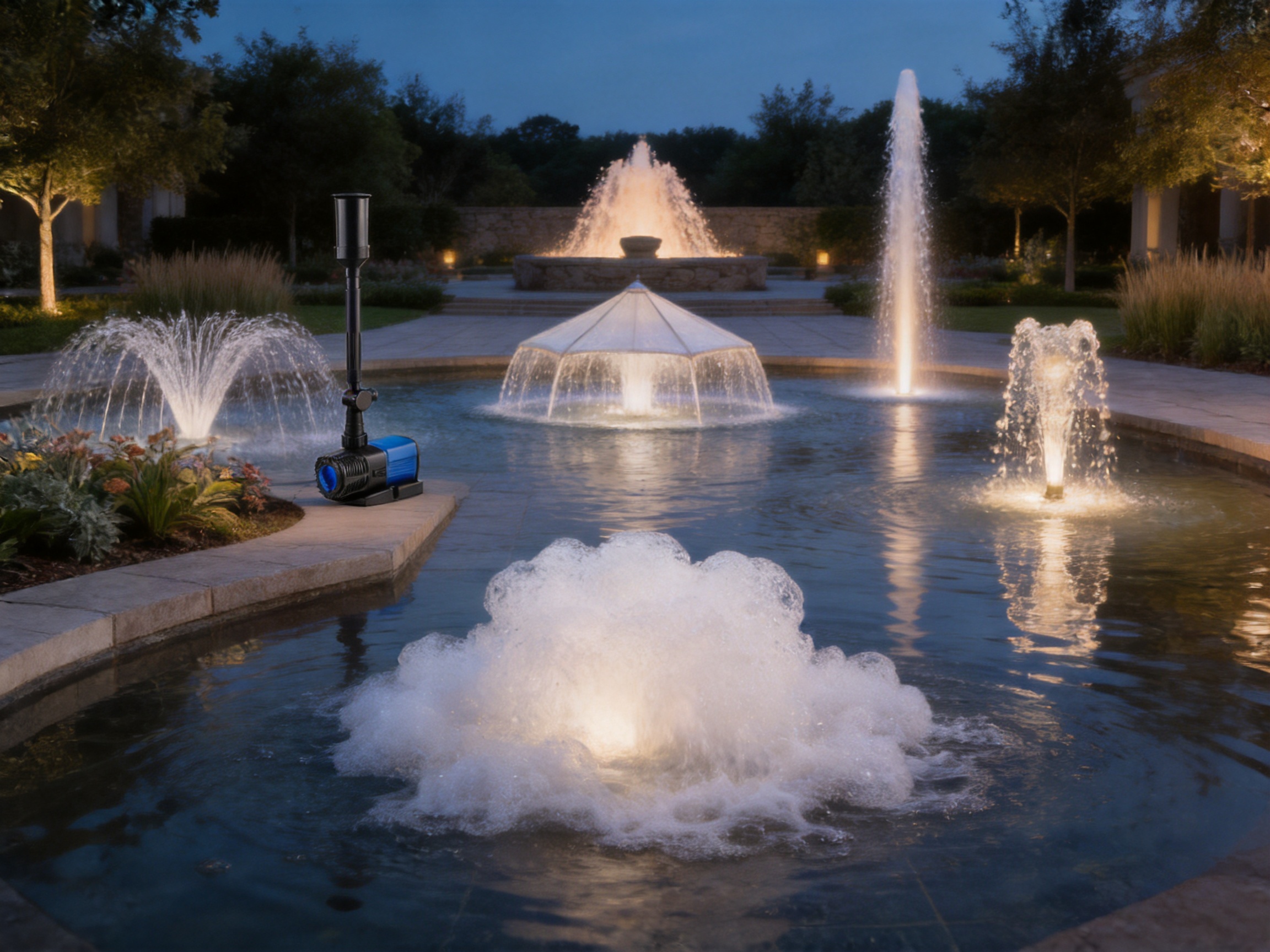
The JTP Series is associated with six listed fountain effects: foam, rain forest, tent, champagne, rocket, and volcano. Each effect gives water a different shape and movement pattern. This selection allows one product family to serve a wide variety of visual concepts, from compact ornamental displays to more dramatic landscape features.
A foam effect creates a dense, aerated appearance. It can make a relatively modest water flow look full and textured, which is useful in small ponds, courtyard features, entrance displays, and decorative basins. Because the effect emphasizes volume and surface texture, it can be visually effective without requiring an extremely tall column of water.
The rain forest pattern suggests multiple falling streams or a broad, naturalistic water movement. It may be appropriate for landscaped settings where the designer wants to create a softer connection between water, plants, and surrounding stonework. Such a pattern can also add sound without relying only on vertical height.
A tent-style fountain generally produces a structured shape that spreads outward or forms a canopy-like profile. It can create a central visual focus in a circular or symmetrical basin. The pattern may be especially suitable for formal gardens, hotel courtyards, and public plazas.
A champagne effect is associated with bubbling or clustered upward streams. This appearance can bring energy to a small water feature and may work well where a lively but controlled display is preferred. It can also be combined with lighting to produce a sparkling appearance during evening operation.
The rocket pattern emphasizes vertical movement and height. It may be chosen for installations that require a more prominent center point or a stronger visual silhouette. When using a tall spray, designers should consider wind, evaporation, splash distance, and basin capacity.
A volcano-style pattern creates a broader and more dramatic water profile. It can be used as a central feature in a larger basin or as a thematic element in a landscape display. The final appearance will depend on nozzle configuration, water quality, operating setting, and the surrounding design.
The availability of multiple patterns is an important difference from a simple circulation pump. A basic pump may move water effectively but provide limited opportunity to shape the display. A fountain-oriented product family combines hydraulic delivery with visual accessories, helping designers create a more complete result.
The output ratings run from 1,800 liters per hour to 9,000 liters per hour. This progression gives users a clear way to compare models. Lower-output units can support smaller decorative installations, while higher-output models can provide the circulation needed for larger nozzles, broader patterns, or more substantial basins.
The maximum head values increase from 2.2 meters to 5.2 meters across the models. This is relevant when the fountain effect must rise above the water surface or when the pipe layout introduces additional lifting requirements. A model with a higher nominal output but insufficient head may not produce the expected result once connected to a tall nozzle or restrictive plumbing arrangement.
Users should evaluate the complete system rather than relying on free-flow output. Pipe diameter, pipe length, elbows, valves, nozzle openings, filters, and water depth can all influence final performance. A professional installer can calculate the expected operating point and select the model that provides the required output at the actual working head.
The range also supports future design changes. A landscape project may begin with a moderate display and later add a different nozzle or a larger basin. Having multiple compatible models can make replacement or upgrading more orderly. A distributor can maintain a coherent product family instead of offering unrelated pumps with different installation practices.
Because the product is intended for fountain applications, water quality and maintenance remain important. Leaves, algae, sediment, and mineral deposits can interfere with intake areas and nozzle openings. Regular inspection helps preserve flow stability and fountain appearance. The pump should not be expected to compensate for a blocked intake or poorly maintained water feature.
The listed dimensions provide useful information for planning the pump chamber, mounting area, and fountain assembly. The smaller model group measures 182 × 115 millimeters in length and width, with a height range of 470 to 600 millimeters. The larger group measures 250 × 123 millimeters in length and width, with a height range of 500 to 630 millimeters.
The height range is significant for fountain installations because the visual center of the effect may need to be aligned with the basin, nozzle, or surrounding structure. Adjustable dimensions can help installers accommodate different water depths or presentation requirements. Before installation, the available clearance should be compared with the listed minimum and maximum dimensions.
Weight is also relevant. The smaller models are listed at 3.0 kilograms, while the larger models are listed at 3.5 kilograms. These weights are manageable for many installations, but the supporting structure must still be stable and protected from movement. Vibration, uneven bases, and poor alignment can affect fountain performance and may create unnecessary noise.
A good installation normally includes a stable support, accessible maintenance area, suitable water depth, protected electrical routing, and a basin large enough to contain splash and wind-driven drift. The pump should be positioned so that it receives adequate water and can be removed for inspection without dismantling the entire feature.
The product is presented by a group with more than 30 years of activity in aquarium products, aquacultural machinery, and industrial equipment. This long operating history is relevant because fountain pumps require knowledge that crosses several fields: motorized water movement, fluid handling, aquatic environments, electrical safety, plastics or housing design, and production quality control.
The company information identifies several functional departments, including a research institute, business school, quality control department, personnel and administrative information department, and financial department. The presence of dedicated research and quality functions suggests an organizational structure capable of supporting product development beyond simple assembly. For a technical product, this type of structure can help connect design, testing, procurement, production, and after-sales requirements.
The group also reports several wholly owned subsidiary corporations and an import and export company, together with holdings in multiple trading companies. Such an extended corporate and distribution structure can support a broad supply network and international market access. It may also provide advantages in production coordination, purchasing, inventory management, and regional service.
Advanced manufacturing should not be understood only as the use of a particular machine. It also includes the way a company organizes product development and quality assurance. For the JTP Series, the relevant strengths include a long-term focus on aquatic machinery, a dedicated quality control function, a research-oriented organization, and experience supplying domestic and overseas markets.
A mature manufacturing process generally begins with product definition. Engineers identify the expected output range, head requirements, electrical conditions, physical dimensions, cable length, and accessory compatibility. These requirements are then translated into a product family with consistent model naming and specification differences. The JTP range demonstrates this family-based approach by offering several capacities rather than one undifferentiated pump.
Production control is equally important. A fountain pump includes electrical and mechanical components that must work together. Consistent assembly, inspection of electrical connections, verification of moving components, and checking of finished dimensions all contribute to dependable operation. Quality control procedures can help identify deviations before products are shipped to distributors or project sites.
Manufacturing scale can also support repeatability. When a company produces a broad portfolio of aquarium and water-related equipment, it can develop experience with common materials, motors, seals, impellers, cables, packaging systems, and inspection requirements. That experience may help improve consistency across related product categories.
International production requires additional attention to voltage, frequency, labeling, packaging, documentation, and logistics. The JTP Series is listed for several voltage and frequency environments, which indicates an orientation toward varied market requirements. Electrical compatibility must still be confirmed for each order, but the specification itself provides a useful foundation for export distribution.
Reliability in a fountain pump depends on more than rated flow. The pump may operate for extended periods, often outdoors, and may face humidity, splash, temperature variation, water impurities, and inconsistent maintenance. Quality control should therefore address both the pump itself and the way it is prepared for the application.
A quality-oriented production process may include inspection of incoming components, assembly checks, electrical testing, visual examination, operational testing, packaging inspection, and traceability. The supplied company information confirms the existence of a quality control department, although it does not specify every test procedure. Buyers should request the applicable technical documentation when a project requires particular certification or testing evidence.
For users, reliability is also influenced by correct model selection. Operating a pump beyond its intended head, blocking the intake, running it without sufficient water, or exposing electrical connections to water can cause failure regardless of manufacturing quality. The best product performance comes from combining a properly controlled manufacturing process with correct installation and maintenance.
The product family’s consistent cable length, model structure, dimensional information, and voltage listing can help reduce specification errors. Clear information is itself a quality advantage because it supports better decisions before the equipment reaches the job site.
The JTP Series can be compared with conventional fountain pumps in several practical categories. The first is model choice. A single fixed-output pump may be too weak for one project and unnecessarily powerful for another. A family covering 1,800 to 9,000 liters per hour gives users more opportunities to match the equipment to the installation.
The second is control flexibility. Fixed-speed pumps normally provide limited adjustment. The frequency-variation concept offers a way to adapt operating performance to different visual effects and hydraulic conditions. This can be useful when the same fountain must support seasonal changes, different display programs, or varying wind conditions.
The third is electrical versatility. The listed 110-volt, 220-volt, and 240-volt options, combined with 50-hertz and 60-hertz compatibility, are useful for international projects. A competitor restricted to one electrical standard may create additional sourcing or replacement complications.
The fourth is fountain presentation. The listed foam, rain forest, tent, champagne, rocket, and volcano patterns provide more design possibilities than a standard pump intended only for circulation. The product is therefore positioned not merely as a water-moving device but as a fountain system component.
The fifth is installation reach. A 10-meter cable can be helpful where the pump and power connection are separated by distance. This does not eliminate the need for safe cable management, but it can improve layout flexibility.
The sixth is manufacturing and organizational support. A long-established group with research, quality control, multiple subsidiaries, and international distribution experience may be better positioned to support a broad product range than a small supplier offering only one generic model. Buyers should still evaluate documentation, service arrangements, and project-specific requirements, but corporate production depth is an important consideration.
These advantages should be understood in application terms rather than as an automatic guarantee that the JTP Series will outperform every competing pump in every condition. Performance depends on the complete system. However, the combination of model variety, adjustable operation, fountain effects, broad electrical compatibility, and established manufacturing resources creates a strong value proposition for many decorative water projects.
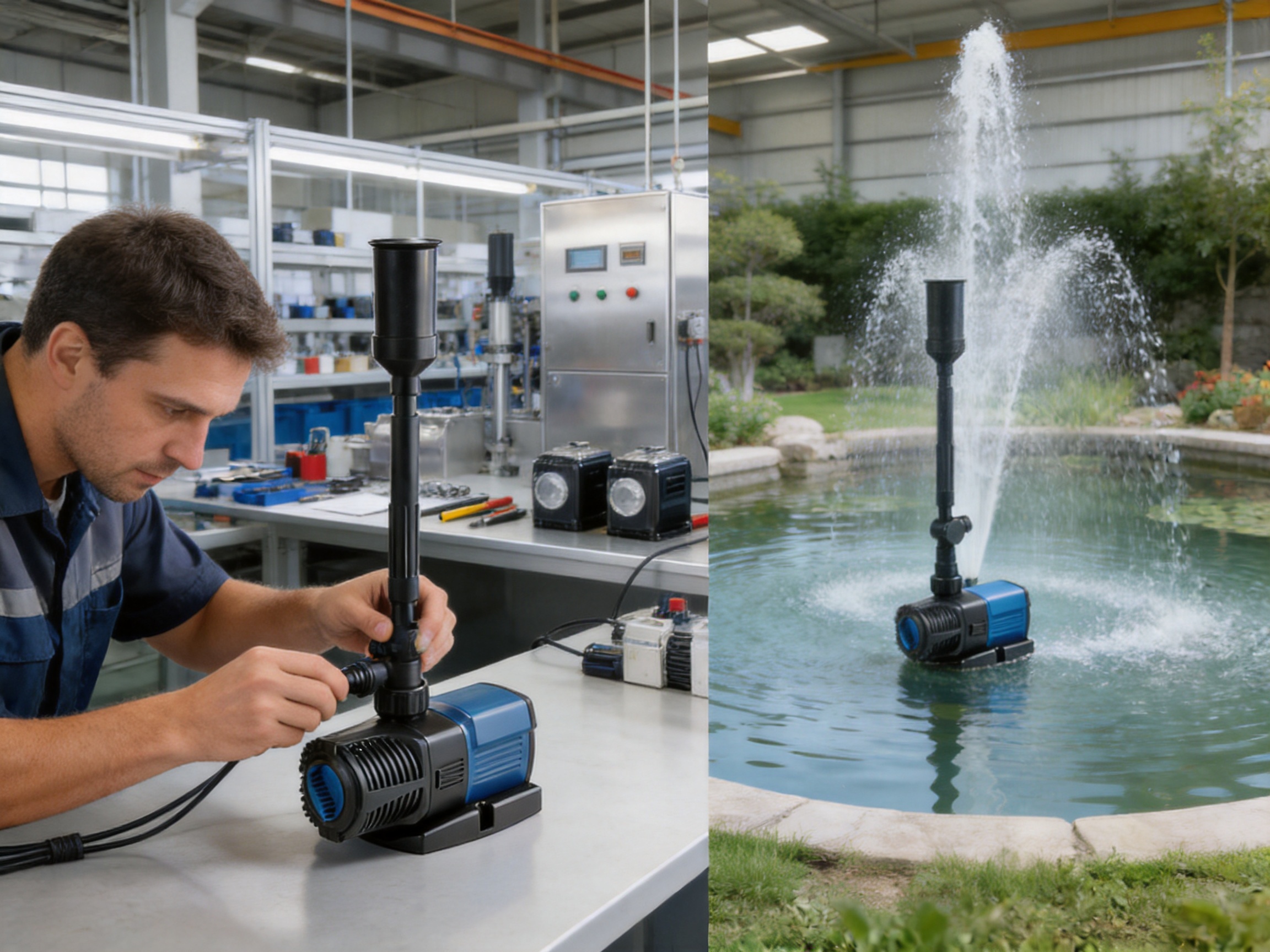
The JTP Series can be considered for garden fountains, ornamental ponds, courtyard water features, public landscaping, commercial entrances, hotel grounds, recreational areas, display pools, and selected aquarium-related installations. The appropriate model depends on the water volume, required spray height, nozzle arrangement, operating schedule, and available electrical supply.
In private gardens, the lower-output models may be suitable for compact features where the objective is gentle movement and moderate sound. The smaller physical dimensions can help with installation in confined equipment chambers. A lower-power model may also be appropriate when the fountain operates for long periods and the design does not require a tall spray.
In commercial landscaping, the middle models can help create a stronger focal point. Entrances, courtyards, and reception areas often need a fountain that is visible from a distance but still proportionate to the surrounding architecture. The selection of different patterns can help a designer match the fountain with the character of the site.
For larger basins or more prominent displays, the JTP-6000RF through JTP-9000RF may provide the greater output and head capacity required by the design. These models should be evaluated with the actual nozzle and pipe system, as the rated output is not the same as the final spray volume at maximum height.
In aquaculture or aquatic equipment environments, water movement may be used for circulation, oxygen exchange, or display. However, users should confirm whether the exact model is intended for the water chemistry, biological conditions, and continuous operating schedule of the application. A decorative fountain pump should not automatically be substituted for specialized equipment where life-support performance is critical.
The first selection question is the required output. Estimate the amount of water that must pass through the fountain per hour, then allow for the losses created by the pipe and nozzle arrangement. The target should be based on the actual operating point, not simply the pump’s free-flow rating.
The second question is maximum head. Measure the vertical distance between the water surface and the outlet, then consider friction losses. If the fountain requires a tall spray, a model with a greater head rating may be necessary. Designers should avoid selecting a pump whose maximum head only barely exceeds the required height.
The third question is the desired visual effect. Foam, rain forest, tent, champagne, rocket, and volcano patterns may require different flow characteristics and nozzle arrangements. The selected model should be tested with the intended effect before final installation whenever possible.
The fourth question is electrical compatibility. Confirm whether the project uses 110 volts, 220 volts, or 240 volts, and whether the local supply is 50 hertz or 60 hertz. Verify the exact configuration supplied for the destination market and use suitable protective devices.
The fifth question is physical space. Compare the pump dimensions with the basin, equipment chamber, access cover, and support platform. The listed height ranges should be incorporated into the installation drawing. Adequate clearance is needed for cleaning and removal.
The sixth question is cable routing. The 10-meter cable length can provide useful flexibility, but the cable should be protected from water entry, mechanical damage, sunlight where relevant, and accidental contact. Connections should be located in appropriate protected enclosures.
The seventh question is maintenance. Plan for intake inspection, nozzle cleaning, sediment removal, water-quality management, and seasonal shutdown where required. Easy access can reduce service time and help preserve the appearance of the fountain.
Routine maintenance begins with checking the water level. A pump that operates with insufficient water may experience overheating, unstable flow, or premature wear. The basin should remain within the operating range recommended for the installation.
The intake area should be inspected for leaves, algae, gravel, plastic debris, and other contaminants. Blocked intake paths can reduce flow and increase stress on the pump. Cleaning frequency depends on the location and the surrounding environment.
Nozzles and fountain accessories should also be examined. Mineral deposits may change the shape of the spray, while small obstructions can create uneven streams. Cleaning should be performed with methods compatible with the materials and without damaging openings or fittings.
Electrical components require visual inspection for damaged insulation, loose connections, corrosion, or water intrusion. Any electrical service should be performed by a qualified person, particularly when the equipment is installed outdoors or in a public location.
At the end of a seasonal operating period, the pump should be cleaned and stored or protected according to the installation conditions. Freezing environments require special attention because trapped water can expand and damage components. A maintenance log can help operators identify changes in sound, flow, vibration, or power behavior before they become serious problems.
Water-feature sustainability involves both electricity and water management. A fountain can lose water through evaporation, splash, wind drift, and maintenance discharge. Selecting an appropriate spray height and operating schedule can reduce unnecessary losses. Variable operation may allow the system to run at a lower setting during periods when a dramatic display is not required.
Energy use is affected by power rating, operating duration, hydraulic resistance, and control settings. The listed power range extends from 11 watts to 70 watts across the product family. This allows users to select a model whose rated capacity is closer to the project’s actual needs. Oversizing can be avoided when the lower-capacity models are sufficient.
Water quality management can also support efficiency. Clean water and unobstructed flow paths help the pump operate as intended. Excessive sediment and biological growth may increase maintenance requirements and reduce hydraulic performance. Proper filtration or pre-screening may be appropriate depending on the basin design.
Responsible operation also includes selecting a fountain pattern that suits the site. A high rocket spray may be visually impressive, but a lower foam or champagne pattern could be more practical in a windy location. The best design balances appearance, water retention, energy use, maintenance, and local environmental conditions.
Distributors often need products that can serve different customer segments without creating an unnecessarily complicated catalog. The JTP Series offers a recognizable model structure across a broad output range. This can simplify training, quotation preparation, replacement recommendations, and stock planning.
A product family also makes it easier to support repeat customers. A landscape contractor who has used one model may be able to specify another model in the same series for a larger or smaller project. Familiar specifications, cable length, fountain effects, and electrical options can reduce the learning curve.
For export distributors, multi-voltage and dual-frequency availability can be especially useful. It provides a foundation for serving different markets while maintaining a consistent product identity. Export orders should still be reviewed carefully for local certification, packaging, language, and electrical requirements.
The manufacturer’s reported import and export structure, subsidiaries, trading relationships, and long-term market development may help support international distribution. Commercial buyers should evaluate lead times, minimum order quantities, spare parts, technical documents, warranty conditions, and regional service before placing a large order.
Buyers should request a complete performance curve whenever a project has demanding hydraulic requirements. A flow-versus-head curve provides more useful information than a single output number because it shows how performance changes as lifting height increases.
It is also useful to confirm the supplied nozzle set, adjustment method, controller requirements, maintenance access, replacement parts, and packaging contents. The available product information identifies several fountain effects, but the exact accessories included with a specific order should be verified.
Electrical details should be confirmed in writing. Although the product listing includes 110-volt, 220-volt, and 240-volt options and 50-hertz and 60-hertz operation, the correct configuration may depend on the destination market. Installation instructions should identify protection requirements and any limitations on use.
For commercial or public installations, buyers may need documentation relating to inspection, safety, materials, noise, operating temperature, and continuous-duty suitability. The manufacturer or distributor should be consulted when the project has requirements beyond a standard decorative fountain.
The JTP Series is designed to drive decorative fountain displays and circulate water through fountain accessories. It is available in several capacities so that users can select a model appropriate to the scale and hydraulic demands of the installation.
The listed models provide rated outputs from 1,800 liters per hour to 9,000 liters per hour. The range includes lower-capacity, intermediate, and higher-capacity options.
Frequency variation provides greater control over pump operation than a basic fixed-speed design. It can help users adjust water movement for different fountain effects, weather conditions, display requirements, and hydraulic conditions. Actual control functions should be confirmed in the technical documentation for the supplied configuration.
The listed patterns are foam, rain forest, tent, champagne, rocket, and volcano. These patterns create different water shapes and can be selected according to the landscape concept and desired visual effect.
The maximum head values range from 2.2 meters on the JTP-1800RF to 5.2 meters on the JTP-5800RF and JTP-9000RF. Actual performance depends on pipe resistance, nozzle selection, water level, and operating conditions.
The product information lists 110 volts, 220 volts, and 240 volts, with 50-hertz and 60-hertz frequency compatibility. The exact electrical configuration should be confirmed before ordering and installation.
Each listed model has a 10-meter cable. The cable still needs to be routed and protected in accordance with local safety requirements and the manufacturer’s installation instructions.
No. The JTP-1800RF through JTP-5800RF are listed at 182 × 115 × 470–600 millimeters and 3.0 kilograms. The JTP-4000RF through JTP-9000RF are listed at 250 × 123 × 500–630 millimeters and 3.5 kilograms.
No. The best model is the one that matches the required output, head, nozzle, basin, operating schedule, and electrical supply. An oversized pump may be unnecessary, while an undersized pump may fail to produce the intended fountain effect.
No fountain pump should be treated as maintenance-free. Intake areas, nozzles, water levels, cables, and electrical connections should be inspected regularly. The required maintenance frequency depends on water quality, outdoor conditions, operating hours, and installation design.
The manufacturer’s information describes more than 30 years of activity in aquarium products, aquacultural machinery, and industrial equipment. It also identifies a research institute, a quality control department, multiple subsidiaries, and international import and export capabilities. These resources support product development, production coordination, quality management, and market service.
Not automatically. The series is designed for fountain applications, and users should confirm compatibility with the water chemistry, biological requirements, operating schedule, and safety conditions of any aquarium or aquaculture project. Specialized life-support systems may require different equipment.
The JTP Series Frequency Variation Fountain Pump offers a broad and practical solution for decorative water-feature applications. Its model range covers outputs from 1,800 to 9,000 liters per hour, while maximum head values extend from 2.2 to 5.2 meters. The series also includes 10-meter cables, multiple voltage options, 50-hertz and 60-hertz compatibility, and a choice of fountain patterns.
Its most important product advantage is flexibility. Users can select among multiple capacities instead of accepting one fixed performance level. The frequency-variation concept can provide additional control over flow behavior, helping designers adapt the fountain to different visual effects and operating conditions. Compared with conventional fixed-output alternatives, this may improve system matching and offer opportunities for more efficient operation.
The product’s value is reinforced by the manufacturer’s reported organizational and production background. More than three decades of activity in aquatic and industrial equipment, together with research, quality control, subsidiary companies, and international distribution resources, provides a foundation for continued product development and market support.
For the best result, the pump should be selected as part of a complete hydraulic and electrical system. Output, head, nozzle, pipework, basin size, cable routing, water quality, and maintenance access must all be considered. When these factors are properly matched, the JTP Series can help create stable, attractive, and adaptable fountain installations for gardens, commercial landscapes, public spaces, and other aquatic environments.
1. Product specification sheet for the JTP Series Frequency Variation Fountain Pump, including model output, power, maximum head, dimensions, cable length, and weight information.
2. Manufacturer-provided corporate information concerning company history, research organization, quality control, subsidiaries, and international business operations.
3. General principles of centrifugal and submersible pump selection, including the relationship between flow rate, total head, pipe resistance, and nozzle performance.
4. General guidance on decorative fountain design, water-feature maintenance, electrical protection, cable routing, and outdoor aquatic equipment installation.
5. General engineering practice for matching pump capacity, fountain pattern, operating schedule, water conservation goals, and site-specific environmental conditions.


 No. 61-79, Baima Street, Maao Town, Dinghai District, Zhoushan City, Zhejiang Province, China.
 0086 580 8082088 / 8081168
 0086 580 8080978
 songhua@sunsun-china.com