

 English
 русский
 España
 Portugal
 عربي
عربيWang Yu | Aquarium Products After-Sales Engineer
Home / Author / Wang Yu | Aquarium Products After-Sales Engineer / Multifunctional Electric Sand Washer for Cleaner, Healthier Aquariums
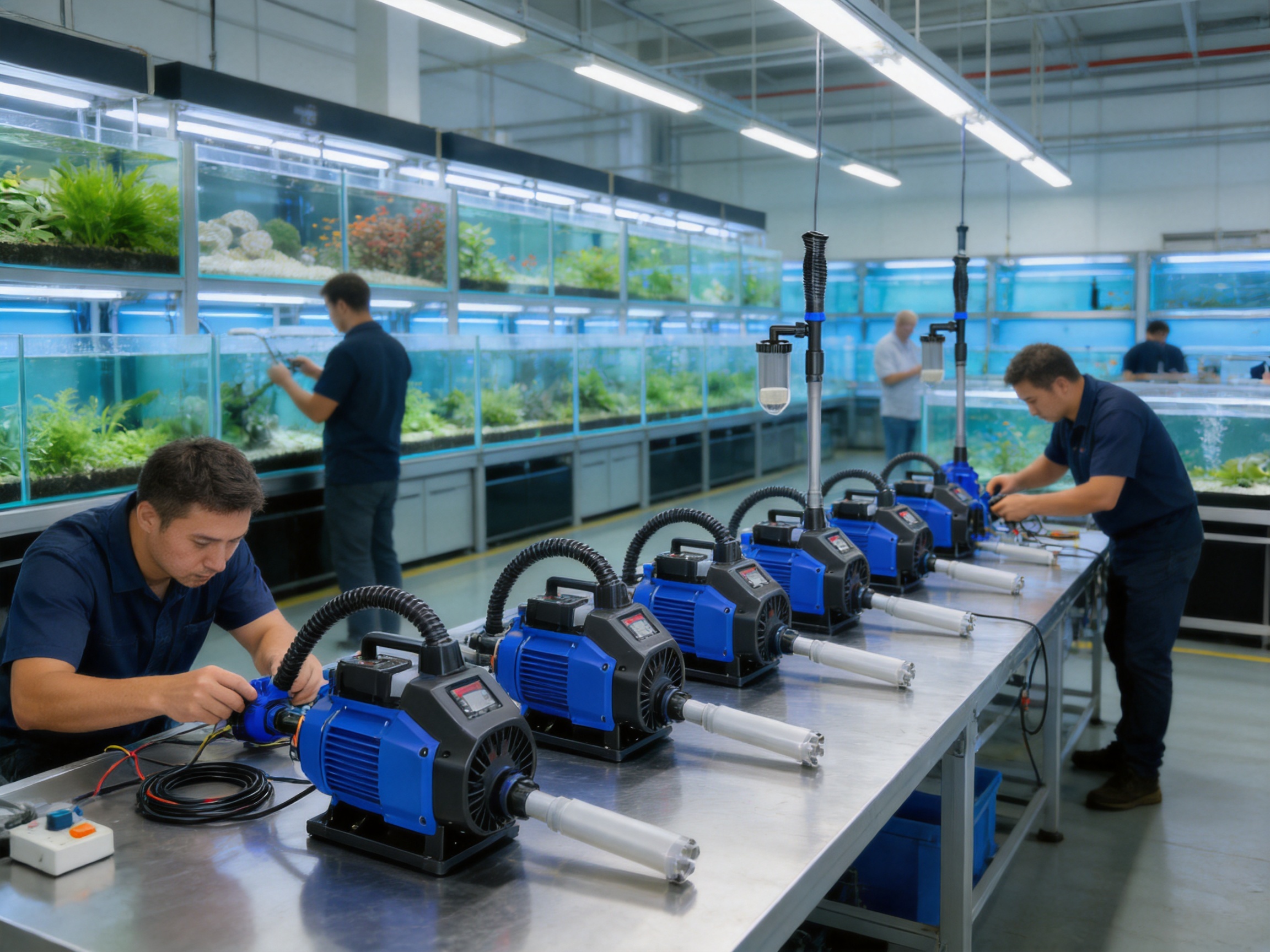
Maintaining an aquarium requires more than changing part of the water from time to time. Gravel, sand, and other substrate materials gradually collect uneaten food, fish waste, plant debris, algae, and fine organic particles. If these materials remain trapped beneath the surface, they can reduce water quality, create unpleasant odors, encourage harmful bacterial activity, and make the aquarium environment less comfortable for fish, shrimp, aquatic plants, and other living organisms. Routine substrate cleaning is therefore an essential part of responsible aquarium care.
The multifunctional electric sand washer described in this article is designed to simplify that task. It combines water pumping, substrate washing, controlled flow, rapid suction, and electric operation in one aquarium accessory. Instead of relying only on manual siphoning, the user can employ an electrically driven system to remove dirty water and suspended debris while disturbing the substrate in a controlled manner. Depending on the selected model, the unit provides a flow rate from 350 liters per hour to 1,000 liters per hour and a maximum lift from 0.7 meters to 1.9 meters.
This range gives aquarium owners several options for matching performance to tank size, substrate type, cleaning frequency, and working height. The compact HXS-01 is suitable when a lower flow rate and straightforward operation are preferred. The HXS-01D adds a DC 5V output feature, while the HXS-02 and HXS-03 provide higher pumping performance and adjustable dimensions for larger or deeper aquarium applications.
Manufactured by Sensen Group Co., Ltd., a company with a long history in aquarium products, aqua cultural machinery, and industrial equipment, the sand washer reflects an approach centered on practical aquarium use. Its design concentrates several useful functions in one device, helping users reduce cleaning time, improve substrate maintenance, and handle routine aquarium service with less manual effort.
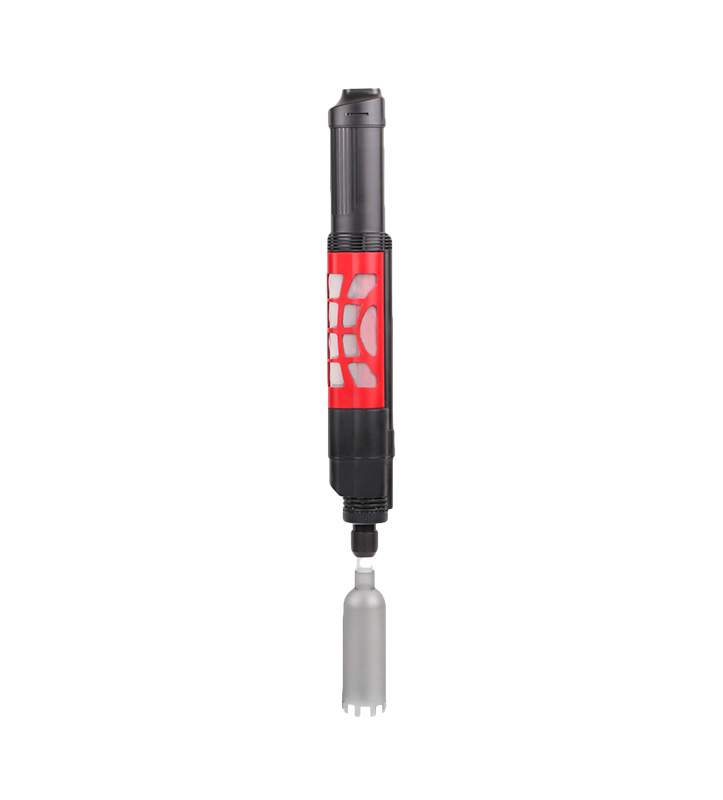
Multifunctional electric sand washer for fish tank which has strong ability of clean and suction
Content
Substrate is an important part of an aquarium’s appearance and biological environment. Gravel and sand provide a natural-looking base, support rooted plants, and create shelter for small aquatic animals. However, substrate also acts as a collection point for waste. Particles can settle between grains even when the visible surface looks clean.
When organic material accumulates in the substrate, it may decompose and release unwanted substances into the water. Excessive accumulation can contribute to cloudy water, unpleasant smells, algae problems, and unstable water conditions. In planted aquariums, compacted debris may also limit circulation around plant roots. In fish-only aquariums, waste trapped beneath the surface can become increasingly difficult to remove without a suitable cleaning tool.
Manual cleaning with a basic siphon can work, but it often requires careful positioning, repeated priming, and continuous attention to the water flow. A siphon may also remove too much water too quickly or draw substrate into the waste line. If the flow is too weak, the tool may fail to lift fine waste. If the flow is too strong, it may disturb plants, uproot decorative materials, or remove gravel from the aquarium.
An electric sand washer addresses these challenges by using a motor-driven pump to move water and debris. The user can guide the cleaning head across selected areas, regulate the flow, and choose an appropriate operating method. This makes the cleaning process more predictable than a completely manual siphon system.
The central advantage of the product is its multifunctional design. It is not limited to one simple pumping action. The product information identifies several operating functions: power display, one-key switching, pumping, sand washing, flow regulation, and fast suction. These functions are integrated to support different stages of aquarium maintenance.
A power display provides a visible indication that the unit is receiving power and operating. This is useful during routine maintenance because aquarium cleaning often involves several hoses, containers, tools, and electrical accessories. A clear operating indication helps the user confirm the status of the device before adjusting the flow or moving the cleaning head.
One-key switching simplifies operation. Instead of repeatedly disconnecting a hose or manipulating several controls, the user can start or stop the device with a single control. This is especially helpful when the operator needs to pause cleaning to reposition the tube, protect a plant, move a decorative object, or empty a collection container.
The pumping function supports water transfer during partial water changes and general aquarium servicing. The pump helps move water from the aquarium to a suitable container or drainage point, subject to the installation arrangement and the applicable electrical safety requirements. This can reduce the physical effort required to remove dirty water.
The sand-washing function is designed to agitate and clean substrate while water and loosened debris are drawn away. Proper technique remains important: the user should move the cleaning head gradually, avoid excessive disturbance around fragile plants, and select a flow level suitable for the substrate. Used correctly, the system can reach areas where waste has settled while helping retain the bulk of the substrate.
Flow regulation is one of the most important practical features for aquarium cleaning. Different aquariums contain different materials. Coarse gravel can tolerate a stronger flow than fine sand. A newly planted aquarium may require a gentler setting than an established aquarium with a robust hardscape. The ability to regulate flow gives the user more control over how aggressively the substrate is cleaned.
Fast suction helps reduce the time required to remove dirty water and suspended particles. This can be particularly useful during larger maintenance sessions, when the operator needs to remove visible waste before it settles again. Faster suction does not eliminate the need for careful handling, but it can make the overall process more efficient.
The product family includes four listed models. Their specifications differ in power, maximum lifting height, output, dimensions, and output-voltage configuration. The selection allows aquarium owners, retailers, and professional maintenance users to choose a model according to actual requirements rather than relying on a single universal configuration.
| Model | Input Voltage | Output Voltage | Power | Maximum Lift | Output | Dimensions |
|---|---|---|---|---|---|---|
| HXS-01 | 220–240V / 50Hz | Not specified | 6W | 0.7m | 350L/h | 64 × 74 × 740mm |
| HXS-01D | 220–240V / 50Hz | DC 5V | 6W | 0.7m | 350L/h | 64 × 74 × 740mm |
| HXS-02 | 220–240V / 50Hz | Not specified | 16W | 1.6m | 800L/h | 75 × 55 × 650–1050mm |
| HXS-03 | 220–240V / 50Hz | Not specified | 20W | 1.9m | 1000L/h | 85 × 59 × 660–1060mm |
The HXS-01 delivers 350 liters per hour with a 0.7-meter maximum lift. Its 6W power rating and compact 64 × 74 × 740mm dimensions make it a practical option for smaller aquariums, moderate cleaning tasks, and users who prefer a simpler low-power device.
The HXS-01D shares the same principal performance figures as the HXS-01 but includes a listed DC 5V output voltage. This configuration may be useful in applications where a low-voltage output arrangement is required. Users should confirm the intended electrical setup and compatibility before operation.
The HXS-02 increases performance to 800 liters per hour and provides a 1.6-meter maximum lift. Its adjustable length, listed as 650 to 1050mm, offers greater reach for deeper tanks or for users who want to change the working length during maintenance.
The HXS-03 is the highest-output model in the range. With 20W of power, a 1.9-meter maximum lift, and an output of 1,000 liters per hour, it is designed for demanding cleaning and water-transfer work. Its adjustable length of 660 to 1060mm provides flexibility for larger aquariums and different operating positions.
Maximum output values are reference specifications rather than guarantees of identical performance under every operating condition. Actual flow may be affected by hose length, vertical lift, bends, water resistance, substrate density, filter condition, and the configuration of the cleaning attachment. Selecting a model with appropriate capacity helps maintain effective performance without applying unnecessary flow to a delicate aquarium.
The multifunctional electric sand washer offers several practical advantages compared with a basic hand-operated siphon or a single-purpose gravel vacuum. These advantages concern convenience, control, performance, and adaptability.
Traditional siphons commonly require the operator to establish water flow manually. This can be inconvenient and may result in water entering the mouth or spilling outside the aquarium if the procedure is not performed carefully. A motor-driven sand washer creates pumping action electrically, reducing the dependence on manual priming.
An electric pump can provide more consistent water movement than a manually started siphon. A stable flow helps the user work through the substrate in an organized way. By adjusting the flow, the operator can balance waste removal against the need to preserve gravel, sand, plants, and aquarium decorations.
Fast suction and higher-output models can shorten the time needed for cleaning tasks. This is important for aquariums that require frequent maintenance, display tanks that must remain visually attractive, and commercial or institutional installations where staff must service several tanks during a limited period.
The HXS-02 and HXS-03 include adjustable dimensions. Their working lengths can be extended or shortened within the specified ranges, allowing the user to reach deeper areas while maintaining a comfortable operating position. Adjustable length also makes storage easier and can help accommodate aquariums with different depths.
Because the unit supports pumping, sand washing, flow regulation, and suction, it can be used for more than one maintenance task. One device may assist with partial water changes, substrate cleaning, removal of settled debris, and general aquarium servicing. This reduces the need to purchase several separate manual tools.
Fine sand, medium gravel, and larger decorative substrate behave differently under suction. A fixed-flow tool may be too aggressive for some materials and too weak for others. Flow regulation improves adaptability and allows the user to begin gently before increasing the flow only when necessary.
Good equipment produces the best results when it is used correctly. Before cleaning, the user should prepare a suitable waste-water container or drainage arrangement, check the hose connections, inspect the power cord and controls, and confirm that the aquarium water level is appropriate for the selected tool position.
It is generally advisable to switch off equipment that could be affected by a lowered water level, such as heaters or certain circulation devices, before beginning a partial water change. The specific aquarium configuration should be assessed carefully. Fish and aquatic animals should not be exposed to unnecessary turbulence, sudden temperature changes, or accidental contact with the cleaning head.
The cleaning head should be placed near, but not forcibly pressed into, the substrate. The user can begin with a low flow setting and observe how the sand or gravel responds. The tool should then be moved slowly across a limited section. This allows suspended waste to be removed before it spreads through the entire aquarium.
For gravel, the cleaning head can often be held slightly above the surface or inserted carefully into the upper layer. Waste rises into the water stream while heavier gravel falls back. For fine sand, a gentler flow and greater distance from the surface may be appropriate. The operator should avoid leaving the unit in one place for too long, especially near plant roots or lightweight decorations.
It is not always necessary to clean every section of substrate during every maintenance session. Dividing the aquarium into zones can reduce disturbance and prevent excessive removal of beneficial biological material. The cleaning schedule should depend on the livestock, feeding level, filtration system, plant density, and substrate type.
When the desired amount of water has been removed, the one-key switch can be used to stop the unit. The user should then complete the remaining maintenance steps, including replacing water that has been prepared to an appropriate temperature and condition. The device should be rinsed and stored according to the manufacturer’s instructions after use.

The product is suitable for a broad range of aquarium users. Beginners may appreciate the straightforward electric operation and visible power status. Experienced aquarists may value the flow regulation and model selection, which allow the tool to be matched to different tanks. Aquarium retailers, service providers, breeders, offices, restaurants, schools, and public display areas may benefit from the improved efficiency of routine substrate maintenance.
For a small home aquarium, the HXS-01 may provide sufficient capacity for occasional cleaning. Its lower power rating can be appropriate when the user wants controlled movement rather than maximum water transfer. The HXS-01D provides a related configuration with a listed DC 5V output, giving buyers another option when considering electrical integration and application requirements.
For deeper aquariums or more frequent cleaning, the HXS-02 offers a substantial increase in output and lift. Its variable length supports a more comfortable working posture and makes it easier to reach the bottom of a taller aquarium. The HXS-03 extends the performance range further and is appropriate when higher flow and greater lifting ability are important.
Retailers can also benefit from offering a four-model range. Rather than presenting customers with one device that may be oversized for small tanks or underpowered for large tanks, the retailer can guide them toward a suitable performance level. This can improve customer satisfaction and reduce the likelihood of users applying an inappropriate tool to their aquarium.
The product is associated with Sensen Group Co., Ltd., also identified in the supplied company information as Sunsun Group Co., Ltd. The group was established in November 1985 and has developed activities in aquarium products, aqua cultural machinery, industrial equipment, and related fields. More than three decades of operation provide a substantial background for understanding the needs of aquarium users and the demands of equipment production.
The company states that it has established several functional departments at its headquarters, including a research institute, business school, quality control department, personnel and administrative information department, and financial department. From a manufacturing perspective, this departmental structure indicates that product development, operational management, quality supervision, training, and commercial coordination are treated as connected parts of the business rather than isolated activities.
A dedicated research function can support the development of practical equipment such as electric sand washers. Products of this type must balance pumping performance, physical dimensions, user handling, substrate protection, electrical design, and cost. Improvements in one area can affect the others. A compact motor may reduce the weight of the unit but may also limit lift. A stronger pump may improve suction but require more careful flow control. Product development therefore depends on evaluating the entire system rather than focusing on one specification alone.
The stated quality control department is also relevant to aquarium equipment. Pumps and cleaning tools are used around water, so consistent assembly, reliable connections, suitable materials, and functional testing are important. While specific inspection procedures for the HXS series are not provided, an organized quality control structure gives the manufacturer a framework for monitoring production and addressing variation.
The group also reports wholly owned subsidiary corporations in different locations and an import and export company. Its wider production and marketing structure can support component coordination, manufacturing capacity, distribution, and service for domestic and international markets. Such organizational scale may be an advantage when supplying products to distributors, retailers, and aquarium equipment buyers in different regions.
Another stated strength is the company’s experience across aquarium pets, aquaculture machinery, and industrial equipment. These fields share certain technical requirements, including fluid movement, motorized equipment, environmental management, and dependable operation. Experience in multiple related sectors can encourage the transfer of engineering and manufacturing knowledge between product categories.
The company describes its development direction as industrial technicalization, marketing globalization, and brand internationalization. For an aquarium accessory, this means the product must be understandable, usable, and serviceable across different markets. Clear specifications, model differentiation, export capability, and consistent production are especially important when products are distributed beyond the original manufacturing region.
Aquarium maintenance involves water, electricity, time, and consumable supplies. The multifunctional design can help users manage these resources more efficiently. Flow regulation allows the operator to remove only the necessary amount of water and target the areas containing the most visible waste. A controlled process can reduce unnecessary water loss compared with repeatedly emptying and refilling the aquarium during an unstructured cleaning session.
The listed power ratings are relatively modest for the functions provided, ranging from 6W to 20W. The appropriate model should be selected according to the required output and lift rather than simply choosing the highest rating. A small aquarium may not benefit from a 20W model if a lower-output device already provides sufficient control. Conversely, using an undersized model for a large or deep aquarium may extend cleaning time and reduce practical efficiency.
Water conservation also depends on the cleaning method. The product is intended to assist with maintenance, not to encourage unnecessary full water changes. Many aquariums can be maintained through appropriately planned partial changes, substrate cleaning, filtration management, and regular observation. The sand washer helps make targeted cleaning more convenient, but water replacement should still follow the needs of the livestock and the advice of a qualified aquarium professional.
Electrical equipment must be handled carefully around water. The operating environment should follow the applicable electrical safety rules for the installation location. Users should inspect cables, plugs, switches, and housings before use. Damaged equipment should not be operated. Hands should be dry when handling electrical connections, and the device should be disconnected from power before cleaning, disassembling, or inspecting internal components.
The input specification for the listed models is 220–240V at 50Hz. Buyers should confirm that the product configuration matches the electrical supply in the intended market. The HXS-01D lists a DC 5V output, but the presence of this output does not remove the need for proper connection and safe installation. Electrical conversion, adapters, or accessory connections should be handled only in accordance with the product instructions.
The pump should not be operated outside its intended water-use conditions. The user should avoid running the unit dry unless the instructions specifically permit it. Foreign objects, large stones, plant roots, and debris can interfere with the intake or impeller. Keeping the intake area clean helps maintain performance and reduces the possibility of blockage.
Maximum lift is an important specification. A model rated for a 0.7-meter lift should not be expected to provide the same flow at a greater height. Hose routing also matters. Long hoses, sharp bends, narrow passages, and clogged attachments can reduce water movement. For best results, the setup should be as direct as practical, and the selected model should have sufficient capacity for the installation.
Fish, shrimp, snails, and other aquarium animals should be protected during cleaning. The suction opening should be monitored continuously, especially in aquariums containing small or slow-moving animals. The tool should not be used to remove livestock or intentionally create excessive turbulence. Plants and fragile decorations should also be handled carefully.
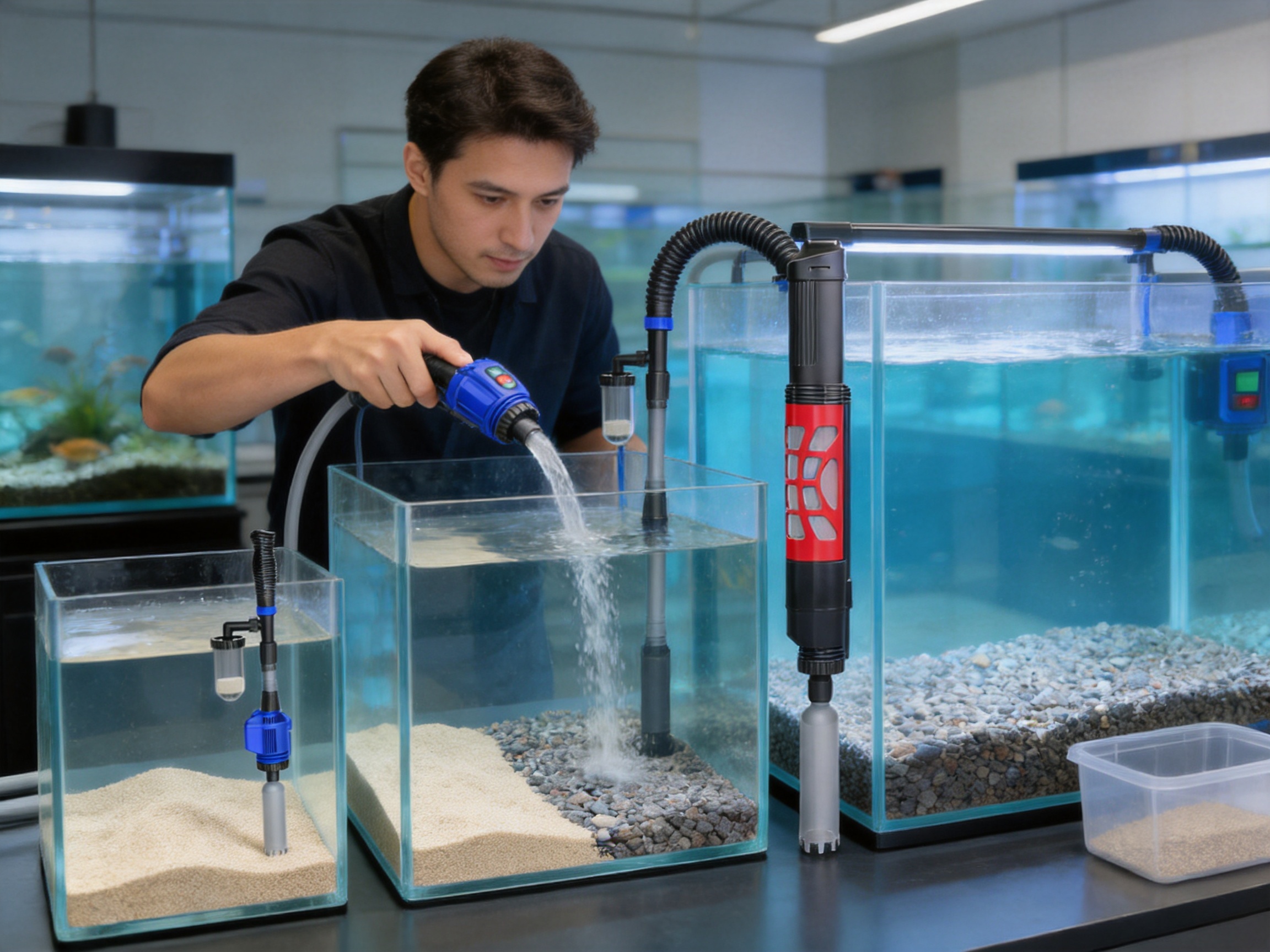
Routine care of the equipment can help preserve its pumping performance. After each use, the external parts and water-contact components should be rinsed with clean water where appropriate. Aquarium salt, mineral deposits, algae, and organic residue can accumulate on surfaces and reduce flow over time.
Any removable intake screen or cleaning attachment should be checked for blockage. Fine sand and plant debris can restrict water passage. If the output decreases, the first checks should include the power supply, hose connections, intake area, flow-control position, and possible obstruction.
Users should not use household detergents, soaps, oils, or chemical cleaners on parts that may later contact aquarium water unless the product instructions specifically authorize the substance. Residues can be harmful to aquatic life. A simple water rinse and appropriate mechanical cleaning are generally safer approaches, followed by complete drying and suitable storage.
The unit should be stored in a clean, dry location when not in use. Cables should not be tightly bent or crushed, and adjustable sections should not be forced beyond their specified ranges. Proper storage helps protect the equipment between maintenance sessions and makes it easier to inspect before the next use.
Model selection should begin with the aquarium’s dimensions and cleaning requirements. Tank height is particularly important because the maximum lift determines how effectively water can be moved to the destination container or drainage point. The size and density of the substrate also affect the required flow.
The HXS-01 is the entry-level 350L/h model. It may be a suitable choice for smaller tanks, light maintenance, and users who prioritize a compact, lower-power solution. The HXS-01D offers the same listed 350L/h output and 0.7-meter lift while adding the stated DC 5V output configuration.
The HXS-02 provides 800L/h and a 1.6-meter lift. It is a practical middle option for users who need more power than the HXS-01 but do not require the maximum output of the product family. Its 650–1050mm adjustable dimension makes it useful for a variety of aquarium depths.
The HXS-03 provides 1,000L/h and a 1.9-meter lift. It is the strongest listed model and may be preferred for larger tanks, deeper installations, frequent service work, or situations in which faster water transfer is valuable. Its higher capacity should still be used with care on delicate sand, young plants, and lightweight decorations.
| Application Consideration | Recommended Focus |
|---|---|
| Small aquarium or light cleaning | Lower flow, compact handling, and controlled suction |
| Low-voltage output requirement | Review the HXS-01D configuration and confirm compatibility |
| Medium aquarium or deeper working position | Consider the 800L/h HXS-02 with adjustable length |
| Large aquarium or demanding water transfer | Consider the 1,000L/h HXS-03 with 1.9m maximum lift |
| Fine sand or fragile planted layout | Use a gentle flow setting and careful movement regardless of model |
The most powerful model is not automatically the best model for every aquarium. Effective cleaning depends on control, not only output. A properly sized unit can provide an appropriate balance of speed, substrate protection, energy use, and ease of handling.
For distributors and retailers, multifunctional aquarium equipment can be attractive because it addresses several common customer needs in one product category. Consumers often look for a tool that can remove dirty water, clean gravel, and simplify maintenance without requiring a complicated collection of accessories. A clearly differentiated model range makes it easier for sales staff to explain the relationship between tank size, lifting height, output, and adjustable dimensions.
The product also offers useful content for retail education. Staff can demonstrate how flow regulation works, explain the difference between pumping and substrate washing, and show why a smaller model may be preferable for a nano aquarium while a higher-output model may be more appropriate for a deep display tank. Such education can help customers use the equipment correctly and reduce avoidable service problems.
The manufacturer’s broad company structure and export capability may support wholesale supply. The supplied company information states that Sensen Group operates multiple subsidiaries and maintains an import and export company. Buyers seeking aquarium accessories for domestic or international distribution may therefore consider the company’s manufacturing scale, product range, and organizational resources alongside the technical specifications of the HXS series.
A clean substrate improves the visual presentation of an aquarium. Removing accumulated debris helps restore the natural color of gravel and sand, reduces visible waste, and creates a clearer view of plants and decorations. For retail displays, public exhibits, hospitality installations, and home aquariums, appearance is an important part of the overall experience.
Substrate cleaning also supports a healthier environment when carried out as part of a balanced maintenance program. Removing excess organic debris can reduce the load placed on the filtration system. It can also help prevent waste from remaining undisturbed in areas with limited circulation. The tool should not be considered a substitute for biological filtration, water testing, appropriate stocking levels, or responsible feeding, but it can complement those practices.
Regular, moderate cleaning is generally preferable to rare, aggressive cleaning. The multifunctional sand washer allows the operator to work in sections and adjust the process to the aquarium’s condition. This encourages a more measured routine in which visible waste is removed without unnecessarily disrupting the entire substrate bed.
Many aquarium cleaning tools are designed around a single function. Some are simple siphons, some are manual gravel vacuums, and some are pumps that transfer water without providing a practical way to wash substrate. The HXS series is positioned differently by combining several functions in an electrically powered format.
Its competitive advantages are primarily functional rather than based on one isolated specification. The series offers multiple output levels, an adjustable-flow concept, one-key operation, fast suction, and model-specific lifting capacity. These features address common frustrations associated with manual maintenance: slow water movement, difficult startup, limited control, and poor suitability for different tank depths.
The product also competes through selection flexibility. A user can choose between four models instead of accepting a single pump size. This is beneficial because aquarium equipment should be matched to the biological and physical characteristics of the tank. A well-matched tool is more likely to be used regularly and correctly.
Compared with a high-capacity pump designed only for water transfer, the multifunctional sand washer offers greater relevance to substrate maintenance. Compared with a simple manual siphon, it offers powered suction and a wider range of operating functions. Compared with an oversized cleaning device, the lower-output models provide a more controlled alternative for smaller aquariums.
Manufacturing aquarium equipment requires attention to repeatability. A product may be used by beginners, experienced hobbyists, maintenance workers, and commercial operators, so its operation should remain understandable across different levels of experience. Consistency in motor performance, housing assembly, connections, controls, and accessories is important for maintaining user confidence.
Sensen Group’s stated quality control department provides an organizational foundation for this objective. Its research institute provides another element by supporting product innovation and technical improvement. The company’s long operating history and involvement in several equipment-related industries further contribute to its manufacturing background.
The company’s stated network of subsidiaries may also support specialized production and supply coordination. While the supplied materials do not specify the exact factory process for each HXS component, a large group structure can provide resources for procurement, manufacturing management, quality supervision, logistics, and after-sales coordination.
Advanced manufacturing should be understood not only as the use of machinery. It also includes product planning, engineering review, process control, functional verification, packaging, documentation, and feedback from the market. For a sand washer, these activities must work together to deliver a tool that pumps effectively, remains manageable in the user’s hands, and withstands repeated contact with aquarium water when maintained correctly.
Its main purpose is to help clean aquarium substrate and remove dirty water. It combines sand washing, pumping, suction, flow regulation, and simple electric switching in one aquarium accessory.
It is designed for aquarium substrate cleaning, including sand and gravel. The user should adjust the flow and cleaning technique according to the substrate type. Fine sand generally requires gentler handling than coarse gravel.
The HXS-03 provides the highest listed output at 1,000 liters per hour. It also has a maximum lift of 1.9 meters and an adjustable dimension of 660 to 1060mm.
The HXS-01 and HXS-01D are both listed at 6W. Their output is 350 liters per hour, and their maximum lift is 0.7 meters.
The two models share the listed 6W power, 0.7-meter maximum lift, 350L/h output, and 64 × 74 × 740mm dimensions. The HXS-01D additionally lists a DC 5V output, while the HXS-01 output voltage is not specified in the supplied table.
No. Although it has the highest capacity, a powerful model may be excessive for a small aquarium or delicate substrate. The flow should be regulated, and the model should be selected according to aquarium depth, substrate, livestock, and cleaning requirements.
Maximum lift indicates the greatest stated vertical height through which the pump can move water under the specified operating conditions. Actual output may decrease as lift, hose length, bends, and resistance increase.
No. It is a maintenance and substrate-cleaning tool, not a substitute for a biological or mechanical aquarium filtration system. Regular filtration, water testing, partial water changes, and responsible aquarium management remain necessary.
Yes, but it should be used carefully. The operator should reduce the flow when working near fragile plants, avoid damaging roots, and prevent the cleaning head from pulling up planted substrate or uprooting vegetation.
The suction opening should be monitored continuously. Users should work slowly, keep the intake away from livestock, and pause the device whenever animals approach the cleaning head. Additional protective accessories may be considered if compatible with the product configuration.
The listed input supply is 220–240V at 50Hz for all four models. Buyers should verify local compatibility and follow all applicable electrical safety requirements before operation.
The water-contact parts should be rinsed appropriately, and the intake and hose should be checked for sand, plant material, or other obstructions. Detergents and chemical cleaners should not be used unless specifically approved by the instructions. The device should be disconnected from power before cleaning or inspection.
No. The HXS-01 and HXS-01D are listed with fixed dimensions of 740mm. The HXS-02 has an adjustable length of 650 to 1050mm, and the HXS-03 has an adjustable length of 660 to 1060mm.
Flow regulation helps users adapt the cleaning action to different substrates and aquarium layouts. It can reduce the risk of removing fine sand, disturbing plants, or shifting decorations while still allowing sufficient suction for waste removal.
The product is supplied by Sensen Group Co., Ltd., also identified in the provided company information as Sunsun Group Co., Ltd. The group was established in 1985 and operates in aquarium products, aqua cultural machinery, industrial equipment, and related fields.
The multifunctional electric sand washer provides a practical way to improve aquarium substrate maintenance. Its combination of pumping, sand washing, flow regulation, fast suction, one-key switching, and power display addresses many of the limitations associated with basic manual cleaning tools. The four-model range, with outputs from 350L/h to 1,000L/h and maximum lifts from 0.7m to 1.9m, gives users flexibility when selecting equipment for different aquarium conditions.
The product’s strongest advantage is its balance of functionality and choice. The lower-output HXS-01 and HXS-01D models support controlled cleaning for smaller applications, while the HXS-02 and HXS-03 offer greater reach and capacity for deeper or more demanding aquariums. Adjustable flow helps users work more carefully with different substrate materials, and adjustable dimensions on the larger models improve access and handling.
Its manufacturing background is another important consideration. Sensen Group’s long history, research institute, quality control department, broad subsidiary structure, and experience across aquarium and equipment industries provide a foundation for product development and supply. Although proper use and maintenance remain the responsibility of the operator, the company’s organizational resources support the goal of producing practical aquarium equipment for domestic and international markets.
When matched correctly to the aquarium, installed safely, and used with a measured cleaning technique, the electric sand washer can reduce maintenance effort, improve substrate appearance, and help aquarium owners maintain a cleaner and more stable aquatic environment.
1. Sensen Group Co., Ltd. Product specification sheet for the HXS-01, HXS-01D, HXS-02, and HXS-03 multifunctional electric sand washers.
2. Sensen Group Co., Ltd. Corporate information and company development overview.
3. Aquarium maintenance principles concerning substrate cleaning, partial water changes, biological filtration, and livestock protection.
4. General electrical safety guidance for water-related household and aquarium equipment.
5. Product performance considerations for aquarium pumps, including flow rate, maximum lift, hose resistance, and substrate response.


 No. 61-79, Baima Street, Maao Town, Dinghai District, Zhoushan City, Zhejiang Province, China.
 0086 580 8082088 / 8081168
 0086 580 8080978
 songhua@sunsun-china.com