

 English
 русский
 España
 Portugal
 عربي
عربيZhang Lina | Overseas Aquarium Filters Sales Rep
Home / Author / Zhang Lina | Overseas Aquarium Filters Sales Rep / Complete Turtle Feed for Everyday Aquatic Reptile Care
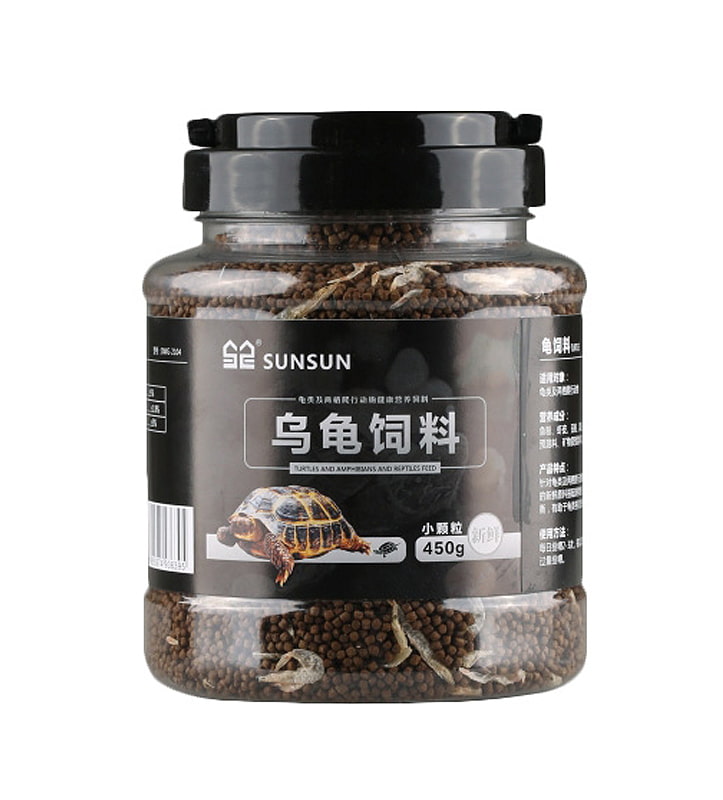
DWG-2101/2102/2103/2104 is a bottled turtle feed product designed for keepers who want convenient, consistent, and practical daily nutrition for aquatic turtles. Positioned within aquarium accessories, this feed supports the routine care of pet turtles kept in tanks, terrariums, paludariums, and other controlled aquatic habitats. With available net contents of 200 g and 450 g per bottle, it offers flexibility for both small household users and higher-frequency feeding needs.
Unlike ordinary unpackaged or loosely sealed turtle foods, this product is presented in a bottle format that helps improve storage convenience, daily portion control, and product cleanliness. For pet owners, the bottle is easy to open, close, store, and handle. For retailers and distributors, the clear model series structure—DWG-2101, DWG-2102, DWG-2103, and DWG-2104—makes it suitable for organized display, inventory planning, and category expansion in aquarium accessory sections.
The product is backed by an experienced manufacturer with long-term involvement in aquarium pets, aquatic equipment, aquaculture machinery, and related product development. The manufacturing background is important because turtle feed is not merely a consumable item; it must be produced with stable processes, careful material selection, controlled packaging, and quality inspection. A reliable production system helps deliver a more consistent feeding experience from bottle to bottle.
Content
DWG-2101/2102/2103/2104 is a turtle feed series supplied in bottled packaging. The available net content is 200 g or 450 g per bottle, allowing users to select a size according to the number of turtles, feeding frequency, and storage preferences. The product belongs to the aquarium accessories category, which means it is designed to complement aquatic pet care systems such as fish tanks, turtle tanks, aquarium lighting, water pumps, air pumps, controllers, and other habitat-supporting equipment.
For many turtle keepers, feed quality directly affects daily maintenance. Feed that breaks apart too quickly may cloud the water. Feed that is difficult to store may absorb moisture. Feed that is inconvenient to dispense can lead to overfeeding. DWG-2101/2102/2103/2104 addresses these practical concerns by combining a dedicated turtle-feed concept with bottle packaging and a product-series format that supports repeat purchasing and standardized use.
The feed is especially suitable for users who want a straightforward feeding solution without complicated preparation. Turtles are popular aquatic pets because they are interactive, long-lived, and visually appealing in well-designed habitats. However, they require regular care, stable water quality, and appropriate nutrition. A dependable turtle feed helps simplify the owner’s routine and encourages more disciplined feeding habits.
| Item | Details |
|---|---|
| Product Series | DWG-2101/2102/2103/2104 |
| Product Type | Turtle feed |
| Category | Aquarium accessories |
| Net Content | 200 g / 450 g per bottle |
| Packaging Form | Bottled feed |
| Primary Use | Daily feeding for aquatic turtles |
| Suitable Environments | Turtle tanks, aquariums, paludariums, and controlled aquatic pet habitats |
Turtles kept in indoor aquatic habitats depend heavily on the food provided by their owners. In nature, many turtle species consume a range of animal and plant materials depending on age, habitat, and season. In a tank environment, the owner must provide food that is clean, convenient, and suitable for regular feeding. A commercially prepared turtle feed helps reduce guesswork and supports a more stable feeding routine.
Quality matters for several reasons. First, turtles may be messy eaters, and unsuitable food can produce more residue in the water. Second, poor storage can cause feed to lose freshness or become affected by moisture. Third, inconsistent particle size or texture can make feeding less efficient, particularly when turtles vary in size. Fourth, pet owners often need a product that fits into a larger maintenance routine involving filtration, water changes, lighting, heating, and tank cleaning.
DWG-2101/2102/2103/2104 is designed for the practical needs of everyday turtle care. Its bottled format helps protect the feed during storage and supports cleaner handling than open-bag or bulk-feed alternatives. The model series also gives sellers and customers a recognizable product line that can be placed alongside other aquarium accessories for one-stop purchasing.
One of the most visible advantages of DWG-2101/2102/2103/2104 is the bottle format. In the pet food category, packaging plays a major role in user satisfaction. A bottle can be stored upright, closed after use, and handled easily during feeding. Compared with simple plastic bags or loosely sealed containers, bottled feed helps reduce accidental spills and supports better daily organization.
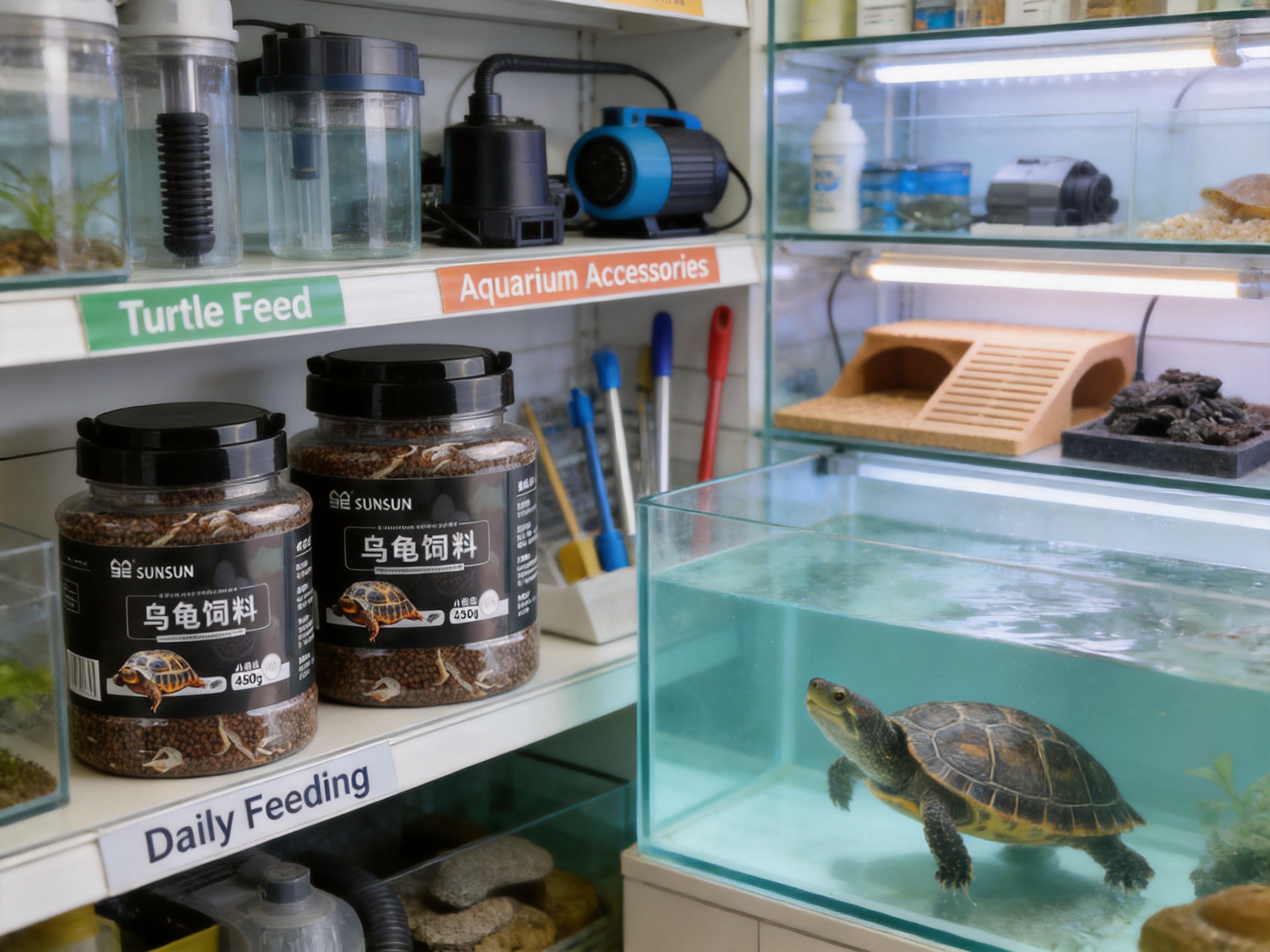
For aquarium shops, the bottle also improves shelf display. It can be arranged neatly, grouped by model, and presented as part of a professional aquatic pet-care section. For online or wholesale distribution, bottled packaging can offer a more standardized product appearance and a clearer consumer impression.
The 200 g and 450 g bottle options allow users to choose according to need. A small household with one or two turtles may prefer the 200 g bottle to maintain freshness and reduce long storage periods. A user with multiple turtles, a larger habitat, or higher feeding frequency may prefer the 450 g bottle for better continuity and fewer repurchases.
This dual-size approach is an advantage over many single-size products. Single-size feeds can be inconvenient: a very small bottle may run out too quickly, while an oversized container may remain open for too long in a humid environment. By offering two common net contents, DWG-2101/2102/2103/2104 provides a more balanced solution for different customer groups.
Because the product belongs to the aquarium accessories category, it fits naturally into the same purchasing journey as tanks, lighting, water pumps, air pumps, filters, controllers, and habitat decorations. Turtle keepers rarely buy feed in isolation. They often need equipment and consumables together. A turtle feed product supported by an aquarium-focused manufacturer can be integrated more effectively into full pet-care systems.
This is a practical advantage over generic pet-food products that are not connected with aquatic habitat expertise. A manufacturer familiar with aquarium systems better understands the importance of water cleanliness, feeding behavior, equipment compatibility, and consumer education.
Routine is essential in turtle keeping. Overfeeding can pollute water, while irregular feeding can create stress and inconsistent growth patterns. A stable bottled feed encourages owners to use measured, repeated feeding practices. The product can be kept near the tank, opened as needed, and closed after feeding.
Although feeding requirements vary by turtle species, age, size, water temperature, and activity level, a dedicated turtle feed helps owners establish a basic schedule. It can be used as a main feeding option or as part of a varied diet according to professional guidance and species-specific needs.
The manufacturer behind this product has decades of development in aquarium pets, aquaculture machinery, industrial equipment, and related aquatic products. This background matters because successful turtle-feed production requires more than simply filling a container. It requires raw material management, production control, packaging discipline, inspection procedures, and supply-chain stability.
Compared with small-scale or short-term producers, an established aquatic-industry manufacturer can provide stronger support in production planning, product continuity, quality management, and market service. This helps distributors, retailers, and end users obtain a more dependable product supply.

The turtle feed market includes many product types, from simple low-cost feed to premium specialty formulas. DWG-2101/2102/2103/2104 is positioned as a practical daily feed with strong packaging convenience and manufacturing support. Its competitive advantages can be understood through storage, consistency, user experience, supply reliability, and compatibility with aquarium retail ecosystems.
Loose feed or thin-bag feed can be easily exposed to moisture after opening. In humid environments, especially near aquariums, feed storage becomes a real concern. A bottle is easier to close and store than many low-grade bags. It also reduces the chance of feed scattering around the tank area. This advantage is especially valuable for families, schools, aquarium stores, and small pet-care facilities that require clean surroundings.
Packaging appearance influences consumer confidence. A dedicated bottled turtle feed communicates that the product is intended for aquatic reptile care. Generic pet foods may not clearly address turtle-keeping needs, and poorly presented products may be less attractive in retail environments. DWG-2101/2102/2103/2104 offers a specialized identity that supports both consumer trust and retail organization.
The 200 g and 450 g bottle options offer more flexibility than products supplied in only one size. This helps avoid two common problems: buying too little and needing frequent repurchase, or buying too much and keeping feed open for an extended period. Flexible capacity is useful for different owner profiles and can improve repeat-purchase satisfaction.
Some competing products are produced by companies with narrow product ranges or limited manufacturing depth. By contrast, this product comes from a company with broad operations in aquarium pets and aquatic equipment. The company has developed multiple functional departments and subsidiary operations, supporting research, quality control, administration, finance, marketing, and production management. This organizational strength helps create a more stable foundation for product availability and long-term cooperation.
Turtle care is connected to equipment. A turtle tank requires filtration, water circulation, lighting, air supply, cleaning tools, and accessories. A feed product supplied by a company active in these categories can be marketed as part of an integrated aquatic lifestyle. This gives DWG-2101/2102/2103/2104 an advantage over feed-only competitors because it can be paired with related products in retail programs and user education.
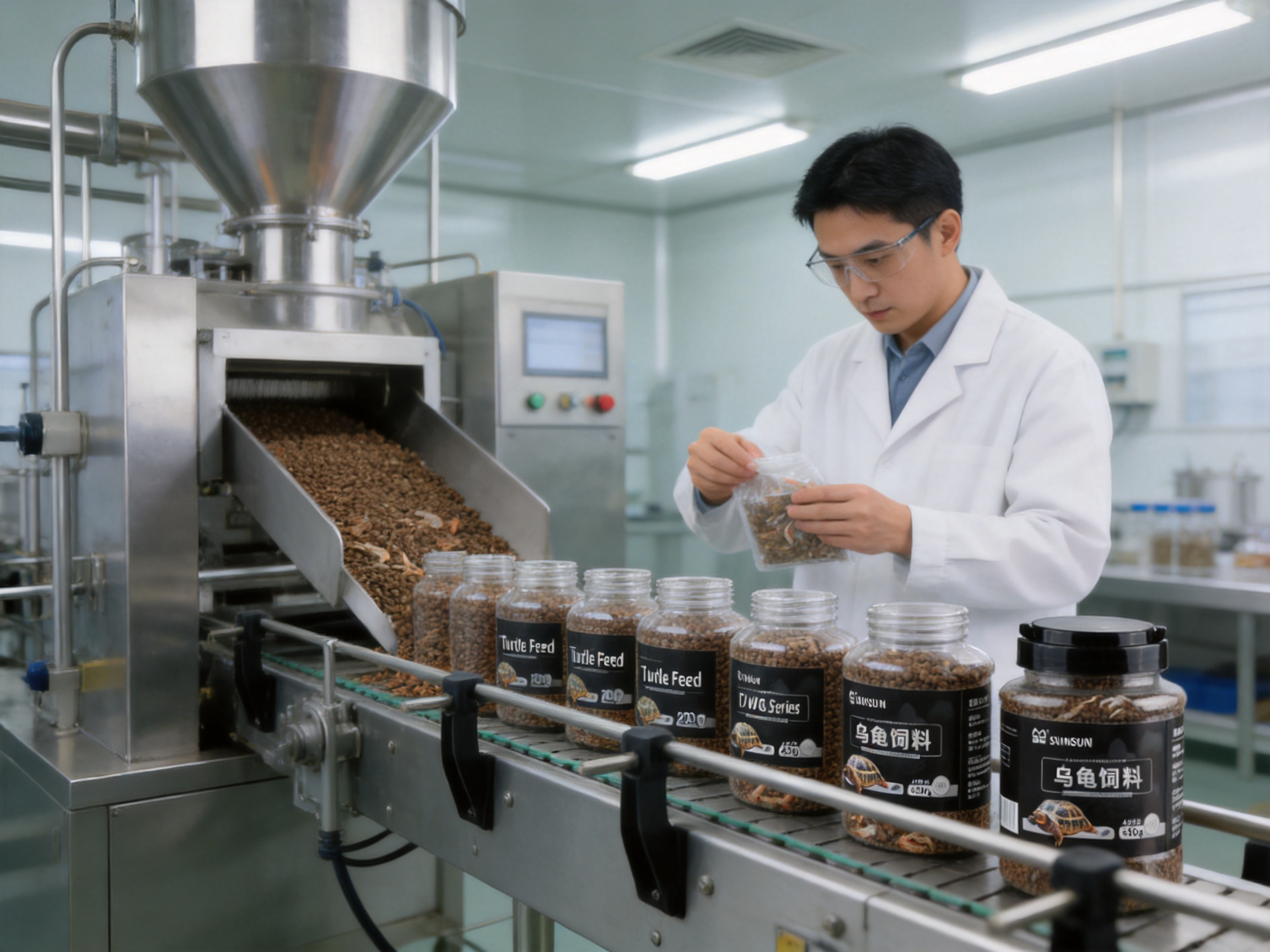
A turtle feed product reflects the strength of its manufacturing system. The manufacturer, Sensen Group Co., Ltd., was established in 1985 and has developed through more than three decades of continuous effort. Its operations extend across aquarium pets, aquaculture machinery, and industrial equipment. This experience gives the company a deep understanding of aquatic environments, animal-care products, production systems, and market expectations.
The company has built functional departments including research, business training, quality control, personnel administration, information management, and financial management. Such internal structure supports systematic product development rather than fragmented production. For consumable aquarium accessories like turtle feed, this matters because every production step must be managed carefully to maintain consistency and consumer confidence.
The company also operates several subsidiary corporations and maintains a wide sales and trading network. This scale supports purchasing, production coordination, logistics, and market feedback. When a product line such as DWG-2101/2102/2103/2104 enters the market, it benefits from this broader infrastructure.
Reliable feed production begins with raw material control. The manufacturer’s quality-management approach helps ensure that materials are selected, received, and stored according to controlled procedures. While specific formula details may vary by product model and production standards, responsible feed manufacturing generally requires attention to freshness, cleanliness, particle quality, and storage conditions.
In competitive markets, raw material management is a major differentiator. Low-quality products may show inconsistent appearance, odor, texture, or feeding response. A more controlled manufacturing environment helps reduce these issues and supports better batch-to-batch stability.
For turtle feed, uniform mixing is important because each feeding portion should be as consistent as possible. Advanced production management helps ensure that materials are blended evenly before forming. Proper forming also helps create feed particles that are suitable for handling, packaging, and feeding.
Compared with manually produced or loosely controlled products, industrial mixing and forming processes provide greater repeatability. This is important for retailers and distributors because customers expect the same product performance every time they purchase a bottle.
Moisture control is critical in dry pet-feed products. Excess moisture can affect storage stability, while overly aggressive drying may influence texture and acceptance. A controlled drying process helps keep the feed appropriate for bottled packaging and long-term distribution.
Manufacturers with experience in aquatic products understand that aquarium environments are often humid. Feed may be stored near tanks, pumps, and water-change areas. Therefore, production and packaging should work together to help protect the product after purchase.
The bottled design of DWG-2101/2102/2103/2104 requires accurate filling, clean sealing, and consistent presentation. Packaging is not only an outer shell; it is part of product performance. Proper packaging helps protect the contents, supports shelf display, and improves user handling.
Compared with economy packaging, a well-managed bottle format offers a more professional consumer experience. It is easier to store in retail displays, easier to recognize after purchase, and easier for owners to keep near their turtle habitat.
The company’s quality control department plays an important role in maintaining product standards. Quality inspection may involve checks related to appearance, packaging integrity, net content accuracy, production consistency, and storage readiness. These checks help reduce defects and strengthen trust among distributors and consumers.
In pet-care products, quality control is also a brand-protection measure. A feed product must perform reliably in real homes and aquarium stores. Strong inspection systems reduce complaints, improve repeat purchasing, and support long-term market development.
Sensen Group Co., Ltd. is located in Zhoushan City, Zhejiang Province, China, and has developed a broad manufacturing and marketing structure. Its history since 1985 reflects long-term commitment to the aquatic and pet industries. The company has expanded into aquarium pets, aquaculture machinery, and industrial equipment, creating a diverse technical and commercial base.
The company’s development philosophy emphasizes industrial technicalization, marketing globalization, and brand internationalization. These principles are relevant to DWG-2101/2102/2103/2104 because the product is not limited to a local or single-channel audience. Turtle feed can serve domestic and international markets when supported by stable manufacturing, packaging, distribution, and after-sales communication.
The company has also created a large sales network, including thousands of aquarium stores with unified presentation. This retail foundation gives the company direct understanding of consumer needs. Feedback from stores and users can inform product improvement, packaging optimization, and category planning. Feed products benefit greatly from this feedback loop because daily-use products must match real household habits.
In addition, the company has invested in online and offline integration, including digital consumer-service concepts. This modern sales approach helps connect product supply with customer education, ordering convenience, and market visibility. For aquarium accessories, where users often require guidance, integrated retail and digital communication can improve customer satisfaction.
A good turtle habitat is a system. Feed is one component, but it interacts with water quality, filtration, lighting, temperature, and tank size. Even the best feed must be used correctly. DWG-2101/2102/2103/2104 is intended to support daily feeding, but owners should still follow responsible care practices.
Turtles often eat in water, and uneaten feed can contribute to waste. Owners should provide appropriate portions and remove leftover food when necessary. A feed that is convenient to dispense can help reduce accidental overfeeding. The bottle packaging supports this by making daily feeding more controlled and repeatable.
Water quality should be maintained with proper filtration and regular cleaning. The manufacturer’s broader involvement in aquarium equipment is an advantage because feed can be considered alongside water pumps, air pumps, filters, and other maintenance tools. A complete care approach is more effective than focusing on feed alone.
Feeding frequency depends on species, age, size, activity level, and environmental conditions. Young turtles may require more frequent feeding than adults, while adult turtles often benefit from a more controlled schedule. Owners should observe appetite and body condition and consult reptile-care guidance when necessary.
DWG-2101/2102/2103/2104 supports routine feeding by providing a stable product that can be used consistently. Consistency helps owners notice changes in appetite more easily. If a turtle suddenly refuses food, the owner can investigate water temperature, health, stress, or habitat conditions.
Many turtles benefit from dietary variety. Depending on the species, age, and professional care recommendations, a balanced routine may include prepared feed, appropriate vegetables, occasional protein sources, calcium support, or other species-suitable foods. A bottled turtle feed can serve as a convenient foundation within that broader diet plan.
Owners should avoid unsuitable human foods, excessive treats, and unclean natural foods. A properly manufactured commercial feed is often safer and more convenient than random feeding materials. It also helps reduce the uncertainty faced by beginner turtle keepers.
After opening, turtle feed should be stored in a cool, dry place and closed properly after each use. The bottle format makes this easier. Users should avoid touching the feed with wet hands and should not leave the bottle open near splashing water. Good storage habits help maintain product condition and feeding satisfaction.
DWG-2101/2102/2103/2104 is not only useful for individual turtle owners. It also has strong advantages for retailers, wholesalers, aquarium shops, and pet-product distributors. Its clear product identity, practical packaging, and connection to a recognized manufacturer make it suitable for commercial channels.
Bottled feed is easy to arrange on shelves. Retailers can display 200 g and 450 g bottles together, giving customers a simple choice between standard and larger capacities. The product can be placed near turtle tanks, aquarium accessories, water-care products, or reptile-care sections.
Feed is a consumable product. Unlike durable equipment, it generates repeated demand. A turtle owner who is satisfied with the product may return to buy the same bottle size or upgrade to a larger size. For retailers, this creates continuous traffic and strengthens customer retention.
Turtle feed can be sold together with tanks, filters, lighting, basking platforms, water pumps, cleaning tools, and aquarium decorations. Because the manufacturer has broad product categories, retailers can build a more complete solution for customers. This improves the shopping experience and increases basket value.
Distributors prefer products that have stable supply, clear specifications, and market support. The manufacturer’s long operating history and wide business structure support confidence in cooperation. DWG-2101/2102/2103/2104 has simple, understandable specifications, making it easy for sales teams to introduce and for customers to understand.
Beginner turtle keepers often face many questions. What should the turtle eat? How much should be fed? How should food be stored? How can water stay clean? A dedicated bottled turtle feed helps simplify the first step. It gives new owners a ready-to-use product specifically intended for turtles.
The bottle format is beginner-friendly because it reduces mess and confusion. The owner can keep the bottle near the habitat and use it during scheduled feeding. The 200 g size is practical for new users who may not yet know their long-term consumption rate. As they gain experience, the 450 g size may become more convenient.
The product also encourages users to think of turtle care as part of an aquarium system. Feed, water quality, lighting, and equipment all work together. Since the manufacturer is active in aquarium products and accessories, the feed fits into a broader care environment rather than standing alone.
Experienced owners may already understand turtle behavior, habitat maintenance, and feeding routines. For them, the value of DWG-2101/2102/2103/2104 lies in convenience, consistency, and supply reliability. They may have multiple turtles or larger tanks, making the 450 g bottle especially useful.
Experienced users also appreciate packaging that can be stored cleanly. In a room with multiple tanks or accessories, organization matters. Bottled feed is easier to stack, label, and access than soft packaging. This is particularly useful for hobbyists, breeders, schools, and public display areas.
Because the product is part of an aquarium accessory line, experienced users can combine it with other maintenance products. A professional turtle setup may include powerful filtration, suitable lighting, basking areas, and regular cleaning tools. Feed that fits neatly into this ecosystem improves operational efficiency.
Users should feed turtles according to species-specific needs and avoid overfeeding. A general approach is to offer an amount that the turtle can consume within a short period, then remove leftovers to prevent water pollution. Young turtles, active turtles, and turtles in warmer environments may eat more frequently, while adult turtles may require more controlled portions.
Feed should not be used as the only care solution. Turtles need appropriate water depth, basking access, lighting, temperature control, clean water, and enough space. Owners should research the exact species they keep because different turtles have different dietary preferences and habitat requirements.
When introducing a new feed, owners may observe the turtle’s response over several feedings. Some turtles accept new food immediately; others need gradual adaptation. If a turtle refuses food for an extended period, the owner should check water temperature, stress factors, health condition, and environmental setup.
The 200 g bottle is suitable for small households, first-time turtle keepers, and users who prefer smaller quantities for freshness management. It is easy to store and convenient for occasional feeding needs. Retailers can recommend it to customers purchasing a turtle feed product for the first time.
The 450 g bottle is suitable for users with multiple turtles, larger turtles, or higher feeding frequency. It reduces the need for frequent repurchase and may be more practical for long-term keepers. Retailers can recommend it to experienced users or customers who already know their turtle’s feeding habits.
Offering both sizes supports customer choice and improves market coverage. Some customers will begin with 200 g and later switch to 450 g. Others may keep both sizes for different locations or feeding situations.
Trust is essential in pet products. Owners feed their animals daily and want to feel confident in the product they choose. DWG-2101/2102/2103/2104 builds trust through its focused turtle-feed identity, practical bottle packaging, and the production strength of an experienced aquatic-products manufacturer.
Consumers often judge feed by appearance, smell, handling, packaging condition, and animal acceptance. While individual turtle preferences can vary, a consistently manufactured product helps create a positive user experience. Retailers also benefit when customers can easily recognize and repurchase the same product.
In competitive markets, trust is built over time. A company with decades of industry participation, functional departments, subsidiary operations, and broad sales networks is better positioned to maintain stable product standards and respond to market needs.
It is a turtle feed product series supplied in bottled packaging. It is categorized as an aquarium accessory and is designed for daily feeding of aquatic turtles kept in controlled habitats.
The product is available in 200 g and 450 g net content options. The 200 g bottle is suitable for smaller feeding needs, while the 450 g bottle is practical for users with multiple turtles or higher feeding frequency.
Bottled packaging improves storage convenience, reduces mess, supports cleaner handling, and helps users close the container after each feeding. It is also easier for retailers to display and manage on shelves.
Yes. Its ready-to-use format and clear turtle-feed purpose make it suitable for beginners. However, new owners should also learn about species-specific care, water quality, basking needs, lighting, and feeding frequency.
It can be used as a convenient daily feed, but many turtles benefit from a varied diet depending on species and age. Owners should follow reptile-care guidance and provide suitable dietary variety when needed.
It should be kept in a cool, dry place with the bottle closed after use. Users should avoid wet hands, direct water splashes, and prolonged exposure to humidity.
Compared with loose or poorly sealed feed, this bottled product is easier to store, cleaner to handle, more professional in appearance, and better suited for retail display and daily home use.
The product is supported by an experienced manufacturer with decades of development in aquarium pets, aquaculture machinery, industrial equipment, research, quality control, and market distribution. These strengths help support consistent production and reliable supply.
Aquarium shops, pet stores, distributors, wholesalers, online retailers, and turtle-care product suppliers can include it in their aquarium accessories or reptile-care sections.
Two sizes allow customers to choose according to actual consumption. Smaller households may prefer 200 g, while frequent users may prefer 450 g. This flexibility improves customer satisfaction and repeat purchasing.
DWG-2101/2102/2103/2104 is a practical turtle feed series designed for daily aquatic reptile care. With 200 g and 450 g bottled options, it provides convenient storage, clean handling, and flexible purchasing choices. Its role within the aquarium accessories category makes it especially suitable for turtle owners who want a feeding product that fits naturally into a complete aquatic habitat system.
The product’s advantages are not limited to the feed itself. It is supported by a manufacturer with long-term experience in aquarium pets, aquaculture machinery, industrial equipment, quality control, research, and market development. This foundation strengthens product reliability, supply stability, and retail confidence. Compared with ordinary loose-packed or generic turtle feeds, DWG-2101/2102/2103/2104 offers better packaging convenience, more professional presentation, and stronger integration with aquatic pet-care channels.
For turtle owners, the product simplifies daily feeding. For retailers, it provides shelf-ready appeal and repeat-purchase potential. For distributors, it offers clear specifications and manufacturing support. As aquatic pet care continues to develop, practical products like this turtle feed series play an important role in helping users maintain cleaner, more organized, and more enjoyable turtle habitats.
1. Mader, D. R., and Divers, S. J. Reptile Medicine and Surgery. Elsevier.
2. McArthur, S., Wilkinson, R., and Meyer, J. Medicine and Surgery of Tortoises and Turtles. Blackwell Publishing.
3. Highfield, A. C. Practical Encyclopedia of Keeping and Breeding Tortoises and Freshwater Turtles. Carapace Press.
4. National Research Council. Nutrient Requirements of Fish and Shrimp. National Academies Press.
5. Warwick, C., Frye, F. L., and Murphy, J. B. Health and Welfare of Captive Reptiles. Springer.
6. Manufacturer-provided product information for DWG-2101/2102/2103/2104 turtle feed, including category and net content specifications.




 No. 61-79, Baima Street, Maao Town, Dinghai District, Zhoushan City, Zhejiang Province, China.
 0086 580 8082088 / 8081168
 0086 580 8080978
 songhua@sunsun-china.com