

 English
 русский
 España
 Portugal
 عربي
عربيZhang Lina | Overseas Aquarium Filters Sales Rep
Home / Author / Zhang Lina | Overseas Aquarium Filters Sales Rep / High Pressure Whirl Charging Air Pump for Industrial-Grade Aeration and Vacuum Performance
Modern aquaculture, aquarium engineering, wastewater treatment, pneumatic conveying, and specialized industrial air systems all require stable, continuous, and energy-conscious airflow. The SG/SG-S Series High Pressure Whirl Charging Airpump is designed for these demanding operating conditions, offering a broad selection of models that combine high pressure, strong vacuum capability, dependable output, and robust structural design. As an air pump category product, it is especially suitable for applications where ordinary low-pressure aeration equipment cannot deliver enough force, stability, or service life.
This article introduces the SG/SG-S Series High Pressure Whirl Charging Airpump from the perspective of performance, structure, application value, manufacturing quality, competitive advantages, model selection, installation, operation, and maintenance. It also explains how advanced production capacity, long-term industry experience, quality control, and comprehensive product development support make this series a reliable choice for professional buyers, distributors, aquaculture operators, aquarium engineering companies, and industrial equipment integrators.
SG/SG-S Series High Pressure Whirl Charging Airpump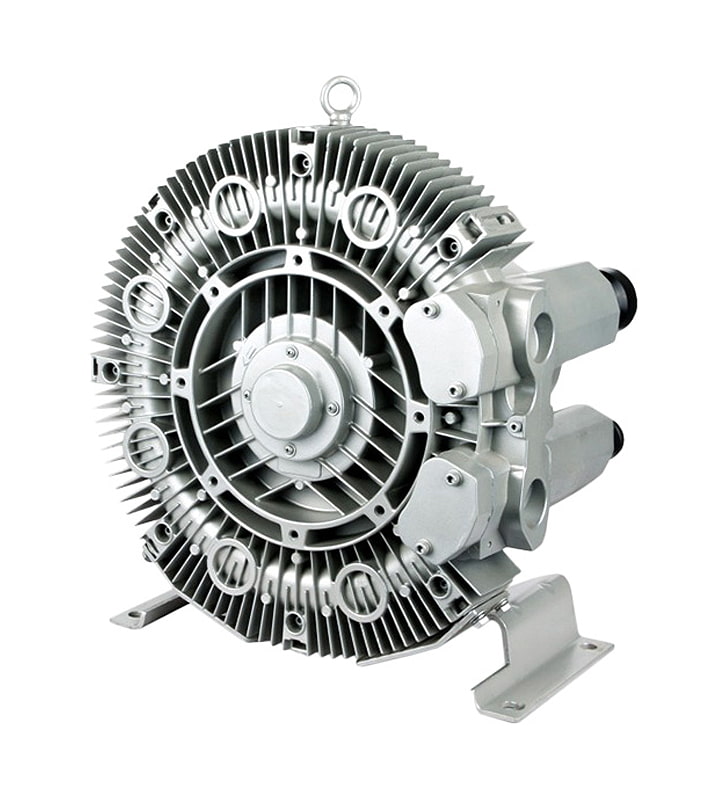
Content
The SG/SG-S Series High Pressure Whirl Charging Airpump is a high-pressure air delivery device engineered to generate strong airflow under demanding pressure conditions. Unlike basic aquarium air pumps intended only for small tanks or decorative aeration, this series is built for large-scale and continuous-duty scenarios. It is suitable for big fish tanks, fish farms, aquatic breeding bases, centralized aquarium systems, industrial aeration, oxygenation pipelines, pneumatic agitation, vacuum suction support, and equipment that requires both pressure and air volume.
The product family includes multiple models with power ratings ranging from 750 W to 5500 W. This wide range allows users to select a machine based on the desired air output, pressure level, vacuum requirement, installation space, and energy budget. The standard SG models provide strong and efficient pressure performance for many medium and large applications, while the SG-S models provide higher pressure capabilities for more demanding systems.
One of the most important characteristics of this series is the combination of pressure, vacuum, and output capacity. Some models reach pressure levels from 35 kPa to 150 kPa, vacuum levels from -23 kPa to -60 kPa, and output levels from 48 m³/h to 165 m³/h. This performance range gives the series a strong position among professional high-pressure whirl air pumps and makes it competitive against products that may offer either high pressure or high air volume but not both in a balanced way.
The SG/SG-S Series is also developed with practical installation in mind. The dimensional range is compact relative to its output level, making the pumps suitable for pump rooms, equipment cabinets, farm workshops, filtration systems, and mechanical rooms. With weights ranging from 16.5 kg to 64 kg, each model is built with durable materials while still remaining manageable for professional installation teams.
Many aeration systems fail because the pump can produce air volume under free-flow conditions but loses performance when connected to deep water, long pipelines, diffuser networks, or resistance-heavy systems. The SG/SG-S Series is designed to address this issue. With rated pressure options reaching up to 150 kPa in the SG-S models, the series can drive air through systems where standard pumps would struggle or become inefficient.
For aquaculture, higher pressure is critical when air must reach the bottom of deep ponds, large tanks, raceways, or multi-layer breeding systems. For industrial applications, pressure stability is important when air must pass through equipment, filters, channels, or controlled outlets. By maintaining pressure under load, the product helps improve oxygen transfer, process reliability, and operating consistency.
Air output is another key indicator of practical performance. The SG/SG-S Series offers output levels of 48 m³/h, 88 m³/h, 120 m³/h, and 165 m³/h depending on the selected model. This allows users to match the pump to system size. Smaller models can support medium-duty applications, while larger models are suitable for centralized air supply networks.
Compared with many competitor pumps that require multiple smaller units to reach similar airflow, the higher-output models in this series can simplify system design. Fewer pumps may mean fewer electrical connections, fewer failure points, less maintenance scheduling, and more efficient space utilization. For operators who manage large aquaculture or aquarium facilities, this can translate into lower long-term operating complexity.
The series also offers meaningful vacuum capability, with values from -23 kPa to -60 kPa. This feature expands the potential uses of the equipment beyond simple air delivery. Vacuum capability can support suction-related processes, material handling assistance, water treatment auxiliary systems, and specialized industrial workflows.
For buyers who need equipment versatility, this dual performance of pressure and vacuum is valuable. Instead of purchasing separate devices for different air movement functions, a properly selected model from the SG/SG-S Series may support a broader range of operational needs. This makes the product attractive for engineering companies, equipment manufacturers, and users who want flexible air system design.
The series includes models such as SG-750, SG-1100, SG-1500, SG-2200, SG-2200-2, SG-3300, SG-1500-S, SG-2200-S, SG-3000-S, SG-4000-S, SG-3300-S, and SG-5500-S. This range is important because high-pressure air systems should not be selected only by maximum power. The correct pump depends on the relationship between pressure, air volume, pipeline resistance, diffuser type, application depth, duty cycle, installation space, and power supply.
A broad product range reduces the risk of over-sizing or under-sizing. Over-sizing can waste energy and create unnecessary system stress. Under-sizing can cause poor oxygenation, reduced performance, overheating, and early wear. With a wide range of choices, users can select the most appropriate configuration for their actual operating conditions.
The following table summarizes the key specifications of the SG/SG-S Series High Pressure Whirl Charging Airpump. It is included to help engineers, purchasers, and project planners compare models quickly and identify suitable options for different applications.
Model |
Voltage |
Power |
Pressure |
Vacuum |
Output |
Operating Pressure |
Weight |
Dimensions L×W×H |
SG-750 |
220V/380V/50Hz |
750W |
35kPa |
-23kPa |
48m³/h |
<28kPa |
16.5kg |
295×294×319mm |
SG-1100 |
220V/380V/50Hz |
1100W |
52kPa |
-30kPa |
88m³/h |
<38kPa |
24kg |
320×346×375mm |
SG-1500 |
220V/380V/50Hz |
1500W |
65kPa |
-35kPa |
120m³/h |
<36kPa |
26kg |
350×366×393mm |
SG-2200 |
220V/380V/50Hz |
2200W |
65kPa |
-35kPa |
120m³/h |
<48kPa |
29kg |
350×366×393mm |
SG-2200-2 |
220V/380V/50Hz |
2200W |
72kPa |
-32kPa |
165m³/h |
<35kPa |
32kg |
364×418×455mm |
SG-3300 |
220V/380V/50Hz |
3300W |
72kPa |
-35kPa |
165m³/h |
<48kPa |
35kg |
390×418×455mm |
SG-1500-S |
220V/380V/50Hz |
1500W |
70kPa |
-40kPa |
48m³/h |
<50kPa |
28kg |
525×313×326mm |
SG-2200-S |
220V/380V/50Hz |
2200W |
138kPa |
-46kPa |
120m³/h |
<46kPa |
40kg |
567×385×397mm |
SG-3000-S |
220V/380V/50Hz |
3000W |
138kPa |
-50kPa |
120m³/h |
<65kPa |
47kg |
608×385×397mm |
SG-4000-S |
220V/380V/50Hz |
4000W |
138kPa |
-60kPa |
120m³/h |
<80kPa |
51kg |
635×385×387mm |
SG-3300-S |
220V/380V/50Hz |
3300W |
140kPa |
-45kPa |
165m³/h |
<50kPa |
48kg |
612×442×457mm |
SG-5500-S |
220V/380V/50Hz |
5500W |
150kPa |
-48kPa |
165m³/h |
<75kPa |
64kg |
643×442×457mm |
A common weakness of many competing pumps is imbalance. Some models provide high air volume but only at low pressure, making them unsuitable for deep water or long pipeline systems. Others provide high pressure but limited output, creating insufficient total aeration in large facilities. The SG/SG-S Series offers a balanced range, including models with 120 m³/h or 165 m³/h output while still maintaining strong pressure capacity.
This balance is especially important in aquaculture, where the oxygen demand of fish, shrimp, or other aquatic organisms can change quickly with stocking density, feeding rate, temperature, and biological activity. A pump that cannot maintain both airflow and pressure may cause oxygen distribution to become uneven. By offering both strong output and high pressure, the SG/SG-S Series supports more stable oxygen delivery throughout the system.
Another advantage is professional segmentation. Rather than offering only one or two general-purpose products, the series provides a complete selection from compact 750 W units to heavy-duty 5500 W units. This allows the product to compete effectively in multiple market segments: medium aquarium systems, commercial fish rooms, aquaculture tanks, ponds, centralized air stations, industrial equipment, and high-pressure air supply systems.
For distributors and project contractors, a complete series is more convenient than sourcing different pumps from multiple manufacturers. It enables consistent product support, spare parts planning, technical training, installation logic, and after-sales service. This series-based approach makes procurement and system design more efficient.
High-pressure air pumps are often required to run for long periods. In aquaculture, aeration may need to operate continuously to protect livestock health. In industrial systems, air delivery may be part of a process line that cannot stop unexpectedly. Therefore, equipment durability is not a secondary feature; it is central to operational safety and cost control.
The SG/SG-S Series is built for demanding use. The machines have substantial weights relative to their sizes, indicating durable structural components and stable mechanical construction. A strong body helps reduce vibration, maintain alignment, protect internal parts, and improve long-term reliability. Compared with lighter-duty alternatives that may be designed primarily for intermittent use, this series is more suitable for professional continuous-duty environments.
The series supports 220V/380V/50Hz configurations, making it adaptable to many commercial and industrial installations. The availability of both single-phase and three-phase style voltage categories is useful for different facilities. Smaller facilities may use 220V power, while larger workshops and farms often prefer 380V supply for heavy equipment.
This practical compatibility improves market suitability and reduces the need for custom power conversion in many cases. For system integrators, electrical compatibility is a major installation consideration. A pump series that can match common power environments can reduce project delays and simplify installation planning.
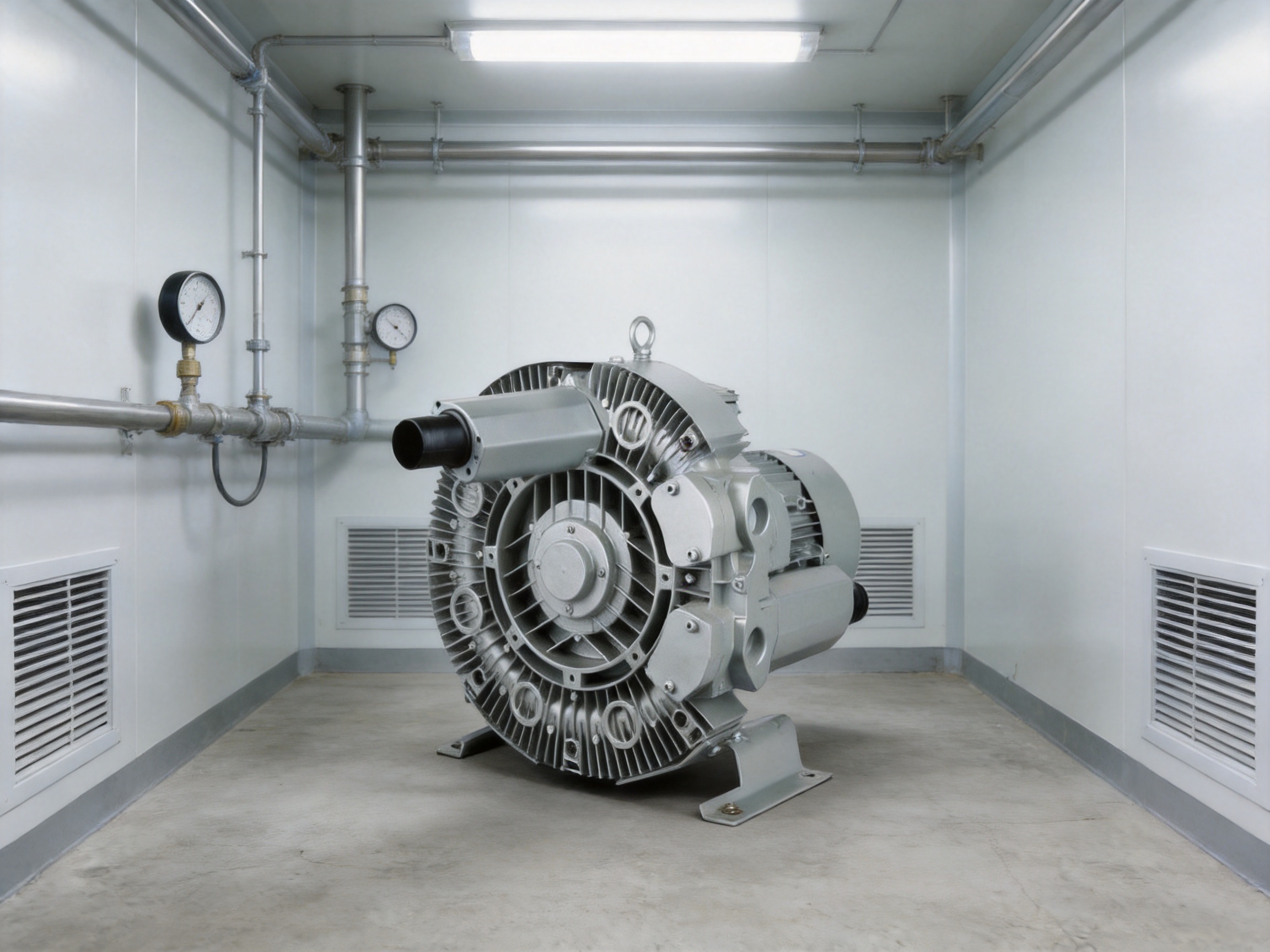
Large display aquariums, aquarium stores, public aquariums, hotel fish tanks, seafood holding tanks, and ornamental fish facilities all need reliable aeration. In these systems, air is not only used for oxygen supply but may also support biological filtration, water circulation, foam fractionation, gas exchange, and decorative water movement. The SG/SG-S Series can supply stable airflow to multiple outlets, helping system designers create centralized aeration networks.
In a large aquarium facility, multiple small air pumps can create noise, clutter, inconsistent airflow, and complex maintenance. A centralized high-pressure whirl charging air pump can reduce equipment quantity and improve system organization. The airflow can be distributed through manifolds, valves, and diffusers to different tanks. This approach supports cleaner installation and more controllable operation.
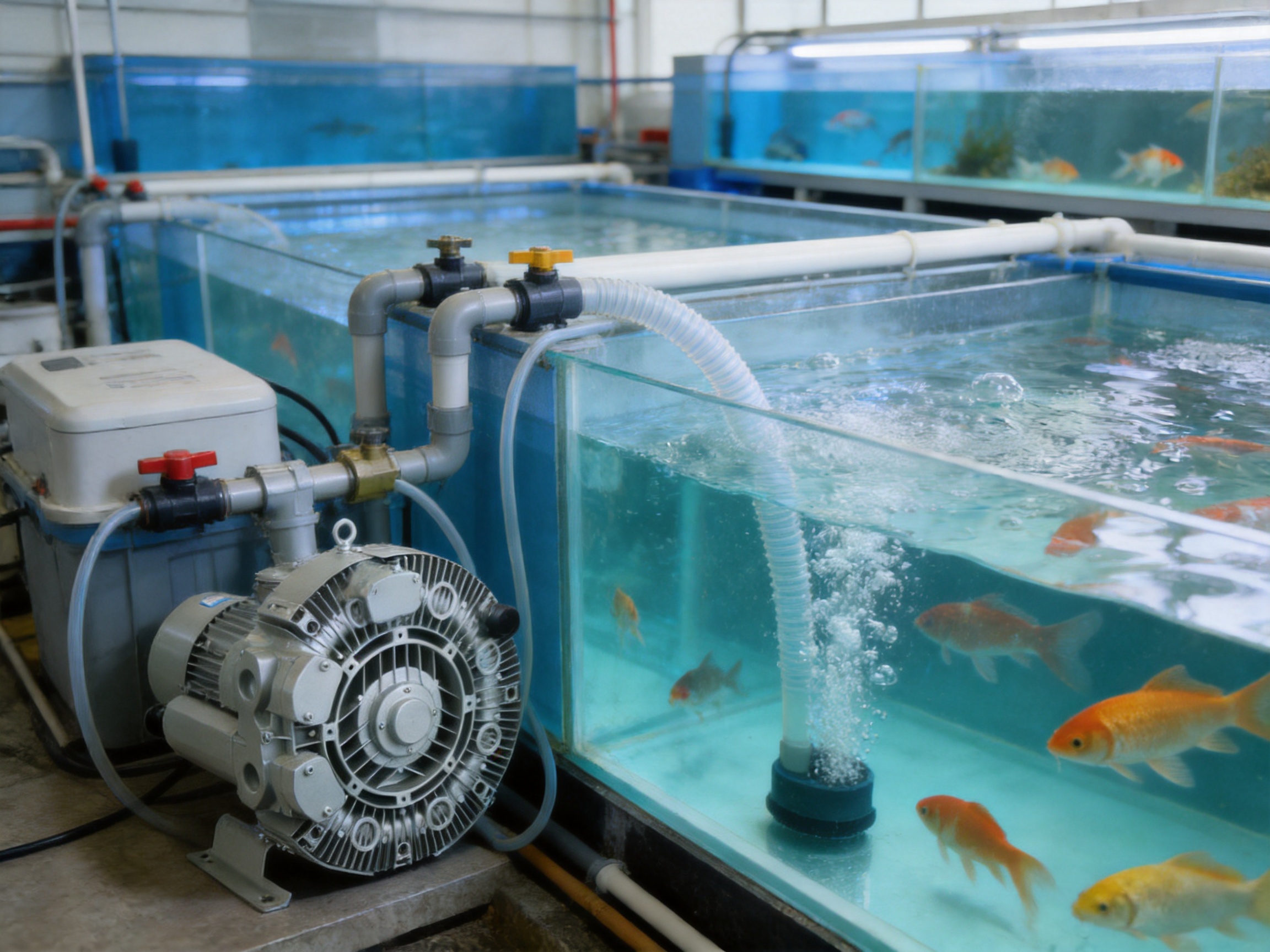
Commercial aquaculture requires dependable oxygenation because dissolved oxygen is directly related to animal health, feeding efficiency, growth rate, and survival rate. Insufficient oxygen can cause stress, disease vulnerability, poor feed conversion, and even mass mortality. The SG/SG-S Series supports high-volume aeration for breeding tanks, recirculating aquaculture systems, fish ponds, shrimp ponds, nursery systems, and intensive farming units.
The high-pressure capability is especially useful for deeper tanks and ponds where air must overcome water pressure. The strong output helps distribute oxygen across wider areas. When used with suitable diffusers, pipelines, and oxygen management practices, the pump can contribute to improved water quality and more stable production.
Recirculating aquaculture systems require more than simple oxygenation. They often include biofilters, degassing units, foam fractionators, moving bed reactors, and controlled water movement. Air pumps may be used to support nitrifying bacteria, remove unwanted gases, mix biological media, and maintain water stability. The SG/SG-S Series is suitable for these multi-function air requirements because it offers both pressure and volume.
For moving bed biofilters, the pump can help keep biological media suspended. For deep tanks, it can deliver air to bottom diffusers. For central air systems, it can supply multiple units simultaneously. This flexibility is valuable because recirculating systems often expand over time, and a pump with strong capacity provides room for future upgrades.
Seafood markets, processing centers, restaurants, and live transport preparation stations also benefit from strong aeration. Live fish, crabs, shrimp, shellfish, and other aquatic products require oxygen-rich water to maintain quality before sale or transport. The SG/SG-S Series can support holding tanks and temporary storage systems where reliable airflow is necessary.
Compared with ordinary low-pressure pumps, high-pressure whirl charging air pumps are better suited for systems with many tanks, long air lines, or deep containers. They help maintain consistent aeration and reduce the risk of oxygen shortage during busy business hours or high stocking periods.
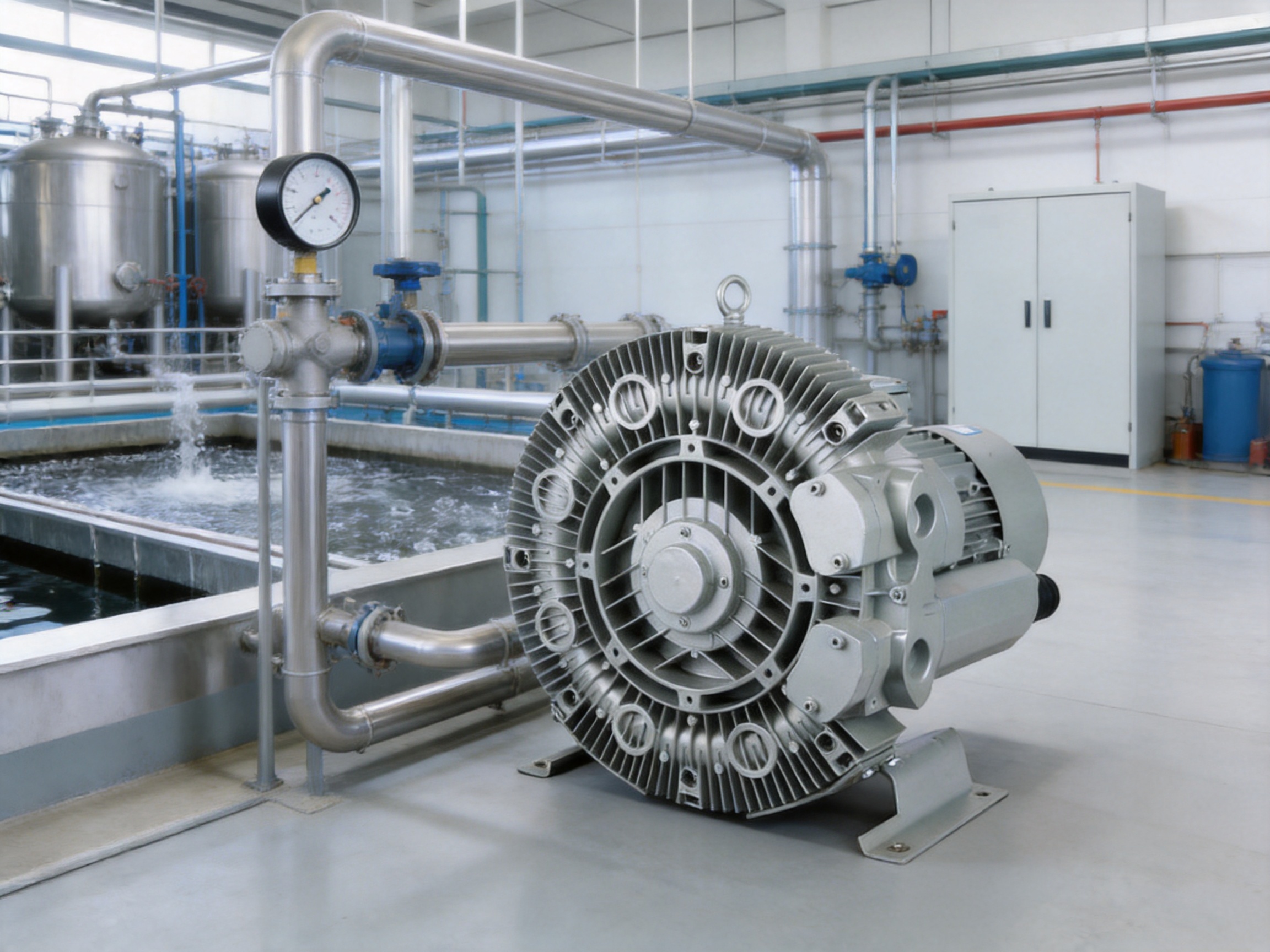
Wastewater treatment systems often require air for biological treatment, oxidation, agitation, and odor control. Air must pass through diffuser grids, pipelines, and water columns, creating resistance. A high-pressure air pump can help maintain adequate airflow under these conditions. The SG/SG-S Series is suitable for small and medium wastewater treatment equipment, decentralized treatment units, and industrial process water aeration.
In biological treatment, oxygen supports microorganisms that break down organic matter. Stable aeration improves treatment efficiency and helps prevent anaerobic conditions. By providing pressure options up to 150 kPa, the SG-S models are particularly useful for applications that require stronger air delivery.
The series can also be used in certain pneumatic conveying, air charging, drying, and equipment support scenarios. Its vacuum capability may support suction-side functions, while pressure capability supports blowing-side applications. Although every industrial application requires proper engineering verification, the performance range of the SG/SG-S Series makes it useful for many customized systems.
Engineering users may select a model based on required airflow, pipeline length, material resistance, duty cycle, and environmental conditions. The broad model range allows system builders to choose the unit that best matches their process requirements rather than adapting the process to a limited pump selection.
Beyond aquaculture and industrial use, air movement can support certain agricultural and garden equipment systems, including oxygenation of nutrient solutions, water circulation support, and specialized plant wall installations. In hydroponic or aquaponic systems, oxygen delivery supports root health and microbial balance. A high-pressure pump may be useful where air must travel through long lines or multiple diffuser points.
This application flexibility aligns with the company’s broader product categories, including aquarium equipment, garden equipment, water pumps, air pumps, plant wall systems, pet products, and aquarium accessories. A manufacturer with experience across these categories can better understand how air pumps interact with complete aquatic and environmental systems.
A high-pressure whirl charging air pump typically uses a rotating impeller structure to accelerate air and generate pressure through controlled airflow movement. Air enters the pump, gains kinetic energy from the rotating component, and is guided through the housing to increase pressure before discharge. This type of design is valued for relatively stable airflow, compact structure, and suitability for continuous operation.
The SG/SG-S Series applies this principle in a range of sizes and performance levels. The design focuses on pressure stability, airflow delivery, compact arrangement, and mechanical durability. The product is intended to operate in real working conditions where resistance, heat, vibration, and continuous duty can challenge weaker equipment.
Compared with diaphragm pumps used in small aquariums, whirl charging air pumps are far more suitable for large systems. Diaphragm pumps are often quiet and economical for small tanks, but they cannot deliver the high pressure and volume needed for commercial or industrial air networks. Compared with some bulky blowers, the SG/SG-S Series offers a compact and organized structure that is easier to integrate into equipment rooms and packaged systems.
Sensen Group Co., Ltd., also known through its Sunsun industrial identity, was established in 1985 and has accumulated decades of experience in aquarium pets, aquaculture machinery, industrial equipment, and related product categories. This long operating history is a major advantage because air pump quality depends not only on design but also on manufacturing consistency, process control, component selection, and practical application knowledge.
The company has developed a large-scale production and marketing system supported by multiple functional departments, including research, quality control, personnel and administration, financial management, and business training. A dedicated research institute and structured quality control department support product innovation and process reliability. These strengths help the SG/SG-S Series maintain stable quality across a broad model range.
The company’s manufacturing approach is supported by subsidiaries and production bases, including operations in different regions. This scale allows the company to manage production capacity, supply chain coordination, product development, and market service more effectively than smaller manufacturers with limited resources. For buyers, manufacturing scale can mean more stable availability, better batch consistency, and stronger long-term support.
Continuous research and development are essential in the air pump industry. Customers increasingly demand higher efficiency, lower noise, longer service life, compact dimensions, easier maintenance, and more reliable pressure output. A manufacturer with internal research capability can respond to these requirements more effectively than a trading-only supplier.
The SG/SG-S Series reflects practical R&D priorities: a wide power range, high pressure options, substantial output, vacuum capability, and installation-friendly dimensions. These features suggest that the product was developed based on real customer scenarios, not only laboratory specifications. The existence of models for different pressure and flow combinations shows an engineering understanding of varied application needs.
For high-pressure air pumps, consistency is vital. Small deviations in parts, assembly, balance, sealing, or motor quality can affect performance, noise, temperature, and service life. A strong quality control system helps ensure that every unit performs according to specification. The company’s quality control department supports inspection, testing, and process verification throughout production.
Professional manufacturing processes may include incoming material inspection, motor testing, impeller balance control, housing machining or forming checks, assembly verification, pressure and airflow testing, electrical safety inspection, and final packaging inspection. These steps help reduce defect rates and protect customer confidence.
The company is active in aquarium pets, aquaculture machinery, industrial equipment, water pumps, air pumps, aquarium lighting, controllers, aquarium accessories, and related systems. This integrated industry experience is valuable because air pumps rarely operate alone. They are usually part of a larger system involving water pumps, filtration, oxygenation, lighting, control devices, tanks, accessories, and biological requirements.
A manufacturer that understands the entire aquatic ecosystem can design air pumps that better meet practical user needs. For example, aquaculture operators need oxygenation that supports animal density and water treatment. Aquarium stores need centralized air that remains stable across many tanks. Industrial users need pressure and vacuum performance that can integrate into machinery. The SG/SG-S Series benefits from this broad application background.
The first step in selecting a model is understanding pressure requirement. Pressure must overcome water depth, pipeline resistance, diffuser resistance, valves, bends, and distribution losses. For shallow or moderate systems, standard SG models may be sufficient. For deeper systems, longer pipelines, or high-resistance diffusers, SG-S models with higher pressure ratings may be more appropriate.
For example, SG-750 provides 35 kPa pressure and 48 m³/h output, making it suitable for smaller professional systems or moderate air networks. SG-1500 and SG-2200 provide 65 kPa pressure and 120 m³/h output, supporting larger aeration systems. SG-2200-S, SG-3000-S, and SG-4000-S provide 138 kPa pressure with 120 m³/h output, suitable for high-pressure needs. SG-5500-S reaches 150 kPa pressure and 165 m³/h output, making it one of the strongest options in the series.
Air output should be selected based on the total number of diffusers, tank volume, livestock density, oxygen demand, process requirement, or equipment airflow requirement. A system with many outlets may need a model with 120 m³/h or 165 m³/h output. Smaller systems may use 48 m³/h or 88 m³/h models.
It is important to consider real working output rather than only free-air output. When pressure increases, actual delivered air may change depending on system resistance. Therefore, users should select a model with a suitable performance margin. A margin helps the pump operate comfortably without being pushed constantly to its limits.
Power ratings range from 750 W to 5500 W. Higher power generally supports greater pressure or output, but it also increases electricity consumption. Users should avoid selecting a larger model than necessary. The correct pump should meet operational requirements with reasonable energy efficiency.
For continuous-duty applications, electricity cost can become a major part of total ownership cost. A properly matched model can deliver the needed performance while avoiding unnecessary energy waste. This is another reason why a wide model range is valuable.
Dimensions vary from compact units such as 295×294×319 mm to larger models such as 643×442×457 mm. Installation space should allow not only the physical pump size but also ventilation, maintenance access, pipe connections, vibration control, and safe electrical wiring. Buyers should check the dimensions before confirming equipment room layout.
Air pumps generate heat during operation, so ventilation is important. The pump should not be installed in a sealed or overheated location. Adequate airflow around the machine helps protect motor life and maintain stable operation.
Correct installation is essential for achieving reliable performance. The pump should be placed on a stable, level surface. A firm base helps reduce vibration and prevents movement during operation. For larger models, the foundation should be strong enough to support the pump weight and resist vibration over long-term use.
Air pipelines should be sized properly. If the pipe diameter is too small, resistance increases and the pump may run under excessive load. Long pipelines, many bends, small valves, and blocked diffusers can all raise system pressure. Designers should use suitable pipe diameters and minimize unnecessary restrictions.
A check valve is recommended in aquatic applications to prevent water from flowing back into the pump if the machine stops. Backflow can damage internal parts and create safety risks. For deep tanks or ponds, backflow prevention is especially important.
Diffusers should be chosen according to the pump output and pressure. Very fine diffusers may create high resistance. If the diffuser network is too restrictive, pump performance may suffer. A balanced diffuser layout helps distribute air evenly and maintain efficient oxygen transfer.
Electrical installation should be performed by qualified personnel. Voltage and frequency must match the pump nameplate. Wiring, grounding, overload protection, and control devices should comply with local electrical safety standards. For continuous-duty systems, proper electrical protection is essential.
Before starting the pump, operators should check that the pipeline is open, valves are correctly positioned, the intake is unobstructed, and the power supply is correct. Starting a pump against a blocked discharge or severely restricted pipeline can cause excessive pressure and heat.
During operation, users should monitor sound, vibration, temperature, pressure, and airflow. A sudden change may indicate a blocked filter, closed valve, damaged diffuser, pipe leak, bearing wear, or other system issue. Early inspection can prevent larger failures.
Intake filtration should be kept clean. Dust, moisture, and debris can affect performance and reduce service life. In dirty environments, the intake should be inspected more frequently. Clean air supply helps protect internal components and maintain stable output.
Regular maintenance may include checking fasteners, cleaning filters, inspecting pipelines, confirming electrical connections, monitoring bearing condition, and reviewing operating pressure. Maintenance intervals should be adjusted according to actual operating environment and duty cycle. In aquaculture facilities where the pump protects livestock health, preventive maintenance is especially important.
If the pump is used continuously, it is wise to keep critical spare parts or a backup aeration plan. Even reliable equipment should be supported by emergency preparation in high-value aquaculture or industrial systems. A backup strategy protects production and reduces risk.
When evaluating air pumps, buyers often compare purchase prices first. However, total cost of ownership is more important. A low-cost pump that fails early, uses too much energy, cannot maintain pressure, or requires frequent replacement may be more expensive in the long run. The SG/SG-S Series is designed to offer professional durability and performance stability, which can reduce hidden costs.
Key cost factors include initial purchase cost, energy consumption, installation complexity, maintenance frequency, spare parts availability, downtime risk, and system efficiency. A pump that delivers the right pressure and output can improve the efficiency of the entire air system. In aquaculture, stable aeration may also protect biological assets, which can be far more valuable than the pump itself.
Compared with using multiple small pumps, one properly selected high-pressure whirl charging air pump may reduce wiring, piping complexity, service points, and noise sources. This can lower installation and management cost. In many professional systems, centralized air supply is a more organized and scalable solution.
Professional buyers need more than a single product specification. They need consistent supply, dependable manufacturing, technical support, model options, practical performance, and a manufacturer with long-term industry experience. The SG/SG-S Series answers these needs through its broad model range, pressure capability, output capacity, vacuum performance, and durable construction.
The company behind the product has decades of experience and a broad industrial foundation. Its activities cover aquarium pets, aquaculture machinery, industrial equipment, and related categories. This background supports not only product manufacturing but also system-level understanding. For distributors, project contractors, aquarium builders, and aquaculture operators, this is a meaningful advantage over suppliers that focus only on isolated products.
The series is also practical for international procurement because it offers clear model data, standard voltage categories, and performance levels that can be matched to many applications. Buyers can compare models transparently and choose based on pressure, output, power, weight, and dimensions.
It is mainly used for high-pressure air delivery, aeration, oxygenation, vacuum support, and air supply in aquaculture, large aquarium systems, wastewater treatment, industrial equipment, seafood holding systems, recirculating aquaculture systems, and related applications.
A small aquarium air pump is usually designed for low-pressure, low-volume use in household tanks. The SG/SG-S Series is designed for professional and industrial environments. It provides much higher pressure, greater air output, stronger construction, and better suitability for centralized air supply systems.
For higher-pressure requirements, SG-S models are generally more suitable. For example, SG-2200-S, SG-3000-S, and SG-4000-S provide 138 kPa pressure, while SG-3300-S provides 140 kPa and SG-5500-S provides 150 kPa. The final selection should consider pressure, output, pipeline resistance, diffuser type, and operating conditions.
Yes, the series has vacuum capability, with different models offering values from -23 kPa to -60 kPa. This makes the pump useful for certain suction-related and industrial support applications, provided that the system design is suitable for the pump specifications.
The product is designed for demanding professional use and can support continuous-duty applications when correctly selected, installed, and maintained. Proper ventilation, clean intake air, correct voltage, suitable piping, and regular inspection are important for long-term operation.
Pressure is needed to push air through water depth, pipes, valves, and diffusers. If pressure is insufficient, air may not reach the intended outlet or may be distributed unevenly. Higher pressure supports deep tanks, long pipelines, and high-resistance diffuser systems.
No. Higher power can support stronger performance, but it also increases energy consumption. The best pump is the one that matches the actual system requirement with an appropriate safety margin. Oversizing can waste electricity, while undersizing can reduce aeration efficiency.
The pump should be installed on a stable base, with proper ventilation, correct electrical supply, suitable pipe diameter, open airflow paths, and backflow protection in aquatic systems. Electrical work should be completed by qualified personnel.
Users should inspect the intake filter, check pipelines and diffusers, monitor vibration and sound, confirm electrical connections, clean dust, and verify operating pressure. Maintenance frequency should be based on usage intensity and environmental conditions.
The manufacturer has decades of experience, a broad product portfolio, research and development capability, quality control systems, large-scale production resources, and strong knowledge of aquarium, aquaculture, and industrial equipment markets. These strengths support consistent product quality and long-term supply.
The SG/SG-S Series High Pressure Whirl Charging Airpump is a professional air pump solution for users who need strong pressure, reliable output, vacuum capability, and durable performance. With models ranging from 750 W to 5500 W, pressure ratings up to 150 kPa, vacuum capability down to -60 kPa, and output up to 165 m³/h, the series offers flexible selection for many demanding applications.
Its advantages over many competitors include balanced pressure and airflow, broad model coverage, durable structure, practical voltage compatibility, and suitability for centralized air systems. These strengths make it valuable for aquaculture, large aquarium engineering, recirculating aquaculture systems, seafood holding, wastewater treatment, pneumatic support, and related industrial uses.
Behind the product is a company with long-standing manufacturing experience, integrated industry knowledge, research capability, quality control systems, and large-scale production resources. These strengths help ensure that the product is not only powerful on paper but also practical for real operating environments.
For professional buyers seeking a high-pressure air pump that can support demanding aeration and vacuum-related applications, the SG/SG-S Series offers a strong combination of performance, reliability, selection flexibility, and manufacturing confidence.
1. Technical Specification Sheet for SG/SG-S Series High Pressure Whirl Charging Airpump.
2. Industrial Blower and Air Pump Selection Principles, Mechanical Equipment Engineering Handbook.
3. Aquaculture Aeration System Design and Dissolved Oxygen Management, Aquatic Production Engineering Reference.
4. Wastewater Treatment Aeration Fundamentals, Environmental Process Equipment Guide.
5. Electrical Motor Operation and Maintenance Practices for Continuous-Duty Industrial Equipment.

 No. 61-79, Baima Street, Maao Town, Dinghai District, Zhoushan City, Zhejiang Province, China.
 0086 580 8082088 / 8081168
 0086 580 8080978
 songhua@sunsun-china.com