

 English
 русский
 España
 Portugal
 عربي
Zhang Lina | Overseas Aquarium Filters Sales Rep
Home / Author / Zhang Lina | Overseas Aquarium Filters Sales Rep / Intelligent Pet Hair Dryer: A Practical Guide to Faster, Safer, and More Comfortable Grooming
Bathing a pet is only the first part of grooming. The more difficult task often begins when the coat must be dried. Wet fur can remain heavy, cold, tangled, and uncomfortable, while ordinary household hair dryers may provide insufficient airflow, excessive heat, or an unpleasant level of noise. A professional pet hair dryer is designed to address these challenges with controlled airflow, adjustable temperature, safer handling, and a structure suited to repeated grooming.
The DHC-X1 intelligent pet hair dryer is designed for owners, groomers, pet shops, and other users who need a practical drying solution after bathing. It combines a 2000W output, adjustable wind speed, temperature control, a three-dimensional air circulation design, negative-ion hair care technology, a thickened insulated air duct, and multiple protective features. Instead of relying on a single high-temperature setting, the unit allows users to adjust the airflow and temperature according to the pet’s size, coat, sensitivity, and grooming stage.
This article examines the product’s design, operating principles, user benefits, specifications, applications, maintenance requirements, and manufacturing background. It also explains how the DHC-X1 compares with common alternatives and why controlled drying can be more comfortable and efficient than using a standard domestic hair dryer.
Content
Pet hair is not identical to human hair, and a pet’s skin is not exposed to heat in the same way as a human scalp. Dogs and cats may have dense undercoats, long outer coats, curly hair, double coats, or areas that retain moisture for a long time. Water can remain around the neck, chest, abdomen, legs, paws, ears, and tail even when the surface of the coat appears nearly dry.
A conventional hair dryer usually focuses on a concentrated stream of warm air. This may be suitable for occasional personal use, but it can be less convenient for drying a moving animal. A narrow, hot airflow can make a pet uncomfortable. A dryer that lacks adjustable control may also create a sudden burst of wind or heat, causing the animal to resist grooming.
Professional pet drying requires a balance of four factors:
1. Sufficient air volume to move moisture away from the coat.
2. Adjustable airflow so the user can begin gently and increase the force gradually.
3. Controlled temperature to reduce the possibility of overheating or discomfort.
4. A practical structure that allows the operator to work safely and comfortably for an extended period.
The DHC-X1 is built around these requirements. It is not simply a high-power heating appliance. Its design emphasizes airflow, adjustability, circulation, hair protection, noise reduction, and operator comfort.
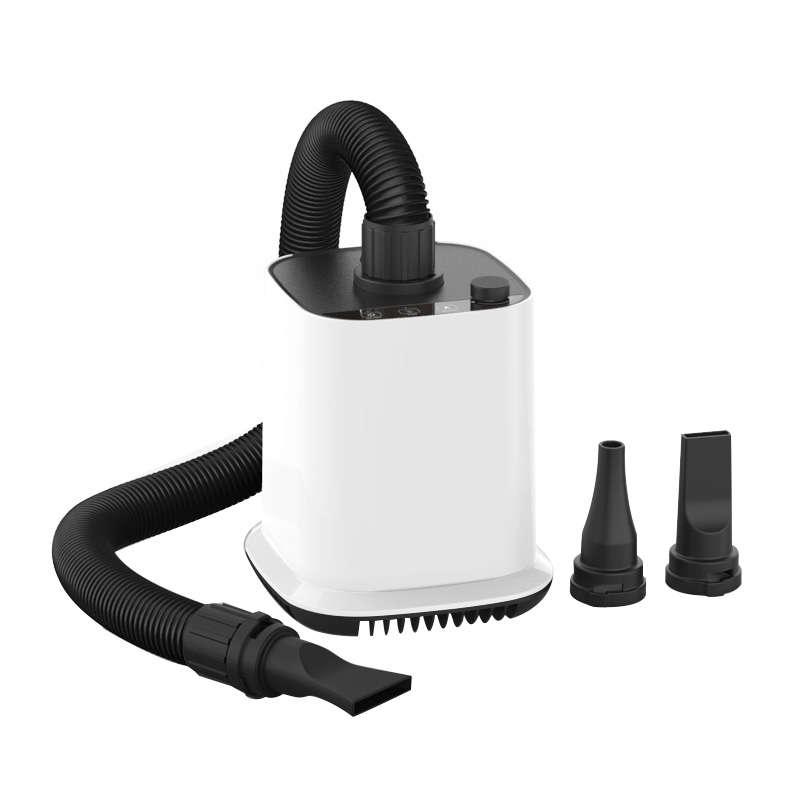
DHC-X1 intelligent water dispenser
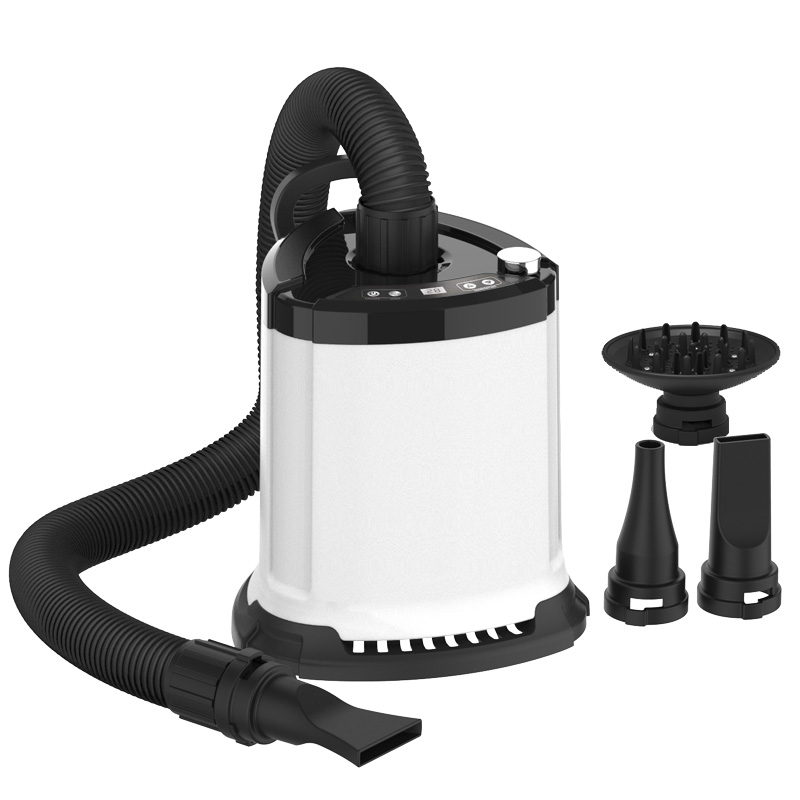
The DHC-X1 is an intelligent pet hair dryer intended for drying, cleaning, shaping, and grooming animal coats. The product is supplied as a main blower body, a flexible hose, three blowing nozzles, and a warranty card. Its compact body measures approximately 23 × 23 × 26.5 centimeters, making it easier to place in a grooming area, home utility space, pet shop, or professional salon.
The product uses a rated power supply of 220V/50Hz and has an output power of 2000W. Its stated wind speed range is adjustable from 20 to 70 meters per second, while the product information identifies temperature adjustment around 60°C. The actual comfort experienced by a pet depends on the selected setting, distance from the coat, coat density, room temperature, and the way the nozzle is used.
Two dedicated control keys support independent adjustment of temperature and wind. This arrangement gives the user greater control than a simple on-or-off dryer. A professional operator can begin with a lower airflow, observe the pet’s reaction, and gradually select a stronger setting when appropriate. The same approach can be used when drying a nervous animal, a small pet, or an animal with sensitive skin.
The DHC-X1 also uses a flexible hose and interchangeable nozzles. The hose allows the main machine to remain in a stable position while the user directs airflow around the animal. The nozzles help concentrate or distribute air for different grooming needs. A wider flow may be useful for larger wet areas, while a more focused attachment can help separate and shape hair.
The main features include quick drying, adjustable temperature, continuously variable wind-speed control, three-dimensional surrounding airflow, a thickened and insulated air duct, a heat-insulated handle area, negative-ion hair protection, and an air-duct structure designed to reduce low-frequency noise.
These features are especially valuable when the product is used after regular bathing. The dryer can help reduce the time that an animal remains wet, make grooming more manageable, and provide a more consistent drying process than towels alone.
The 2000W output gives the DHC-X1 a strong operating capacity for moving moisture through and away from the coat. In pet grooming, airflow often plays a more important role than heat alone. Strong air can separate wet hair, expose damp areas, and carry water away from the surface. This can reduce the need to depend on excessive heat.
Many low-powered household dryers are designed primarily to warm and gently dry a small area. They may require the user to keep the device close to one section of hair for a long time. That approach can be inefficient when the animal has a thick coat or when the user must dry the entire body. By contrast, the DHC-X1 is intended to create a larger and stronger airflow suitable for dense or wet fur.
High power does not mean that the dryer should always be used at maximum output. The advantage of a powerful motor is that it provides a broader operating range. The user can begin at a low setting and increase the airflow as the pet becomes comfortable or as the coat requires more force. This flexibility is more useful than a machine that is weak at every setting or strong only in an uncomfortable way.
For long-haired or double-coated animals, an effective drying sequence may begin at the back and sides, followed by the chest, legs, belly, tail, and areas around the neck. The nozzle should remain in motion rather than being held continuously over one spot. The user can direct air through the coat to help reach the undercoat without applying unnecessary heat.
Airflow-based drying can help remove loose water, lift flattened hair, and support coat shaping. It can also assist with cleaning loose particles from the surface of a coat before brushing. For professional groomers, a strong controllable airflow can improve work efficiency when several animals must be processed during the same day.
Compared with towel drying alone, a powered dryer can reach areas where towels are difficult to use. Towels may absorb surface water, but they do not always remove moisture held deep in dense fur. An air stream can separate strands and expose hidden dampness. This is particularly important because a coat that feels dry on the surface may still be moist underneath.
Compared with a basic domestic hair dryer, the DHC-X1 offers a higher stated output and a design focused specifically on pet drying. Its hose, nozzles, control keys, and insulated structure are intended for a grooming environment rather than personal hair styling.
Pets differ greatly in size, coat type, age, health, and tolerance of grooming. A setting that is suitable for a large dog with a thick coat may be too strong for a small dog, cat, puppy, senior animal, or nervous pet. Adjustable control is therefore one of the most important features of a pet dryer.
The DHC-X1 provides separate control of wind and temperature. The wind control is described as stepless, allowing the user to adjust airflow continuously rather than being limited to a small number of fixed speed levels. This makes the transition from gentle drying to stronger drying smoother.
A recommended starting method is to turn the wind control to a low setting before directing air toward the animal. The airflow can then be increased gradually while the user observes body language, facial expression, ear position, movement, and general comfort. If the pet shows signs of stress, the user should reduce the setting, increase the distance, or pause the process.
Temperature should also be selected carefully. The stated adjustment temperature is approximately 60°C, but the temperature experienced at the coat depends on airflow, distance, room conditions, and the selected control position. The operator should never assume that a higher setting is automatically better. Warm air should be comfortable and controlled rather than excessively hot.
Adjustable temperature offers several practical benefits:
1. A lower-temperature setting can support gentle drying for sensitive animals.
2. A moderate setting can help remove moisture efficiently during normal grooming.
3. A carefully selected warmer setting can support faster drying in a cool environment, provided the airflow is kept moving and the pet is monitored continuously.
4. Temperature can be adjusted as the coat changes from very wet to partly dry.
The combination of variable wind and temperature control gives the user more opportunities to adapt the drying process. This is a meaningful advantage over compact dryers with only one fixed speed and one fixed heat level.

The product information describes a 360-degree three-dimensional surrounding airflow design. This design is intended to support warm-air circulation around the pet rather than concentrating all airflow in a single narrow direction.
A surrounding airflow concept can be useful because a pet’s body is not a flat surface. Curved areas, thick sections, and overlapping layers of hair can cause moisture to remain in places that are difficult to reach. Air circulation from multiple directions may help distribute the drying effect more evenly and reduce the need for constant repositioning.
The product’s air inlet and internal airflow design are intended to support circulation while maintaining strong output. The stated concept is to provide a small-hurricane airflow effect while avoiding an uncomfortable concentration of heat in one area. The operator should still move the hose and nozzle carefully because no airflow system eliminates the need for responsible handling.
For a full-body grooming routine, the user can divide the animal into sections. Air may first be directed across the back and sides, then under the chest, around the legs, and toward the tail. The hose makes it possible to change angles without lifting the main body of the dryer. The three nozzles allow the operator to select a more suitable air pattern for each area.
Short coats may dry quickly, but they can still benefit from adjustable airflow and controlled temperature. The operator can use a moderate setting to remove water without making the pet uncomfortable.
Long coats often require more time because moisture can remain between strands. A stronger airflow can help separate the coat, while a suitable nozzle can assist with directing air along the hair.
Double coats may be especially challenging because the dense undercoat can retain water after the surface has dried. The dryer should be used patiently, with the coat separated where appropriate. The user should monitor the skin and avoid holding the airflow at one location for too long.
Curly coats may require simultaneous drying and shaping. The air stream can help lift and organize the hair, while the operator uses a brush or comb when appropriate. The product’s airflow and negative-ion features are intended to support a smoother, more controlled finish.
The DHC-X1 is described as providing a high concentration of negative ions for hair protection. Negative-ion technology is commonly used in hair-care appliances to help reduce static electricity. In practical grooming, reduced static may help hair lie more smoothly and appear less flyaway after drying.
Static can make brushing more difficult, especially in dry indoor environments. Hair may separate unevenly, cling to tools, or become visually rough. By helping reduce static, negative-ion airflow may contribute to a softer and shinier appearance. The product information also presents the technology as supporting light, fluffy hair.
Negative ions should not be considered a substitute for proper grooming technique. Coat condition also depends on bathing products, brushing, nutrition, genetics, humidity, and the overall health of the animal. Nevertheless, an airflow system that combines drying with static reduction can provide a more polished result than a basic hot-air dryer.
For grooming professionals, coat presentation matters because the final appearance reflects the quality of the service. A smoother coat can make brushing, trimming, and styling more convenient. For home users, reduced static may make the pet feel cleaner and easier to manage after bathing.
Noise is one of the main reasons some pets resist grooming. A sudden mechanical sound may cause anxiety before the airflow even touches the coat. For that reason, the DHC-X1 incorporates an air-duct structure intended to reduce low-frequency noise while maintaining strong airflow.
The product description refers to a curl-tail hair dryer structure and an effort to reduce low-frequency sound. This suggests attention to the relationship between airflow path and acoustic performance. Airflow turbulence, motor vibration, housing resonance, and duct shape can all affect the sound produced by a blower.
A quieter dryer is not necessarily silent. Pets may still react to the motor, airflow, hose movement, or nozzle sound. The best approach is to introduce the appliance gradually. The user can first allow the pet to observe the machine while it is switched off, then operate it at a distance, and only move the airflow closer after the animal appears calm.
Starting with the lowest practical wind speed is particularly important for nervous animals. Sudden high airflow can be more alarming than the motor noise itself. The DHC-X1’s stepless control allows the user to make this introduction more gradual.
Noise reduction also benefits the operator. Groomers who use a dryer for long periods may find a more controlled acoustic environment less tiring. In a professional salon, reduced low-frequency noise can contribute to a more comfortable workplace and a calmer atmosphere for multiple animals.
The DHC-X1 includes an insulated design around the hand-contact area and a thickened air duct. These details address operator comfort and safe handling during the drying process.
Drying a large or heavily coated animal can take time. The user may need to hold the hose at different angles, change nozzles, separate hair, or move around the animal. A handle that becomes uncomfortably warm can make the task more difficult. Heat insulation helps create a more comfortable grip and reduces concern about the hand-contact area warming during operation.
The product description also emphasizes a handle design with no dead corner and protection for the user’s hands. The hose can be held directly without the operator being exposed to the gradual warming associated with the air-blowing process. These features are particularly relevant to professional users who may repeat the same task many times during a working day.
A thickened air duct can contribute to structural durability and help support the airflow path. It may also help with insulation and vibration control. The operator should inspect the hose and connections regularly, because a damaged or poorly connected duct can reduce performance and create unnecessary strain on the appliance.
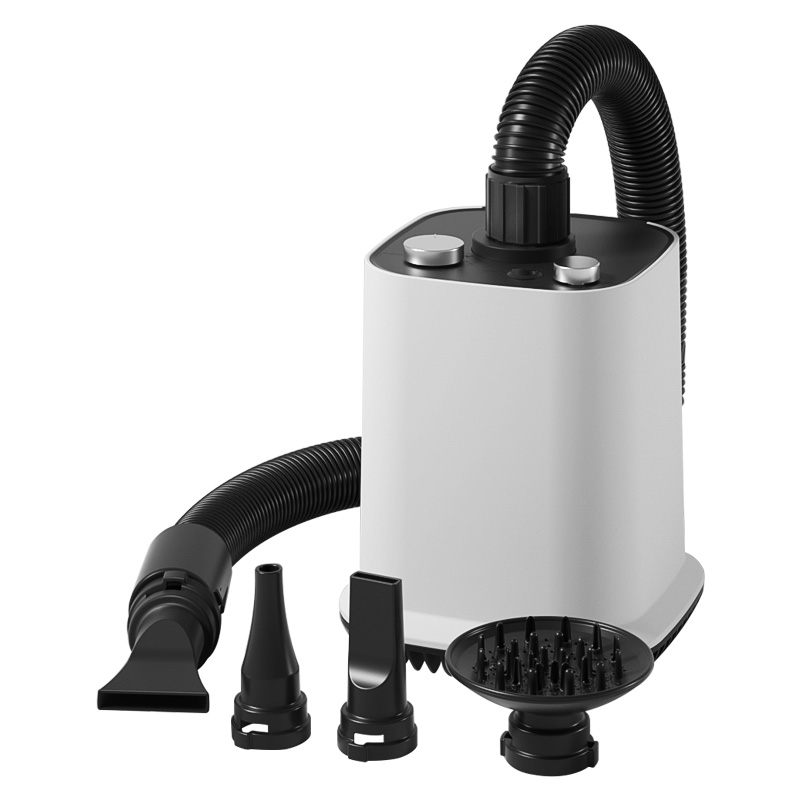
The DHC-X1 package includes three blowing nozzles. Interchangeable nozzles provide flexibility because different areas of a pet’s body and different coat conditions require different airflow patterns.
A wider nozzle can be useful when drying large areas such as the back, sides, or chest. It distributes air over a broader section and may provide a more comfortable experience for a pet that is becoming accustomed to the dryer.
A more concentrated nozzle can help direct airflow toward dense sections, damp areas, or hair that needs shaping. Concentrated airflow should be used with care because it can feel stronger and may disturb loose particles. It should not be aimed directly into the eyes, ears, nose, or mouth.
A third nozzle may be selected according to the coat type, drying stage, or preferred grooming technique. Users should follow the correct installation method and ensure that the attachment is securely fitted before operation.
Nozzle selection can make the product more versatile than a dryer with a permanently fixed outlet. It allows the user to adapt the air pattern without replacing the entire appliance. For pet shops and salons, this can be helpful when working with animals of different sizes and coat structures.
Towels are useful for removing surface water and calming a pet immediately after bathing. However, towel drying may leave the undercoat damp, especially on large, long-haired, or double-coated animals. It can also require substantial physical effort and may create tangles if the coat is rubbed too aggressively.
The DHC-X1 complements towel drying by moving air through the coat. A practical routine can begin with gentle towel pressing to remove excess water, followed by controlled airflow. This reduces the amount of water the dryer must remove while allowing air to reach areas that towels cannot easily dry.
A typical household hair dryer is compact and convenient, but it may not provide the air volume, hose length, nozzle flexibility, or working comfort needed for pet grooming. It may also use a small outlet that creates a concentrated hot stream.
The DHC-X1 is specifically configured around pet drying. Its stronger stated output, hose-based design, separate wind and temperature controls, three nozzles, insulated hand-contact area, and pet-oriented airflow concept provide a more suitable combination for animal grooming.
Some pet blowers offer strong airflow but limited control. A fixed-speed machine may be effective on a tolerant, large dog but overwhelming for a small or nervous animal. The DHC-X1’s adjustable airflow allows the user to start gently and increase power when appropriate.
Control is also useful when drying different body areas. The operator may choose a lower setting around sensitive regions and a stronger setting for dense areas, while maintaining awareness of the animal’s comfort.
Portable dryers are easy to store, but lower output can extend drying time. A 2000W product offers a larger performance range and is better suited to users who regularly dry thick coats or several animals. The DHC-X1 remains relatively compact while providing a high stated output for its category.
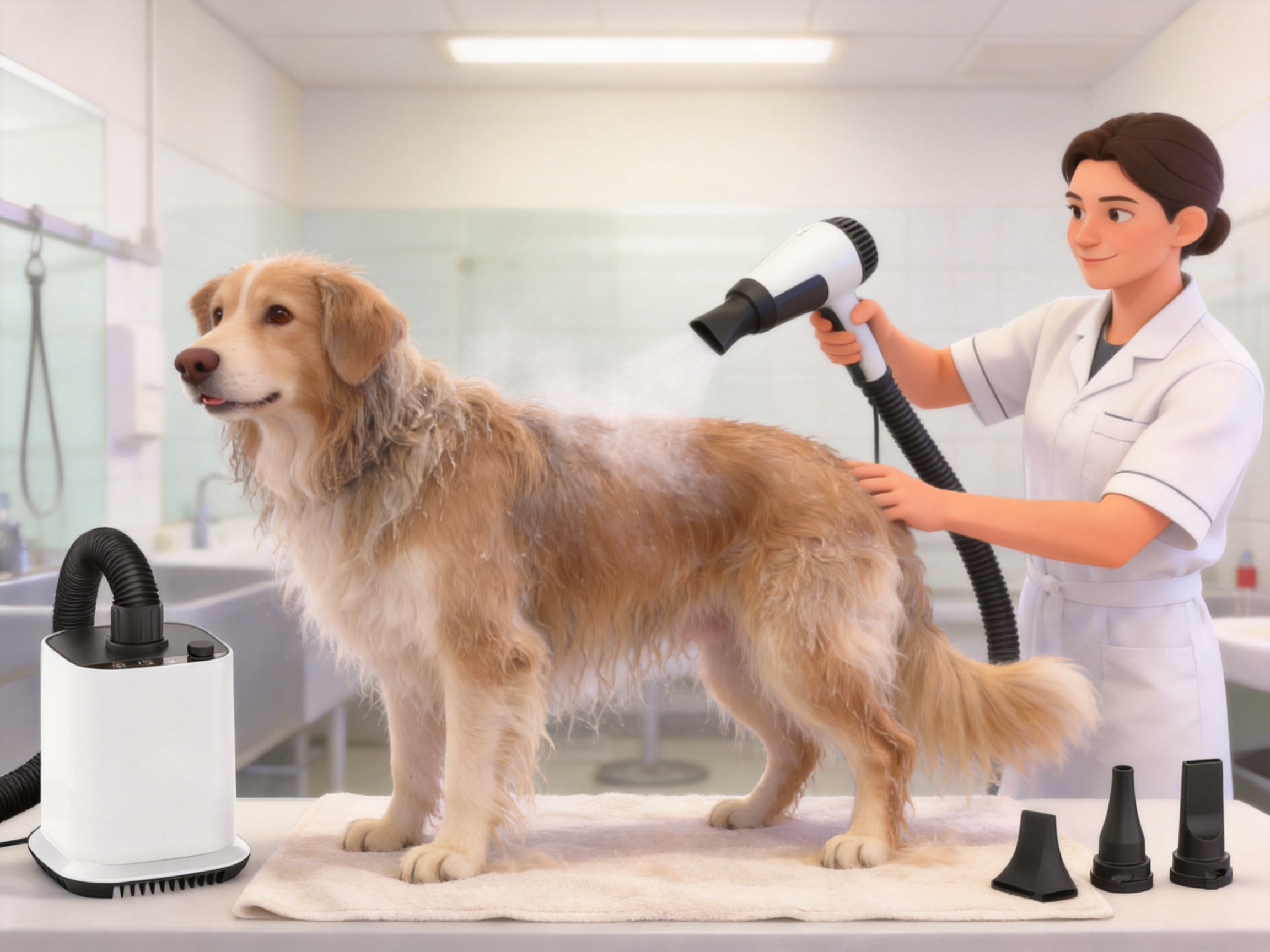
Correct operation is essential for both performance and pet comfort. Before using the product, place the main body on a stable surface with sufficient ventilation around the air inlet. Keep the appliance away from standing water, wet floors, and areas where the electrical connection could be exposed to moisture.
Insert the air-duct connection into the air outlet of the main unit. Confirm that the connection is properly seated. A loose connection may reduce airflow and cause the hose to move unexpectedly.
Choose the nozzle that suits the animal, coat, and drying stage. Screw the selected nozzle into the outlet pipe as instructed. Check that it is secure before switching on the appliance.
Turn the temperature control to start the machine and select a low initial setting. Turn the wind control to a gentle level. Let the pet hear and feel the airflow from a distance before moving closer.
Increase the airflow gradually according to the animal’s response. Adjust the temperature as needed, but keep the nozzle moving. Do not hold warm air over one area for an extended period.
Work systematically across the coat. Pay attention to the undercoat, belly, legs, paws, tail, neck, and areas behind the ears. Separate or brush sections of hair when appropriate so that moisture hidden beneath the surface can escape.
When the coat appears dry, inspect dense areas by touch. The skin and undercoat should not remain noticeably damp. Reduce the airflow before switching off the appliance, and allow the machine to cool according to the operating environment.
A pet dryer must be treated as a powered appliance that produces strong moving air and warmth. Users should read the supplied instructions before operation and should never leave the appliance running unattended.
Do not direct airflow into the eyes, ears, nose, or mouth. Avoid forcing air into skin folds or wounds. If the animal has a skin condition, recent surgery, respiratory sensitivity, or another health concern, consult a qualified veterinarian before using a powerful dryer.
Monitor the pet throughout the process. Signs of stress may include shaking, excessive panting, attempts to escape, flattened ears, vocalization, or unusual agitation. If these signs occur, reduce the airflow, increase the distance, change the nozzle, or stop the session.
Keep electrical connections dry. Do not use the appliance with wet hands or place the main body where water can enter. Inspect the cable, housing, hose, and nozzle before each session. Damaged components should be repaired or replaced by a qualified service provider.
Children should not operate the product without responsible adult supervision. The dryer should also be stored where pets cannot chew the cable or hose.
The product includes a cotton filter at the rear. Dust, loose hair, dander, and other particles can accumulate in the filter during regular use. A blocked filter may reduce airflow, increase operating strain, and affect drying performance.
To clean the filter, switch off and unplug the appliance. Open the rear cover and remove the cotton filter according to the instructions. Clean the filter appropriately and allow it to dry completely before reinstalling it. Do not operate the appliance with a wet filter.
The outside of the machine can be wiped with a soft, dry or slightly damp cloth when the appliance is disconnected from power. Avoid pouring water over the body. The hose and nozzles should also be checked for hair or debris that could restrict airflow.
Regular maintenance has several benefits. It helps preserve airflow, supports stable operation, reduces the accumulation of dust, and can extend the useful life of the appliance. Professional users should establish a routine inspection schedule because the equipment may be used repeatedly throughout the day.
| Specification | Details |
|---|---|
| Product model | DHC-X1 |
| Product type | Intelligent pet hair dryer and blower |
| Rated power supply | 220V/50Hz |
| Output power | 2000W |
| Product size | Approximately 23 × 23 × 26.5 cm |
| Adjustable wind speed | Approximately 20–70 m/s |
| Temperature information | Approximately 60°C stated adjustment temperature |
| Airflow control | Stepless wind-speed adjustment |
| Airflow structure | Three-dimensional surrounding airflow design |
| Hair-care feature | Negative-ion hair protection technology |
| Included accessories | Three blowing nozzles, one hose, one warranty card, and one main blower body |
Specifications should be understood together with the operating instructions. Performance can vary according to electrical conditions, ambient temperature, coat density, nozzle selection, hose condition, filter cleanliness, and the distance between the outlet and the pet.
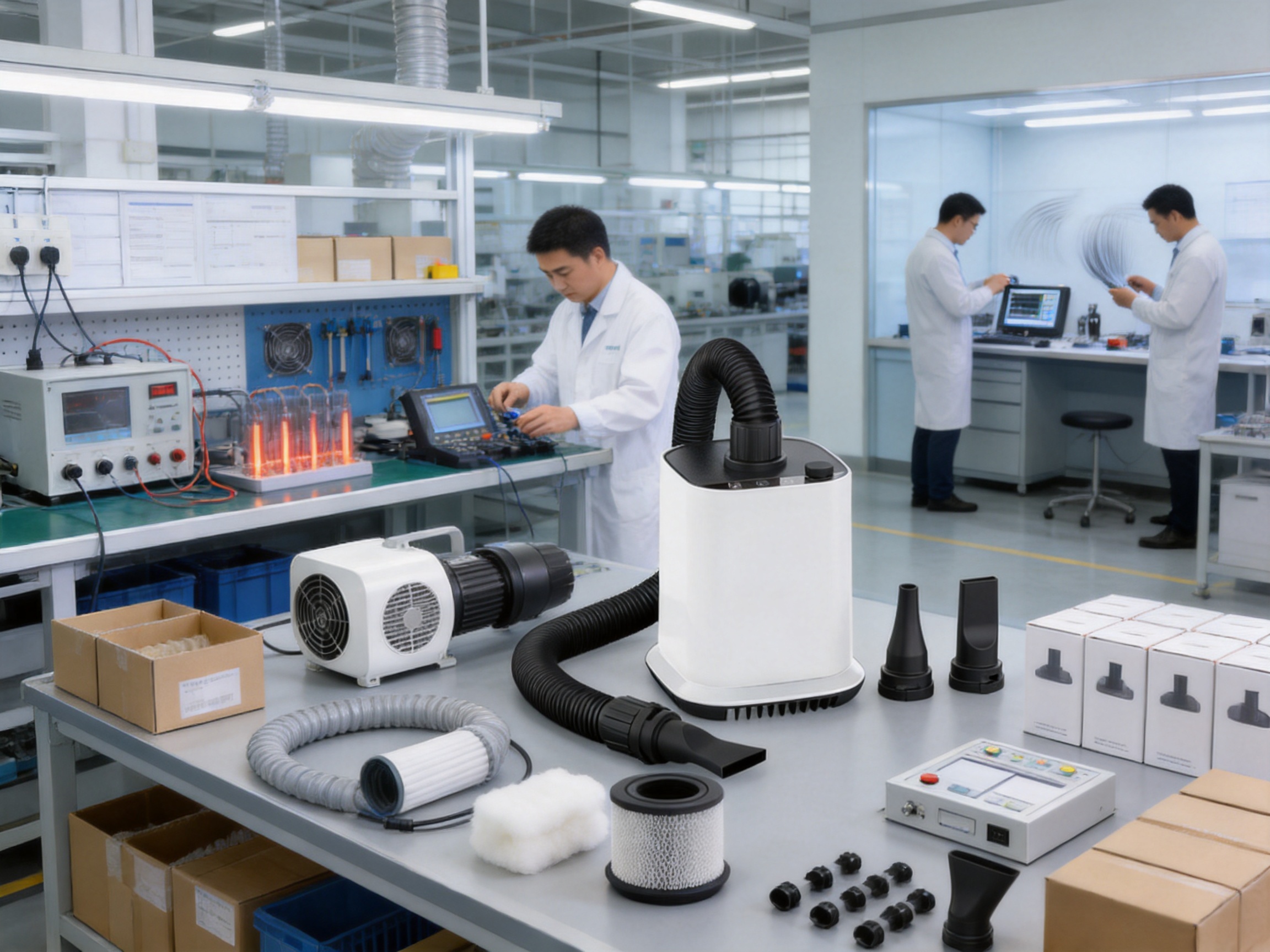
The product is supplied by Sensen Group Co., Ltd., an established manufacturer with a history extending back to 1985. The company describes its business as covering aquarium products, aquaculture machinery, industrial equipment, and related pet products. This broad industrial background is relevant because the DHC-X1 combines motor-driven airflow, temperature management, molded housing, flexible ducting, controls, filtration, and accessory components in one system.
The company information identifies several functional departments, including a research institute, business school, quality control department, personnel and administrative information department, and financial department. A dedicated quality control function can support inspection and process consistency across incoming materials, assembly, electrical components, product testing, packaging, and finished goods.
The company also reports a network of wholly owned subsidiaries and trading companies in different parts of China. Such a structure can provide access to broader manufacturing capabilities, component coordination, logistics resources, and regional service support. It may also make it easier to organize production and distribution for different product categories and markets.
The DHC-X1 reflects several areas of product development: airflow design, motor output, variable control, noise reduction, heat insulation, filtration, nozzle compatibility, and ergonomic handling. These elements must work together. Increasing motor power without controlling temperature may reduce comfort. Adding temperature control without sufficient airflow may extend drying time. A strong blower without a suitable hose or handle may be difficult to operate.
The product’s design shows an effort to combine performance and usability rather than focusing only on one technical specification. The air-duct structure is intended to balance airflow and noise, while the insulated handle addresses the user’s working experience. The negative-ion function focuses on coat appearance, and the adjustable controls address differences between animals.
For a product in this category, quality control should cover electrical safety, motor operation, switch performance, temperature behavior, airflow consistency, hose connection strength, nozzle fit, filter installation, housing integrity, and packaging protection. A systematic inspection approach helps reduce the possibility of variation between units.
Quality control is also important because pet grooming equipment is used close to animals and people. Stable controls, reliable insulation, secure attachments, and correctly assembled airflow paths contribute to safer daily use. The company’s stated quality-control organization provides a foundation for managing these requirements.
The company reports more than 30 years of development and a broad sales and production network. Experience across aquarium, aquaculture, industrial, and pet-related products can support supplier coordination and large-scale production planning. It can also help a manufacturer develop processes for different materials, including plastic housings, metal components, electrical parts, flexible hoses, filters, and packaging materials.
Manufacturing scale is valuable to distributors and professional users because it can support more stable availability, repeat orders, and coordinated product delivery. It may also make it easier to maintain a consistent accessory supply, including replacement filters, hoses, or nozzles where available through the appropriate sales channel.
The DHC-X1 is suitable for home pet owners who regularly bathe dogs, cats, and other compatible companion animals. It can be especially useful for owners of long-haired or dense-coated pets that remain damp for a long time after bathing.
Pet shops can use the dryer as part of a bathing and grooming service. Its adjustable airflow allows staff to adapt the process to different animals, while the hose and nozzles help organize the workstation.
Professional grooming salons may benefit from the combination of high output, variable control, and ergonomic handling. Repeated daily use makes filter maintenance, cable inspection, and operator comfort particularly important.
Breeders, boarding facilities, animal care centers, and mobile grooming services may also find the product useful where regular coat drying is required. Before purchasing multiple units, professional users should confirm electrical compatibility, workspace ventilation, service arrangements, and the availability of consumable or replacement parts.
When comparing pet dryers, users should look beyond the highest power figure. A useful evaluation should include output, airflow adjustment, temperature control, noise behavior, hose flexibility, nozzle selection, filter access, cleaning requirements, housing quality, safety design, and after-sales support.
Power determines the potential capacity of the motor, but controllability determines how practically that power can be used. A dryer with strong output and stepless adjustment may be more versatile than one with similar power but limited settings.
Temperature control is also essential. A dryer should permit gentle operation for smaller or sensitive pets and stronger operation for dense coats when appropriate. The product should be used with continuous monitoring rather than relying only on a numerical temperature value.
Noise should be assessed in context. A quieter airflow structure can improve comfort, but the user should still introduce the machine gradually. The physical design matters as well. A stable main body, flexible hose, insulated handle, and secure nozzles can reduce fatigue and improve control.
Finally, buyers should consider the manufacturer’s production experience and quality systems. A company with research, manufacturing, quality control, and distribution capabilities may be better positioned to support consistent production than a supplier focused only on short-term assembly or trading.
No. Although some product listings may use an incorrect translation or category label, the DHC-X1 described in the supplied materials is an intelligent pet hair dryer and blower. It is intended for drying, cleaning, and shaping pet hair after bathing.
The stated output power is 2000W. The rated power supply is 220V/50Hz.
Yes. The product uses stepless wind-speed adjustment, with a stated wind-speed range of approximately 20–70 meters per second. Users should begin at a low setting and increase the airflow gradually.
Yes. The DHC-X1 has a separate temperature control. Product information states an adjustment temperature of approximately 60°C. The user should select a comfortable operating level and keep the airflow moving across the coat.
It may be suitable if introduced gradually and operated carefully. Start with low airflow, keep the dryer at a distance, and allow the pet to become familiar with the sound. Stop or reduce the setting if the animal shows signs of distress.
Yes. The stated package includes three blowing nozzles, one hose, one warranty card, and one main blower body.
The negative-ion function is intended to help reduce static electricity and support smoother, shinier, and less flyaway hair. It complements, but does not replace, correct bathing, brushing, and drying practices.
Switch off and unplug the appliance, open the rear cover, remove the cotton filter, and clean it according to the instructions. The filter must be completely dry before it is installed again.
It can reduce dependence on towels, but towel pressing is still useful for removing excess surface water immediately after bathing. A combination of towel drying and controlled airflow is often more efficient than either method alone.
Its high stated output, adjustable controls, hose, interchangeable nozzles, and insulated handle make it suitable for professional grooming applications. Salons should establish regular inspection and filter-cleaning procedures and confirm local electrical requirements.
It may be used only if the cat tolerates the sound and airflow. Cats can be particularly sensitive to noise and strong wind. Use the lowest practical setting, introduce the appliance slowly, and stop immediately if the animal becomes distressed.
The DHC-X1 is designed around pet grooming rather than human hair styling. Its features include a stronger stated output, flexible hose, three nozzles, stepless airflow adjustment, separate temperature control, surrounding airflow, negative-ion hair care, and an insulated air-duct and handle design.
The DHC-X1 presents a balanced approach to pet drying. Its 2000W output addresses the need for strong airflow, while its adjustable wind and temperature controls support a more gradual and individualized grooming process. The three-dimensional airflow concept, flexible hose, and three nozzles make the unit adaptable to different coat types and body areas.
Its negative-ion hair-care feature may help reduce static and improve the finished appearance of the coat. The air-duct structure is intended to reduce low-frequency noise, while the insulated handle and thickened duct focus on operator comfort. Together, these features provide a broader set of functions than a basic domestic hair dryer or a fixed-speed blower.
The product’s suitability is also supported by the manufacturer’s reported industrial experience, research organization, quality-control department, broad subsidiary structure, and long-term development history. These company strengths are relevant to a product that requires coordinated control of electrical, mechanical, airflow, thermal, ergonomic, and accessory-related elements.
As with any powered grooming appliance, performance depends on correct use. The dryer should be introduced slowly, operated with continuous observation, kept away from water at the electrical body, and maintained through regular filter cleaning and inspection. When these practices are followed, the DHC-X1 can provide an efficient and adaptable solution for home grooming, pet shops, grooming salons, boarding facilities, and other animal-care environments.
1. Product specification sheet for the DHC-X1 intelligent pet hair dryer, including model, power supply, output power, dimensions, wind-speed range, temperature information, and package contents.
2. Product operating instructions for air-duct installation, nozzle installation, temperature and wind adjustment, and cotton-filter cleaning.
3. Product feature summary describing quick drying, adjustable temperature, stepless airflow control, surrounding airflow, insulated handle construction, and thickened air-duct design.
4. Sensen Group Co., Ltd. company profile describing company history, research organization, quality-control functions, subsidiaries, trading companies, and product-industry coverage.
5. General pet-grooming safety principles concerning controlled temperature, gradual airflow introduction, electrical safety, coat inspection, and continuous animal observation.


 No. 61-79, Baima Street, Maao Town, Dinghai District, Zhoushan City, Zhejiang Province, China.
 0086 580 8082088 / 8081168
 0086 580 8080978
 songhua@sunsun-china.com