

 English
 русский
 España
 Portugal
 عربي
Zhang Lina | Overseas Aquarium Filters Sales Rep
Home / Author / Zhang Lina | Overseas Aquarium Filters Sales Rep / Top-Entry Cat Litter Basin: A Cleaner, Roomier Solution for Modern Homes
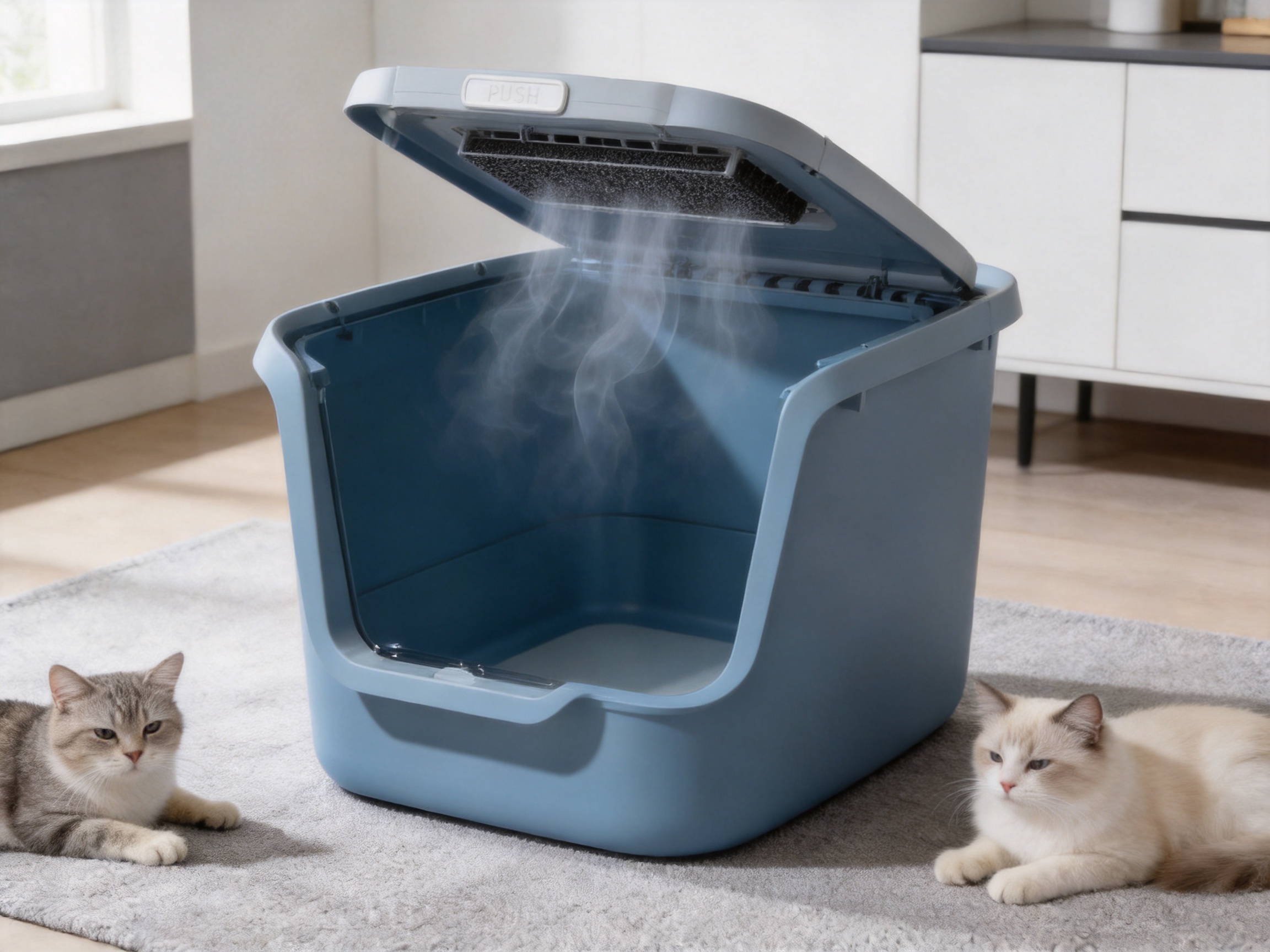
Cat owners often accept litter tracking, scattered sand, unpleasant odors, difficult cleaning, and limited interior space as unavoidable parts of daily life. A conventional litter tray may be inexpensive and easy to find, but it can also leave considerable room for improvement. Open trays allow litter to escape in every direction, while many enclosed boxes are difficult to clean, uncomfortable for larger cats, or poorly suited to homes with more than one cat.
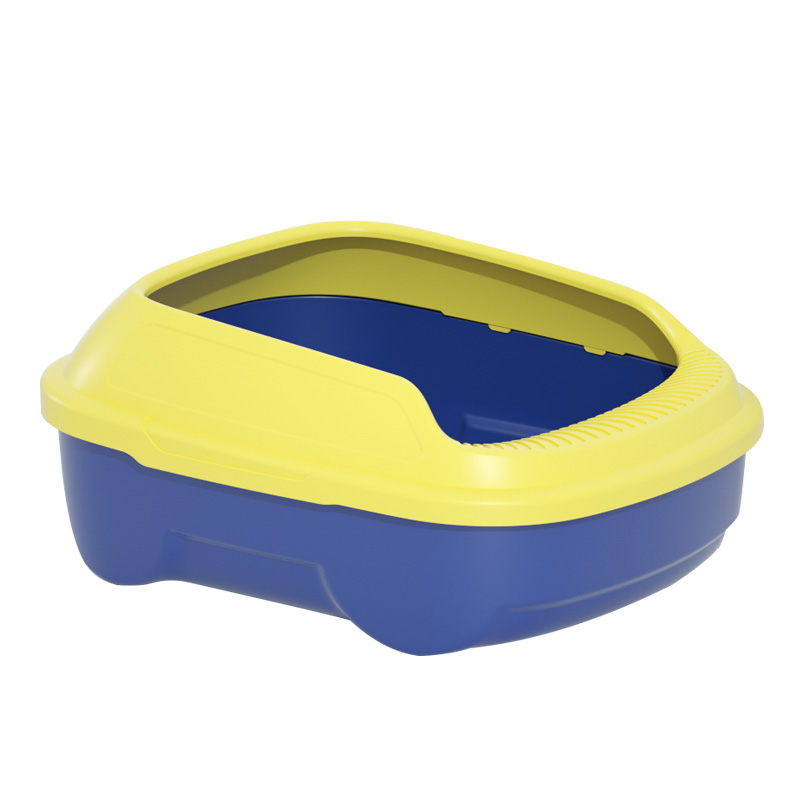
The JHO overhead cat litter basin is designed to address these common problems through a combination of top entry, spacious construction, seamless molding, a liftable lid, a covered deodorizing compartment, and a sand-retaining top surface. Instead of asking owners to compromise between accessibility, cleanliness, appearance, and convenience, the product brings these requirements together in one integrated design.
Manufactured within the wider production network of Sensen Group Co., Ltd., the basin reflects the company’s long-term experience in pet products, aquarium equipment, machinery, and related household products. The manufacturer’s research, production, quality control, and distribution capabilities provide a strong foundation for developing practical products that serve both domestic and international markets.
Content
Cat litter is not simply a container problem. It is a daily-use system involving the cat, the owner, the litter material, the surrounding floor, and the air quality of the room. A litter basin must be comfortable enough for the cat to use regularly and practical enough for the owner to maintain without frustration.
Traditional open litter trays usually provide easy access, but their low walls may allow urine, litter, and waste to reach the floor. A cat that digs enthusiastically can scatter litter outside the tray within minutes. The exposed surface also makes odors more noticeable, especially when the basin is placed in a small apartment, bathroom, laundry area, or bedroom.
Front-entry enclosed litter boxes may reduce some visible mess, yet they can introduce other difficulties. A narrow opening can be uncomfortable for a large cat, and a low internal ceiling may restrict natural standing, turning, or squatting positions. Owners may also need to remove or separate several parts before they can reach the waste, which makes routine cleaning slower than it should be.
Another issue is the relationship between a cat’s natural behavior and the shape of the litter box. Cats often prefer elevated, covered, or enclosed spaces that resemble a secure shelter. At the same time, many cats dislike cramped interiors or poorly ventilated containers. A successful litter basin therefore needs to provide both privacy and freedom of movement.
The overhead design approaches these challenges from a different direction. The cat enters through an opening in the top, uses the spacious interior, and exits upward. The raised route helps keep litter contained, while the top cover can collect particles from the cat’s paws before they reach the floor. This arrangement is especially useful for households seeking a cleaner appearance without giving up a comfortable internal space.
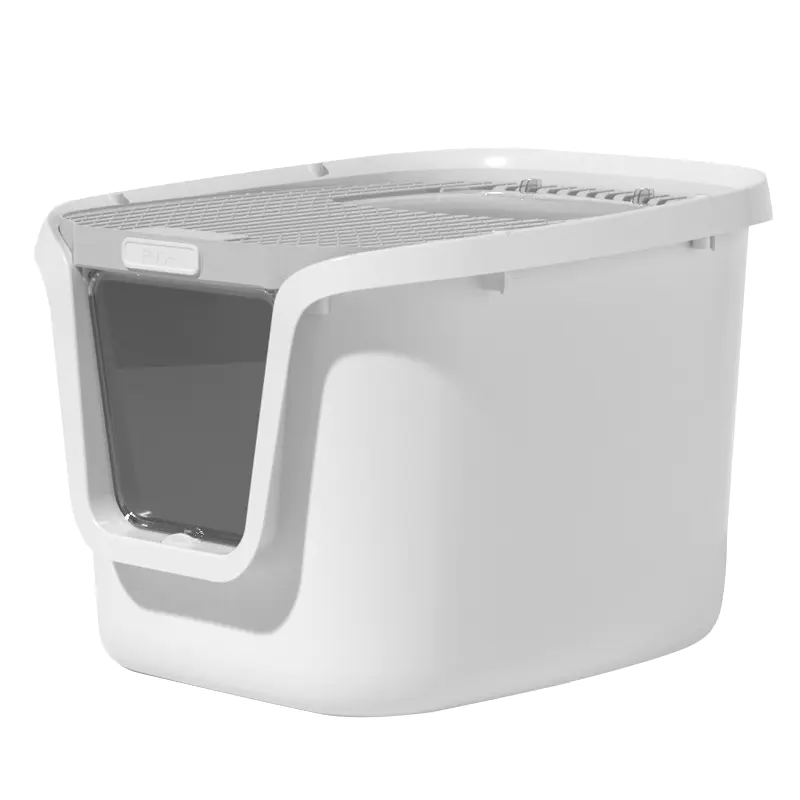
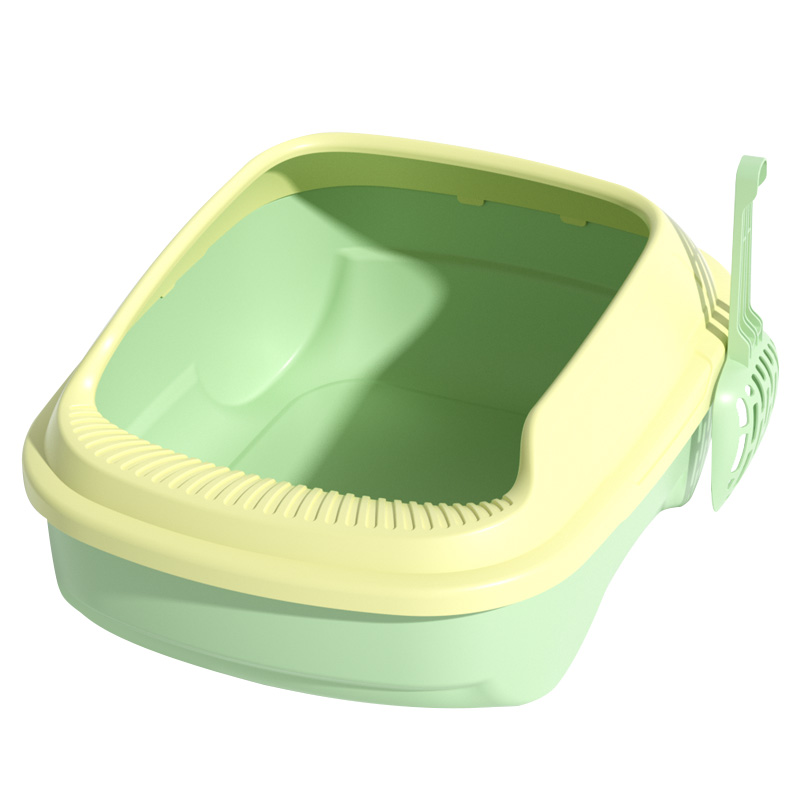
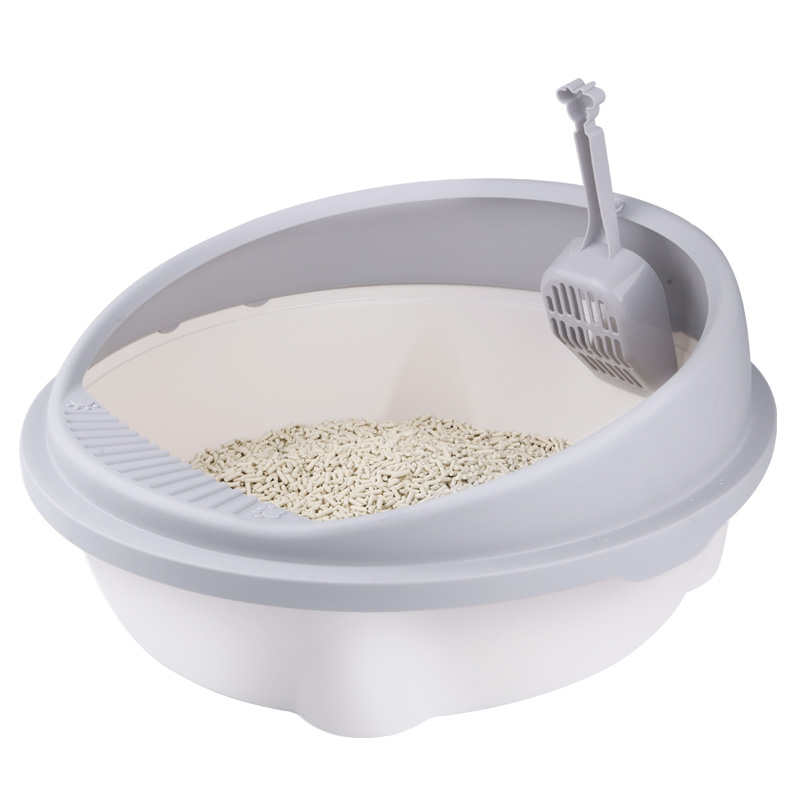
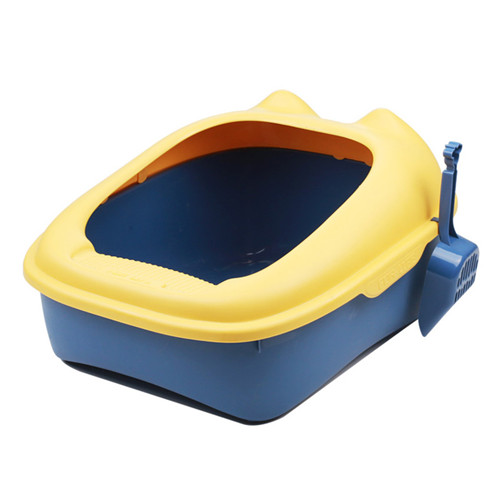
JHO overhead cat litter basin
The central feature of the basin is its top-entry structure. Instead of placing the doorway on the front or side, the product uses a top opening that encourages the cat to climb in and out. This configuration creates a practical barrier against litter being carried directly across the floor.
Top entry can be particularly valuable for cats that dig energetically or kick litter toward the entrance. In a conventional front-opening box, the litter may travel straight through the doorway. With an overhead design, the cat must pass across the top surface after using the basin. Any loose particles that fall from the paws can remain on the lid or return through the opening when the cover is lifted.
The upper entry also gives the basin a more enclosed profile. This can help reduce the visual impact of the litter area in a home. The product has a furniture-friendly appearance that is more suitable for modern interiors than a basic exposed tray. Its three color options, Temperament Grey, Cherry Pink, and Maka Blue, allow owners to select a finish that fits different rooms and personal preferences.
The entry opening measures 20 by 20 centimeters. This provides a defined access point while retaining the enclosed character of the basin. Because cats vary in size, age, flexibility, and preference, owners should consider the opening and overall dimensions carefully before purchase. The large version is intended for more spacious use, while the small version is suitable for homes that have less available floor area.
The design also includes two-way access behavior within the top-entry structure. Cats naturally enjoy climbing through boxes and exploring enclosed spaces. A top opening can make the litter routine feel more familiar and engaging, especially for cats that already like boxes, tunnels, and elevated resting places.
A litter basin can only work well if the cat can use it without feeling restricted. The JHO basin emphasizes a large internal space in which a cat can sit, stand, turn, dig, and squat more naturally. The product information specifically presents the interior as suitable for cats weighing up to 20 kilograms, although the actual suitability will depend on the cat’s body shape, movement habits, and individual comfort.
Space is important for hygiene as well as comfort. When a cat has room to position itself away from previously used litter, the likelihood of stepping directly into waste may be reduced. A spacious basin also gives the cat enough area to dig and cover waste without immediately reaching the walls or lid.
The large interior is useful for households with several cats. Multi-cat homes often experience heavier litter usage and more frequent cleaning. A small tray may fill quickly, encourage crowding, or cause a cat to avoid the box. A larger basin gives each cat more usable area and can help owners manage the litter routine more efficiently.
Owners should still provide enough litter boxes for the number of cats in the home, since a larger basin does not remove the need for appropriate litter-box management. However, the product’s capacity can make each individual box more functional and comfortable.
The two available sizes provide flexibility:
| Specification | Small Version | Large Version |
|---|---|---|
| Overall length | 44.5 cm | 55.5 cm |
| Overall width | 37.5 cm | 44.5 cm |
| Overall height | 33 cm | 38.3 cm |
| Entry opening | 20 x 20 cm | 20 x 20 cm |
| Available colors | Temperament Grey, Cherry Pink, Maka Blue | Temperament Grey, Cherry Pink, Maka Blue |
The small model can help owners make better use of limited floor space. The large model offers a more generous interior for bigger cats, active cats, or multi-cat households. Measuring the planned location before ordering is recommended, including enough clearance to lift the lid and remove the basin for cleaning.
One of the most important structural advantages of this product is its 360-degree seamless integrated design. A litter basin with numerous joints, gaps, or detachable seams may allow urine and fine litter to collect in difficult-to-reach areas. Over time, these hidden areas can contribute to odor, staining, and more complicated cleaning.
The integrated form reduces the number of potential leakage points. When a cat urinates close to the wall or digs aggressively, the continuous basin structure is designed to keep liquid and litter inside the main container. This is an important improvement over low-sided or loosely assembled trays, which may allow waste to splash or escape.
Seamless construction also makes the product easier to wipe and wash. Fewer connecting edges mean fewer places for residue to accumulate. This does not eliminate the need for regular maintenance, but it can make each cleaning session more direct and less labor-intensive.
For owners, the benefit is not limited to appearance. Preventing leakage protects the floor beneath the litter area and reduces the need to clean surrounding surfaces. It can also help preserve the condition of wooden flooring, mats, tiles, and other household materials that may be affected by repeated exposure to moisture.
Compared with a basic open tray, the higher integrated walls and covered profile provide a more controlled environment. Compared with a complicated multi-part enclosed box, the unified molding approach offers a simpler surface to inspect and maintain.
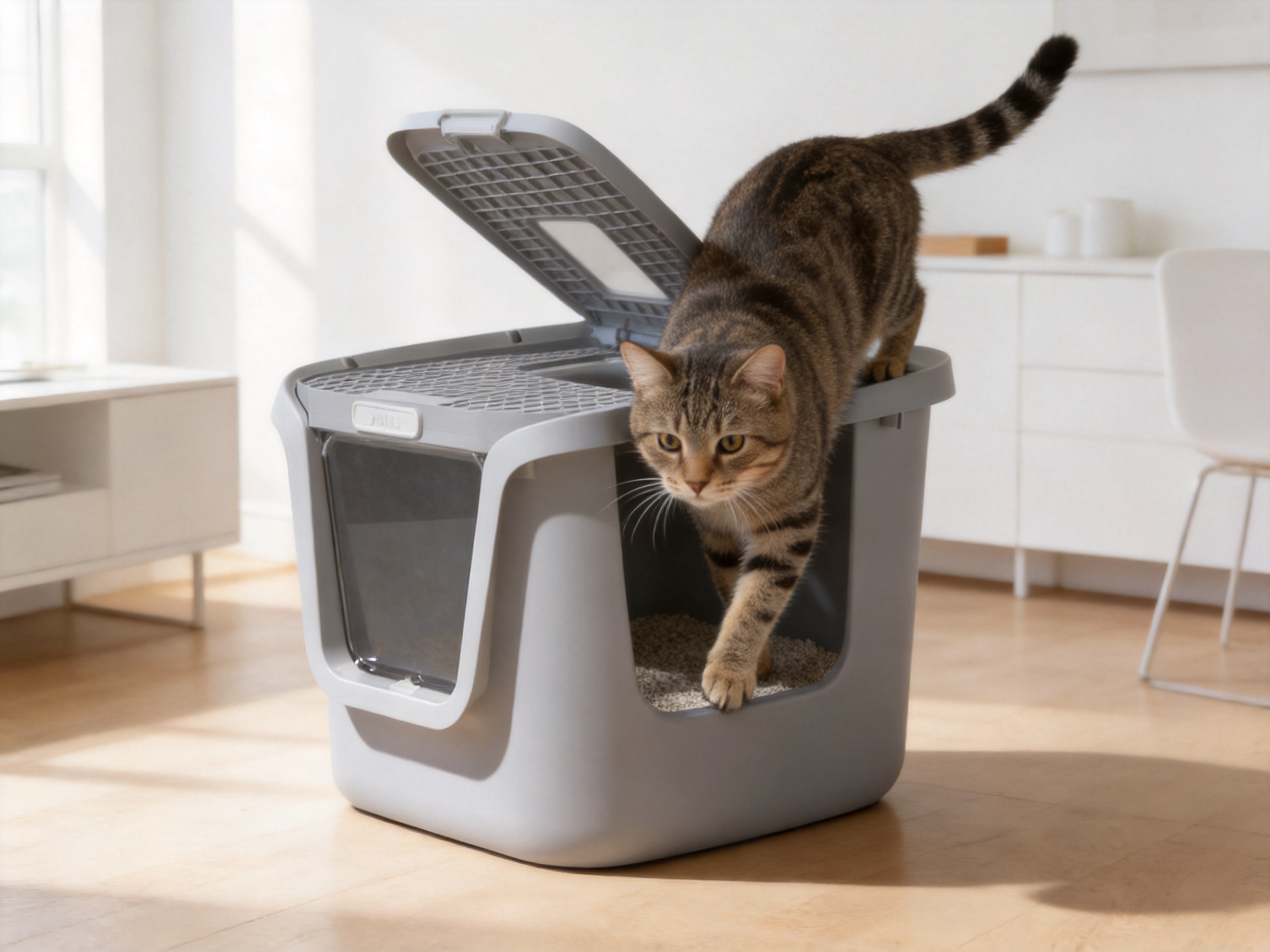
Easy access is essential because litter cleaning is a frequent task. A litter box that controls mess but takes too long to open may discourage owners from cleaning it as often as necessary. The basin addresses this issue with a liftable top-cover design intended to provide rapid access to the interior.
When the lid is lifted, the owner can reach the waste directly with a scoop. This avoids the need to dismantle a complex enclosure or move the entire unit before every cleaning session. The product information describes the lid as capable of being lifted in approximately one second, emphasizing the speed and convenience of the opening mechanism.
Quick access is especially useful in busy households, multi-cat homes, and commercial environments where several litter basins must be serviced. A simple lifting action makes it easier to perform frequent spot cleaning throughout the day instead of postponing maintenance until the box becomes heavily soiled.
The liftable lid is also practical when the litter needs to be changed completely. Owners can open the basin, remove the used material, wipe the interior, add fresh litter, and close the cover without handling numerous separate panels. A straightforward workflow can make routine care less unpleasant and more consistent.
Although the lid is designed for convenience, owners should operate it carefully and keep the moving surfaces free from excessive litter. Regular inspection helps maintain smooth movement and prevents particles from obstructing the closure area.
Litter tracking is one of the most persistent complaints associated with cat ownership. Even when a cat uses the box correctly, small particles may cling to the paws and fall onto the floor. Traditional trays often provide no dedicated surface for collecting this material.
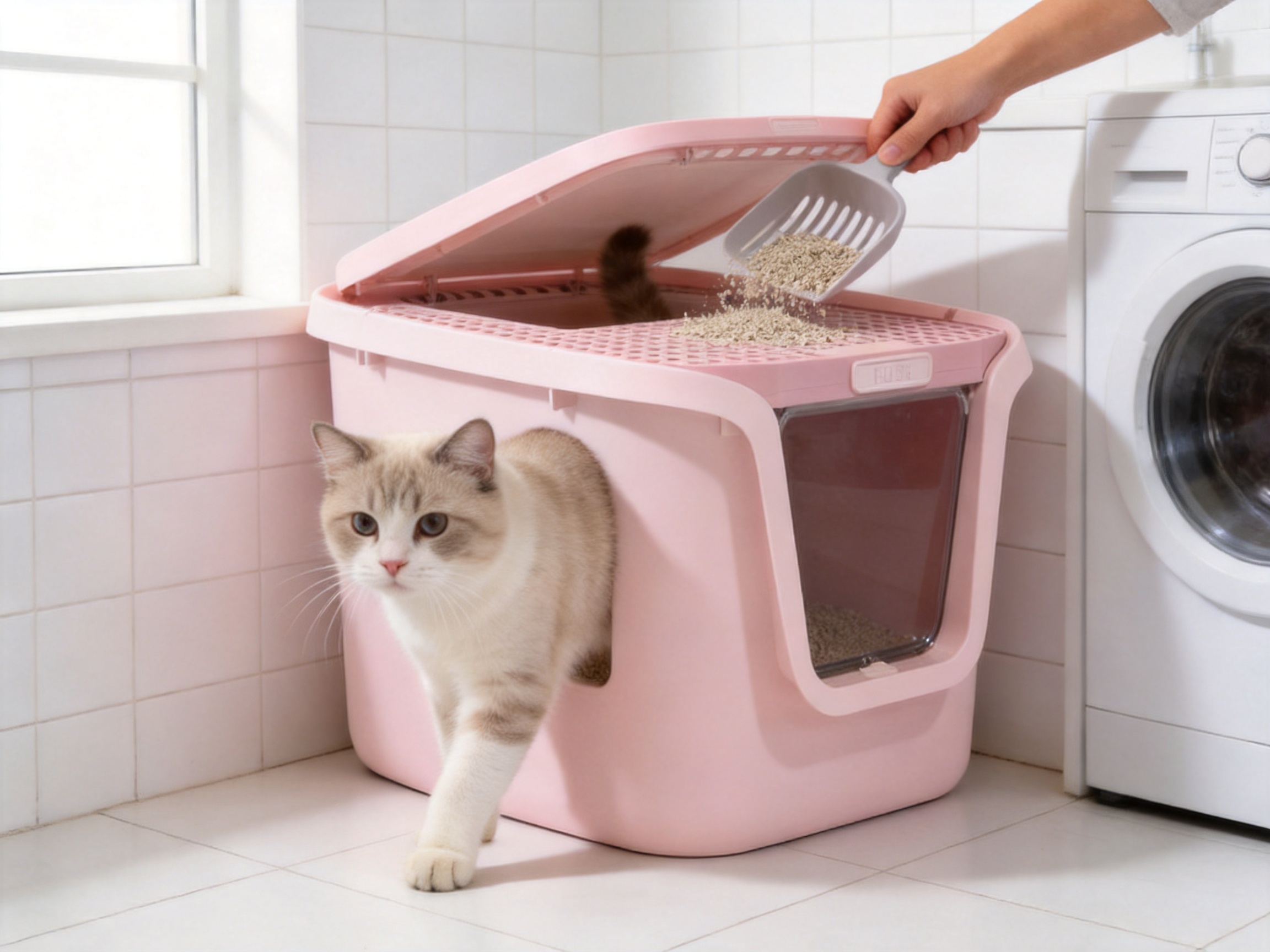
The top-entry basin uses the cover as a sand-retaining area. When the cat climbs out, particles that fall from the paws can remain on the top rather than being carried directly into the room. When the lid is lifted, the product’s design allows the collected litter to fall back into the basin instead of being thrown away.
This creates two practical benefits. First, the floor around the basin can remain cleaner. Second, the owner may waste less litter because particles collected on the cover can return to the main container. The result is a more efficient daily routine and a tidier appearance around the litter station.
The sand-retaining feature is different from relying solely on a separate floor mat. A mat may still be useful, but the top cover works at the moment the cat exits, before loose particles spread across a larger area. The combination of an overhead route and a collecting surface offers a more complete approach to controlling tracking than a conventional low-sided pan.
No litter basin can guarantee that every particle will remain inside. Litter type, cat behavior, paw structure, and the surrounding floor all influence tracking. Nevertheless, the integrated top surface directly addresses one of the most common sources of household mess.
Odor control is another central consideration when choosing a litter basin. A fully open tray exposes the litter surface to the room, while a closed box can trap unpleasant air if it lacks appropriate ventilation. The product combines a covered design with a concealed deodorizing compartment intended to support air freshness.
The built-in compartment is designed for activated carbon. Activated carbon is widely used as an adsorbent material because its porous structure can help capture certain odor-causing compounds. In this product, the concealed placement keeps the deodorizing component integrated into the top cover rather than leaving a loose filter or accessory visible in the room.
Ventilation and odor reduction should work together. A covered litter basin that is completely unventilated may retain moisture and concentrated odors inside. The described design uses ventilation-oriented deodorization to help maintain a cleaner-smelling environment while preserving the enclosed form of the basin.
Activated carbon is not a substitute for scooping. The most effective odor-control routine includes removing waste promptly, replacing litter according to the litter manufacturer’s instructions, washing the basin regularly, and replacing or refreshing the carbon material when necessary. The deodorizing compartment is best understood as an additional layer of odor management.
Compared with a simple open pan, the concealed carbon system offers a more deliberate approach to odor handling. Compared with an enclosed box without a filter area, it provides a designated place for an adsorbent material. This makes the product more suitable for apartments, shared living areas, and other places where odor control is especially important.
A product for animals should not focus only on human convenience. The cat must feel secure and comfortable using the basin. The top-entry format reflects the fact that many cats are attracted to boxes, enclosed spaces, and elevated routes.
The cat enters from above, moves into a protected interior, and exits through the same general route. This can create a sense of privacy while reducing exposure to activity in the surrounding room. Some cats may prefer this arrangement because it allows them to use the litter area away from direct visual contact.
The spacious body helps balance the privacy of a covered basin with the need for free movement. Cats can stand, turn, dig, and squat without being forced into an excessively narrow compartment. A product that combines cover and interior volume is more versatile than one that simply places a lid over a small tray.
Transition should be handled patiently, particularly for cats that have only used front-entry boxes. Owners can place the new basin near the familiar litter box, use the same litter, and allow the cat to investigate without pressure. The top-entry design may be accepted quickly by curious cats, while cautious cats may require more time.
Older cats, kittens, cats with limited mobility, or animals recovering from illness may find climbing into a top-entry basin more difficult. For these animals, an accessible alternative may be more appropriate. Product selection should always consider the individual cat rather than relying only on general design advantages.
Pet products are increasingly expected to fit into the home rather than appear as purely utilitarian equipment. The basin’s enclosed shape and three color choices make it easier to integrate into different interior styles.
Temperament Grey offers a neutral appearance that can blend with contemporary, minimalist, or industrial rooms. Cherry Pink provides a brighter and more playful option, while Maka Blue gives the litter area a distinct color accent. The choice of color does not affect the core function, but it allows owners to select a product that feels intentional rather than visually out of place.
The covered construction also reduces the immediate visibility of litter and waste. This can be valuable when the product must be placed in a bathroom, hallway, utility room, bedroom, or other shared area. A more discreet silhouette helps owners maintain a cleaner visual environment.
Appearance should never replace hygiene, but attractive design can encourage owners to place the basin in a practical location where it is easier to monitor and clean. A product that is accepted as part of the home is more likely to receive consistent daily care.
Open trays are usually simple and accessible, but they provide limited protection against litter scatter, urine splash, and odor spread. The overhead basin offers higher containment, a covered interior, and a dedicated top surface for collecting loose litter.
An open tray may be suitable for a kitten, an older cat, or an animal that cannot climb. However, for cats that dig forcefully or carry litter on their paws, the top-entry structure provides a more targeted solution to everyday mess.
Many front-entry boxes prioritize a compact outer shape, which can reduce internal space. The JHO basin emphasizes a large interior in which cats can adopt different positions. The liftable lid also gives the owner direct access from above, avoiding the need to reach through a narrow door.
Front-entry designs can be easier for cats that prefer a familiar route, but they may allow litter to travel directly out of the entrance. The top-entry route interrupts this path and helps keep the surrounding floor cleaner.
Some enclosed litter products use several detachable panels, frames, doors, and filters. These features can provide flexibility, but they may also create seams, corners, and parts that require frequent disassembly. The integrated molding of this basin reduces structural complexity while preserving access through the liftable lid.
A simpler body can help owners identify dirty areas quickly and clean the basin more thoroughly. It also reduces the number of components that can be misplaced during washing or maintenance.
A visually attractive litter box may not provide enough room, adequate odor management, or convenient access. This basin combines a coordinated appearance with functional features including spacious dimensions, integrated molding, a top-entry route, sand retention, and a concealed activated-carbon area.
The product therefore competes not only on appearance but also on the practical details that influence everyday satisfaction.
The product is associated with Sensen Group Co., Ltd., a manufacturer with roots extending back to 1985. Over more than three decades, the company has developed activities covering aquarium pets, aquaculture machinery, industrial equipment, and related product categories. This broad industrial background is relevant because it combines consumer-product understanding with experience in technical manufacturing.
The company’s stated organizational structure includes research, business development, quality control, personnel and administration, information management, and finance departments. A dedicated research institute and quality control function can support a more systematic product-development process than a small operation focused only on short-term assembly.
The group also operates through multiple wholly owned subsidiaries and maintains an import and export company. Its wider network includes businesses connected with pet products, equipment, manufacturing, and distribution. This structure can help coordinate product design, production, inspection, logistics, and market service across different regions.
For a molded litter basin, manufacturing quality is especially important. The product must maintain consistent dimensions, stable walls, properly fitted lid components, and a smooth surface that can be cleaned repeatedly. Integrated molding requires attention to material distribution, shape accuracy, surface finish, and cooling control during production.
Consistency matters because even small differences can affect how a lid fits, how the basin sits on the floor, or how easily the owner accesses the interior. A manufacturer with established production systems is better positioned to monitor these details across multiple production runs.
Quality control is also important for color consistency. The three available finishes should maintain a coordinated appearance from one production batch to another. While minor variation can occur in any manufactured plastic product, structured inspection helps maintain a reliable standard.
The company’s research-oriented structure supports a product philosophy based on identifying everyday problems and solving them through physical design. The basin’s features correspond directly to common complaints: leakage, restricted space, slow cleaning, strong odor, litter tracking, and unattractive appearance.
This approach is more meaningful than adding decorative features without improving use. The seamless body responds to leakage. The spacious interior responds to size and comfort. The liftable lid responds to cleaning speed. The top surface responds to tracking. The activated-carbon compartment responds to odor. The color range responds to home integration.
Product development also benefits from knowledge gained across related pet and equipment categories. Experience in aquarium products and water-related equipment, for example, can contribute to an understanding of moisture control, cleanable surfaces, material durability, and production reliability. The litter basin belongs to a different use category, but many manufacturing principles overlap.
The company’s long-standing presence in domestic and international markets can further support feedback collection. Different households use different litter types, place products in different rooms, and expect different levels of convenience. A broad market perspective helps manufacturers recognize which features offer universal value and which require regional adaptation.
Before first use, place the basin on a stable, level surface. The floor should be strong enough to support the basin, the litter, and the cat. Avoid locations where the top cover could strike a wall, shelf, cabinet, or other object when lifted.
Fill the basin with an appropriate depth of cat litter. The ideal depth depends on the litter material and the cat’s digging behavior. Too little litter may reduce absorption and make it easier for waste to contact the basin floor. Too much litter may increase tracking and make the basin unnecessarily heavy.
Scoop waste regularly. A top-entry litter basin can reduce visible mess, but it still depends on consistent cleaning. Prompt removal helps control odor, keeps the litter more attractive to the cat, and supports better overall hygiene.
When cleaning the basin, remove the used litter and wipe the internal surfaces with a pet-safe cleaning product. Rinse away residue and allow the components to dry before adding fresh litter. Avoid harsh chemicals or strong fragrances that may discourage the cat from using the box.
Inspect the lid, hinges, contact points, and deodorizing compartment periodically. Remove any litter particles that may interfere with smooth lifting or closing. Replace activated carbon according to its condition and the manufacturer’s maintenance recommendations.
The top cover should also be cleaned because it functions as a litter-catching surface. Returning collected litter to the basin helps reduce waste, but the cover should not be allowed to accumulate dust, waste, or moisture.
The small basin measures 44.5 centimeters in length, 37.5 centimeters in width, and 33 centimeters in height. It is appropriate for owners who need a more compact footprint and whose cats can comfortably use the 20 by 20 centimeter opening and available internal space.
The large basin measures 55.5 centimeters in length, 44.5 centimeters in width, and 38.3 centimeters in height. Its larger dimensions provide more room for bigger cats, cats that turn frequently before squatting, and households that prefer a more generous litter area.
Body weight alone should not determine the selection. A long-bodied cat may need more floor length, while a tall cat may benefit from greater internal height. Owners should observe the cat’s normal toilet posture and compare it with the basin’s dimensions.
For a multi-cat household, the large version can provide additional capacity, but owners should still consider installing more than one litter box. Separate locations may reduce competition and give each cat a choice of private areas.
Some cats accept a new litter basin immediately, while others are cautious about changes. A gradual introduction can improve the likelihood of successful use.
Place the basin in a quiet location that the cat already recognizes as safe. Use familiar litter at first so that the smell and texture do not change at the same time as the container. If the cat is hesitant to climb in, leave the lid open where possible and allow supervised exploration.
Reward calm investigation, but do not force the cat into the basin. Pressure can create a negative association with the litter area. Once the cat begins using the product reliably, the owner can maintain the normal lid position and cleaning routine.
Owners changing from a front-entry box may keep the old box nearby temporarily. When the cat chooses the new basin consistently, the old one can be removed or retained as an additional option depending on the household’s needs.
The basin is suitable for homes that need better control of litter tracking and visual clutter. Its enclosed form can work well in apartments, family homes, bedrooms, utility rooms, and other spaces where a fully open tray would be conspicuous.
It may also be valuable for households with active cats that scatter litter during digging. The top surface and elevated exit route create an additional containment stage between the interior and the floor.
For owners who clean frequently but dislike disassembling complicated litter boxes, the liftable lid can simplify the routine. The ability to open the main compartment quickly makes spot cleaning more convenient.
The product may be less suitable for cats with restricted mobility, severe joint problems, or a strong aversion to climbing. In those cases, a low-entry design may be more appropriate. Careful observation of the cat’s age, health, flexibility, and established habits should guide the decision.
Sensen Group Co., Ltd. describes a broad manufacturing and commercial network supported by multiple subsidiaries, an import and export company, and numerous trading relationships. This scale is relevant to buyers seeking stable product availability, organized communication, and the ability to serve markets beyond a single local region.
The company’s stated business philosophy emphasizes technical industrial development, global marketing, and international brand development. These priorities support a production model in which product design is paired with market requirements, quality management, and distribution planning.
For retailers and professional buyers, a manufacturer with several functional departments may offer advantages in product coordination. Research teams can address design questions, quality-control teams can manage inspection, and export personnel can support international order processes. The exact service arrangement depends on the buyer’s agreement, but the organizational foundation is significant.
The company also presents itself as an innovator serving aquarium pets, aquaculture machinery, industrial equipment, and related industries. This diversified background can help reduce dependence on a single product category and support continuous investment in manufacturing capability.
A product such as the overhead cat litter basin benefits from this type of industrial foundation because its value depends on more than the initial concept. The design must be translated into a repeatable molded product, finished consistently, packed securely, and delivered through a reliable supply network.
For retailers, the product offers a clear set of selling points that can be explained easily to customers. The most important benefits are spacious capacity, top entry, reduced litter tracking, seamless construction, quick lid access, odor-control support, and color choice.
These features address recognizable customer concerns rather than requiring a long technical explanation. A shopper who is frustrated by litter on the floor can understand the purpose of the top cover. A shopper with a large cat can understand the value of the larger interior. A shopper who dislikes complicated cleaning can appreciate the liftable lid and integrated body.
The two size options also allow retailers to serve different living spaces and cat sizes. The colors add another merchandising dimension and make it possible to display the product as a coordinated household item rather than only as a functional pet accessory.
For online listings, clear dimensions are essential. Retailers should display the external measurements, entry size, recommended use considerations, cleaning instructions, and photographs from several angles. Buyers should understand that top-entry products are not ideal for every cat, particularly cats with limited mobility.
The main purpose is to control litter tracking and improve containment while giving the cat a covered, spacious area. The cat enters and exits through the top, and loose litter can remain on the cover rather than spreading directly across the floor.
No litter product can guarantee complete elimination of tracking. Cat behavior, litter material, paw structure, and room layout all affect the result. However, the top-entry route and sand-retaining cover are designed to reduce the amount of litter carried into the surrounding area.
The lid can be lifted quickly to expose the interior. This allows the owner to scoop waste, replace litter, or wash the basin without dismantling a complicated enclosure.
It means the basin is formed as an integrated structure with fewer joints and gaps. This design is intended to reduce leakage points and make the interior easier to wipe and maintain.
The product is designed with a spacious interior, and the large version measures 55.5 by 44.5 by 38.3 centimeters. The product information presents the basin as suitable for cats weighing up to 20 kilograms, but owners should also consider body length, flexibility, posture, and the 20 by 20 centimeter entry opening.
Yes, the large interior is suitable for multi-cat homes, but one basin may not be enough for every household. Many cats prefer separate litter areas, so owners should consider the number of cats, available space, and each animal’s habits.
The concealed compartment is intended to hold activated carbon, which can help adsorb certain odor-causing compounds. It supports odor management but does not replace regular scooping, litter replacement, and basin cleaning.
The listed color options are Temperament Grey, Cherry Pink, and Maka Blue.
The small version is more suitable when floor space is limited and the cat can comfortably use the available interior and opening. The large version offers more room for bigger or more active cats. Measuring the installation area and considering the cat’s normal posture are recommended.
No. Cats with limited mobility, joint problems, serious illness, or difficulty climbing may prefer a low-entry design. The product should be introduced gradually, and the cat’s comfort should remain the primary consideration.
The product is associated with Sensen Group Co., Ltd., a company established in 1985 with business activities covering aquarium pets, aquaculture machinery, industrial equipment, and related product fields. The product parameters identify the product brand as JIALU.
Buyers should check the required floor space, lid-clearance area, entry opening, cat size, preferred color, cleaning requirements, and suitability for the cat’s mobility. Retail and wholesale buyers should also confirm packaging, order quantities, delivery terms, and after-sales arrangements with the supplier.
The JHO overhead cat litter basin provides a practical response to several problems associated with conventional litter trays. Its top-entry route helps reduce direct litter escape, while the cover provides a surface where loose particles can collect. The spacious interior supports more natural movement, and the large version is designed for bigger cats and multi-cat households.
The seamless integrated body is intended to reduce sand splashing and urine leakage, while the liftable lid makes scooping and complete cleaning faster. A concealed activated-carbon compartment adds another level of odor-management support, and the three-color selection helps the product fit different home environments.
Its advantages are strengthened by the manufacturing background of Sensen Group Co., Ltd. The company’s long operating history, research resources, quality-control structure, subsidiary network, and international supply orientation provide a solid foundation for producing and distributing practical pet products.
For households seeking a cleaner, more spacious, and more attractive alternative to a basic litter tray, the overhead basin offers a balanced combination of containment, convenience, cat comfort, and manufacturing capability. As with any pet product, the final choice should account for the individual cat’s size, health, mobility, and preferences.
1. Product specification sheet for the JHO overhead cat litter basin, including dimensions, colors, entry opening, and listed product features.
2. Manufacturer-provided product description concerning top entry, seamless integrated molding, lid lifting, sand retention, activated-carbon deodorization, and spacious interior design.
3. Sensen Group Co., Ltd. company information concerning corporate history, business activities, research organization, quality control, subsidiaries, and international distribution.
4. General principles of feline environmental enrichment, litter-box placement, cleaning routines, and gradual product introduction for companion cats.
5. General technical information on activated carbon as an adsorbent material for household odor-management applications.


 No. 61-79, Baima Street, Maao Town, Dinghai District, Zhoushan City, Zhejiang Province, China.
 0086 580 8082088 / 8081168
 0086 580 8080978
 songhua@sunsun-china.com